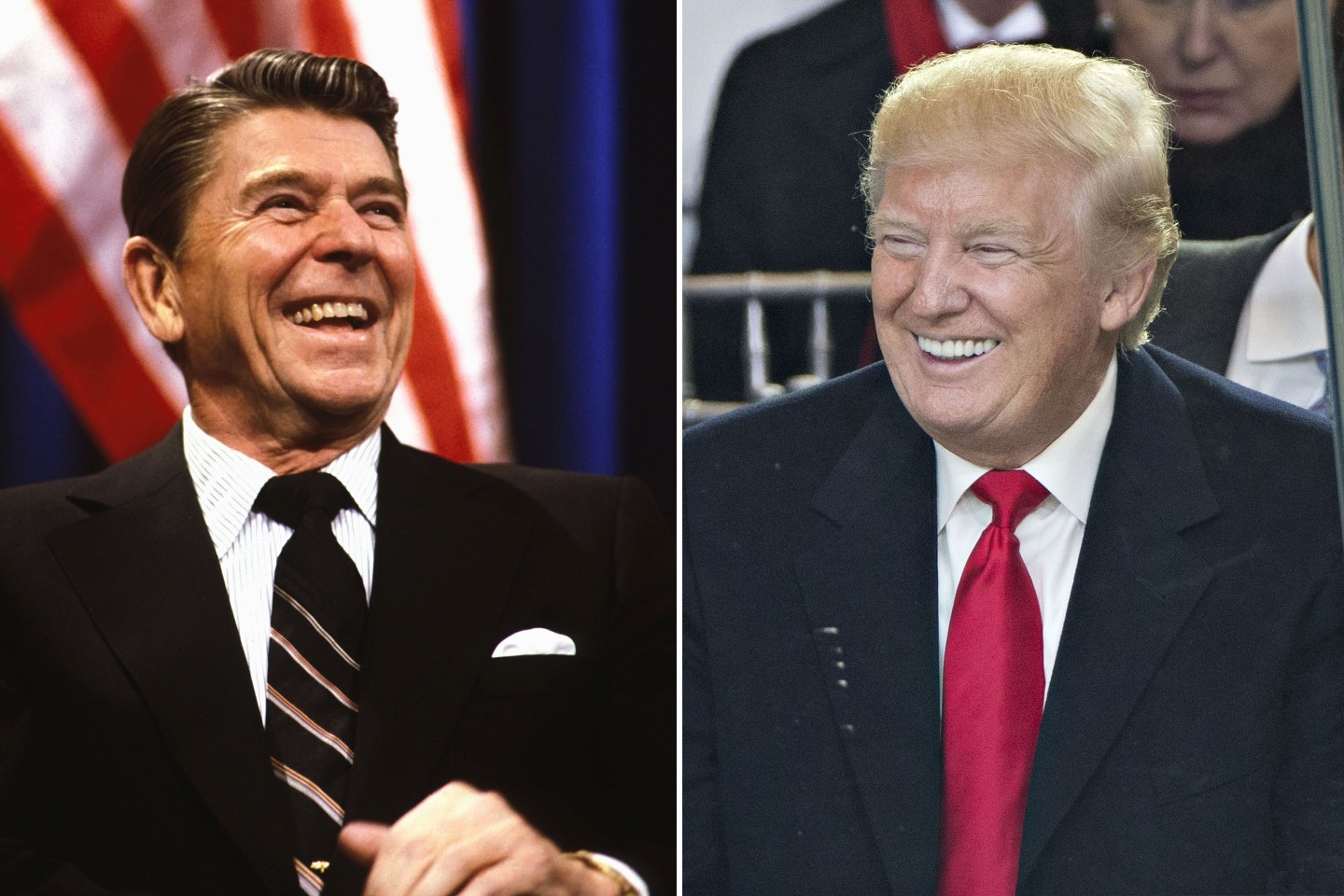
As you take office today as the 45th President of the United States, you are at the biggest turning point in your life. And after one of the most divisive elections in its history, the United States is also at a crossroads. Having won as a political outsider, can you now successfully and safely govern the country? And will the country, with all of its political, demographic and cultural fissures, hold together while you try?
As the founder of the Washington Speakers Bureau, I’ve worked closely with three U.S. Presidents, four British Prime Ministers and countless American and world leaders and I’ve learned a few things about them and the decisions they have to make in the face of great challenges.
You are facing the daunting task of bringing the country together at a time of enormous change, here and abroad. Fortunately, the lessons of your predecessors in the White House are there for the taking. They can help guide you not only to make good on at least some of your promises to supporters but also to reach out to the rest of the country.
You seem to have already taken a page from history in signaling that you would not be pursuing investigations of Hillary Clinton. More than 40 years ago, in the wake of Watergate, Gerald Ford pardoned Richard Nixon. As Bob Woodward reported in “Shadow: Five Presidents and the Legacy of Watergate,” the pardon wasn’t the result of a corrupt deal but an act of political courage and compassion, not for Nixon but for the country as a whole. We needed to move on and not be mired in the spectacle of an indictment and trial of a former President. Your decision about Clinton appears to be in that spirit. Whatever she did or didn’t do in the past pales in comparison with the challenges that you and our country now face.
Here are several other lessons from history that could prove useful.
Tone
Ronald Reagan’s soft-spokenness, genial nature and unwavering focus on a few core principles disarmed his opponents and charmed the rest of us. You, too, could be a great communicator. You were a master at using the campaign debates, and the cable news networks and, of course, your Twitter account to battle your way to the nomination and victory. Now, communication is no longer about 140 characters, buzz words or campaign slogans. To be a great now, you must communicate in a thoughtful, concise and unifying manner. Do not attack the media, use them to the best of your ability; they can be a tool for healing, as Reagan knew so well. You used them that way, too, in the early hours of Nov. 9, when your victory suddenly became clear. Your words then were humble, embracing and generous—and gave hope of unity to many who had just voted against you. It is a tone that the country needs to hear again and again.
Inspiration
John F. Kennedy mobilized America’s spirit by vowing to get us to the moon within a decade, and we got there. You could bring us together in a similar way by committing the country to another goal that we could all sign on to: finding cures for cancer. We’ve made runs against cancer before, but haven’t backed them with nearly enough funding. You could make a deal to cure that problem without busting the budget, by tapping the trillions of stranded offshore dollars that big U.S. multinationals have parked abroad. You’ve promised to cut corporate tax rates, in part so that the companies will repatriate those dollars, giving the economy here a boost. Go ahead with that plan, but tinker a bit with the details so that the companies have a strong incentive to donate a healthy portion of the funds to the cancer battle.
A helping hand
It may take longer than you think to get shuttered factories up and running again, and it will also take time to find the right projects for your ambitious trillion-dollar infrastructure program. But let’s start somewhere, as FDR did in the Depression. Pick a project in the most economically depressed part of each state, red and blue. By definition, such quick hits will be modest, but they can also be meaningful—the refurbishing of a national park, an old bridge ready to be replaced but in need of money, the redeployment of VA doctors.
In Michigan, send the Navy Seabees and the Army Corps of Engineers to Flint, speeding up the process of replacing all those dangerous lead pipes so that safe water can flow once more. In each project, make sure that local construction workers, office assistants and idle teenagers are hired to help. Yes, it is showmanship of sorts. But it is also an immediate and tangible down payment on the big jobs programs to come.
One final lesson, from George Mitchell, who rose from a hardscrabble childhood in a mill town in Maine to become Majority Leader of the U.S. Senate. In 1994, President Bill Clinton offered him a seat on the Supreme Court. But Mitchell turned him down. He had introduced a healthcare reform bill in the Senate and it still needed his attention, he told the President. He said he would just be more useful there.
That dedication to service is the biggest lesson of all. We’ll continue to squabble over political priorities and agendas, as we always have in this messy democracy. But let’s not make it personal, or take it that way. We’re in this together.
Bernie Swain is the founder of the Washington Speakers Bureau and the author of What Made Me Who I Am.