• Home
  • Latest
  • Fortune 500
  • Finance
  • Tech
  • Leadership
  • Lifestyle
  • Rankings
  • Multimedia

Trendingnow

1

Gen Z fled San Francisco for Texas and Florida. Now they’re turning ‘welcomer cities’ into the next big tech towns

2

Social Security's 2032 deadline puts a 22% cut on the table — but Washington has way less room to negotiate than 1983

3

Boomers actually do hold most of the wealth and power. So why do they call it 'whiny' to point that out?

1

Gen Z fled San Francisco for Texas and Florida. Now they’re turning ‘welcomer cities’ into the next big tech towns

2

Social Security's 2032 deadline puts a 22% cut on the table — but Washington has way less room to negotiate than 1983

3

Boomers actually do hold most of the wealth and power. So why do they call it 'whiny' to point that out?
Commentary

Russian Hackers Were Only Getting Started in the 2016 Election

By
Rob Knake
Rob Knake
Down Arrow Button Icon
By
Rob Knake
Rob Knake
Down Arrow Button Icon
January 15, 2017, 6:00 PM ET
TOPSHOT-RUSSIA-HACKING-INVESTIGATION-INTERNET-POLITICS
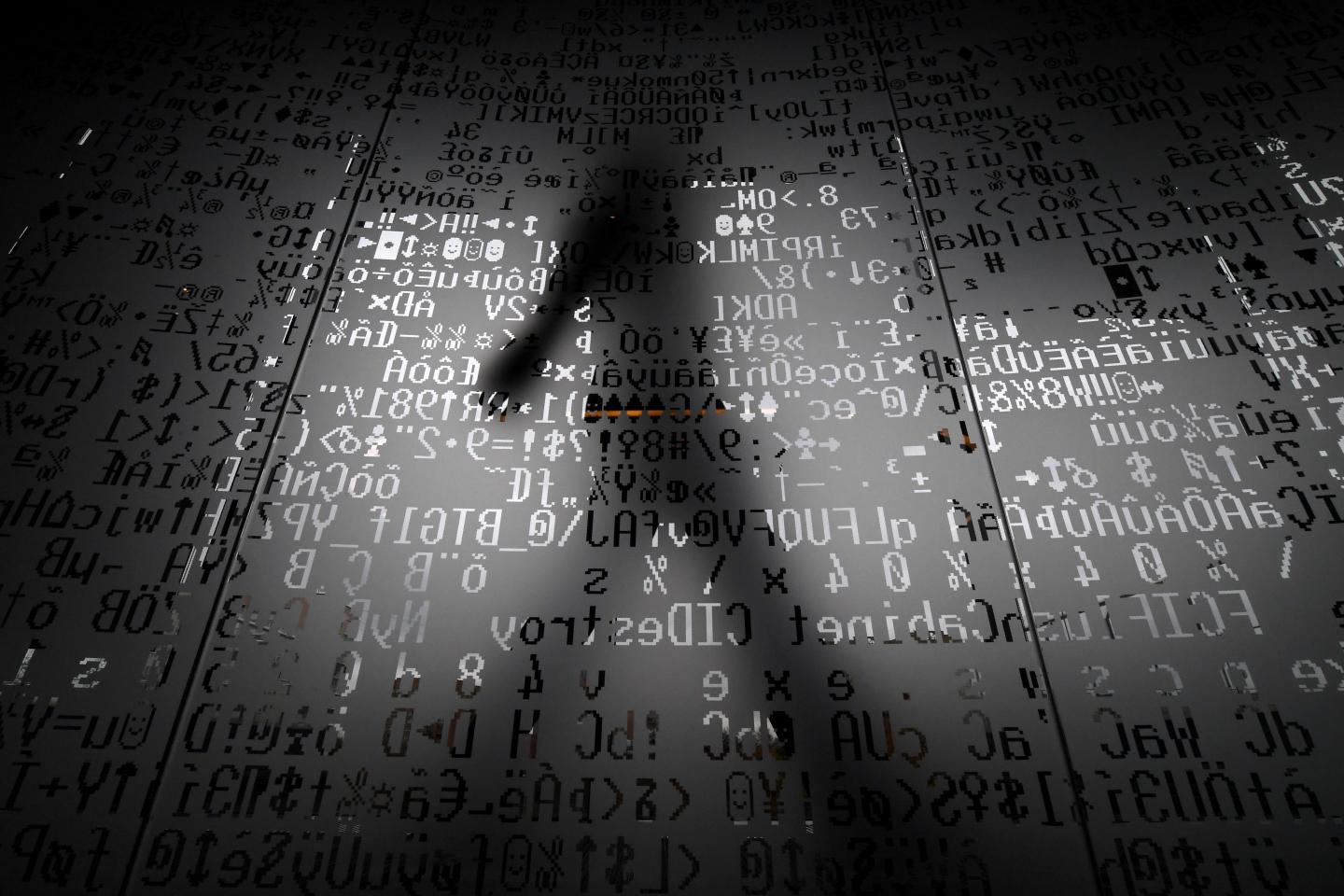
TOPSHOT - A picture taken on October 17, 2016 shows an employee walking behind a glass wall with machine coding symbols at the headquarters of Internet security giant Kaspersky in Moscow. / AFP / Kirill KUDRYAVTSEV / TO GO WITH AFP STORY BY Thibault MARCHAND (Photo credit should read KIRILL KUDRYAVTSEV/AFP/Getty Images)Photograph by Kirill Kudryavtsev—AFP/Getty Images

As ugly as Russia’s hacking to influence November’s election was, it wasn’t an act of cyber war because it wasn’t an act of war. While certainly hostile, and likely a violation of international law, the action falls far short of how warfare is likely to play out in cyberspace. And frighteningly, it demonstrates only a fraction of Russia’s capability to harm U.S. interests online.

The attack caught the national security community off-guard because it represents a shift in Russia’s approach to the U.S. in cyberspace. The real danger is that if the U.S.-Russia relationship degrades further, the Kremlin could end up unleashing its true cyberwarfare capabilities.

When Donald Trump takes office later this month, his administration is likely to find that despite the current honeymoon between the president-elect and Russian President Vladimir Putin, America’s goals abroad will run into Russian opposition in places like Syria, Iran, and Eastern Europe. When that happens and events spiral out of control, don’t be surprised if Russia decides to turn the lights off across major American cities.

Over the last few years, we’ve seen a preview of what Russia can accomplish in cyberspace. The Russian intelligence services have taken the age-old art of kompromat—creating and planting or releasing compromising material—and updated it for the digital age. Using their ability to gain access to computer systems, Russian operatives have planted child pornography on the computer of an exiled dissident living in England, and taken over and posted misinformation on Lithuanian government websites.

Of even greater concern is the Russian attack on the Ukrainian power grid carried out in 2015. As documented in a report published by the SANS Institute, Russian actors were able to cut off power for several hours for a quarter of a million people through a coordinated cyber attack against multiple energy companies. While the attacks were limited in scale and scope, they demonstrated for the first time what many in the field of cybersecurity have known is possible—the ability to cause real-world impacts through digital means.

Given all of this activity, no one in the U.S. should have been surprised to see the Kremlin’s tactics ported across the Atlantic in an attempt to influence the 2016 presidential election. It also means that we should expect to see Russia use its cyber exploitation capabilities against the U.S. for even darker and more frightening purposes in the year ahead. What Russia has done in its backyard may just have been trial runs for targeting U.S. interests.

The impact of an attack against the U.S. might not be as limited as the attack on Ukraine’s power grid. In that incident, system operators were able to revert to manual controls, something that might not be possible in the U.S. given the level of automation introduced here in recent years. What that might mean is that the next time the U.S. and Russia come into conflict, the U.S. power system will be a likely target for Russian hackers.


Such an attack might have devastating consequences. Lloyd’s of London analysis suggests that an attack on the power grid in the northeast U.S. could result in a weeks-long blackout in some areas. The report concluded that the impact of such an incident would be far-reaching, with economic losses ranging from $250 billion to $1 trillion. Direct damage to grid infrastructure, interruption of business operations, and reduced sales would make up for most of the losses, though in darker scenarios, breakdowns in logistics systems could result in widespread shortages, looting and rioting, and the imposition of martial law.

In addition, hackers could disrupt commercial flights by targeting air traffic control systems or airline ticketing and reservation systems. Many in the security community fear that the Mirai botnet—a malware program that has taken over thousands of devices around the world—could be used to launch a distributed denial of service attack so large that it would clog up the core infrastructure of the Internet. As the Internet of Things continues to expand, adding more than five million devices per day, this problem will only continue to grow.

Given the savvy with which Russia has wielded its cyber capabilities of late, it’s unlikely that the Kremlin will miscalculate how seriously the Washington would perceive an attack on its critical infrastructure. Whether the U.S. has the capability to inflict similar harm on Russia is a matter of conjecture. What is certain, however, is that if Russia does its worst in cyberspace, the new Cold War could get hot very quickly, and might not be contained to the digital world.

Rob Knake is a senior fellow at the Council on Foreign Relations, former director for cybersecurity policy at the National Security Council, and co-author of Cyber War: The Next Threat to National Security and What to Do About It.

About the Author
By Rob Knake
See full bioRight Arrow Button Icon

Latest in Commentary

Finance
Lorem ipsum dolor sit amet, consectetur adipiscing elit, sed do eiusmod tempor incididunt ut labore et dolore magna aliqua. Ut enim ad minim veniam
By Fortune Editors
October 20, 2025
Finance
Lorem ipsum dolor sit amet, consectetur adipiscing elit, sed do eiusmod tempor incididunt ut labore et dolore magna aliqua. Ut enim ad minim veniam
By Fortune Editors
October 20, 2025
Finance
Lorem ipsum dolor sit amet, consectetur adipiscing elit, sed do eiusmod tempor incididunt ut labore et dolore magna aliqua. Ut enim ad minim veniam
By Fortune Editors
October 20, 2025
Finance
Lorem ipsum dolor sit amet, consectetur adipiscing elit, sed do eiusmod tempor incididunt ut labore et dolore magna aliqua. Ut enim ad minim veniam
By Fortune Editors
October 20, 2025
Finance
Lorem ipsum dolor sit amet, consectetur adipiscing elit, sed do eiusmod tempor incididunt ut labore et dolore magna aliqua. Ut enim ad minim veniam
By Fortune Editors
October 20, 2025
Finance
Lorem ipsum dolor sit amet, consectetur adipiscing elit, sed do eiusmod tempor incididunt ut labore et dolore magna aliqua. Ut enim ad minim veniam
By Fortune Editors
October 20, 2025

Most Popular

Finance
Lorem ipsum dolor sit amet, consectetur adipiscing elit, sed do eiusmod tempor incididunt ut labore et dolore magna aliqua. Ut enim ad minim veniam
By Fortune Editors
October 20, 2025
Finance
Lorem ipsum dolor sit amet, consectetur adipiscing elit, sed do eiusmod tempor incididunt ut labore et dolore magna aliqua. Ut enim ad minim veniam
By Fortune Editors
October 20, 2025
Finance
Lorem ipsum dolor sit amet, consectetur adipiscing elit, sed do eiusmod tempor incididunt ut labore et dolore magna aliqua. Ut enim ad minim veniam
By Fortune Editors
October 20, 2025
Finance
Lorem ipsum dolor sit amet, consectetur adipiscing elit, sed do eiusmod tempor incididunt ut labore et dolore magna aliqua. Ut enim ad minim veniam
By Fortune Editors
October 20, 2025
Finance
Lorem ipsum dolor sit amet, consectetur adipiscing elit, sed do eiusmod tempor incididunt ut labore et dolore magna aliqua. Ut enim ad minim veniam
By Fortune Editors
October 20, 2025
Finance
Lorem ipsum dolor sit amet, consectetur adipiscing elit, sed do eiusmod tempor incididunt ut labore et dolore magna aliqua. Ut enim ad minim veniam
By Fortune Editors
October 20, 2025
Fortune Secondary Logo
Rankings
  • 100 Best Companies
  • Fortune 500
  • Global 500
  • Fortune 500 Europe
  • Most Powerful Women
  • World's Most Admired Companies
  • See All Rankings
  • Lists Calendar
Sections
  • Finance
  • Fortune Crypto
  • Features
  • Leadership
  • Health
  • Commentary
  • Success
  • Retail
  • Mpw
  • Tech
  • Lifestyle
  • CEO Initiative
  • Asia
  • Politics
  • Conferences
  • Europe
  • Newsletters
  • Personal Finance
  • Environment
  • Magazine
  • Education
Customer Support
  • Frequently Asked Questions
  • Customer Service Portal
  • Privacy Policy
  • Terms Of Use
  • Single Issues For Purchase
  • International Print
Commercial Services
  • Advertising
  • Fortune Brand Studio
  • Fortune Analytics
  • Fortune Conferences
  • Business Development
  • Group Subscriptions
About Us
  • About Us
  • Press Center
  • Work At Fortune
  • Terms And Conditions
  • Site Map
  • About Us
  • Press Center
  • Work At Fortune
  • Terms And Conditions
  • Site Map
  • Facebook icon
  • Twitter icon
  • LinkedIn icon
  • Instagram icon
  • Pinterest icon

Latest in Commentary

Vietnam has bold plans for its economic future. It will need U.S. tech, capital, and speed to make them happen
CommentaryVietnam
Vietnam has bold plans for its economic future. It will need U.S. tech, capital, and speed to make them happen
By Brian McFeeters and Vu Tu ThanhJune 14, 2026
2 hours ago
t
CommentaryTariffs
A quartz countertop tariff could double your kitchen renovation cost — and kill 13 jobs for every one it creates
By Steve SwedbergJune 14, 2026
13 hours ago
nexstar
CommentaryAntitrust
Nexstar CEO: big tech swallowed local newspapers. Local TV could be next
By Perry A. SookJune 14, 2026
14 hours ago
ravi
CommentaryWeather and forecasting
I spent 8 years flood-proofing a city. Capital markets are running out of time to take El Niño seriously
By Ravi S. BhallaJune 13, 2026
1 day ago
herrin
CommentaryInfrastructure
America just committed $1.2 trillion to fix its infrastructure. We’re still flying blind
By Gregg HerrinJune 13, 2026
2 days ago
cyber
Commentarycyber
Accenture cyber leads: why hiring more people won’t solve the cybersecurity talent gap
By Harpreet Sidhu and Vikram DesaiJune 13, 2026
2 days ago

Most Popular

Gen Z fled San Francisco for Texas and Florida. Now they’re turning ‘welcomer cities’ into the next big tech towns
Real Estate
Gen Z fled San Francisco for Texas and Florida. Now they’re turning ‘welcomer cities’ into the next big tech towns
By Sydney LakeJune 13, 2026
2 days ago
Social Security's 2032 deadline puts a 22% cut on the table — but Washington has way less room to negotiate than 1983
Personal Finance
Social Security's 2032 deadline puts a 22% cut on the table — but Washington has way less room to negotiate than 1983
By John W. Diamond and The ConversationJune 12, 2026
2 days ago
Boomers actually do hold most of the wealth and power. So why do they call it 'whiny' to point that out?
Economy
Boomers actually do hold most of the wealth and power. So why do they call it 'whiny' to point that out?
By Nick LichtenbergJune 14, 2026
12 hours ago
CEO of $20 billion AI firm Perplexity says the secret to success is ‘sleeping with that fear’ that your competitor will steal your idea
Success
CEO of $20 billion AI firm Perplexity says the secret to success is ‘sleeping with that fear’ that your competitor will steal your idea
By Preston ForeJune 13, 2026
2 days ago
Trump expects to sign a deal with Iran on Sunday, but Tehran may want to avoid giving him a gift on his birthday
Middle East
Trump expects to sign a deal with Iran on Sunday, but Tehran may want to avoid giving him a gift on his birthday
By Jason MaJune 13, 2026
1 day ago
'It's not a jailbreak' — Research leading to U.S. export restrictions on top Anthropic models was for defense, cybersecurity CEO says
AI
'It's not a jailbreak' — Research leading to U.S. export restrictions on top Anthropic models was for defense, cybersecurity CEO says
By Jason MaJune 13, 2026
1 day ago

© 2026 Fortune Media IP Limited. All Rights Reserved. Use of this site constitutes acceptance of our Terms of Use and Privacy Policy | CA Notice at Collection and Privacy Notice | Do Not Sell/Share My Personal Information
FORTUNE is a trademark of Fortune Media IP Limited, registered in the U.S. and other countries. FORTUNE may receive compensation for some links to products and services on this website. Offers may be subject to change without notice.