• Home
  • News
  • Fortune 500
  • Tech
  • Finance
  • Leadership
  • Lifestyle
  • Rankings
  • Multimedia
Tech

Most Students Can’t Tell the Difference Between Fake and Real News, Study Finds

By
Mathew Ingram
Mathew Ingram
Down Arrow Button Icon
By
Mathew Ingram
Mathew Ingram
Down Arrow Button Icon
November 23, 2016, 12:18 PM ET
INDIA-INTERNET-FACEBOOK
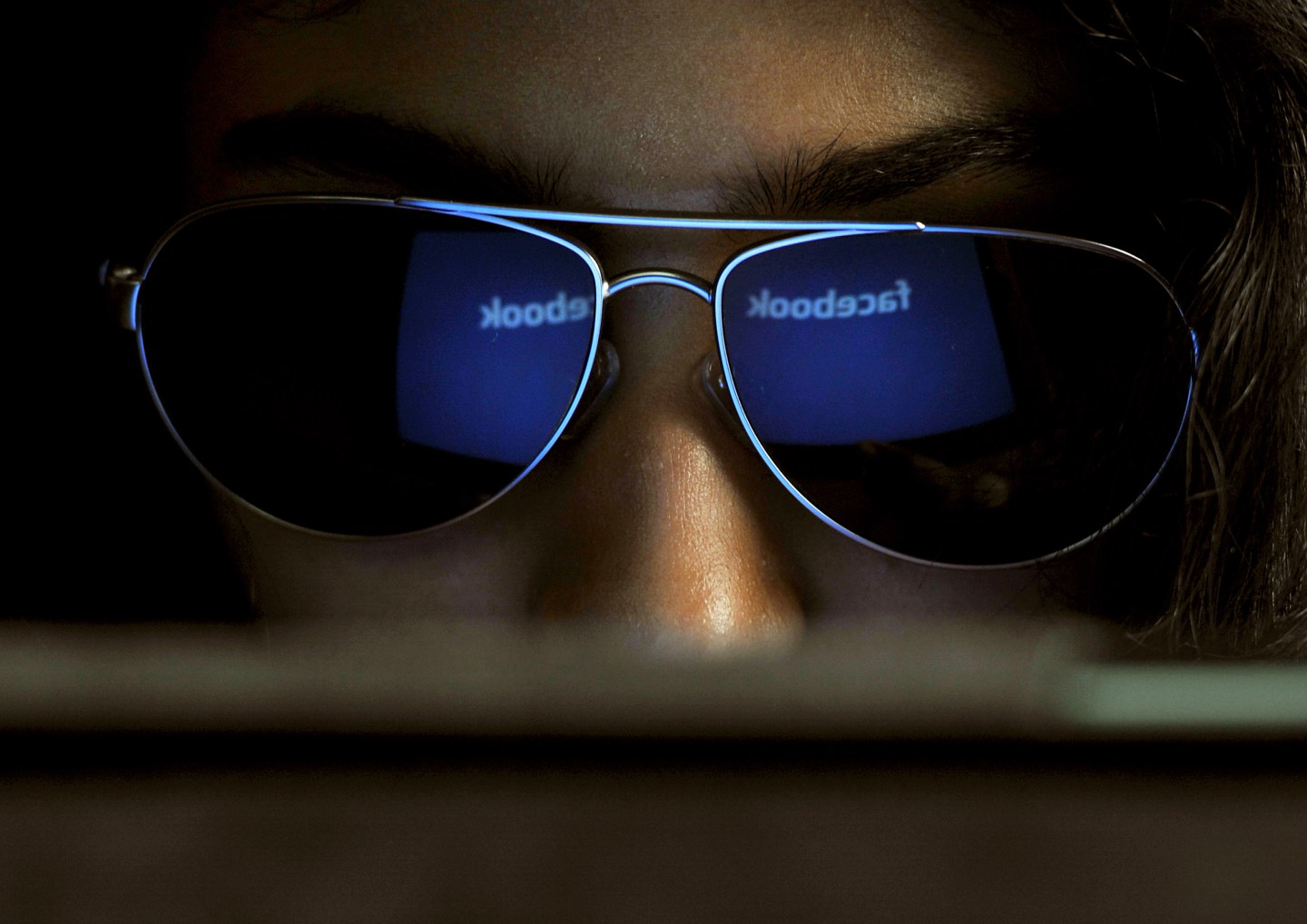
The 'Facebook' logo is reflected in a young Indian woman's sunglasses as she browses on a tablet in Bangalore on May 15, 2012. World's popular and leading social networking company Facebook Inc., founded in a Harvard dorm room by Mark Zuckerberg whose current value exceeds 100 billion USD, will be making an initial public offering (IPO) which is slated to be Silicon Valley's biggest-ever. AFP PHOTO/Manjunath KIRAN Photograph by Manjunath Kiran—AFP/Getty Images

The rise of “fake news” is a topic that is getting a lot of attention lately, thanks to the role that Facebook and other social platforms play in news consumption for a growing number of users. But there are other problems as well, a recent Stanford study found.

According to researchers from the university, a majority of students—more than 80% of them, in fact—could not distinguish between a piece of sponsored content or “native advertising” and a real news article. They also had difficulty determining whether a news story shared on social media was credible, and based their decision on odd or even irrelevant factors.

The study, conducted by Stanford’s History Education Group, surveyed more than 7,800 students from middle school through to college. They were given a series of articles to review and then asked to describe them, and rate whether they were trustworthy.

One example asked middle school students whether they should trust an article about financial planning that was written by a bank executive, and sponsored by a bank. The researchers said that many students did not see the author or the sponsored nature of the piece as a reason to question its credibility or accuracy.

Get Data Sheet, Fortune’s technology newsletter.

Another exercise asked students to look at the homepage of the news site Slate, and identify whether certain parts of it were news or advertising. They had no problem determining that a standard banner ad was advertising, but more than 80% believed a native ad—which was clearly labeled with the words “sponsored content”—was a real news story.

“Many people assume that because young people are fluent in social media they are equally perceptive about what they find there,” professor Sam Wineburg, lead author of the report and founder of the Stanford History Education Group, said in a statement. “Our work shows the opposite to be true.”

Perhaps even more disturbing was the finding that a significant proportion of high school students saw Facebook posts as being trustworthy based on factors that had nothing to do with the identity of the person who posted it, or any qualifications they might have.

Facebook is taking on Craigslist with this new feature. Watch:

Students were asked to look at two Facebook posts that mentioned Donald Trump’s candidacy for president. One was from the official account of Fox News—which had a blue checkmark, meaning the account has been verified by Facebook as legitimate—and the other came from a fake account that looked like Fox News. More than 30% of students argued that the fake account was more trustworthy because of some key graphic elements that it included, such as a large photo.

Even at the college level, where students were asked to research and identify whether descriptions of candidates’ political views were accurate, the study found significant gaps in their reasoning.

In one example, college-aged students had to evaluate the credibility of a news website. The Stanford researchers found that high-quality design, links to traditional news organizations and well-written “About” pages were able to convince many of the students that a site was credible, regardless of what the actual news content was that appeared on the site.


About the Author
By Mathew Ingram
See full bioRight Arrow Button Icon

Latest in Tech

Matt Rogers
CommentaryInfrastructure
 I built the first iPhone with Steve Jobs. The AI industry is at risk of repeating an early smartphone mistake
By Matt RogersDecember 4, 2025
18 minutes ago
work
Future of Work
AI is reshaping the rhythm of the workweek–and leaders need to pay attention
By David ShimDecember 4, 2025
23 minutes ago
Venmo
CybersecurityVenmo
Venmo says it’s ‘back up and running’ after hours of trouble sending and receiving money
By Audrey McAvoy and The Associated PressDecember 4, 2025
23 minutes ago
Huang
Big TechWhite House
Nvidia’s Jensen Huang meets behind closed doors with Trump, then Republican senators
By Matt Brown and The Associated PressDecember 4, 2025
30 minutes ago
personalized
AIGoogle
Google VP says the AI revolution is just a matter of time: ‘The younger generation is really feeling like it’s a native part of how they work’
By Nick LichtenbergDecember 4, 2025
1 hour ago
ServiceNow president Amit Zavery
AIServiceNow
ServiceNow’s president says acquiring identity and access management platform Veza will help customers track the whereabouts of AI agents
By Jeremy KahnDecember 4, 2025
2 hours ago

Most Popular

placeholder alt text
North America
Jeff Bezos and Lauren Sánchez Bezos commit $102.5 million to organizations combating homelessness across the U.S.: ‘This is just the beginning’
By Sydney LakeDecember 2, 2025
2 days ago
placeholder alt text
Economy
Ford workers told their CEO 'none of the young people want to work here.' So Jim Farley took a page out of the founder's playbook
By Sasha RogelbergNovember 28, 2025
6 days ago
placeholder alt text
North America
Anonymous $50 million donation helps cover the next 50 years of tuition for medical lab science students at University of Washington
By The Associated PressDecember 2, 2025
2 days ago
placeholder alt text
Economy
Scott Bessent calls the Giving Pledge well-intentioned but ‘very amorphous,’ growing from ‘a panic among the billionaire class’
By Nick LichtenbergDecember 3, 2025
20 hours ago
placeholder alt text
Innovation
Google CEO Sundar Pichai says we’re just a decade away from a new normal of extraterrestrial data centers
By Sasha RogelbergDecember 1, 2025
3 days ago
placeholder alt text
C-Suite
MacKenzie Scott's $19 billion donations have turned philanthropy on its head—why her style of giving actually works
By Sydney LakeDecember 2, 2025
2 days ago
Rankings
  • 100 Best Companies
  • Fortune 500
  • Global 500
  • Fortune 500 Europe
  • Most Powerful Women
  • Future 50
  • World’s Most Admired Companies
  • See All Rankings
Sections
  • Finance
  • Leadership
  • Success
  • Tech
  • Asia
  • Europe
  • Environment
  • Fortune Crypto
  • Health
  • Retail
  • Lifestyle
  • Politics
  • Newsletters
  • Magazine
  • Features
  • Commentary
  • Mpw
  • CEO Initiative
  • Conferences
  • Personal Finance
  • Education
Customer Support
  • Frequently Asked Questions
  • Customer Service Portal
  • Privacy Policy
  • Terms Of Use
  • Single Issues For Purchase
  • International Print
Commercial Services
  • Advertising
  • Fortune Brand Studio
  • Fortune Analytics
  • Fortune Conferences
  • Business Development
About Us
  • About Us
  • Editorial Calendar
  • Press Center
  • Work At Fortune
  • Diversity And Inclusion
  • Terms And Conditions
  • Site Map

© 2025 Fortune Media IP Limited. All Rights Reserved. Use of this site constitutes acceptance of our Terms of Use and Privacy Policy | CA Notice at Collection and Privacy Notice | Do Not Sell/Share My Personal Information
FORTUNE is a trademark of Fortune Media IP Limited, registered in the U.S. and other countries. FORTUNE may receive compensation for some links to products and services on this website. Offers may be subject to change without notice.