• Home
  • Latest
  • Fortune 500
  • Finance
  • Tech
  • Leadership
  • Lifestyle
  • Rankings
  • Multimedia
China

Congressional Panel Wants to Ban Chinese State Ownership of U.S. Companies

By
Daniel Bentley
Daniel Bentley
Down Arrow Button Icon
By
Daniel Bentley
Daniel Bentley
Down Arrow Button Icon
November 17, 2016, 10:46 AM ET
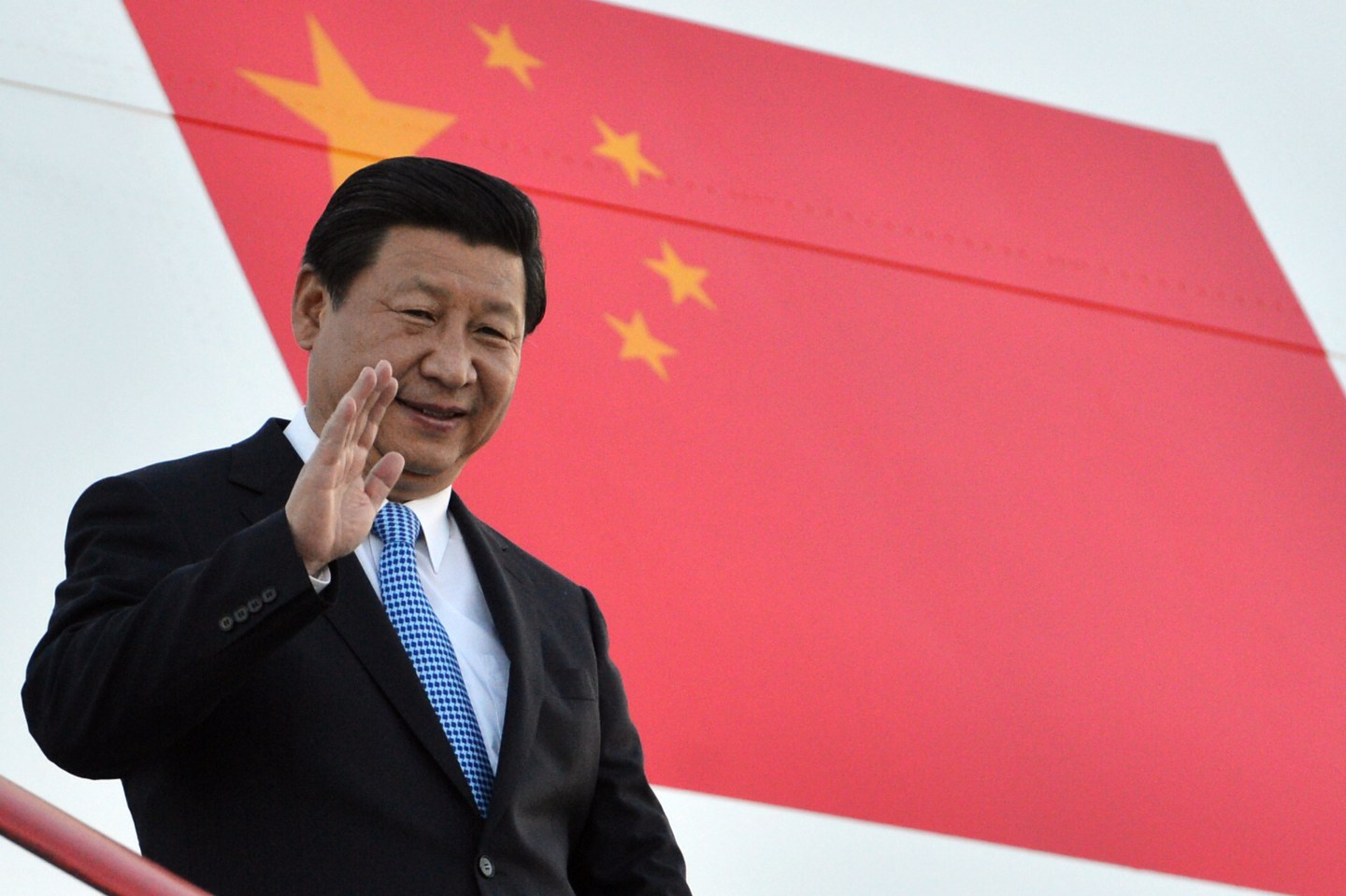
President of the People's Republic of China Xi Jinping
SAINT PETERSBURG - SEPTEMBER 04: In this handout image provided by Ria Novosti, President of the People's Republic of China Xi Jinping arrives in Russia ahead of the G20 summit on September 4, 2013 in St. Petersburg, Russia. The G20 summit is scheduled to run between September 5th and 6th. (Photo by Alexey Kudenko/RIA Novosti via Getty Images)Photograph by Alexey Kudenko/RIA Novosti via Getty Images/File

U.S. lawmakers should take action to ban China’s state-owned firms from acquiring U.S. companies, a congressional panel charged with monitoring security and trade links between Washington and Beijing said on Wednesday.

In its annual report to Congress, the U.S.-China Economic and Security Review Commission said the Chinese Communist Party has used state-backed enterprises as the primary economic tool to advance and achieve its national security objectives.

The report recommended Congress prohibit U.S. acquisitions by such entities by changing the mandate of CFIUS, the U.S. government body that conducts security reviews of proposed acquisitions by foreign firms.

“The Commission recommends Congress amend the statute authorizing the Committee on Foreign Investment in the United States (CFIUS) to bar Chinese state-owned enterprises from acquiring or otherwise gaining effective control of U.S. companies,” the report said.

CFIUS, led by the U.S. Treasury and with representatives from eight other agencies, including the departments of Defense, State and Homeland Security, now has veto power over acquisitions from foreign private and state-controlled firms if it finds that a deal would threaten U.S. national security or critical infrastructure.

If enacted, the panel’s recommendation would essentially create a blanket ban on U.S. purchases by Chinese state-owned enterprises.

The report “has again revealed the commission’s stereotypes and prejudices,” Chinese Foreign Ministry spokesman Geng Shuang said in Beijing.

“We ask that Chinese companies investing abroad abide by local laws and regulations, and we hope that relevant countries will create a level playing field,” he told a daily news briefing.

EXTRA WEIGHT

The panel’s report is purely advisory, but could carry extra weight this year because they come as President-elect Donald Trump’s transition team is formulating its trade and foreign policy agenda and vetting candidates for key economic and security positions.

Congress also could be more receptive, after U.S. voter sentiment against job losses to China and Mexico helped Republicans retain control of both the House and the Senate in last week’s election.

Trump strongly criticized China throughout the U.S. election campaign, grabbing headlines with his pledges to slap 45 percent tariffs on imported Chinese goods and to label the country a currency manipulator on his first day in office.

“Chinese state owned enterprises are arms of the Chinese state,” Dennis Shea, chairman of the U.S.-China Economic and Security Review Commission, told a news conference.

“We don’t want the U.S. government purchasing companies in the United States, why would we want the Chinese Communist government purchasing companies in the United States?”

The recommendation to change laws governing CFIUS was one of 20 proposals the panel made to Congress. On the military side, it called for a government investigation into how far outsourcing to China has weakened the U.S. defense industry.

The 16-year-old panel also said Congress should pass legislation that would require its pre-approval of any move by the U.S. Commerce Department to declare China a “market economy” and limit anti-dumping tariffs against the country.

The United States and U.S. businesses attracted a record $64.5 billion worth of deals involving buyers from mainland China this year, more than any other country targeted by Chinese buyers, according to Thomson Reuters data.

The push into the United States is part of a global overseas buying spree by Chinese companies that this year has seen a record $200 billion worth of deals, nearly double last year’s tally.

CFIUS has shown a higher degree of activism against Chinese buyers this year, catching some by surprise. Prominent deals that fell victim to CFIUS include Tsinghua Holdings’ $3.8 billion investment in Western Digital.

Overall, data do not demonstrate CFIUS has been a significant obstacle for Chinese investment in the United States. In 2014, the latest year for which data is available, China topped the list of foreign countries in CFIUS review with 24 deals reviewed out of more than 100 scrutinized by CFIUS.

Although the number of Chinese transactions reviewed rose in absolute terms, it fell as a share of overall Chinese acquisitions, the report noted, and the vast majority of deals reviewed by CFIUS were cleared.


About the Author
By Daniel Bentley
See full bioRight Arrow Button Icon
0

Most Popular

Finance
Lorem ipsum dolor sit amet, consectetur adipiscing elit, sed do eiusmod tempor incididunt ut labore et dolore magna aliqua. Ut enim ad minim veniam
By Fortune Editors
October 20, 2025
Finance
Lorem ipsum dolor sit amet, consectetur adipiscing elit, sed do eiusmod tempor incididunt ut labore et dolore magna aliqua. Ut enim ad minim veniam
By Fortune Editors
October 20, 2025
Finance
Lorem ipsum dolor sit amet, consectetur adipiscing elit, sed do eiusmod tempor incididunt ut labore et dolore magna aliqua. Ut enim ad minim veniam
By Fortune Editors
October 20, 2025
Finance
Lorem ipsum dolor sit amet, consectetur adipiscing elit, sed do eiusmod tempor incididunt ut labore et dolore magna aliqua. Ut enim ad minim veniam
By Fortune Editors
October 20, 2025
Finance
Lorem ipsum dolor sit amet, consectetur adipiscing elit, sed do eiusmod tempor incididunt ut labore et dolore magna aliqua. Ut enim ad minim veniam
By Fortune Editors
October 20, 2025
Finance
Lorem ipsum dolor sit amet, consectetur adipiscing elit, sed do eiusmod tempor incididunt ut labore et dolore magna aliqua. Ut enim ad minim veniam
By Fortune Editors
October 20, 2025
Rankings
  • 100 Best Companies
  • Fortune 500
  • Global 500
  • Fortune 500 Europe
  • Most Powerful Women
  • Future 50
  • World’s Most Admired Companies
  • See All Rankings
Sections
  • Finance
  • Leadership
  • Success
  • Tech
  • Asia
  • Europe
  • Environment
  • Fortune Crypto
  • Health
  • Retail
  • Lifestyle
  • Politics
  • Newsletters
  • Magazine
  • Features
  • Commentary
  • Mpw
  • CEO Initiative
  • Conferences
  • Personal Finance
  • Education
Customer Support
  • Frequently Asked Questions
  • Customer Service Portal
  • Privacy Policy
  • Terms Of Use
  • Single Issues For Purchase
  • International Print
Commercial Services
  • Advertising
  • Fortune Brand Studio
  • Fortune Analytics
  • Fortune Conferences
  • Business Development
About Us
  • About Us
  • Editorial Calendar
  • Press Center
  • Work At Fortune
  • Diversity And Inclusion
  • Terms And Conditions
  • Site Map
  • Facebook icon
  • Twitter icon
  • LinkedIn icon
  • Instagram icon
  • Pinterest icon

Most Popular

placeholder alt text
AI
Bill Gates pulls out of India’s AI summit at the last minute, in the latest blow to an event dogged by organizational chaos
By Beatrice NolanFebruary 19, 2026
13 hours ago
placeholder alt text
Personal Finance
You need $2 million to retire and 'almost no one is close,' BlackRock CEO warns, a problem that Gen X will make 'harder and nastier'
By Sydney LakeFebruary 17, 2026
2 days ago
placeholder alt text
Economy
Top Trump advisor furious about true cost of tariffs being revealed, vows to punish New York Fed for ‘worst paper’ ever in history
By Jake AngeloFebruary 18, 2026
1 day ago
placeholder alt text
AI
Thousands of CEOs just admitted AI had no impact on employment or productivity—and it has economists resurrecting a paradox from 40 years ago
By Sasha RogelbergFebruary 17, 2026
2 days ago
placeholder alt text
Personal Finance
Current price of silver as of Wednesday, February 18, 2026
By Joseph HostetlerFebruary 18, 2026
1 day ago
placeholder alt text
AI
Deutsche Bank asked AI how it was planning to destroy jobs. And the robot answered
By Nick LichtenbergFebruary 18, 2026
1 day ago

© 2026 Fortune Media IP Limited. All Rights Reserved. Use of this site constitutes acceptance of our Terms of Use and Privacy Policy | CA Notice at Collection and Privacy Notice | Do Not Sell/Share My Personal Information
FORTUNE is a trademark of Fortune Media IP Limited, registered in the U.S. and other countries. FORTUNE may receive compensation for some links to products and services on this website. Offers may be subject to change without notice.