• Home
  • News
  • Fortune 500
  • Tech
  • Finance
  • Leadership
  • Lifestyle
  • Rankings
  • Multimedia

Can You Crash An Autonomous Car Ethically?

Andrew Nusca
By
Andrew Nusca
Andrew Nusca
Editorial Director, Brainstorm and author of Fortune Tech
Down Arrow Button Icon
Andrew Nusca
By
Andrew Nusca
Andrew Nusca
Editorial Director, Brainstorm and author of Fortune Tech
Down Arrow Button Icon
November 16, 2016, 4:08 AM ET
Fortune-The Drive Los Angeles Auto Show 2016 autonomy ethics
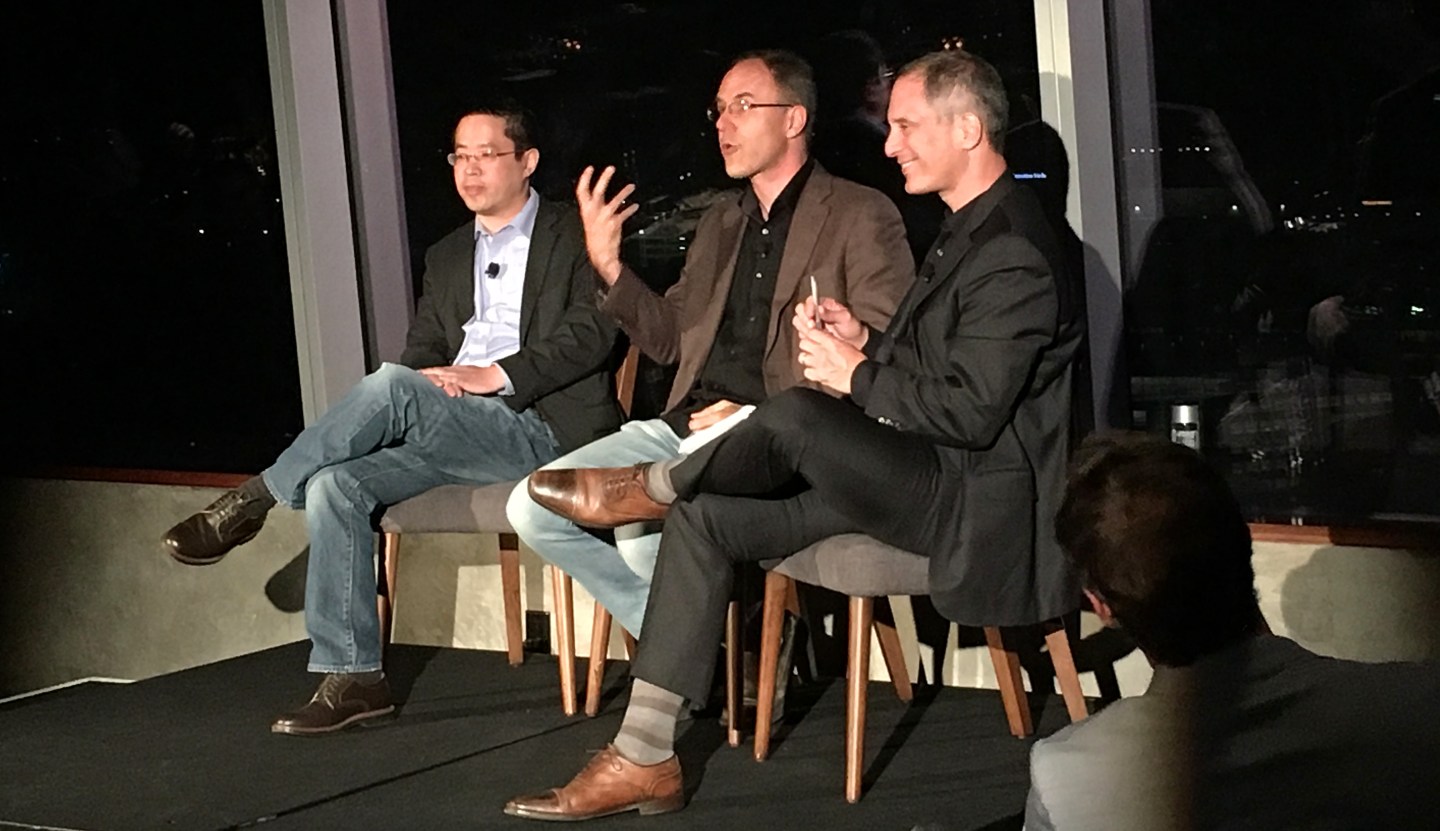
Patrick Lin, Chris Gerdes, and Adam Lashinsky at the Fortune-The Drive dinner at the 2016 Los Angeles Auto Show.Andrew Nusca/Fortune

Imagine you’re in a self-driving car in the middle of a busy freeway, say the 101, in Los Angeles. Imagine that you suddenly have to swerve because a couch falls off a truck driving in front of you. Stomping on the brakes isn’t an option—behind you is a big rig that’s been tailgating you for the last mile. To your left is a sport-utility vehicle that could probably handle the impact if you swerve into it. To your right is a sedan that might not.

You have to swerve either way. So: left or right?

“These are decisions that need to be thought about or programmed in advance,” said Patrick Lin, director of the Ethics and Emerging Sciences Group at California Polytechnic State University. “Either way leads to problems.” In either case, you’re targeting a vehicle class through no fault of its own.

That’s the problem facing autonomous, a.k.a. self-driving, cars. At an invite-only dinner co-hosted by Fortune and The Drive at the 2016 Los Angeles Auto Show, experts agreed that autonomous technologies allow us to sit back and let the car take the wheel yet come with their own challenges.

“That’s one of the big opportunities for automated vehicles,” said Chris Gerdes, chief technology officer for the U.S. Department of Transportation. “It could have a huge impact on saving lives.”

Get Data Sheet, Fortune’s tech newsletter.

Ninety-four percent of so-called last actions during an automotive collision are the result of human judgment (read: errors), Gerdes said. “Self-driving cars have this promise of removing the human from that equation,” he said. “That’s not trivial.”

The catch: With self-driving cars you’ve shifted the error from human drivers to human programmer, Gerdes said. Machine learning techniques can improve the result, but they aren’t perfect.

And then there are ethical concerns. If you program a collision, that means it’s premeditated, Lin said. Is that even legal? “This is all untested law,” he said.

On the other hand automated vehicles can see the environment around them in 360 degrees, Gerdes said. Humans can’t do that. Self-driving cars won’t drink too much at dinner; they won’t get tired.

“If you put a vehicle on an open road, I suspect an automated one will be much [safer] than a human[-driven] one,” Gerdes said.

He referenced the so-called Trolley Car Problem. The gist: Five people are riding on the trolley car and a pedestrian crosses the tracks in front of it. In an inevitable crash situation, do you choose to let the trolley lose control and potentially kill its five passengers? Or do you throw a switch and almost definitely kill the pedestrian?

That’s an engineering question, Gerdes said. But what happens when you take more safety precautions—say, you post a sign saying that it’s dangerous for pedestrians to cross the trolley tracks? Does that change the equation?

That’s an ethics question, Lin said. “I think ethics is vitally important in these engineering problems but it’s not necessarily a literal translation of philosophical problems,” he said. People hate the trolley-car conceit “because it’s so fake,” he added. Ethics experiments tend to isolate variables. The real world is not so clear-cut.

Still, anytime you’re programming two tons of steel and glass moving at 60 m.p.h. to do something is an ethics call, Lin said. “Ethics are not facts,” he said. “These are things that need to be debated.”

About the Author
Andrew Nusca
By Andrew NuscaEditorial Director, Brainstorm and author of Fortune Tech
Instagram iconLinkedIn iconTwitter icon

Andrew Nusca is the editorial director of Brainstorm, Fortune's innovation-obsessed community and event series. He also authors Fortune Tech, Fortune’s flagship tech newsletter.

See full bioRight Arrow Button Icon

Latest in

Databricks CEO speaking on stage.
AIBrainstorm AI
Databricks CEO Ali Ghodsi says his company will be worth $1 trillion by doing these three things
By Beatrice NolanDecember 9, 2025
18 minutes ago
AIBrainstorm AI
CoreWeave CEO: Despite see-sawing stock, IPO was ‘incredibly successful’ after challenges of Liberation Day tariff timing
By Sharon GoldmanDecember 9, 2025
39 minutes ago
Arm CEO on stage at Brainstorm AI
AIBrainstorm AI
Physical AI robots will automate ‘large sections’ of factory work in the next decade, Arm CEO says
By Beatrice NolanDecember 9, 2025
2 hours ago
Jerome Powell, chairman of the US Federal Reserve, during the Hoover Institution's George P. Shultz Memorial Lecture Series in Stanford, California, US, on Monday, Dec. 1, 2025.
EconomyJobs
‘Fodder for a recession’: Top economist Mark Zandi warns about so many Americans ‘already living on the financial edge’ in a K-shaped economy 
By Eva RoytburgDecember 9, 2025
3 hours ago
ConferencesBrainstorm AI
Exelon CEO: The ‘warning lights are on’ for U.S. electric grid resilience and utility prices amid AI demand surge
By Jordan BlumDecember 9, 2025
3 hours ago
AIBrainstorm AI
‘Customers don’t care about AI’—they just want to boost cash flow and make ends meet, Intuit CEO says
By Jason MaDecember 9, 2025
4 hours ago

Most Popular

placeholder alt text
Success
When David Ellison was 13, his billionaire father Larry bought him a plane. He competed in air shows before leaving it to become a Hollywood executive
By Dave SmithDecember 9, 2025
14 hours ago
placeholder alt text
Real Estate
The 'Great Housing Reset' is coming: Income growth will outpace home-price growth in 2026, Redfin forecasts
By Nino PaoliDecember 6, 2025
3 days ago
placeholder alt text
Investing
Baby boomers have now 'gobbled up' nearly one-third of America's wealth share, and they're leaving Gen Z and millennials behind
By Sasha RogelbergDecember 8, 2025
1 day ago
placeholder alt text
Success
Craigslist founder signs the Giving Pledge, and his fortune will go to military families, fighting cyberattacks—and a pigeon rescue
By Sydney LakeDecember 8, 2025
1 day ago
placeholder alt text
Uncategorized
Transforming customer support through intelligent AI operations
By Lauren ChomiukNovember 26, 2025
13 days ago
placeholder alt text
Success
‘Godfather of AI’ says Bill Gates and Elon Musk are right about the future of work—but he predicts mass unemployment is on its way
By Preston ForeDecember 4, 2025
5 days ago
Rankings
  • 100 Best Companies
  • Fortune 500
  • Global 500
  • Fortune 500 Europe
  • Most Powerful Women
  • Future 50
  • World’s Most Admired Companies
  • See All Rankings
Sections
  • Finance
  • Leadership
  • Success
  • Tech
  • Asia
  • Europe
  • Environment
  • Fortune Crypto
  • Health
  • Retail
  • Lifestyle
  • Politics
  • Newsletters
  • Magazine
  • Features
  • Commentary
  • Mpw
  • CEO Initiative
  • Conferences
  • Personal Finance
  • Education
Customer Support
  • Frequently Asked Questions
  • Customer Service Portal
  • Privacy Policy
  • Terms Of Use
  • Single Issues For Purchase
  • International Print
Commercial Services
  • Advertising
  • Fortune Brand Studio
  • Fortune Analytics
  • Fortune Conferences
  • Business Development
About Us
  • About Us
  • Editorial Calendar
  • Press Center
  • Work At Fortune
  • Diversity And Inclusion
  • Terms And Conditions
  • Site Map

© 2025 Fortune Media IP Limited. All Rights Reserved. Use of this site constitutes acceptance of our Terms of Use and Privacy Policy | CA Notice at Collection and Privacy Notice | Do Not Sell/Share My Personal Information
FORTUNE is a trademark of Fortune Media IP Limited, registered in the U.S. and other countries. FORTUNE may receive compensation for some links to products and services on this website. Offers may be subject to change without notice.