• Home
  • Latest
  • Fortune 500
  • Finance
  • Tech
  • Leadership
  • Lifestyle
  • Rankings
  • Multimedia

Trendingnow

1

Amazon workers on food stamps have tripled despite its record revenue—and it’s just the latest evidence of the new economy of shrinking labor shares

2

Jamie Dimon says the American Dream is slipping away. The dysfunctional baby boomer retirement wave is a major part of the problem

3

After Trump says he doesn't need Congress for his $5,000 'dividend,' House Speaker Mike Johnson says not so fast but vows to try to make it happen

1

Amazon workers on food stamps have tripled despite its record revenue—and it’s just the latest evidence of the new economy of shrinking labor shares

2

Jamie Dimon says the American Dream is slipping away. The dysfunctional baby boomer retirement wave is a major part of the problem

3

After Trump says he doesn't need Congress for his $5,000 'dividend,' House Speaker Mike Johnson says not so fast but vows to try to make it happen
Honda

Honda and Yamaha Announce Scooter Partnership

By
Reuters
Reuters
Down Arrow Button Icon
By
Reuters
Reuters
Down Arrow Button Icon
October 5, 2016, 11:40 AM ET
Yamaha Looks To Green Power To Cut Manufacturing Costs In India
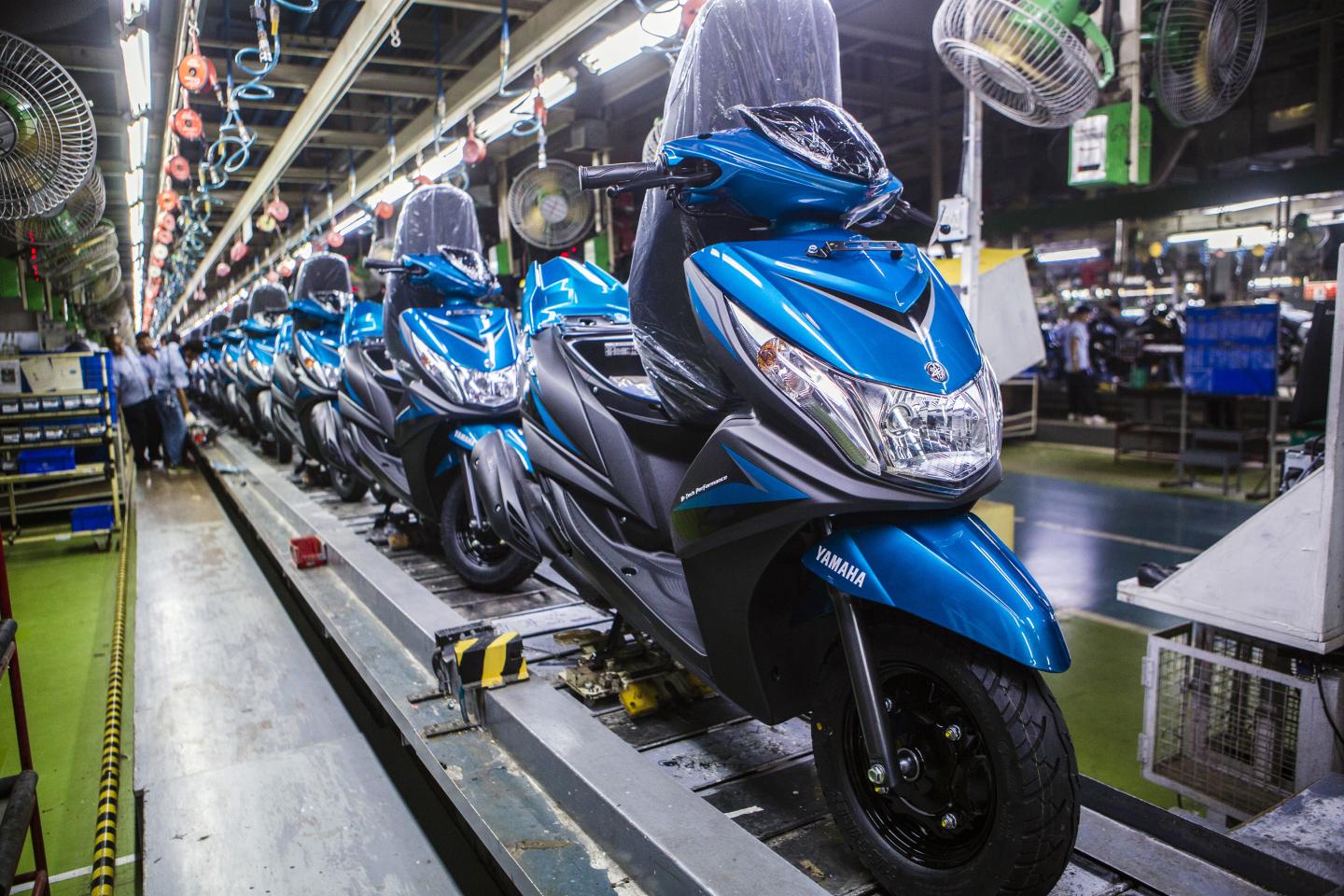
Scooters are assembled at the Yamaha Motor Co. plant in Surajpur, Uttar Pradesh, India, on Wednesday, July 20, 2016. The Japanese motorcycle maker wants solar power to supply a quarter of energy needs at its northern Indian factories near Delhi, according to company executives. Photographer: Prashanth Vishwanathan/Bloomberg via Getty ImagesPrashanth Vishwanathan — Bloomberg via Getty Images
Google source logo
Add Fortune on Google for similar content.

Japan’s Honda Motor Co Ltd and Yamaha Motor Co Ltd on Wednesday said they were joining forces to develop scooters for the domestic market, burying the hatchet on a decades-old rivalry and consolidating production in response to a shrinking motorcycle market.

Honda, the world’s largest motorcycle brand by sales, said it would start producing Yamaha’s 50-cc engine scooter models for the domestic market at its plant in southern Japan by the end of 2018, based on the manufacturing platform for Honda’s small scooter models.

The two companies said that pooling resources would be a way to mitigate increasing costs to develop new scooter technologies and keep pace with ever-tightening emissions regulations in the face of falling domestic scooter sales.

“The slowdown in the scooter market seen in the past few years has made business in the sector very difficult for both companies, so partnering will have merits,” Honda operating officer Shinji Aoyama told reporters.

Both companies said they would continue to market scooters separately, and that the partnership was limited to Japan. By far the largest market for both companies is Asia ex-Japan, where a growing demand for scooters from an expanding middle class has created their biggest battleground.

Yamaha managing executive officer Katsuaki Watanabe said having Honda manufacture Yamaha models on contract would likely be more cost efficient than Yamaha’s current arrangement of producing the vehicles in Taiwan and exporting them back home.

The two companies said they would also jointly update their respective delivery scooter models, which Honda may also manufacture for Yamaha, while also considering collaboration on electric scooter projects.

The partnership stands in contrast to a bitter rivalry between Honda, the top seller of scooters in Japan, and second-ranked Yamaha which dates back to around 1980, when both companies released dozens of motorcycle models and competed over distribution and pricing to increase market share.

“There’s absolutely no bad feeling or ill will left over from that period,” Yamaha’s Watanabe said.

Since then, overall domestic sales of motorcycles and scooters have fallen sharply due to a slump in demand from a rapidly growing elderly population and falling interest in vehicle ownership among younger consumers particularly in the past few years.

Sales fell 10.6 percent to 373,000 motorcycles in the year ended March 2015, their second year of decline and a drop from the 1.2 million motorbikes sold in 1995.

Motorcycles are a key part of both companies’ product line-ups, although domestic sales contribute little to global revenue.

About the Author
By Reuters
See full bioRight Arrow Button Icon

Latest in


Most Popular

Fortune Secondary Logo
Rankings
  • 100 Best Companies
  • Fortune 500
  • Global 500
  • Fortune 500 Europe
  • Most Powerful Women
  • World's Most Admired Companies
  • See All Rankings
  • Lists Calendar
Sections
  • Finance
  • Fortune Crypto
  • Features
  • Leadership
  • Health
  • Commentary
  • Success
  • Retail
  • Mpw
  • Tech
  • Lifestyle
  • CEO Initiative
  • Asia
  • Politics
  • Conferences
  • Europe
  • Newsletters
  • Personal Finance
  • Environment
  • Magazine
  • Education
Customer Support
  • Frequently Asked Questions
  • Customer Service Portal
  • Privacy Policy
  • Terms Of Use
  • Single Issues For Purchase
  • International Print
Commercial Services
  • Advertising
  • Fortune Brand Studio
  • Fortune Analytics
  • Fortune Conferences
  • Business Development
  • Group Subscriptions
About Us
  • About Us
  • Press Center
  • Work At Fortune
  • Terms And Conditions
  • Site Map
  • About Us
  • Press Center
  • Work At Fortune
  • Terms And Conditions
  • Site Map
  • Facebook icon
  • Twitter icon
  • LinkedIn icon
  • Instagram icon
  • TikTok icon
  • YouTube icon

    Latest in


    Most Popular

    © 2026 Fortune Media IP Limited. All Rights Reserved. Use of this site constitutes acceptance of our Terms of Use and Privacy Policy | CA Notice at Collection and Privacy Notice | Do Not Sell/Share My Personal Information
    FORTUNE is a trademark of Fortune Media IP Limited, registered in the U.S. and other countries. FORTUNE may receive compensation for some links to products and services on this website. Offers may be subject to change without notice.