• Home
  • Latest
  • Fortune 500
  • Finance
  • Tech
  • Leadership
  • Lifestyle
  • Rankings
  • Multimedia
CommentaryUnited Nations

What Bankers Can Do To Tackle Climate Change

By
Simon Zadek
Simon Zadek
and
Nick Robbins
Nick Robbins
Down Arrow Button Icon
By
Simon Zadek
Simon Zadek
and
Nick Robbins
Nick Robbins
Down Arrow Button Icon
September 20, 2016, 12:00 PM ET
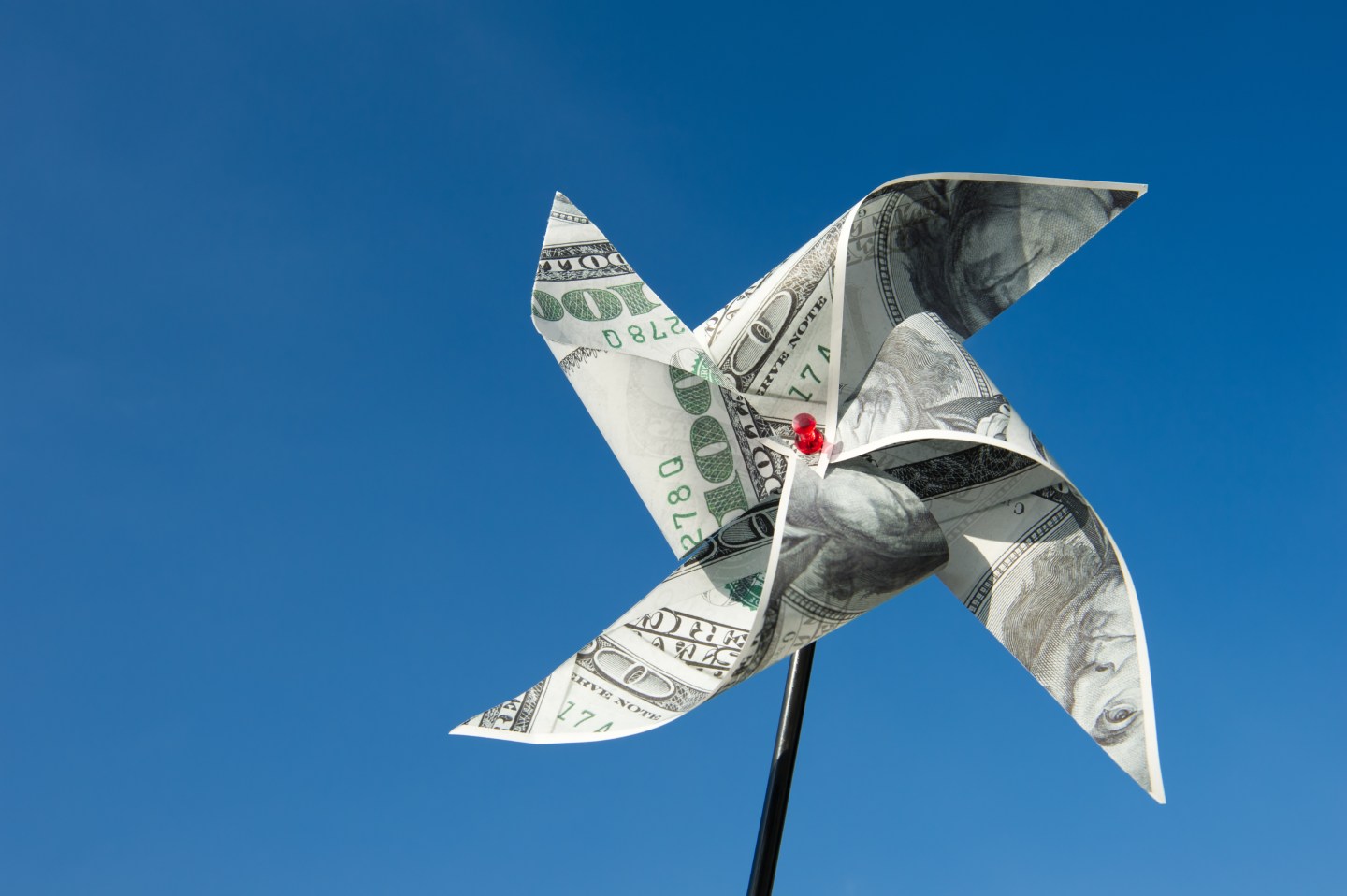
Dollar Pinwheel
Close-up of pinwheel made from American dollar bill.livecal—iStockphoto/Getty Images

The decision by China and the United States to jointly ratify the Paris Agreement on climate change on the eve of the Chinese-hosted G20 Leaders Summit earlier this month, was simply great news. It is a huge signal from the world’s two largest economies that the low-carbon transition is not just environmentally necessary, but now lies at the heart of their future prosperity.

The news out of China is even bigger than meets the eye. In addition to ratifying the Paris Agreement, G20 Summit host President Xi Jingping headed to Hangzhou after just presiding over the decision to introduce new guidelines for establishing a green financial system. The decision consists of 35 measures to boost capital flows to green industries and constrain finance to polluting projects. The goal is to mobilise the US$600 billion needed each year to realise China’s goal of becoming an ecological civilization – an ambition amounting to trillions of yuan.

These decisions go hand in hand. It is no surprise that one of the three goals of the Paris Agreement is to ensure that investment, lending and insurance decisions take climate risks fully into account. What is needed are the global frameworks and national climate plans to reset the incentives for the unprecedented investment that’s needed for zero-carbon energy, climate resilient infrastructure, retooling of the agricultural system and protecting vulnerable communities and nations.

Government money is of course vital, particularly to generate financing so that developing countries can meet climate change goals. But the bulk of the funding for climate action and building a green economy more broadly will come from private sources. According to UNCTAD’s World Investment Report (2014), somewhere between $5 trillion and $7 trillion each year to deliver sustainable development worldwide. This is a large sum – but set against the $300 trillion of assets in the world’s financial system, the issue is not an absolute shortage of funds. The question is one of allocation.

Today’s financial system is not yet fit to supply the investment required – a reason why China has introduced its comprehensive greening strategy. A range of barriers stand in the way: mispriced environmental risks, short-term investment horizons, under-developed capital markets for green assets (such as clean energy), and perverse incentives (biased investment decisions in favor of short-term returns over long-term value creation), and misguided subsidies (continued fossil fuel subsidies).

Moves are afoot to fix these weaknesses, blending market leadership with national action and new forms of international cooperation. Institutional investors worth $10 trillion are measuring the carbon footprint of their portfolios. The bond market focused on emissions-reducing technologies has grown to $46 billion in issuance this year – with China’s new green bond regulations driving $8 billion alone in the first quarter. In parallel, fintech innovations in Kenya are enabling poorer communities without consumer credit ratings to purchase clean energy on a pay-as-you-go basis. And stock exchanges with 70% of market capitalization have now committed to sustainability disclosure.

China is also not alone in introducing rules that seek to align the financial system with the climate and sustainability challenge. France’s recently passed Energy Transition Law requires major businesses – including financial institutions – to get serious about measuring, managing and reporting the implications of climate change. The Bank of England has kicked off a domino of assessments across Europe looking at the threats that climate change poses to key sectors, such as insurance. Building on these national measures, the world’s club of central bankers, the Financial Stability Board, has launched a task force, chaired by former New York mayor and financial data titan Michael Bloomberg, to set out a consistent framework for transparent climate disclosure.

Such developments are but the early stages in a broader transformation of the financial system. More is expected. Under China’s presidency, the G20 has established a Green Finance Study Group (GFSD). Chaired by the People’s Bank of China and the Bank of England, the GFSG is mandated to develop options to mobilise green finance through financial market reforms and development. At the conclusion of the G20 Leaders Summit, world leaders released the first-ever policy document on greening financial systems endorsed by all G20 members.

Take as a whole, the decisions of the United States and China display a seriousness towards achieving what Mark Carney, Governor of the Bank of England has labeled a “reset” of the financial system. So let us enjoy the momentum generated by this ratification, but “follow the money” – whether in yuan, dollars or pounds – must surely be our mantra from now on.

Simon Zadek and Nick Robins are co-directors of the United Nations Environment Programme (UNEP) Inquiry, which works to advance systematic action to align the financial system and sustainable development.
About the Authors
By Simon Zadek
See full bioRight Arrow Button Icon
By Nick Robbins
See full bioRight Arrow Button Icon

Latest in Commentary

Finance
Lorem ipsum dolor sit amet, consectetur adipiscing elit, sed do eiusmod tempor incididunt ut labore et dolore magna aliqua. Ut enim ad minim veniam
By Fortune Editors
October 20, 2025
Finance
Lorem ipsum dolor sit amet, consectetur adipiscing elit, sed do eiusmod tempor incididunt ut labore et dolore magna aliqua. Ut enim ad minim veniam
By Fortune Editors
October 20, 2025
Finance
Lorem ipsum dolor sit amet, consectetur adipiscing elit, sed do eiusmod tempor incididunt ut labore et dolore magna aliqua. Ut enim ad minim veniam
By Fortune Editors
October 20, 2025
Finance
Lorem ipsum dolor sit amet, consectetur adipiscing elit, sed do eiusmod tempor incididunt ut labore et dolore magna aliqua. Ut enim ad minim veniam
By Fortune Editors
October 20, 2025
Finance
Lorem ipsum dolor sit amet, consectetur adipiscing elit, sed do eiusmod tempor incididunt ut labore et dolore magna aliqua. Ut enim ad minim veniam
By Fortune Editors
October 20, 2025
Finance
Lorem ipsum dolor sit amet, consectetur adipiscing elit, sed do eiusmod tempor incididunt ut labore et dolore magna aliqua. Ut enim ad minim veniam
By Fortune Editors
October 20, 2025

Most Popular

Finance
Lorem ipsum dolor sit amet, consectetur adipiscing elit, sed do eiusmod tempor incididunt ut labore et dolore magna aliqua. Ut enim ad minim veniam
By Fortune Editors
October 20, 2025
Finance
Lorem ipsum dolor sit amet, consectetur adipiscing elit, sed do eiusmod tempor incididunt ut labore et dolore magna aliqua. Ut enim ad minim veniam
By Fortune Editors
October 20, 2025
Finance
Lorem ipsum dolor sit amet, consectetur adipiscing elit, sed do eiusmod tempor incididunt ut labore et dolore magna aliqua. Ut enim ad minim veniam
By Fortune Editors
October 20, 2025
Finance
Lorem ipsum dolor sit amet, consectetur adipiscing elit, sed do eiusmod tempor incididunt ut labore et dolore magna aliqua. Ut enim ad minim veniam
By Fortune Editors
October 20, 2025
Finance
Lorem ipsum dolor sit amet, consectetur adipiscing elit, sed do eiusmod tempor incididunt ut labore et dolore magna aliqua. Ut enim ad minim veniam
By Fortune Editors
October 20, 2025
Finance
Lorem ipsum dolor sit amet, consectetur adipiscing elit, sed do eiusmod tempor incididunt ut labore et dolore magna aliqua. Ut enim ad minim veniam
By Fortune Editors
October 20, 2025
Fortune Secondary Logo
Rankings
  • 100 Best Companies
  • Fortune 500
  • Global 500
  • Fortune 500 Europe
  • Most Powerful Women
  • Future 50
  • World’s Most Admired Companies
  • See All Rankings
Sections
  • Finance
  • Fortune Crypto
  • Features
  • Leadership
  • Health
  • Commentary
  • Success
  • Retail
  • Mpw
  • Tech
  • Lifestyle
  • CEO Initiative
  • Asia
  • Politics
  • Conferences
  • Europe
  • Newsletters
  • Personal Finance
  • Environment
  • Magazine
  • Education
Customer Support
  • Frequently Asked Questions
  • Customer Service Portal
  • Privacy Policy
  • Terms Of Use
  • Single Issues For Purchase
  • International Print
Commercial Services
  • Advertising
  • Fortune Brand Studio
  • Fortune Analytics
  • Fortune Conferences
  • Business Development
  • Group Subscriptions
About Us
  • About Us
  • Editorial Calendar
  • Press Center
  • Work At Fortune
  • Diversity And Inclusion
  • Terms And Conditions
  • Site Map
Fortune Secondary Logo
  • About Us
  • Editorial Calendar
  • Press Center
  • Work At Fortune
  • Diversity And Inclusion
  • Terms And Conditions
  • Site Map
  • Facebook icon
  • Twitter icon
  • LinkedIn icon
  • Instagram icon
  • Pinterest icon

Latest in Commentary

schmidt
CommentaryData centers
Eric Schmidt: big tech should power its own AI ambitions 
By Eric SchmidtMarch 6, 2026
11 hours ago
sarandos
CommentaryMedia
What Netflix’s acquisition of Ben Affleck’s AI filmmaking company really shows
By Lin CherryMarch 6, 2026
12 hours ago
iran
CommentaryOil
Bypassing Hormuz: how technology, not territory, will win the new energy war
By Siddharth MisraMarch 6, 2026
13 hours ago
nicole
CommentaryVenture Capital
AI mastered language. The physical world is next
By Nicole FraenkelMarch 6, 2026
15 hours ago
EuropeLetter from London
The President is surprised by the lack of European support for military action against Iran—he shouldn’t be
By Kamal AhmedMarch 6, 2026
18 hours ago
khosla
CommentaryDEI
$3.7 billion whisper: the explosive growth of quiet corporate activism
By Sona KhoslaMarch 6, 2026
18 hours ago

Most Popular

placeholder alt text
Economy
The Treasury may need to borrow an extra $1.6 trillion to cover the hole left by tariff ruling and pay a further $400 billion in debt interest
By Eleanor PringleMarch 6, 2026
18 hours ago
placeholder alt text
Success
Chinese billionaire who has fathered more than 100 children hopes to have dozens of U.S.-born boys to one day take over his business
By Emma BurleighMarch 5, 2026
2 days ago
placeholder alt text
AI
Anthropic just mapped out which jobs AI could potentially replace. A 'Great Recession for white-collar workers' is absolutely possible
By Jake AngeloMarch 6, 2026
13 hours ago
placeholder alt text
Politics
Iran is turning out to be a more effective enemy than many thought, and U.S. allies are losing their patience with the war
By Jim EdwardsMarch 6, 2026
17 hours ago
placeholder alt text
Middle East
The Iran conflict will be the ’straw that breaks the camel’s back’ for the U.S. economy if it goes on much longer, Nobel laureate Paul Krugman warns
By Tristan BoveMarch 6, 2026
21 hours ago
placeholder alt text
AI
OpenAI investor Vinod Khosla predicts today’s 5-year-olds won’t ever need to get jobs thanks to AI
By Sasha RogelbergMarch 4, 2026
3 days ago

© 2026 Fortune Media IP Limited. All Rights Reserved. Use of this site constitutes acceptance of our Terms of Use and Privacy Policy | CA Notice at Collection and Privacy Notice | Do Not Sell/Share My Personal Information
FORTUNE is a trademark of Fortune Media IP Limited, registered in the U.S. and other countries. FORTUNE may receive compensation for some links to products and services on this website. Offers may be subject to change without notice.