• Home
  • Latest
  • Fortune 500
  • Finance
  • Tech
  • Leadership
  • Lifestyle
  • Rankings
  • Multimedia

New

Watch Fortune Daily, our new video show that brings you inside the Fortune newsroom and the boardroom

Watch Fortune Daily, our new video show that brings you inside the Fortune newsroom and the boardroom

Watch Fortune Daily, our new video show that brings you inside the Fortune newsroom and the boardroom

Watch Fortune Daily, our new video show that brings you inside the Fortune newsroom and the boardroom

Watch Fortune Daily, our new video show that brings you inside the Fortune newsroom and the boardroom

Watch Fortune Daily, our new video show that brings you inside the Fortune newsroom and the boardroom

Watch Fortune Daily, our new video show that brings you inside the Fortune newsroom and the boardroom

Watch Fortune Daily, our new video show that brings you inside the Fortune newsroom and the boardroom

Watch Fortune Daily, our new video show that brings you inside the Fortune newsroom and the boardroom

Watch Fortune Daily, our new video show that brings you inside the Fortune newsroom and the boardroom

Commentary

What Beijing Could Do Next After the South China Sea Ruling

By
Minxin Pei
Minxin Pei
Down Arrow Button Icon
By
Minxin Pei
Minxin Pei
Down Arrow Button Icon
July 13, 2016, 6:00 PM ET
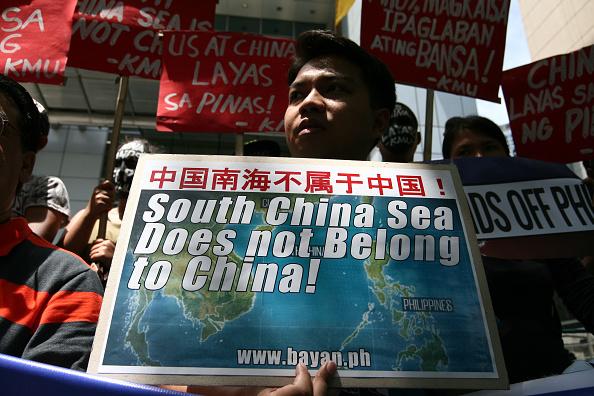
Protesters holding posters against China's incursions in the
MAKATI, PHILIPPINES - 2015/07/07: Protesters holding posters against China's incursions in the South China Sea. (Photo by J Gerard Seguia/Pacific Press/LightRocket via Getty Images)Pacific Press LightRocket via Getty Images
Add Fortune on Google for similar content.

Minxin Pei is a professor of government at Claremont McKenna College and a non-resident senior fellow of the German Marshall Fund of the United States.

Few should be surprised by the unanimous ruling this week against China by a tribunal of the Permanent Court of Arbitration (PCA), a Hague-based international judicial entity constituted under the United Nations Convention on the Law of the Sea (UNCLOS). Even Beijing was expecting this outcome. When the Philippines brought the case against China in early 2013, Beijing refused to take part in the proceedings on the ground that the court has no jurisdiction over the dispute in the South China Sea. Immediately, after the release of the tribunal’s ruling, the Chinese Foreign Ministry issued a detailed rebuttal of the ruling, an indication that Chinese leaders had anticipated an unfavorable verdict.

Although the PCA’s ruling cannot be enforced, the magnitude of defeat suffered by China cannot be overstated. For the first time, an international legal entity has effectively rejected Chinese claims of sovereignty over the South China Sea and soundly criticized its activities such as land reclamations.

While the legal and practical implications of the ruling are still being digested, the most urgent question now is what options Beijing has in the wake of this legal setback.

Given the belligerent response from China, including a recent military exercise in the South China Sea, it is clear that Beijing will not abide by the ruling and cease and desist. In determining how to blunt the impact of the ruling and avoid further loss of its credibility, China will weigh a combination of factors in crafting a response. The most critical ones are the domestic political considerations of its top leadership and the possible response by the United States.

The first option, seen as the most attractive and least costly, is to buy off Manila. The Philippines’ case against China was brought by the administration of President Benigno Aquino, who has just left office. His successor, Rodrigo Duterte, may be induced, with promises of aid, trade and investment deals, to soften Manila’s position. Ideally, Beijing would like President Duterte to declare that the PCA’s ruling has no legal effect on its policy in the South China Sea and that Manila will work with Beijing on a bilateral basis to resolve its dispute. A change of the Philippines’ position will not void the legality of the ruling, but it can significantly soften the diplomatic blow to China’s image and prestige. If successful, this move will snatch a diplomatic victory from the jaws of defeat for China President Xi Jinping and strengthen his hands on the eve of the Communist Party’s 19th Congress in the fall of 2017, a crucial event at which many new leaders will be selected.

However, there are practical difficulties for Beijing in executing this option. China’s uncompromising stance on the South China Sea has fueled anti-China sentiments in the Philippines. As a populist, President Duterte can ill-afford to be seen as selling out the Philippines’ national interest and dignity for short-term economic gains. In addition, the United States, which has backed the Philippines through its dispute with China, will unlikely sit by and let Beijing woo away Manila.

The second option for Beijing is to further escalate the dispute in the South China Sea. Such a move, though high risk, may also produce great long-term benefits. Chinese leaders want to show that, in spite of the PCA’s ruling and America’s efforts to counter Chinese moves in the South China Sea, Beijing can do what it wants regardless of legality or diplomatic consequences. Among possible escalatory steps, the least provocative would be increasing military exercises and aggressive patrols by Chinese coast guard and fishery enforcement vessels in the disputed area. A more dangerous move is the (very public) introduction of weapons into the artificial islands already built in the South China Sea. Beijing can also declare an air defense identification zone (ADIZ) in the South China Sea, as it did in the East China Sea at the height of its dispute with Tokyo over the sovereignty of the Senkaku/Diaoyu Islands in late 2013. The most provocative and riskiest escalatory step would be building an artificial island at Scarborough Shoal, which the Philippines also claims.

Unfortunately, Beijing will encounter strong push back by the U.S. if it opts for escalation. In particular, the declaration of an ADIZ will provoke a strong American reaction because the U.S. has already indicated repeatedly that such a move would constitute an escalation that would be unacceptable. As for building a Chinese artificial island at Scarborough Shoal, President Barack Obama has already warned President Xi against this step.

Given the uncertainty and risks involved in these two options, Beijing will most likely favor the third option for now. It will loudly denounce the PCA ruling but do little else, waiting for the dust to settle. Displaying defiance and fueling nationalism may help Chinese leaders domestically, but following through on their own bluff and precipitating a direct confrontation with the United States in the South China Sea right before a critical party congress may be too reckless a step to take.

About the Author
By Minxin Pei
See full bioRight Arrow Button Icon
Add Fortune on Google for similar content.

Latest in Commentary

Finance
Lorem ipsum dolor sit amet, consectetur adipiscing elit, sed do eiusmod tempor incididunt ut labore et dolore magna aliqua. Ut enim ad minim veniam
By Fortune Editors
October 20, 2025
Finance
Lorem ipsum dolor sit amet, consectetur adipiscing elit, sed do eiusmod tempor incididunt ut labore et dolore magna aliqua. Ut enim ad minim veniam
By Fortune Editors
October 20, 2025
Finance
Lorem ipsum dolor sit amet, consectetur adipiscing elit, sed do eiusmod tempor incididunt ut labore et dolore magna aliqua. Ut enim ad minim veniam
By Fortune Editors
October 20, 2025
Finance
Lorem ipsum dolor sit amet, consectetur adipiscing elit, sed do eiusmod tempor incididunt ut labore et dolore magna aliqua. Ut enim ad minim veniam
By Fortune Editors
October 20, 2025
Finance
Lorem ipsum dolor sit amet, consectetur adipiscing elit, sed do eiusmod tempor incididunt ut labore et dolore magna aliqua. Ut enim ad minim veniam
By Fortune Editors
October 20, 2025
Finance
Lorem ipsum dolor sit amet, consectetur adipiscing elit, sed do eiusmod tempor incididunt ut labore et dolore magna aliqua. Ut enim ad minim veniam
By Fortune Editors
October 20, 2025

Most Popular

Finance
Lorem ipsum dolor sit amet, consectetur adipiscing elit, sed do eiusmod tempor incididunt ut labore et dolore magna aliqua. Ut enim ad minim veniam
By Fortune Editors
October 20, 2025
Finance
Lorem ipsum dolor sit amet, consectetur adipiscing elit, sed do eiusmod tempor incididunt ut labore et dolore magna aliqua. Ut enim ad minim veniam
By Fortune Editors
October 20, 2025
Finance
Lorem ipsum dolor sit amet, consectetur adipiscing elit, sed do eiusmod tempor incididunt ut labore et dolore magna aliqua. Ut enim ad minim veniam
By Fortune Editors
October 20, 2025
Finance
Lorem ipsum dolor sit amet, consectetur adipiscing elit, sed do eiusmod tempor incididunt ut labore et dolore magna aliqua. Ut enim ad minim veniam
By Fortune Editors
October 20, 2025
Finance
Lorem ipsum dolor sit amet, consectetur adipiscing elit, sed do eiusmod tempor incididunt ut labore et dolore magna aliqua. Ut enim ad minim veniam
By Fortune Editors
October 20, 2025
Finance
Lorem ipsum dolor sit amet, consectetur adipiscing elit, sed do eiusmod tempor incididunt ut labore et dolore magna aliqua. Ut enim ad minim veniam
By Fortune Editors
October 20, 2025
Fortune Secondary Logo
Rankings
  • 100 Best Companies
  • Fortune 500
  • Global 500
  • Fortune 500 Europe
  • Most Powerful Women
  • World's Most Admired Companies
  • See All Rankings
  • Lists Calendar
Sections
  • Finance
  • Fortune Crypto
  • Features
  • Leadership
  • Health
  • Commentary
  • Success
  • Retail
  • Mpw
  • Tech
  • Lifestyle
  • CEO Initiative
  • Asia
  • Politics
  • Conferences
  • Europe
  • Newsletters
  • Personal Finance
  • Environment
  • Magazine
  • Education
Customer Support
  • Frequently Asked Questions
  • Customer Service Portal
  • Privacy Policy
  • Terms Of Use
  • Single Issues For Purchase
  • International Print
Commercial Services
  • Advertising
  • Fortune Brand Studio
  • Fortune Analytics
  • Fortune Conferences
  • Business Development
  • Group Subscriptions
About Us
  • About Us
  • Press Center
  • Work At Fortune
  • Terms And Conditions
  • Site Map
  • About Us
  • Press Center
  • Work At Fortune
  • Terms And Conditions
  • Site Map
  • Facebook icon
  • Twitter icon
  • LinkedIn icon
  • Instagram icon
  • TikTok icon
  • YouTube icon

Latest in Commentary

bessent
CommentaryU.S. Department of the Treasury
Bessent’s Yen gamble is a warning sign — buckle up
By Steve H. Hanke and Roger KopplAugust 4, 2026
2 hours ago
d
CommentaryMedia
Why Paramount might win its case and still run out of time to acquire Warner Bros. Discovery
By Paul HardartAugust 4, 2026
4 hours ago
agent
CommentaryAI agents
Your AI agent can be a teammate. But it still needs a boss
By Keith Ferrazzi and Wendy SmithAugust 4, 2026
6 hours ago
dan
Commentarydisruption
How AI turned your best work into the bare minimum
By Dan SchawbelAugust 4, 2026
6 hours ago
owen
CommentaryLeadership
Your AI strategy isn’t failing because of bad design. It’s because your team doesn’t believe in you
By Owen FitzpatrickAugust 4, 2026
7 hours ago
The AI race isn’t about models, it’s about infrastructure—and the U.S. is still far ahead
CommentarySemiconductors
The AI race isn’t about models, it’s about infrastructure—and the U.S. is still far ahead
By Alex CapriAugust 4, 2026
15 hours ago

Most Popular

How Zohran Mamdani's pied-à-terre tax exposed an epidemic of 'ghost cars' instead
Personal Finance
How Zohran Mamdani's pied-à-terre tax exposed an epidemic of 'ghost cars' instead
By Catherina GioinoAugust 4, 2026
12 hours ago
Bars, bowling alleys, and movie theaters cost too much to run and visit. Americans have run out of places to hang out and we're paying with our health
North America
Bars, bowling alleys, and movie theaters cost too much to run and visit. Americans have run out of places to hang out and we're paying with our health
By Catherina GioinoAugust 2, 2026
2 days ago
Wall Street bulls are starting to admit the earnings bubble is real—and the 60/40 portfolio may be the first casualty
Investing
Wall Street bulls are starting to admit the earnings bubble is real—and the 60/40 portfolio may be the first casualty
By Nick LichtenbergAugust 3, 2026
1 day ago
Ray Dalio on the AI bubble nearing 1929, 2000 levels and the lesson people always forget: 'Wealth is not the same as money'
Investing
Ray Dalio on the AI bubble nearing 1929, 2000 levels and the lesson people always forget: 'Wealth is not the same as money'
By Nick LichtenbergAugust 4, 2026
12 hours ago
The Iran war already has a winner: The world’s largest shipbroker notching record earnings from the 'exceptional volatility' in the Strait of Hormuz
Energy
The Iran war already has a winner: The world’s largest shipbroker notching record earnings from the 'exceptional volatility' in the Strait of Hormuz
By Sasha RogelbergAugust 3, 2026
1 day ago
Electric air taxis are finally ready for takeoff
Magazine
Electric air taxis are finally ready for takeoff
By Alexei OreskovicAugust 3, 2026
2 days ago

© 2026 Fortune Media IP Limited. All Rights Reserved. Use of this site constitutes acceptance of our Terms of Use and Privacy Policy | CA Notice at Collection and Privacy Notice | Do Not Sell/Share My Personal Information
FORTUNE is a trademark of Fortune Media IP Limited, registered in the U.S. and other countries. FORTUNE may receive compensation for some links to products and services on this website. Offers may be subject to change without notice.