• Home
  • Latest
  • Fortune 500
  • Finance
  • Tech
  • Leadership
  • Lifestyle
  • Rankings
  • Multimedia
MPWCommentary

What the ‘New York Times’ Gets Wrong About How Women Dress for Work

By
Tory Hoen
Tory Hoen
Down Arrow Button Icon
By
Tory Hoen
Tory Hoen
Down Arrow Button Icon
May 26, 2016, 2:31 PM ET
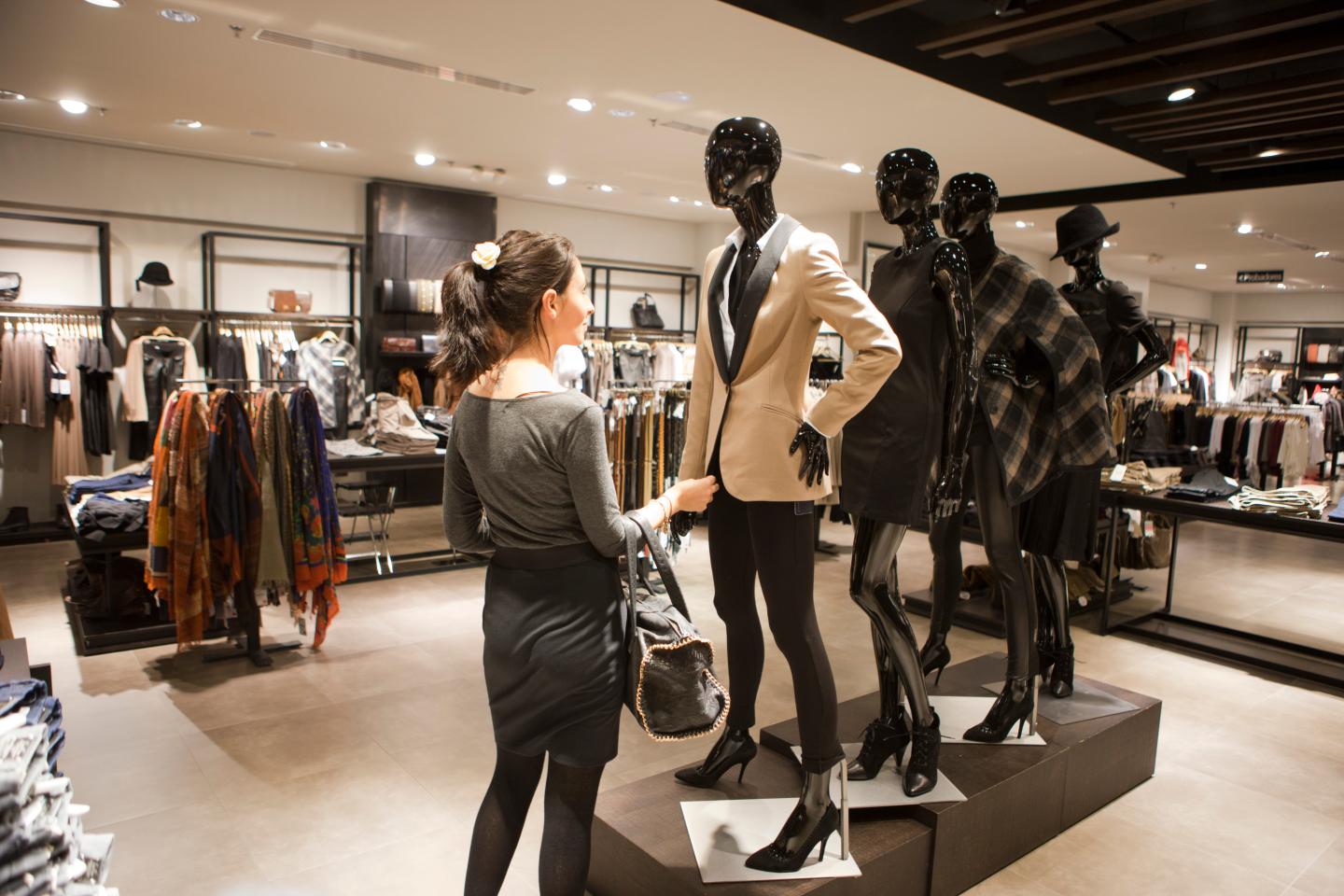
Zara Fashion Store
Young woman goes shopping fashion store Zara Inditex group's business in a shopping center in A Coruna Galicia, 17th November 2010. (Photo by Xurxo Lobato/Cover/Getty Images)Xurxo Lobato Cover/Getty Images

In Wednesday’s New York Times, fashion critic Vanessa Friedman announced the “end of the office dress code.” Interesting theory—but not an accurate one.

To research her article, Friedman paid a visit to the Fashion Institute of Technology’s “Uniformity” exhibit. But I can’t help but wonder: Did she visit any actual offices? Did she speak to any female lawyers, consultants, finance professionals, or executives about how they navigate the concept of a personal uniform? If she did, their on-the-ground insights are entirely absent from her article.

As part of a team that dwells in the trenches of women’s workwear—we help style thousands of professional women every single day—I’d like to offer a response. But more importantly, I’d like to deepen the cultural conversation about workwear so that we can, once and for all, shift the focus from women’s bodies to their brains, both in the office and beyond.

Enough about Mark Zuckerberg’s gray T-shirt

Like many before her, Friedman cites Mark Zuckerberg’s notorious gray t-shirt as proof that professionals are adopting a more casual uniform. Can we move on? Zuckerberg’s shirt of choice is irrelevant to most professional women, especially those working in industries like law and finance, where office environments tend to be more formal. Even women in Silicon Valley find that the casual attire of their male counterparts is not reflective of how they want to dress and be perceived. To wit: Sheryl Sandberg does not show up for work in a gray T-shirt and jeans, but rather, chooses an elegant uniform of tailored dresses and smart separates.

Increasingly flexible dress codes do not mean that women will automatically devolve into wearing T-shirts and sweatpants to work. Rather, they mean that women have the flexibility to wear what makes them look and feel good. Today’s workwear lies at the cross-section of comfort and elegance, but I don’t know a single woman who wonders, “What would Mark Zuckerberg wear?” when planning her outfit for the day. So let’s leave him out of the conversation.

Sign up: Click here to subscribe to the Broadsheet, Fortune’s daily newsletter on the world’s most powerful women.

When it comes to workwear, you can do away with rules, but there will always be codes.

Friedman references the recent outcry surrounding a British temp agency’s requirement that a female employee wear heels. Such rules have no place in the modern workplace, but there will always be norms—often unspoken—about what is appropriate in any given industry. Women learn these codes on the job by observing their superiors and peers. They certainly do not learn them from the fashion media, which regularly steers them wrong. Case in point: the simplistic refrain that “workplaces are becoming more casual.” Which workplaces? How casual? If you show up in a romper to your job at a fashion blog—no problem. But show up in a romper to argue your next case in court? Good luck to you.


The male perspective should not determine what women can and cannot wear at work—but neither should the fashion-industry perspective.

I hope we can all agree: The antiquated assumption that women need to dress a certain way in the workplace so as not to distract their male colleagues is outrageous. It’s 2016, and women can make their own style choices. That said, the fashion industry’s assumption that all women are dying to “express themselves” via clothing misses the mark.

Just as there are many women who dislike shopping, there are many women whose means of personal expression are not exclusively linked to their outward appearance. Friedman’s article implies that most women have a Lady Gaga-style meat dress hanging in the back of their closets that they are just dying to wear to work, if only it were acceptable. Not true. In fact, many women just want to dress simply and efficiently (the way men traditionally have) so that they can get on with their actual work. They have #BetterThingsToDo than agonize over their outfits or strive to keep up with industry-dictated trends. For them, true freedom is not about being able to wear whatever they want to work; it’s about being able to talk and think about something other than their clothes—especially at the office.

The uniform is dead. Long live the uniform!

Friedman begins her article by arguing that, “We live in a moment in which the notion of a uniform is increasingly out of fashion, at least when it comes to the implicit codes of professional and public life.” But she concludes with FIT curator Emma McClendon’s lengthy explanation of her own personal uniforms (she has a “museum uniform” and a “business uniform”). For McClendon, uniforms “fulfill a need to identify your place in the world.”

That may be, but she and Friedman miss a more crucial point: Uniforms also serve to create consistency, efficiency, and in some cases, anonymity. Dressing in a streamlined, predictable way turns the conversation away from your clothing.

Professional women already know all this. It’s the media that’s a step behind.

Friedman finishes her article by urging women “to live an examined life when it comes to your wardrobe and your workplace. Because these issues are only going to get more complicated.”

Most working women don’t need this reminder. They’re being examined from all angles on a daily basis. And many have successfully cracked the code, finding ways to look and feel polished at work without compromising their personal style. After all, looking “professional” and “like yourself” are not necessarily at odds. Why? Because women are professionals. It is not a costume. It is not an act. Sometimes that truth conflicts with with what the larger fashion industry will have you believe, because most fashion brands underserve—or completely ignore—the professional woman’s reality and her daily needs.

So maybe it is not workplaces or ourselves we should be examining. Maybe it is the fashion industry—including fashion media like the New York Times—and its refusal to recognize professional women as a significant segment of the style-interested community. Dressing for work wouldn’t be such a minefield if more brands would acknowledge that women actually have to dress for work. The professional woman may be too busy to shop, but she has money to spend. Perhaps the real revolution will occur when the fashion industry starts to acknowledge her as the force that she already is.

Tory Hoen is the founding editor of The M Dash and the editor-in-chief at professional womenswear brand MM.LaFleur. A version of this post previously appeared on The M Dash.


About the Author
By Tory Hoen
See full bioRight Arrow Button Icon

Latest in MPW

Finance
Lorem ipsum dolor sit amet, consectetur adipiscing elit, sed do eiusmod tempor incididunt ut labore et dolore magna aliqua. Ut enim ad minim veniam
By Fortune Editors
October 20, 2025
Finance
Lorem ipsum dolor sit amet, consectetur adipiscing elit, sed do eiusmod tempor incididunt ut labore et dolore magna aliqua. Ut enim ad minim veniam
By Fortune Editors
October 20, 2025
Finance
Lorem ipsum dolor sit amet, consectetur adipiscing elit, sed do eiusmod tempor incididunt ut labore et dolore magna aliqua. Ut enim ad minim veniam
By Fortune Editors
October 20, 2025
Finance
Lorem ipsum dolor sit amet, consectetur adipiscing elit, sed do eiusmod tempor incididunt ut labore et dolore magna aliqua. Ut enim ad minim veniam
By Fortune Editors
October 20, 2025
Finance
Lorem ipsum dolor sit amet, consectetur adipiscing elit, sed do eiusmod tempor incididunt ut labore et dolore magna aliqua. Ut enim ad minim veniam
By Fortune Editors
October 20, 2025
Finance
Lorem ipsum dolor sit amet, consectetur adipiscing elit, sed do eiusmod tempor incididunt ut labore et dolore magna aliqua. Ut enim ad minim veniam
By Fortune Editors
October 20, 2025

Most Popular

Finance
Lorem ipsum dolor sit amet, consectetur adipiscing elit, sed do eiusmod tempor incididunt ut labore et dolore magna aliqua. Ut enim ad minim veniam
By Fortune Editors
October 20, 2025
Finance
Lorem ipsum dolor sit amet, consectetur adipiscing elit, sed do eiusmod tempor incididunt ut labore et dolore magna aliqua. Ut enim ad minim veniam
By Fortune Editors
October 20, 2025
Finance
Lorem ipsum dolor sit amet, consectetur adipiscing elit, sed do eiusmod tempor incididunt ut labore et dolore magna aliqua. Ut enim ad minim veniam
By Fortune Editors
October 20, 2025
Finance
Lorem ipsum dolor sit amet, consectetur adipiscing elit, sed do eiusmod tempor incididunt ut labore et dolore magna aliqua. Ut enim ad minim veniam
By Fortune Editors
October 20, 2025
Finance
Lorem ipsum dolor sit amet, consectetur adipiscing elit, sed do eiusmod tempor incididunt ut labore et dolore magna aliqua. Ut enim ad minim veniam
By Fortune Editors
October 20, 2025
Finance
Lorem ipsum dolor sit amet, consectetur adipiscing elit, sed do eiusmod tempor incididunt ut labore et dolore magna aliqua. Ut enim ad minim veniam
By Fortune Editors
October 20, 2025
Fortune Secondary Logo
Rankings
  • 100 Best Companies
  • Fortune 500
  • Global 500
  • Fortune 500 Europe
  • Most Powerful Women
  • Future 50
  • World’s Most Admired Companies
  • See All Rankings
Sections
  • Finance
  • Fortune Crypto
  • Features
  • Leadership
  • Health
  • Commentary
  • Success
  • Retail
  • Mpw
  • Tech
  • Lifestyle
  • CEO Initiative
  • Asia
  • Politics
  • Conferences
  • Europe
  • Newsletters
  • Personal Finance
  • Environment
  • Magazine
  • Education
Customer Support
  • Frequently Asked Questions
  • Customer Service Portal
  • Privacy Policy
  • Terms Of Use
  • Single Issues For Purchase
  • International Print
Commercial Services
  • Advertising
  • Fortune Brand Studio
  • Fortune Analytics
  • Fortune Conferences
  • Business Development
  • Group Subscriptions
About Us
  • About Us
  • Editorial Calendar
  • Press Center
  • Work At Fortune
  • Diversity And Inclusion
  • Terms And Conditions
  • Site Map
  • About Us
  • Editorial Calendar
  • Press Center
  • Work At Fortune
  • Diversity And Inclusion
  • Terms And Conditions
  • Site Map
  • Facebook icon
  • Twitter icon
  • LinkedIn icon
  • Instagram icon
  • Pinterest icon

Latest in MPW

Karen Carter
C-SuiteFortune 500 Power Moves
Fortune 500 Power Moves: Which executives gained and lost power this week
By Fortune EditorsApril 17, 2026
1 day ago
She learned accounting before she was a teenager. Now she’s bringing Wall Street to the blockchain
NewslettersMPW Daily
She learned accounting before she was a teenager. Now she’s bringing Wall Street to the blockchain
By Sheryl EstradaApril 17, 2026
1 day ago
Emma Grede—the self-made millionaire behind the $5 billion Skims empire—says it all began with an audacious cold call to Kris Jenner: ‘The difference between me and someone else is, I made it happen’
SuccessHow I made my first million
Emma Grede—the self-made millionaire behind the $5 billion Skims empire—says it all began with an audacious cold call to Kris Jenner: ‘The difference between me and someone else is, I made it happen’
By Orianna Rosa RoyleApril 16, 2026
2 days ago
What Lena Dunham’s memoir tells us about TV’s double standard
NewslettersMPW Daily
What Lena Dunham’s memoir tells us about TV’s double standard
By Ellie AustinApril 16, 2026
2 days ago
fudd
CommentarySports
Azzi Fudd: how I learned to use NIL for transformation, not just transactions
By Azzi FuddApril 15, 2026
3 days ago
Billionaire philanthropist MacKenzie Scott
SuccessBillionaires
Billionaire philanthropist MacKenzie Scott has donated again—a week after gifting millions to a college, she’s just given $70 million to Meals on Wheels America
By Emma BurleighApril 13, 2026
5 days ago

Most Popular

'We should absolutely be concerned about non-college-educated men today': higher rents, living at home, falling out of the labor market
Economy
'We should absolutely be concerned about non-college-educated men today': higher rents, living at home, falling out of the labor market
By Catherina GioinoApril 18, 2026
12 hours ago
Pope Leo warned the world is in ‘big trouble’ if Elon Musk becomes the first trillionaire
Success
Pope Leo warned the world is in ‘big trouble’ if Elon Musk becomes the first trillionaire
By Preston ForeApril 17, 2026
1 day ago
The power has swung back to employers—and workers are paying for it in benefits, flexibility, and leverage
Workplace Culture
The power has swung back to employers—and workers are paying for it in benefits, flexibility, and leverage
By Marco Quiroz-GutierrezApril 17, 2026
1 day ago
Older millennials are starting to act like boomers in the housing market—and pulling away from the pack
Real Estate
Older millennials are starting to act like boomers in the housing market—and pulling away from the pack
By Nick LichtenbergApril 17, 2026
1 day ago
Iran has reopened the Strait of Hormuz—but experts say it now holds a card that works ‘almost like a nuclear deterrent’
Energy
Iran has reopened the Strait of Hormuz—but experts say it now holds a card that works ‘almost like a nuclear deterrent’
By Eva RoytburgApril 17, 2026
1 day ago
Current price of oil as of April 17, 2026
Personal Finance
Current price of oil as of April 17, 2026
By Joseph HostetlerApril 17, 2026
1 day ago

© 2026 Fortune Media IP Limited. All Rights Reserved. Use of this site constitutes acceptance of our Terms of Use and Privacy Policy | CA Notice at Collection and Privacy Notice | Do Not Sell/Share My Personal Information
FORTUNE is a trademark of Fortune Media IP Limited, registered in the U.S. and other countries. FORTUNE may receive compensation for some links to products and services on this website. Offers may be subject to change without notice.