• Home
  • Latest
  • Fortune 500
  • Finance
  • Tech
  • Leadership
  • Lifestyle
  • Rankings
  • Multimedia
Commentary

Here’s Why Everyone Overreacted to Facebook’s ‘Liberal Bias’ Controversy

By
Clay Calvert
Clay Calvert
Down Arrow Button Icon
By
Clay Calvert
Clay Calvert
Down Arrow Button Icon
May 24, 2016, 1:33 PM ET
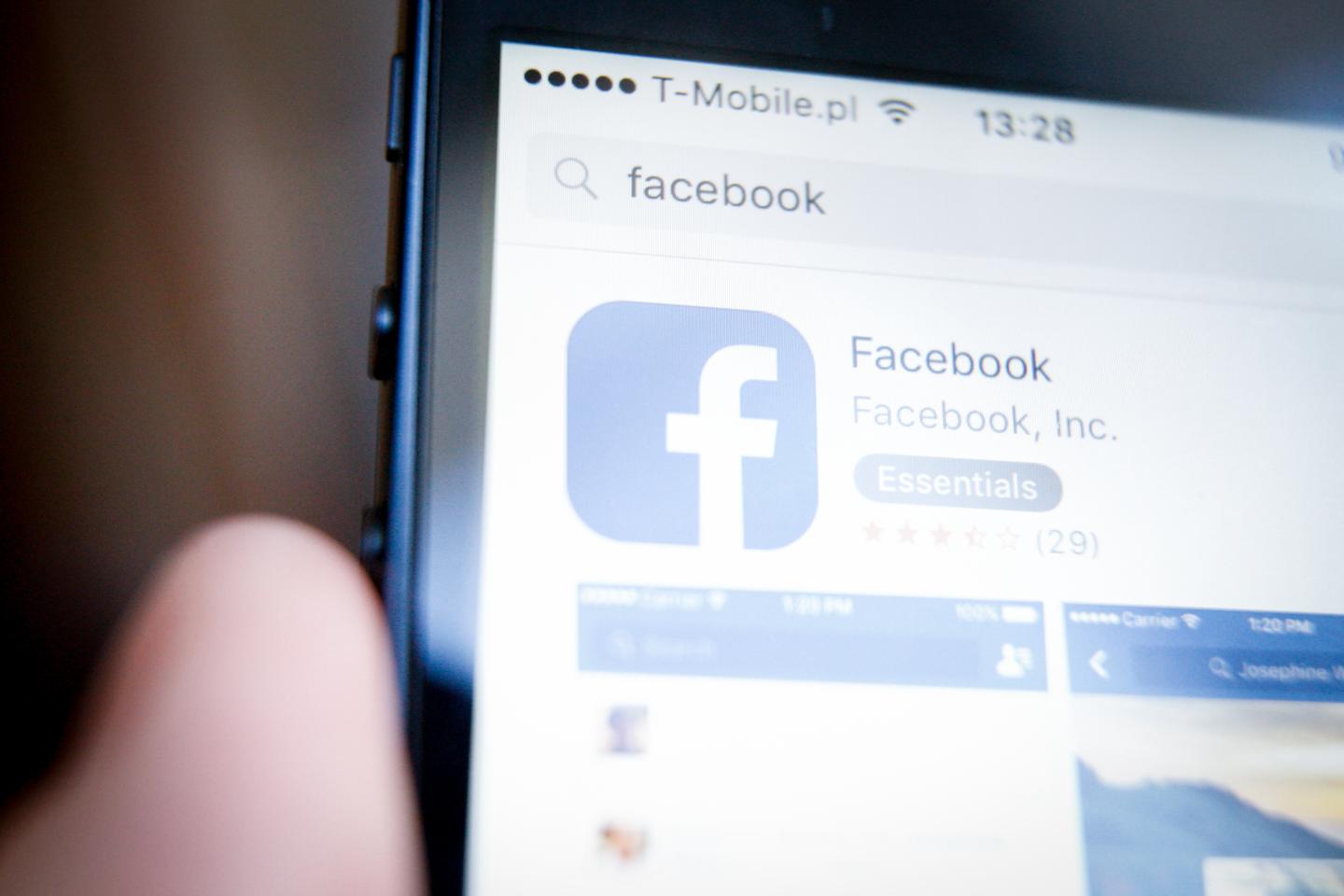
An Illustration of Facebook logo, on May 9, 2016. Facebook won a court case in China against Zhongshan Pearl River Drink Factory for using the name face book. The result of the case is said to show that China is easing its attitude towards the social network which is officially banned in the country. (Photo by Jaap Arriens/NurPhoto via Getty Images)
An Illustration of Facebook logo, on May 9, 2016. Facebook won a court case in China against Zhongshan Pearl River Drink Factory for using the name face book. The result of the case is said to show that China is easing its attitude towards the social network which is officially banned in the country. (Photo by Jaap Arriens/NurPhoto via Getty Images)Photograph by NurPhoto via Getty Images

Facebook has announced changes to the way it runs its Trending Topics feed, following an internal investigation that looked into political bias at the social networking site. While the company said it found no evidence of bias after reports accusing Facebook of routinely suppressing conservative news from its trending news section, Facebook said there will be more training for staff and the feed will no longer depend on a list of news organizations to validate subjects.

Facebook (FB) may be closing the chapter on its liberal bias controversy, but it’s worth taking a look at why so many were upset in the first place. After all, Facebook is a business operation first and foremost – one that thrives on the number of users it has and the data it collects from, not from serving some larger or more noble greater good, its own rhetoric notwithstanding. Were we really so naïve as to think that Facebook was somehow miraculously a bias-free news source? But more on that later. For now, here’s why the controversy, perhaps, some people seem to hit so many nerves.

First, a key concern for many is transparency or the lack thereof. As Emily Bell wrote in March for Columbia Journalism Review, “social media and platform companies took over what publishers couldn’t have built even if they wanted to. Now the news is filtered through algorithms and platforms which are opaque and unpredictable.” And then there is the mysterious human role – the one Facebook’s news curators play in shaping those algorithms and culling through the output to determine what trends.


Second, others fear the vast power and immense size of Facebook and argue that the social media behemoth should be regulated more like a common carrier, akin to telephone companies that cannot censor the messages. Earlier this month, U.S. Sen. John Thune (R – S.D.), the chair of the Senate Committee on Commerce, Science and Transportation, vaguely intimated as much in a letter to Zuckerberg, writing that “with over a billion daily active users on average, Facebook has enormous influence on users’ perceptions of current events, including political perspectives.” Thune demanded that Zuckerberg answer five questions regarding how it chooses trending topics, but on Monday Facebook’s general counsel responded with a lengthy letter stating that the company’s “investigation revealed no systematic political bias” and that “rates of ‘boosting,’ ‘blacklisting,’ and accepting topics have been virtually identical for liberal and conservative topics.”

For all the handwringing over Facebook’s trending topics, we really just need to get over it. Objectivity in journalism is a myth and always has been. Subjective decisions are made everyday in traditional newsrooms across the country about which stories to cover, how many inches those stories merit, where those stories are placed – on the front page or buried on A14 – and who gets to write them.

The journalists chosen to write them, in turn, pick the sources they seek out for comments and quotations – typically one or two from the left and one or two from the right, each with predictable opinions, to create the illusion of balance – and decide whose quotes get more play and whose gets shorter shrift. Journalists choose the very words that make up a story, ordering and arranging them. And despite the rituals of objectivity, as Gaye Tuchman aptly called them back in 1972, that journalists engage in, the end product is a subjective creation.

So why did some somehow expect Facebook to be any different? Because machines using algorithms were supposedly more neutral than humans in identifying trends? Humans created those algorithms, and it is natural for Facebook, as a business, to want as many people to stay tuned – to use an antiquated legacy media phrase – as possible to its site. Did we truly not expect to find a man behind the curtain at the great and powerful Facebook, pulling the strings of the Oz of the news business? Gatekeepers – humans and/or machines – have forever been involved in the flow of information to the public.

The profound irony over the trending topics fracas is that, in the Internet era, we have so many different choices and options from which to obtain news and yet, for the moment, we are so obsessed with and pre-occupied by one social network. The U.S. used to have only three major television networks – and just two before ABC came along – and one, two or maybe three local newspapers to rely on for news. Add to that a couple of powerful weekly news magazines that came to the mailbox and that was really about it.

Rather than call for government inquiries about how Facebook chooses what topics trend and thereby creep closer to a First Amendment fight, people who find bias in Facebook’s choices can and should seek out their news from other sources. We cannot, after all, legislate bias out of the news business.

And there’s another reason to, in Frozen-like fashion, let it go. Do we really want or need social networks telling us what is important and what is trending? The very notion of “trending” itself is troublesome, as it reflects much larger problems with news delivery in this country. It mirrors, albeit on much more rapid timetable, the short news attention span we have and the exceedingly quick news cycles cable channels provide in an effort to keep eyeballs. An issue arises, it garners attention and then it rapidly fades away. The word “trending” suggests anything but a sustained and deliberate discussion of important issues; instead, it embodies fleeting ephemeralness of the kind that is not needed, especially during this election year.

We need to acknowledge that bias – be it by man or machine – is inherent in news and, finally, we must seek out as many different and diverse sources as possible to learn what’s going on in the world and to find out what truly matters to us, not to a news curator or an algorithm.

Clay Calvert is director of the Marion B. Brechner First Amendment Project at the University of Florida.

About the Author
By Clay Calvert
See full bioRight Arrow Button Icon

Latest in Commentary

Finance
Lorem ipsum dolor sit amet, consectetur adipiscing elit, sed do eiusmod tempor incididunt ut labore et dolore magna aliqua. Ut enim ad minim veniam
By Fortune Editors
October 20, 2025
Finance
Lorem ipsum dolor sit amet, consectetur adipiscing elit, sed do eiusmod tempor incididunt ut labore et dolore magna aliqua. Ut enim ad minim veniam
By Fortune Editors
October 20, 2025
Finance
Lorem ipsum dolor sit amet, consectetur adipiscing elit, sed do eiusmod tempor incididunt ut labore et dolore magna aliqua. Ut enim ad minim veniam
By Fortune Editors
October 20, 2025
Finance
Lorem ipsum dolor sit amet, consectetur adipiscing elit, sed do eiusmod tempor incididunt ut labore et dolore magna aliqua. Ut enim ad minim veniam
By Fortune Editors
October 20, 2025
Finance
Lorem ipsum dolor sit amet, consectetur adipiscing elit, sed do eiusmod tempor incididunt ut labore et dolore magna aliqua. Ut enim ad minim veniam
By Fortune Editors
October 20, 2025
Finance
Lorem ipsum dolor sit amet, consectetur adipiscing elit, sed do eiusmod tempor incididunt ut labore et dolore magna aliqua. Ut enim ad minim veniam
By Fortune Editors
October 20, 2025

Most Popular

Finance
Lorem ipsum dolor sit amet, consectetur adipiscing elit, sed do eiusmod tempor incididunt ut labore et dolore magna aliqua. Ut enim ad minim veniam
By Fortune Editors
October 20, 2025
Finance
Lorem ipsum dolor sit amet, consectetur adipiscing elit, sed do eiusmod tempor incididunt ut labore et dolore magna aliqua. Ut enim ad minim veniam
By Fortune Editors
October 20, 2025
Finance
Lorem ipsum dolor sit amet, consectetur adipiscing elit, sed do eiusmod tempor incididunt ut labore et dolore magna aliqua. Ut enim ad minim veniam
By Fortune Editors
October 20, 2025
Finance
Lorem ipsum dolor sit amet, consectetur adipiscing elit, sed do eiusmod tempor incididunt ut labore et dolore magna aliqua. Ut enim ad minim veniam
By Fortune Editors
October 20, 2025
Finance
Lorem ipsum dolor sit amet, consectetur adipiscing elit, sed do eiusmod tempor incididunt ut labore et dolore magna aliqua. Ut enim ad minim veniam
By Fortune Editors
October 20, 2025
Finance
Lorem ipsum dolor sit amet, consectetur adipiscing elit, sed do eiusmod tempor incididunt ut labore et dolore magna aliqua. Ut enim ad minim veniam
By Fortune Editors
October 20, 2025
Fortune Secondary Logo
Rankings
  • 100 Best Companies
  • Fortune 500
  • Global 500
  • Fortune 500 Europe
  • Most Powerful Women
  • World's Most Admired Companies
  • See All Rankings
  • Lists Calendar
Sections
  • Finance
  • Fortune Crypto
  • Features
  • Leadership
  • Health
  • Commentary
  • Success
  • Retail
  • Mpw
  • Tech
  • Lifestyle
  • CEO Initiative
  • Asia
  • Politics
  • Conferences
  • Europe
  • Newsletters
  • Personal Finance
  • Environment
  • Magazine
  • Education
Customer Support
  • Frequently Asked Questions
  • Customer Service Portal
  • Privacy Policy
  • Terms Of Use
  • Single Issues For Purchase
  • International Print
Commercial Services
  • Advertising
  • Fortune Brand Studio
  • Fortune Analytics
  • Fortune Conferences
  • Business Development
  • Group Subscriptions
About Us
  • About Us
  • Press Center
  • Work At Fortune
  • Terms And Conditions
  • Site Map
  • About Us
  • Press Center
  • Work At Fortune
  • Terms And Conditions
  • Site Map
  • Facebook icon
  • Twitter icon
  • LinkedIn icon
  • Instagram icon
  • Pinterest icon

Latest in Commentary

Can the ‘blue economy’ deliver on its promise? Investors are starting see the ocean as an asset worth protecting
CommentaryConservation
Can the ‘blue economy’ deliver on its promise? Investors are starting see the ocean as an asset worth protecting
By Natalie Sum Yue ChungMay 2, 2026
10 hours ago
old
Commentaryaffordability
The American household just took an 81% margin cut. Wall Street hasn’t priced it in
By Katica RoyMay 2, 2026
22 hours ago
dario
CommentaryAnthropic
Anthropic’s most powerful AI model just exposed a crisis in corporate governance. Here’s the framework every CEO needs.
By Jeffrey Sonnenfeld, Stephen Henriques, Dan Kent and Holden LeeMay 2, 2026
22 hours ago
mackenzie
Commentaryphilanthropy
Stop donating to Harvard and the Ivy League. There’s a better option that MacKenzie Scott already figured out
By Ed Smith-LewisMay 2, 2026
1 day ago
drinks
CommentaryFood and drink
We need a new way of thinking about drinking: Time to replace the ‘standard drink’ with advice people can actually use
By Justin KissingerMay 2, 2026
1 day ago
pakistan
CommentaryIran
Asia is being hammered by the Iran conflict’s economic fallout. The U.S. has the playbook to help—and every reason to
By Wendy Cutler and Jane MellsopMay 2, 2026
1 day ago

Most Popular

Scott Bessent on financial literacy: 'it drives me crazy' to see young men in blue-collar construction jobs playing the lottery
Personal Finance
Scott Bessent on financial literacy: 'it drives me crazy' to see young men in blue-collar construction jobs playing the lottery
By Fatima Hussein and The Associated PressMay 1, 2026
2 days ago
Gen Z is rebelling against the economy with ‘disillusionomics,’ tackling near 6-figure debt by turning life into a giant list of income streams
Economy
Gen Z is rebelling against the economy with ‘disillusionomics,’ tackling near 6-figure debt by turning life into a giant list of income streams
By Jacqueline MunisMay 2, 2026
19 hours ago
Stop donating to Harvard and the Ivy League. There's a better option that MacKenzie Scott already figured out
Commentary
Stop donating to Harvard and the Ivy League. There's a better option that MacKenzie Scott already figured out
By Ed Smith-LewisMay 2, 2026
1 day ago
The American household just took an 81% margin cut. Wall Street hasn’t priced it in
Commentary
The American household just took an 81% margin cut. Wall Street hasn’t priced it in
By Katica RoyMay 2, 2026
22 hours ago
A Chick-fil-A worker got fired and then showed up behind the register to allegedly refund himself over $80,000 in mac and cheese
Law
A Chick-fil-A worker got fired and then showed up behind the register to allegedly refund himself over $80,000 in mac and cheese
By Catherina GioinoMay 1, 2026
2 days ago
Current price of oil as of May 1, 2026
Personal Finance
Current price of oil as of May 1, 2026
By Joseph HostetlerMay 1, 2026
2 days ago

© 2026 Fortune Media IP Limited. All Rights Reserved. Use of this site constitutes acceptance of our Terms of Use and Privacy Policy | CA Notice at Collection and Privacy Notice | Do Not Sell/Share My Personal Information
FORTUNE is a trademark of Fortune Media IP Limited, registered in the U.S. and other countries. FORTUNE may receive compensation for some links to products and services on this website. Offers may be subject to change without notice.