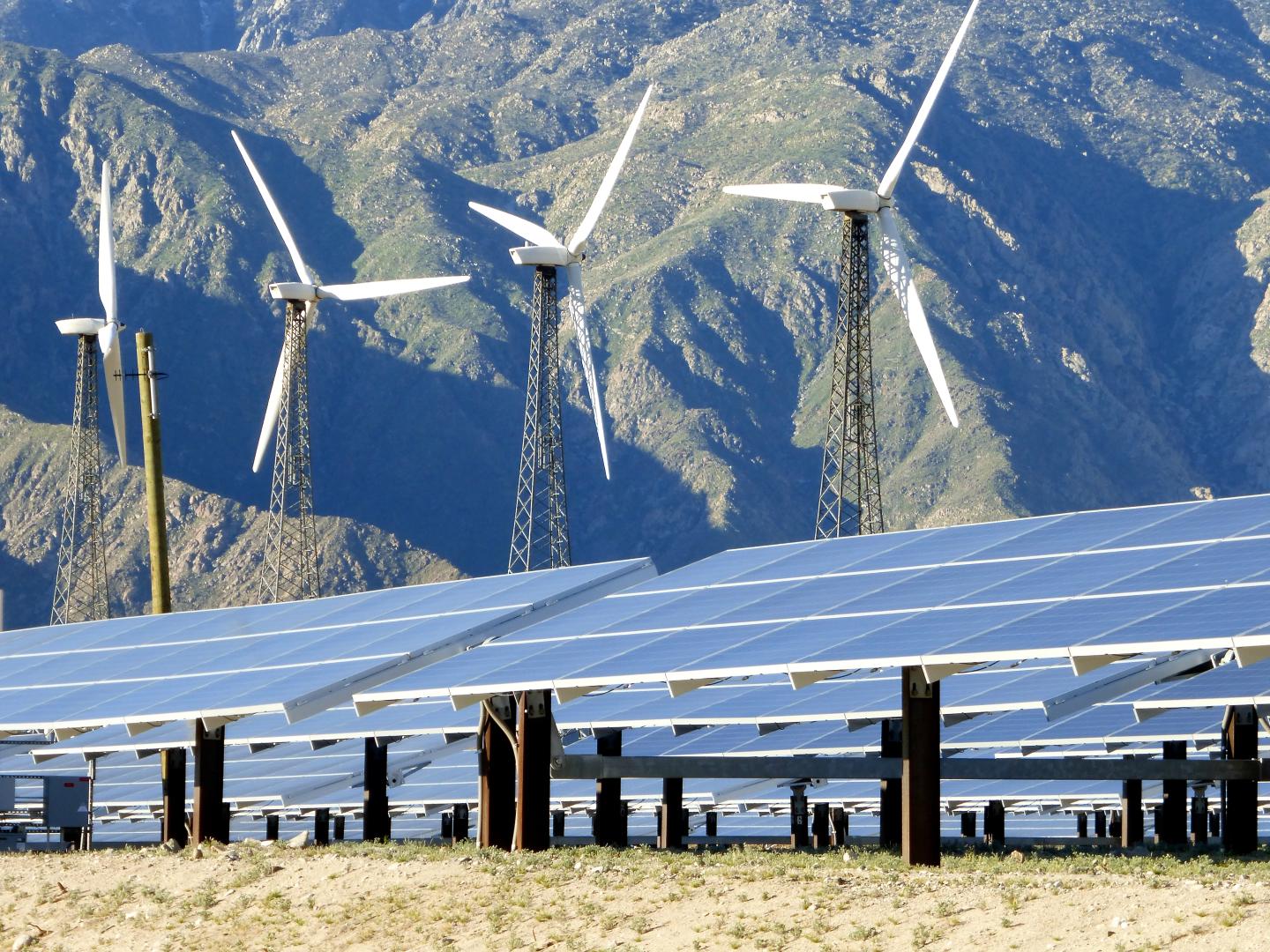
Dynamic. Open. Fast. Innovative. These are not words we typically associate with the energy industry. But amid the noisy debate between climate change activists and deniers, supporters of fossil fuels and renewables, most have overlooked profound changes that are creating an energy future that is more affordable, resilient, customer-oriented–and cleaner.
Energy is transitioning from large, centralized, monolithic systems that take years to build, last for decades, and seem immune to innovation to smaller, distributed, networked systems that can be built in weeks or months and repurposed as needed.
The benefits of this transition will be significant–economically, environmentally, and socially–and it doesn’t require major government subsidies or mandates to succeed, just sound enabling policies, sufficient investment, and broad deployment.
The energy industry might seem to be the last to embrace technology systems that are flexible, nimble and modular. But the change is already all around us. Here are five keys to the new energy future.
1. Constant iteration. Due to the fracking revolution, for example, oil and gas super majors now compete with hundreds of much smaller players that can ratchet production up and down rapidly in response to global price swings. Software is speeding up where drilling occurs, and technology advances occur in real-time as these deft competitors iterate to eke out profits.
GE’s (GE) latest combined-cycle natural gas turbines are another example where smaller, more flexible systems are winning. Each turbine can spin up and down more rapidly, and generate thousands of data points that allow GE to continuously improve performance and increase the pace of upgrades.
As products become smaller, smarter, and faster, they are also becoming more modular, allowing continuous improvements to parts of a system without compromising the functionality of the greater whole. Even cars are doing overnight software updates to improve their capabilities.
2. Collaborative innovation. Disaggregating huge systems into small, high-volume components enables a larger, more diverse and global set of inventors, scientists, and engineers to move these technologies forward. Add in computer modeling, simulation, and 3D printing and these innovators can much more rapidly go from concept to working prototype.
One can see the benefits in the manufacturing of wind mills, solar systems, batteries, and electric vehicles. As the volume of products built and number of component manufacturers grows, so do the speed of iteration and the quality of inputs, bringing prices down and improving performance and customer satisfaction.
For more about energy, watch:
3. Distributed ownership. In this new energy world, asset ownership will also be distributed, as businesses and individuals choose which technologies to own (or lease or share). This system will be more resilient–relative to natural disasters, cyber attacks, or financial stresses–because of its modularity and its ability to morph rapidly. The center of power will shift from ownership of giant assets toward control of the energy cloud that sits above the distributed system and optimal coordination of its assets. The winner, as a Berkshire Hathaway Energy executive has said, will be “the company that becomes Match.com for electrons.” A similar approach has driven the success of information-driven, asset-light platform businesses such as Google, Airbnb, and Uber.
4. Seamlessly orchestrated. Today’s energy paradigm requires us to make dozens of daily decisions about energy consumption, and we expect our suppliers to meet our shifting demand in a 99.9999% reliable fashion. To that we have added wind and solar, intermittent sources that have their own mind about when and how much energy to produce. Early computing and communication technologies faced similar problems regarding capacity and bottlenecking, yet today we create previously unthinkable quantities of data and instantly route it globally where it’s needed.
Our energy system is headed the same way. While distributed energy sources such as rooftop solar have been seen a potential threat to centralized utilities, the real breakthrough is the emergence of a cloud-computing equivalent for the “Internet of electrons” that enables decentralized resources to act dynamically in concert, regardless of who owns them. The ability to sync all energy producing and consuming devices in real-time will completely change our thinking about distributed versus centralized power, allowing our utilities–or new energy service providers–to seamlessly orchestrate the flow of electrons from where they are generated and stored to where they can be optimally used in terms of efficiency, pricing, and more.
5. Quicker impact. Moving from an era of centralized energy scarcity to distributed and dynamic energy abundance will create a better energy system. By empowering consumers, enabling rapid innovation, and reducing cost, this new energy system is the only one that can evolve quickly enough to help us meet our climate mitigation goals.
Much as we couldn’t possibly envision the fast pace and level of impact that cell phones have had in every part of the world, so too do we today struggle to imagine the future of energy. Soon enough, the typical image conjured by the word energy will be not a smoke stack or an oil rig, but a solar-powered, battery-enabled micro-grid powering homes, schools, and electric vehicles in the middle of India or Africa.
Stephan Dolezalek and Andrew Shapiro, long-time clean energy investors and advisors, are founders of Resourcient, which promotes scalable investment in resource efficient businesses.