• Home
  • Latest
  • Fortune 500
  • Finance
  • Tech
  • Leadership
  • Lifestyle
  • Rankings
  • Multimedia
FinanceInvesting

Here’s Why the Most Talked-About Way to Invest Right Now Could Be a Huge Mistake

By
Larry Light
Larry Light
Down Arrow Button Icon
By
Larry Light
Larry Light
Down Arrow Button Icon
March 5, 2016, 12:07 PM ET
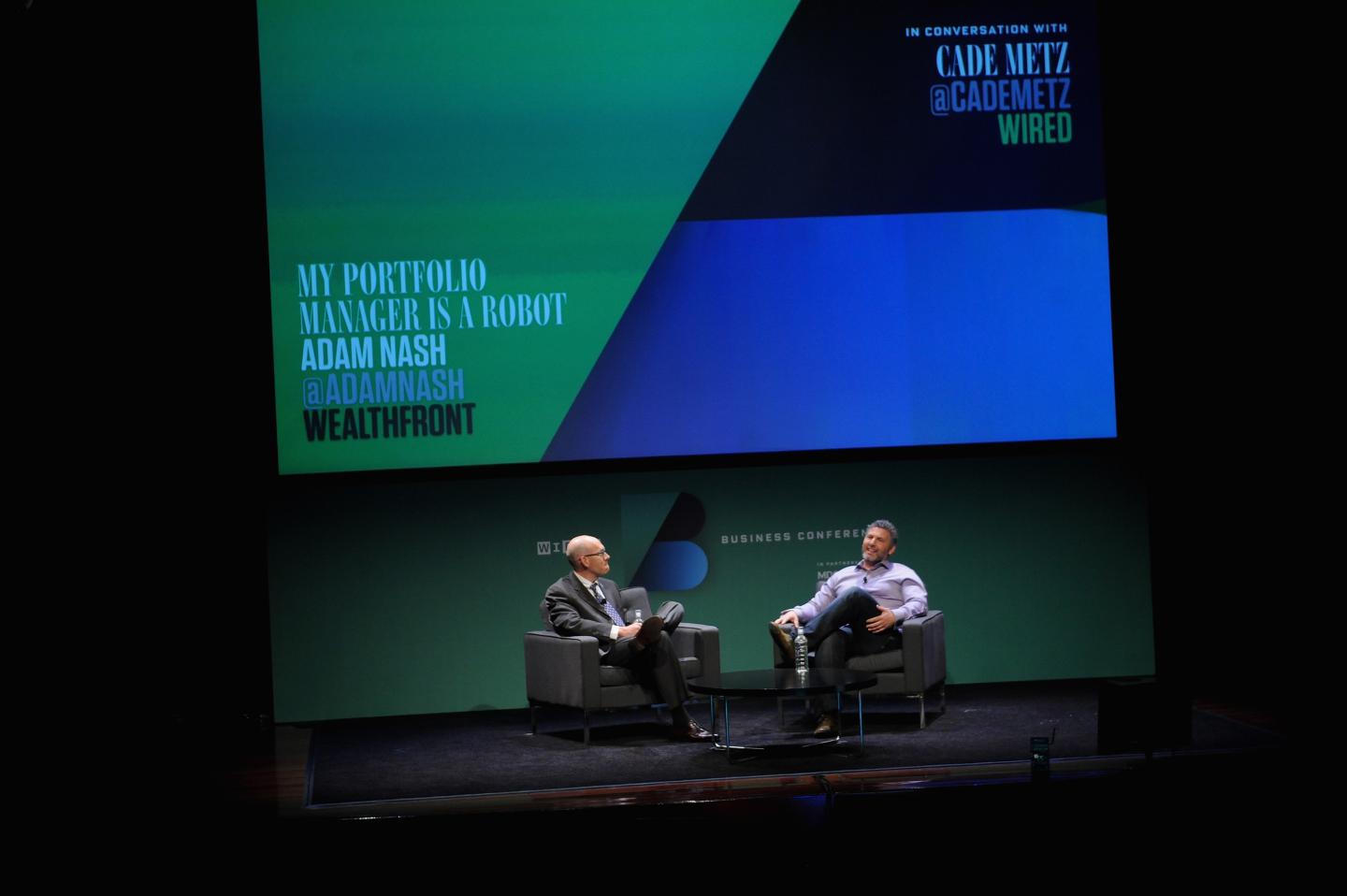
WIRED Business Conference 2015
Photograph by Brad Barket — Getty Images for WIRED

In 2008, the last time the S&P 500 plunged, losing 37% of its value, people bailed out of stocks. The result: Many of these market evacuees weren’t invested come March 2009, when stocks began a long rally that erased those losses and went on to hit record levels. Recently, the market has been gyrating again, beginning 2016 with the worst start of a year ever, only to rebound, regaining nearly all of this year’s losses in the past few weeks.

The question is whether investors were any better at keeping their cool this time around, or were they worse. Either way, the answer might have something to do with the type of adviser more and more people are hiring to manage their money these days—robots. Indeed, the frustration with their experience in the market—poor performance on the way down and poor advice on the way up—has led more people to ditch their financial advisers for low-cost robo-advisers services, which are not actual robots but firms that say they can better manage your investment portfolio using computers.

But the question is whether these computer-driven firms will be better at keeping investors away from trouble spots and in the market when it rebounds than actual human financial advisers were. Investors’ relationships with the automated services tend to be impersonal. After all, it’s done on a screen. While some robos do provide 800 numbers with a few actual certified financial planners on the other end, the lines will be jammed during a market rout.

Nonetheless, Robo-advisers are all the rage. The current narrative suggests that they will decimate entrenched financial advisers. Riding a torrent of favorable publicity, they come across as noble rebels fighting for individuals against the predations of greedy and arrogant Wall Street advisory establishment. The first of these digital advisors appeared about 10 years ago. The financial crisis, when so many stock-picking advisors lost big money for clients, boosted the robos’ standing. Led by rapidly growing companies like Wealthfront, Betterment, and FutureAdviser, they today manage some $53 billion in assets, according to Aite Group researchers. And new research suggests that these firms are nabbing not just Millennials, but increasingly older, and high-net-worth individuals. Consulting firm A.T. Kearney predicts the newer services will surge, managing as much as $2.2 trillion by 2020.

The robos do have some powerful advantages. They beat flesh-and-blood advisors on price, often charging as little as 0.25% yearly to run your money. That’s a bargain compared to a legacy asset manager, who charges 1% of assets. They don’t peddle dreck investments, which generate fat commissions for an old-school brokerage. And you can access them from the comfort of your home, without having to trek to some office.

You need only fill out an online questionnaire, asking you about things like your age and risk tolerance. Then an algorithm chews on the information, produces a list of investments and shows how much money will be plugged into each. Usually, the investments are in low-cost exchange-traded funds that track market indexes, such as the Standard & Poor’s 500.

Trouble is, there are also some seldom-recognized downsides to robo-advisers:

The advice tends to be cookie-cutter. The investment palette you receive may make sense in terms of your stomach for risk and your age group. (For instance, a Millennial’s portfolio should be more loaded with stocks, which statistically do better at creating wealth over time, than a baby boomer’s, who has fewer years to recover from a bear market.) But that’s not enough. Too seldom, the robos rely on what your situation is now, not what your long-term goals are. How will you pay for your kid’s college? Will you be able to buy that vacation home? When should you retire?

Plus, the robos’ focus on index ETFs. That’s not a bad strategy for most of your money. The odds of anyone outpacing the S&P 500 or any other market benchmark are small. It happens about a third of the time for actively managed mutual funds. But there are a few money managers who have done it more than others, and some people have grown increasingly worried that index funds, after years of inflows, could be creating their own bubble. You won’t hear that from a robo-adviser.

The robos don’t cover needs beyond investing. Good luck trying to find out how much insurance you should have. Or the smartest method to minimize taxes. Or the best way to set up your estate. Or how to re-arrange your life once you retire. While you may rack up solid investment returns with a robo-adviser, if you hit someone in a car accident, you may end up depleting your nest egg to pay for the victim’s injuries and lost income.

Personal insights go missing in the robo experience. It’s impossible for an algorithm to know your every need. Ditto for someone on the other end of a toll-free number, who changes every time you call and lacks a personal relationship with you.

Let’s say you and your spouse are on the brink of divorce. A real-life financial adviser can walk you both through the financial realities a split would bring. That’s because the adviser knows your entire background: your child’s learning disability, your aging parents’ care needs, and your underwater mortgage.

But the larger question is whether robos will render traditional advisers obsolete. In the near term, that would be a tall order. Of the $19 trillion in assets under advisers’ management, a mere 0.2% belongs to the robos, according to Aite Group.

Further out, though, prospects for automated investing seem to be bright. Baby boomers heavily populate the ranks of legacy advisors and their clients. But Millennials, who now outnumber boomers, grew up on technology. The robos’ approach resonates with them, and they are, after all, the future.

That’s the argument of Adam Nash, 40, chief executive of Wealthfront, which has amassed $3 billion in assets in just four years of existence. His organization’s computers watch over client investments around the clock. They automatically perform such tasks as tax-loss harvesting, where Wealthfront sells declining investments at a loss, and uses them to offset taxable gains elsewhere in a portfolio. But that’s something that traditional advisers and actively managed mutual funds have long done.

Thanks to inexorable demographics, a sea change likely is coming, one that will eradicate a lot of advisers, and not just the entrenched players. So says Ric Edelman, 57, who founded his Edelman Financial Services in 1988. Catering to fellow baby boomers, he built it into a 42-branch powerhouse with $14.5 billion in managed assets. “In 10 years, half of the nation’s financial advisers will be gone,” he predicts. But he also predicts the next bear market will wipe out the current crop of robos, too, when frightened customers flee and their venture capital funding dries up. Investors often get excited about the newest investment fad in up markets, only to be disappointed when it inevitably leads to losses when the market drops.

What’s more, it’s logical that as Millennials age they will want face-to-face advice. As their financial lives grow more complex and their responsibilities multiply, they will “graduate to more traditional financial planners,” predicts Michael Kitces, a noted advice industry guru.

In the meantime, the appeal of automated investing is strong enough that long-established companies—Fidelity, Charles Schwab, and Vanguard—have started their own online efforts. They have the heft to give the robo start-ups some trouble.

About the Author
By Larry Light
See full bioRight Arrow Button Icon

Latest in Finance

Finance
Lorem ipsum dolor sit amet, consectetur adipiscing elit, sed do eiusmod tempor incididunt ut labore et dolore magna aliqua. Ut enim ad minim veniam
By Fortune Editors
October 20, 2025
Finance
Lorem ipsum dolor sit amet, consectetur adipiscing elit, sed do eiusmod tempor incididunt ut labore et dolore magna aliqua. Ut enim ad minim veniam
By Fortune Editors
October 20, 2025
Finance
Lorem ipsum dolor sit amet, consectetur adipiscing elit, sed do eiusmod tempor incididunt ut labore et dolore magna aliqua. Ut enim ad minim veniam
By Fortune Editors
October 20, 2025
Finance
Lorem ipsum dolor sit amet, consectetur adipiscing elit, sed do eiusmod tempor incididunt ut labore et dolore magna aliqua. Ut enim ad minim veniam
By Fortune Editors
October 20, 2025
Finance
Lorem ipsum dolor sit amet, consectetur adipiscing elit, sed do eiusmod tempor incididunt ut labore et dolore magna aliqua. Ut enim ad minim veniam
By Fortune Editors
October 20, 2025
Finance
Lorem ipsum dolor sit amet, consectetur adipiscing elit, sed do eiusmod tempor incididunt ut labore et dolore magna aliqua. Ut enim ad minim veniam
By Fortune Editors
October 20, 2025

Most Popular

Finance
Lorem ipsum dolor sit amet, consectetur adipiscing elit, sed do eiusmod tempor incididunt ut labore et dolore magna aliqua. Ut enim ad minim veniam
By Fortune Editors
October 20, 2025
Finance
Lorem ipsum dolor sit amet, consectetur adipiscing elit, sed do eiusmod tempor incididunt ut labore et dolore magna aliqua. Ut enim ad minim veniam
By Fortune Editors
October 20, 2025
Finance
Lorem ipsum dolor sit amet, consectetur adipiscing elit, sed do eiusmod tempor incididunt ut labore et dolore magna aliqua. Ut enim ad minim veniam
By Fortune Editors
October 20, 2025
Finance
Lorem ipsum dolor sit amet, consectetur adipiscing elit, sed do eiusmod tempor incididunt ut labore et dolore magna aliqua. Ut enim ad minim veniam
By Fortune Editors
October 20, 2025
Finance
Lorem ipsum dolor sit amet, consectetur adipiscing elit, sed do eiusmod tempor incididunt ut labore et dolore magna aliqua. Ut enim ad minim veniam
By Fortune Editors
October 20, 2025
Finance
Lorem ipsum dolor sit amet, consectetur adipiscing elit, sed do eiusmod tempor incididunt ut labore et dolore magna aliqua. Ut enim ad minim veniam
By Fortune Editors
October 20, 2025
Fortune Secondary Logo
Rankings
  • 100 Best Companies
  • Fortune 500
  • Global 500
  • Fortune 500 Europe
  • Most Powerful Women
  • World's Most Admired Companies
  • See All Rankings
  • Lists Calendar
Sections
  • Finance
  • Fortune Crypto
  • Features
  • Leadership
  • Health
  • Commentary
  • Success
  • Retail
  • Mpw
  • Tech
  • Lifestyle
  • CEO Initiative
  • Asia
  • Politics
  • Conferences
  • Europe
  • Newsletters
  • Personal Finance
  • Environment
  • Magazine
  • Education
Customer Support
  • Frequently Asked Questions
  • Customer Service Portal
  • Privacy Policy
  • Terms Of Use
  • Single Issues For Purchase
  • International Print
Commercial Services
  • Advertising
  • Fortune Brand Studio
  • Fortune Analytics
  • Fortune Conferences
  • Business Development
  • Group Subscriptions
About Us
  • About Us
  • Press Center
  • Work At Fortune
  • Terms And Conditions
  • Site Map
  • About Us
  • Press Center
  • Work At Fortune
  • Terms And Conditions
  • Site Map
  • Facebook icon
  • Twitter icon
  • LinkedIn icon
  • Instagram icon
  • Pinterest icon

Latest in Finance

ExxonMobil CEO Darren Woods, far right, listens as U.S. President Donald Trump,left, speaks during a meeting with oil company executives in the East Room of the White House on Jan. 9. President Trump is aiming to convince oil executives to support his plans in Venezuela, a country whose energy resources he says he expects to control for years to come. US forces seized Venezuelan president Nicolas Maduro in a sweeping military operation on January 3, with Trump making no secret that control of Venezuela's oil was at the heart of his actions.
EnergyIran
Exxon Mobil CEO sees ‘more to come’ on price spikes from Iran war as Exxon, Chevron beat on earnings despite plunging profits
By Jordan BlumMay 1, 2026
59 minutes ago
trump
PoliticsIran
Trump on Iran: ‘They want to make a deal, I’m not satisfied with it, so we’ll see what happens’
By Toqa Ezzidin, Munir Ahmed, Collin Binkley and The Associated PressMay 1, 2026
3 hours ago
infantino
North AmericaWorld Cup
Fifa’s Infantino predicted sellouts and ‘1,000 years of World Cups at once,’ but fans aren’t biting
By James Robson and The Associated PressMay 1, 2026
3 hours ago
cox
C-SuiteWealth
Billionaires have a problem money can’t solve: They don’t know how to talk to their kids
By Nick LichtenbergMay 1, 2026
3 hours ago
trump
EconomyTariffs
Trump says he’ll hike EU auto tariffs to 25%, jolting a world economy that really didn’t need it
By Josh Boak and The Associated PressMay 1, 2026
3 hours ago
male engineer working under pylon
EnergyElectricity
Utility CEOs pocket $626 million as American energy bills hit record highs
By Tristan BoveMay 1, 2026
3 hours ago

Most Popular

Scott Bessent on financial literacy: 'it drives me crazy' to see young men in blue-collar construction jobs playing the lottery
Personal Finance
Scott Bessent on financial literacy: 'it drives me crazy' to see young men in blue-collar construction jobs playing the lottery
By Fatima Hussein and The Associated PressMay 1, 2026
8 hours ago
China dominates the world's lithium supply. The U.S. just found 328 years' worth in its own backyard
North America
China dominates the world's lithium supply. The U.S. just found 328 years' worth in its own backyard
By Jake AngeloApril 30, 2026
1 day ago
The U.S. economy is booming — just not where 50 million Americans live
Commentary
The U.S. economy is booming — just not where 50 million Americans live
By Derek KilmerMay 1, 2026
13 hours ago
Accenture's Julie Sweet blew up 50 years of company history. She says the hardest part is still ahead
Conferences
Accenture's Julie Sweet blew up 50 years of company history. She says the hardest part is still ahead
By Nick LichtenbergApril 29, 2026
2 days ago
Apple cofounder Ronald Wayne—whose stake would be worth up to $400 billion had he not sold it in 1976—says that at 91, he has no regrets
Success
Apple cofounder Ronald Wayne—whose stake would be worth up to $400 billion had he not sold it in 1976—says that at 91, he has no regrets
By Preston ForeApril 27, 2026
4 days ago
Exclusive: America's largest Black-owned bank launches podcast with mission to unlock hidden shame holding back generational wealth
Banking
Exclusive: America's largest Black-owned bank launches podcast with mission to unlock hidden shame holding back generational wealth
By Nick LichtenbergApril 29, 2026
2 days ago

© 2026 Fortune Media IP Limited. All Rights Reserved. Use of this site constitutes acceptance of our Terms of Use and Privacy Policy | CA Notice at Collection and Privacy Notice | Do Not Sell/Share My Personal Information
FORTUNE is a trademark of Fortune Media IP Limited, registered in the U.S. and other countries. FORTUNE may receive compensation for some links to products and services on this website. Offers may be subject to change without notice.