• Home
  • Latest
  • Fortune 500
  • Finance
  • Tech
  • Leadership
  • Lifestyle
  • Rankings
  • Multimedia
Leadership

Here’s Why Prominent Economists are Battling Over ‘Deeply Flawed’ Analysis of Bernie Sanders’ Tax and Spending Plans

By
Chris Matthews
Chris Matthews
Down Arrow Button Icon
By
Chris Matthews
Chris Matthews
Down Arrow Button Icon
February 26, 2016, 12:08 AM ET
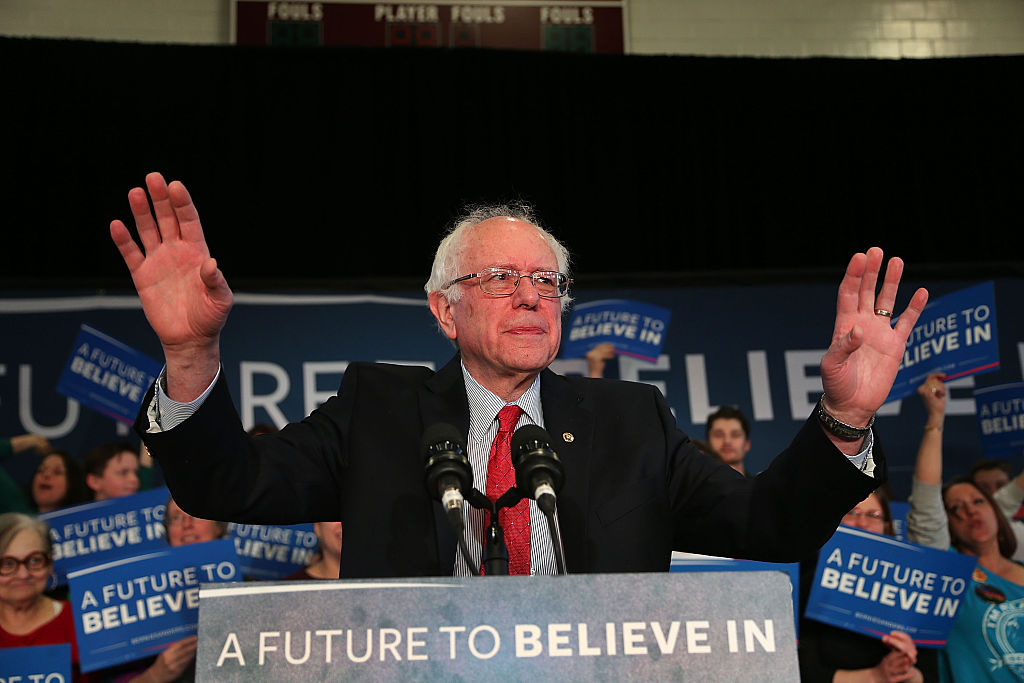
Democratic Presidential Candidate Bernie Sanders Campaigns In Nevada Ahead Of State's Caucus
Photograph by Joe Raedle—Getty Images

The Democratic wonk wars are heating up.

Although the Democratic presidential primary isn’t producing quite as much drama as we’re seeing on the Republican side, the significant differences in substance and style between the Hillary Clinton and Bernie Sanders campaigns are fascinating in their own way, especially if you enjoy a good policy debate.

Last week, four former members of the president’s Council of Economic Advisers—from both the Clinton and Obama Administrations—penned a public letter to the Bernie Sanders campaign and University of Massachusetts Amherst economist Gerald Friedman for making what they called “fantastical claims” about the benefits the U.S. economy would reap if Bernie Sanders’ economic platform were enacted.

In an interview with Fortune, Friedman took exception with their critique, arguing that his approach was within the economic mainstream and suggesting that his critics may not have studied his analysis before dismissing it in general terms. Former congressional Joint Economic Committee executive director James Galbraith accused the Democratic economists of dishonestly smearing Friedman in order to score political points for Clinton.

On Thursday, one of these critics, Christina Romer along with economist, and her husband, David Romer, provided more detail to their objections. They argue:

  • Government stimulus, like that which would result from a Sanders infrastructure and jobs plan, would provide only a temporary boost that would fade as the spending ended. The Romers argue that Friedman mistakenly posits that such spending would increase the growth rate each of the next ten years, even after the stimulus has been spent;
  • Friedman overestimates the overall capacity of the U.S. economy. His analysis assumes that even before the Great Recession, the U.S. economy was producing much less that it could have been absent the optimal government policies; and
  • Friedman is far too optimistic about the effects of Sanders’ proposal on worker productivity growth.

The Romers’ called Friedman’s analysis “highly deficient” and “deeply flawed.” They write, “The estimated demand-induced effects of Senator Sanders’s policies are not just implausibly large but literally incredible.”

The details of these disagreements can be abstruse for non-experts, but in simple terms these economists differ on just how good the U.S. economy can be. If the U.S. economy is nearing it’s potential, then policies like Sanders’ expansion of the welfare state and increased government spending on things like infrastructure aren’t going to increase overall growth that much. In fact, they might even have negative side effects like sparking unwanted inflation or even causing a slight drag on growth (though these policies might be good ideas otherwise).

This debate isn’t explicitly among the campaigns themselves—Bernie Sanders’ policy director has trumpeted Friedman’s claims, but neither candidate has directly addressed them—the argument does seem to reflect the spirit of Clinton’s and Sanders’ pitches to the American public. Sanders is offering a loftier, but perhaps unrealistic, vision of America’s economic future, while Clinton is serving up a hard-nose realism that is less inspiring but potentially more practical.

In an email to Fortune, Friedman responded to this analysis, writing, “My first reaction was sincere joy that we are having a serious discussion on an important issue away from the acrimony and ad hominem attacks. That said, I disagree with them on the theory and empirical facts.” Friedman says that he plans to compose a more detailed rebuttal in the near future.


About the Author
By Chris Matthews
See full bioRight Arrow Button Icon

Latest in Leadership

Thompson
C-SuiteMedia
Atlantic CEO Nick Thompson on how he learned to ‘just keep moving forward’ after his famous firing at 22
By Nick LichtenbergDecember 14, 2025
4 hours ago
Chess master and co-founder of Chess.com, Danny Rensch
SuccessEntrepreneurs
Chess.com cofounder says it took a pinch of delusion to bring the traditional game online—and it’s a ‘requirement for every successful entrepreneur’
By Emma BurleighDecember 14, 2025
6 hours ago
JPMorganChase CEO Jamie Dimon says AI will eliminate jobs—and that soft skills will be more important than ever.
Future of WorkTech
Jamie Dimon says soft skills like emotional intelligence and communication are vital as AI eliminates roles
By Nino PaoliDecember 14, 2025
8 hours ago
Nicholas Thompson
C-SuiteBook Excerpt
I took over one of the most prestigious media firms while training for an ultramarathon. Here’s what I learned becoming CEO of The Atlantic
By Nicholas ThompsonDecember 13, 2025
1 day ago
Lauren Antonoff
SuccessCareers
Once a college dropout, this CEO went back to school at 52—but she still says the Gen Zers who will succeed are those who ‘forge their own path’
By Preston ForeDecember 13, 2025
1 day ago
Asiathe future of work
The CEO of one of Asia’s largest co-working space providers says his business has more in common with hotels
By Angelica AngDecember 12, 2025
2 days ago

Most Popular

placeholder alt text
Economy
Tariffs are taxes and they were used to finance the federal government until the 1913 income tax. A top economist breaks it down
By Kent JonesDecember 12, 2025
2 days ago
placeholder alt text
Success
Apple cofounder Ronald Wayne sold his 10% stake for $800 in 1976—today it’d be worth up to $400 billion
By Preston ForeDecember 12, 2025
2 days ago
placeholder alt text
Success
40% of Stanford undergrads receive disability accommodations—but it’s become a college-wide phenomenon as Gen Z try to succeed in the current climate
By Preston ForeDecember 12, 2025
2 days ago
placeholder alt text
Economy
The Fed just ‘Trump-proofed’ itself with a unanimous move to preempt a potential leadership shake-up
By Jason MaDecember 12, 2025
2 days ago
placeholder alt text
Uncategorized
Transforming customer support through intelligent AI operations
By Lauren ChomiukNovember 26, 2025
18 days ago
placeholder alt text
Success
Apple CEO Tim Cook out-earns the average American’s salary in just 7 hours—to put that into context, he could buy a new $439,000 home in just 2 days
By Emma BurleighDecember 12, 2025
2 days ago
Rankings
  • 100 Best Companies
  • Fortune 500
  • Global 500
  • Fortune 500 Europe
  • Most Powerful Women
  • Future 50
  • World’s Most Admired Companies
  • See All Rankings
Sections
  • Finance
  • Leadership
  • Success
  • Tech
  • Asia
  • Europe
  • Environment
  • Fortune Crypto
  • Health
  • Retail
  • Lifestyle
  • Politics
  • Newsletters
  • Magazine
  • Features
  • Commentary
  • Mpw
  • CEO Initiative
  • Conferences
  • Personal Finance
  • Education
Customer Support
  • Frequently Asked Questions
  • Customer Service Portal
  • Privacy Policy
  • Terms Of Use
  • Single Issues For Purchase
  • International Print
Commercial Services
  • Advertising
  • Fortune Brand Studio
  • Fortune Analytics
  • Fortune Conferences
  • Business Development
About Us
  • About Us
  • Editorial Calendar
  • Press Center
  • Work At Fortune
  • Diversity And Inclusion
  • Terms And Conditions
  • Site Map

© 2025 Fortune Media IP Limited. All Rights Reserved. Use of this site constitutes acceptance of our Terms of Use and Privacy Policy | CA Notice at Collection and Privacy Notice | Do Not Sell/Share My Personal Information
FORTUNE is a trademark of Fortune Media IP Limited, registered in the U.S. and other countries. FORTUNE may receive compensation for some links to products and services on this website. Offers may be subject to change without notice.