• Home
  • Latest
  • Fortune 500
  • Finance
  • Tech
  • Leadership
  • Lifestyle
  • Rankings
  • Multimedia
LeadershipChina

Washington Is Giving the Cold Shoulder to Chinese Investment

By
Minxin Pei
Minxin Pei
Down Arrow Button Icon
By
Minxin Pei
Minxin Pei
Down Arrow Button Icon
February 23, 2016, 10:43 AM ET
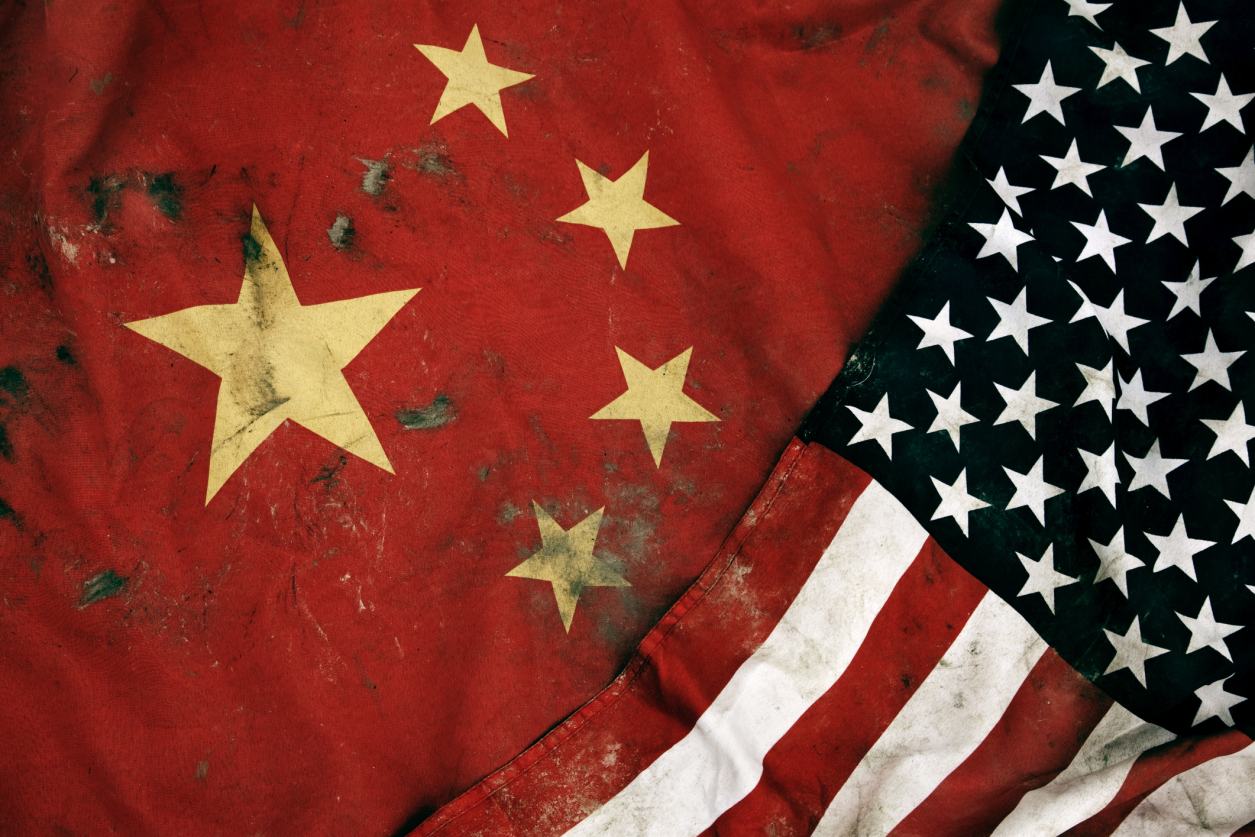
us and china flags
Klubovy—Getty Images

Of all the countries in the world, the U.S. is undoubtedly among the most friendly to foreign investors. But a series of recent events suggest that Uncle Sam is becoming less tolerant of Chinese companies, especially state-owned enterprises, taking over U.S. technology firms.

In some cases, deals that involve the acquisition of American firms by foreign investors can be vetoed by the Committee on Foreign Investment in the U.S. (CFIUS), an inter-agency group comprising officials from the Treasury, Defense, State, Justice and 10 other departments tasked to evaluate the national security implications of such transactions. The CFIUS blesses foreign takeover deals most of the time. In 2012, only 10 out of the 114 deals reviewed by the committee were disapproved. However, this number does not fully reflect the difficulty of getting CFIUS endorsement because many more proposed deals die during the review process. According to the committee’s most recent annual report to Congress, between 2011 and 2013, 38 of the 193 deals investigated by the committee were withdrawn and terminated, most likely because of the poor prospects of approval. Another 17 transactions were called off before a formal investigation by the committee began. So altogether, the effective odds of getting through the CFIUS review successfully are about 60%.

But for Chinese entities seeking to take over U.S. companies, the odds may be much worse.

In late January, the CFIUS blocked a Chinese-backed private equity firm’s proposed $3 billion purchase of the lighting unit of Philips, a Dutch company, citing “unforeseen concerns.” (The CFIUS can block purchase of non-U.S. firms if these companies have significant business in the U.S.)

Last summer, China Resources, a giant state-owned conglomerate, was forced to rescind its $23 billion offer for Micron (MU), the U.S. memory chip manufacturer, because of worries that the deal would not clear the CFIUS review. In February this year, Fairchild Semiconductor International (FCS), a Silicon Valley pioneer, turned down a $2.5 billion offer by another Chinese state-owned entity because of the near certainty that the CFIUS would veto the deal.

In the pipelines for CFIUS review are a $3.8 billion deal by a Tsinghua Holdings, a state-owned company, for a 15% stake in Western Digital (WDC), the giant U.S. hard drive maker; a $6 billion offer by HNA Group, a private Chinese conglomerate, for Ingram Micro, an American distributor of information technology products such as iPhones and Cisco networking equipment; and a $42 billion mega-deal that would allow ChinaChem, one of the largest state-owned enterprises in China, to take over Syngenta, a Swiss firm that is a global leader in genetically modified seeds and pesticides.

The growing opposition to Chinese investments in the U.S. reflects a sea change in Washington. In the last few years, a consensus is emerging that America’s engagement policy with China—pursued by both Republican and Democratic administrations since Richard Nixon went to Beijing—has not delivered the expected dividends. As China has grown stronger and more influential, it has shown a greater willingness to challenge U.S. interests and values. Militarily, China has invested hundreds of billions of dollars in acquiring advanced weapon systems that pose a serious threat to American naval forces in the Western Pacific. Most troubling is China’s latest escalation in the South China Sea, where it has built large artificial islands in disputed areas.

Beijing has become increasingly protectionist, targeting American firms such as Microsoft, Qualcomm, McDonald’s, Walmart, and Apple with anti-monopoly investigations, regulatory harassment, and media attacks. The American Chamber of Commerce in China noted in a 2016 report that 77% of the China-based U.S. firms it surveyed said that they “feel less welcome than before.” Meanwhile, official propaganda and deteriorating human rights conditions in China demonstrate greater ideological hostility toward the U.S.

China’s unfriendly conduct and policies have fueled the growth of a broad-based coalition in Washington that is advocating for a more robust response against Beijing. Imposing tighter restrictions on Chinese investment in the U.S. is just one part of this response.

Chinese entities may very well find the U.S. off-limits in their ambitious plans to acquire cutting-edge technologies overseas. ChinaChem’s attempted takeover of Syngenta (SYT) will likely be a litmus test. If the CFIUS sinks the deal, it will send a clear signal that Washington is dialing up its restrictive policy toward Chinese investment.

For American companies contemplating sales to Chinese firms, the higher regulatory hurdles will come as unwelcome news. To cover themselves, they can seek a significant break-up fee in case deals fail to clear the CFIUS, but that’s about it. As U.S.-China relations move toward an increasingly competitive, if not adversarial, direction, American businesses will need to adjust their China strategies—the sooner the better.

Minxin Pei is the Tom and Margot Pritzker ’72 Professor of Government at Claremont McKenna College and a non-resident senior fellow of the German Marshall Fund of the United States

About the Author
By Minxin Pei
See full bioRight Arrow Button Icon

Latest in Leadership

Finance
Lorem ipsum dolor sit amet, consectetur adipiscing elit, sed do eiusmod tempor incididunt ut labore et dolore magna aliqua. Ut enim ad minim veniam
By Fortune Editors
October 20, 2025
Finance
Lorem ipsum dolor sit amet, consectetur adipiscing elit, sed do eiusmod tempor incididunt ut labore et dolore magna aliqua. Ut enim ad minim veniam
By Fortune Editors
October 20, 2025
Finance
Lorem ipsum dolor sit amet, consectetur adipiscing elit, sed do eiusmod tempor incididunt ut labore et dolore magna aliqua. Ut enim ad minim veniam
By Fortune Editors
October 20, 2025
Finance
Lorem ipsum dolor sit amet, consectetur adipiscing elit, sed do eiusmod tempor incididunt ut labore et dolore magna aliqua. Ut enim ad minim veniam
By Fortune Editors
October 20, 2025
Finance
Lorem ipsum dolor sit amet, consectetur adipiscing elit, sed do eiusmod tempor incididunt ut labore et dolore magna aliqua. Ut enim ad minim veniam
By Fortune Editors
October 20, 2025
Finance
Lorem ipsum dolor sit amet, consectetur adipiscing elit, sed do eiusmod tempor incididunt ut labore et dolore magna aliqua. Ut enim ad minim veniam
By Fortune Editors
October 20, 2025

Most Popular

Finance
Lorem ipsum dolor sit amet, consectetur adipiscing elit, sed do eiusmod tempor incididunt ut labore et dolore magna aliqua. Ut enim ad minim veniam
By Fortune Editors
October 20, 2025
Finance
Lorem ipsum dolor sit amet, consectetur adipiscing elit, sed do eiusmod tempor incididunt ut labore et dolore magna aliqua. Ut enim ad minim veniam
By Fortune Editors
October 20, 2025
Finance
Lorem ipsum dolor sit amet, consectetur adipiscing elit, sed do eiusmod tempor incididunt ut labore et dolore magna aliqua. Ut enim ad minim veniam
By Fortune Editors
October 20, 2025
Finance
Lorem ipsum dolor sit amet, consectetur adipiscing elit, sed do eiusmod tempor incididunt ut labore et dolore magna aliqua. Ut enim ad minim veniam
By Fortune Editors
October 20, 2025
Finance
Lorem ipsum dolor sit amet, consectetur adipiscing elit, sed do eiusmod tempor incididunt ut labore et dolore magna aliqua. Ut enim ad minim veniam
By Fortune Editors
October 20, 2025
Finance
Lorem ipsum dolor sit amet, consectetur adipiscing elit, sed do eiusmod tempor incididunt ut labore et dolore magna aliqua. Ut enim ad minim veniam
By Fortune Editors
October 20, 2025
Fortune Secondary Logo
Rankings
  • 100 Best Companies
  • Fortune 500
  • Global 500
  • Fortune 500 Europe
  • Most Powerful Women
  • World's Most Admired Companies
  • See All Rankings
  • Lists Calendar
Sections
  • Finance
  • Fortune Crypto
  • Features
  • Leadership
  • Health
  • Commentary
  • Success
  • Retail
  • Mpw
  • Tech
  • Lifestyle
  • CEO Initiative
  • Asia
  • Politics
  • Conferences
  • Europe
  • Newsletters
  • Personal Finance
  • Environment
  • Magazine
  • Education
Customer Support
  • Frequently Asked Questions
  • Customer Service Portal
  • Privacy Policy
  • Terms Of Use
  • Single Issues For Purchase
  • International Print
Commercial Services
  • Advertising
  • Fortune Brand Studio
  • Fortune Analytics
  • Fortune Conferences
  • Business Development
  • Group Subscriptions
About Us
  • About Us
  • Lists Calendar
  • Press Center
  • Work At Fortune
  • Terms And Conditions
  • Site Map
  • About Us
  • Lists Calendar
  • Press Center
  • Work At Fortune
  • Terms And Conditions
  • Site Map
  • Facebook icon
  • Twitter icon
  • LinkedIn icon
  • Instagram icon
  • Pinterest icon

Latest in Leadership

How Chris Ong helped Seatrium emerge from a messy merger between two shipyards to become a profitable offshore oil and wind giant
AsiaAsia Agenda
How Chris Ong helped Seatrium emerge from a messy merger between two shipyards to become a profitable offshore oil and wind giant
By Nicholas Gordon and Angelica AngApril 23, 2026
4 hours ago
Spotify just turned 20. Here’s how founder Daniel Ek built it into a $100 billion music empire by being the ‘least powerful person’ at the company
Big TechSpotify
Spotify just turned 20. Here’s how founder Daniel Ek built it into a $100 billion music empire by being the ‘least powerful person’ at the company
By Marco Quiroz-GutierrezApril 23, 2026
4 hours ago
ken
Commentary250 Years of Innovation
The longevity revolution is here. Our systems still think we die at 65
By Ken DychtwaldApril 23, 2026
5 hours ago
anirudh
Conferencesdisruption
Cadence CEO on the AI boom and human nature: ‘there are more tools, but the human part is not different’
By Nick LichtenbergApril 23, 2026
5 hours ago
Meta, Microsoft look to trim workforces amid heavy AI spending
Big TechMeta
Meta, Microsoft look to trim workforces amid heavy AI spending
By Kurt Wagner, Brody Ford and BloombergApril 23, 2026
5 hours ago
Esther, Janet, Susan, and Anne Wojcicki stand in formal dresses and pose.
SuccessLeadership
‘Godmother of Silicon Valley’ Esther Wojcicki, mother of the YouTube and 23andMe CEOs, shares her secret to raising future leaders 
By Jacqueline MunisApril 23, 2026
6 hours ago

Most Popular

When interest on national debt overtook military spending, it triggered a limit where the U.S. may ‘cease to be a great power,’ warns Hoover historian
Economy
When interest on national debt overtook military spending, it triggered a limit where the U.S. may ‘cease to be a great power,’ warns Hoover historian
By Eleanor PringleApril 23, 2026
14 hours ago
Officials will flush 50,000 toilets to flood a Utah lake in order to generate electricity
Environment
Officials will flush 50,000 toilets to flood a Utah lake in order to generate electricity
By Mead Gruver, Dorany Pineda and The Associated PressApril 22, 2026
1 day ago
Cursor’s 25-year-old CEO is a former Google intern who just inked a $60 billion deal with SpaceX
AI
Cursor’s 25-year-old CEO is a former Google intern who just inked a $60 billion deal with SpaceX
By Marco Quiroz-GutierrezApril 22, 2026
1 day ago
Craving work-life balance is a huge red flag, says Fortune 500 Europe CEO—and like Barack Obama, he happily works through weekends
Success
Craving work-life balance is a huge red flag, says Fortune 500 Europe CEO—and like Barack Obama, he happily works through weekends
By Orianna Rosa RoyleApril 22, 2026
2 days ago
'Something sinister could be happening': FBI looks into dead or missing nuclear and space defense scientists tied to NASA, Blue Origin, and SpaceX
Politics
'Something sinister could be happening': FBI looks into dead or missing nuclear and space defense scientists tied to NASA, Blue Origin, and SpaceX
By Catherina GioinoApril 21, 2026
2 days ago
The Iran war is pushing Southeast Asia to debate the once unthinkable: Whether ships will need to pay to transit the Strait of Malacca
Economy
The Iran war is pushing Southeast Asia to debate the once unthinkable: Whether ships will need to pay to transit the Strait of Malacca
By Angelica AngApril 23, 2026
13 hours ago

© 2026 Fortune Media IP Limited. All Rights Reserved. Use of this site constitutes acceptance of our Terms of Use and Privacy Policy | CA Notice at Collection and Privacy Notice | Do Not Sell/Share My Personal Information
FORTUNE is a trademark of Fortune Media IP Limited, registered in the U.S. and other countries. FORTUNE may receive compensation for some links to products and services on this website. Offers may be subject to change without notice.