• Home
  • Latest
  • Fortune 500
  • Finance
  • Tech
  • Leadership
  • Lifestyle
  • Rankings
  • Multimedia
Leadership

The Long, Dark Twilight of the Political Establishment

By
Tory Newmyer
Tory Newmyer
Down Arrow Button Icon
By
Tory Newmyer
Tory Newmyer
Down Arrow Button Icon
February 19, 2016, 8:00 AM ET
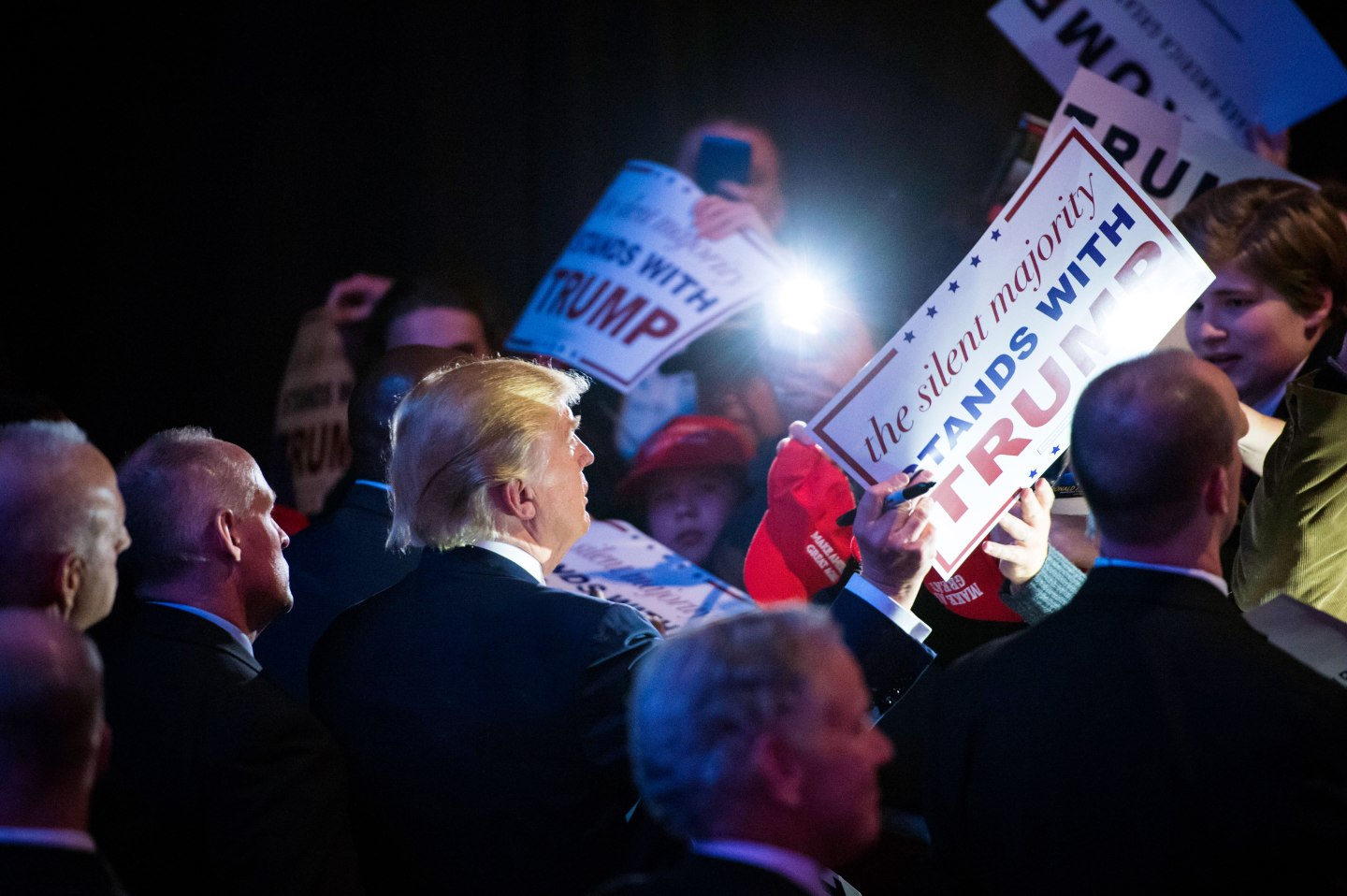
Donald Trump in South Carolina
GREENVILLE, SC - FEBRUARY 15: Supporters reach out for signatures, handshakes and photos as republican presidential candidate Donald Trump greets the crowd after speaking at a campaign rally held in the TD Convention Center in Greenville, SC on Monday Feb. 15, 2016. (Photo by Jabin Botsford/The Washington Post via Getty Images)Photograph by Jabin Botsford — The Washington Post/Getty Images

On the night of Feb. 15, the split screen that has defined the 2016 presidential race repeated itself with a new urgency. In one half there was Republican front-runner Donald Trump, rallying thousands at an arena in Greenville, S.C., with immigration jeremiads and classic rock anthems. In the other, on a stage 203 miles away in North Charleston, there was Jeb Bush, the pack leader Trump had long since deposed, making his first public appearance with his brother, former President George W. Bush. Here was Jeb, fighting for his political life in a state that had long favored his family dynasty.

This cycle, dynasty hasn’t counted for much. In the debate two days earlier, Trump viciously attacked the elder Bush’s record, marking the first time anyone can remember a GOP poll leader lacerating the party’s most recent President. Trump earned boos for the performance, but the audience in attendance—South Carolina party faithfuls—was so distant from the Republican rank and file that the question “Why are people booing?” trended on Google during the event. What’s more, the businessman’s soaring popularity statewide didn’t suffer. If Palmetto State Republicans didn’t punish that heresy against the last Republican commander in chief, it could spell the last gasp for Jeb, who finished 6th in Iowa and 4th in New Hampshire.

At a mininum, the Feb. 20 primary in South Carolina stands poised to further thin the three-way contest among Bush, Florida Sen. Marco Rubio and Ohio Gov. John Kasich to consolidate establishment support against Trump and Texas Sen. Ted Cruz. In the Nevada Democratic caucuses that same day, former Secretary of State Hillary Clinton is hustling to blunt the momentum that Vermont Sen. Bernie Sanders carried out of his blockbuster win in New Hampshire. But both sides are dug in for a slog that could spill into the summer.

MAC.chart01

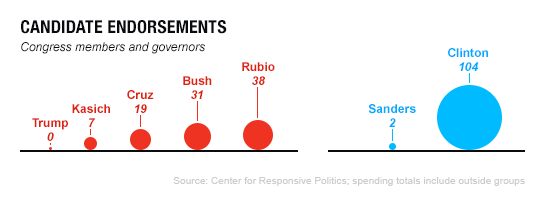
It would be silly, seeing what we’ve seen, to make any sweeping predictions about how this race will end. In the past, advantages like money raised, endorsements, and name recognition were pretty good indicators of election outcomes. If anything, it may be working the other way this time (see chart). Bush, whose campaign was an early juggernaut, embarrassingly floundered despite smashing fundraising records (he still easily retains the money lead, with $150 million raised, including Super PAC funds, and $84 million spent). Clinton, with 184 endorsements from governors and members of Congress, has faced a real challenge from Democratic Socialist Bernie Sanders, who got only two.
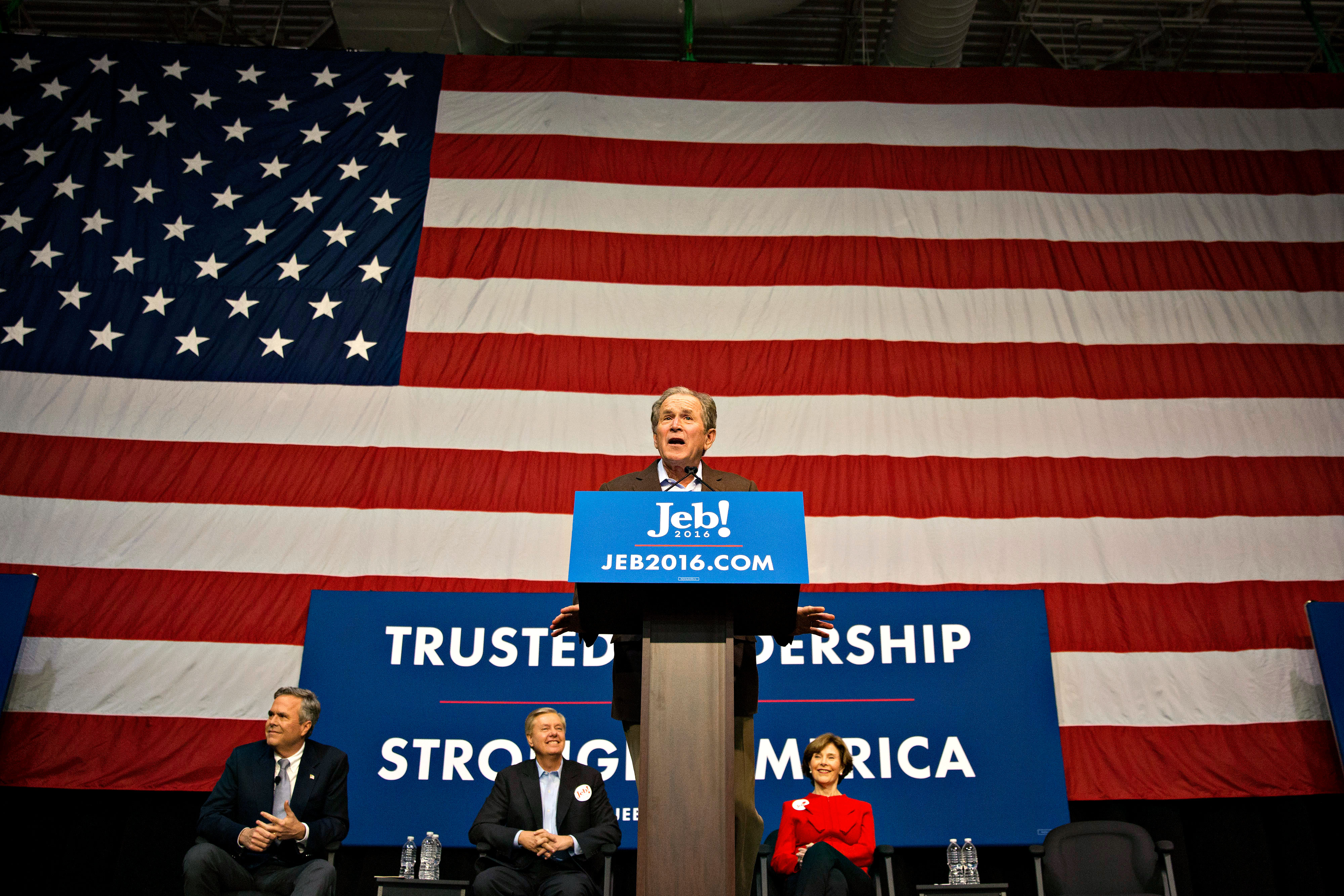
Presidential Candidate Jeb Bush Campaigns With Brother George W. Bush
Former president George W. Bush, along with his wife and Sen. Lindsey Graham, campaigning for his brother, Jeb, at a Feb. 15 rally.Photograph by Daniel Acker — Bloomberg via Getty Images

The ever-looming specter of a late entry from third-party candidate Michael Bloomberg muddies the picture even more for the powers that be. But even if the party elites do get what they want and the general election features a pair of establishment-friendly candidates (say Clinton and Rubio), they stand to inherit an electorate increasingly riven along class lines as much as partisan ones. Put another way, Trump (and Sanders) may fade this spring, but Trumpism is likely to stick around for a while.

Some recent polling explains why. A solid majority of Americans, 54%, now think the country’s economic and political systems are “stacked against them,” and that number has been climbing over the past five years, according to a Wall Street Journal/NBC survey. In the same study, nearly seven in 10 Americans describe themselves as angry that government “seems only to be working for those with money and power, like those in Washington or on Wall Street,” rather than everyday people. The public is so cynical about elected officials, 55% believe “ordinary Americans” would do a better job solving big problems, a Pew Research Center poll found.
MAC.chart02

“There’s so much anger out there on both sides, successful candidates will need to channel it,” says Democratic pollster Jeff Horwitt.

And that suggests the next White House occupant will have a tough time, if he or she is even so inclined, advancing corporate priorities like freer trade and comprehensive immigration reform. Trump and Sanders, the two candidates consistently drawing the biggest crowds, are working off a common roster of C-suite bogeymen: price-gouging drug companies, executives moving factories abroad, and billionaire speculators on Wall Street gambling with other people’s money. That both candidates stir such deep working-class animus, across party lines, should brace Chamber of Commerce types. For business to get what it wants, it may have to make big, public concessions to the voting masses in return—if not, there are plenty of candidates waiting to do it for them. 

A version of this article appears in the March 1, 2016 issue of Fortune with the headline “Does the Establishment Have a Prayer?.”


About the Author
By Tory Newmyer
See full bioRight Arrow Button Icon

Latest in Leadership

Donald Trump
HealthHealth Insurance
‘Tragedy in the making’: Top healthcare exec on why insurance will spike to subsidize a tax cut to millionaires and billionaires
By Nick LichtenbergDecember 12, 2025
4 hours ago
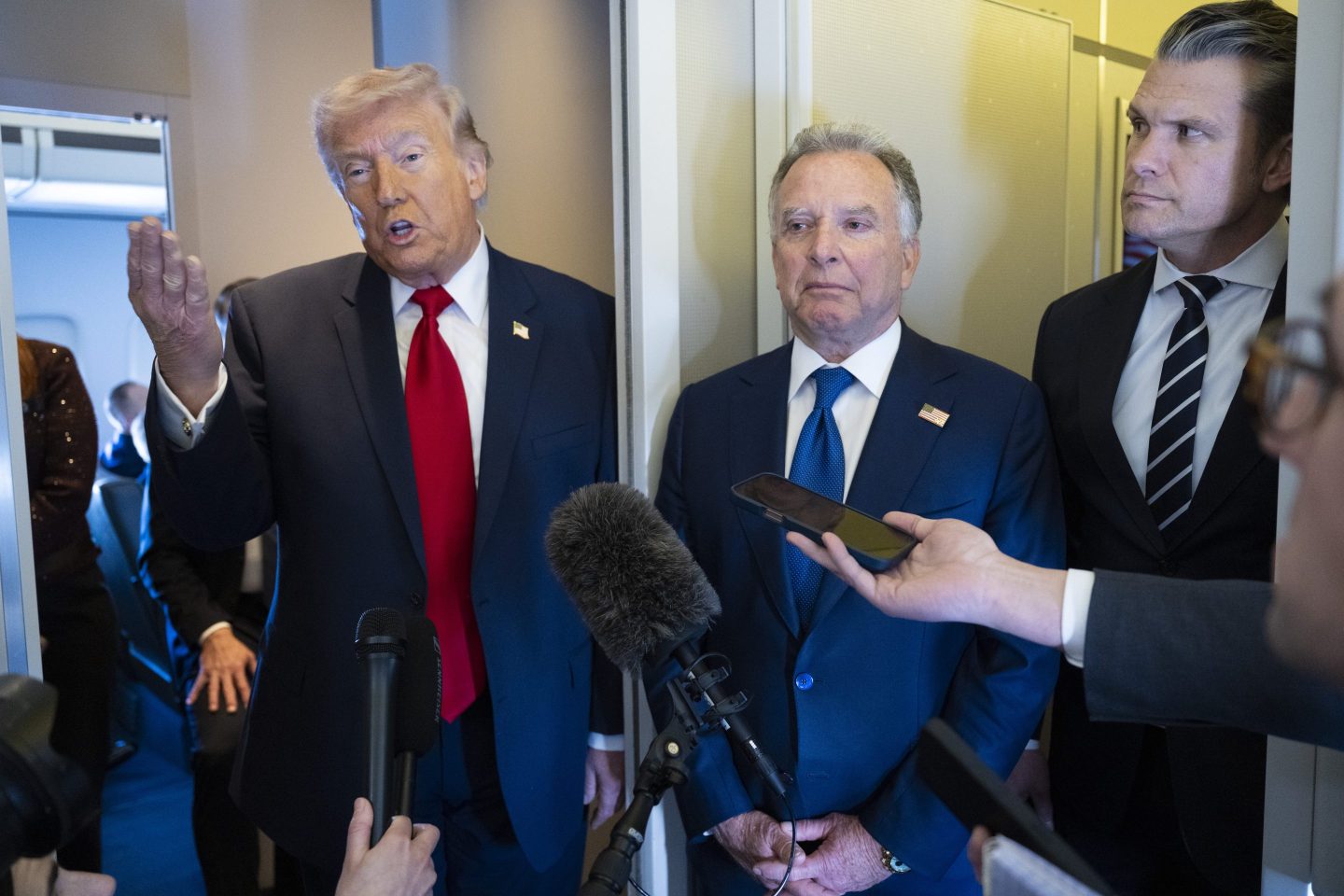
three men in suits, one gesturing
AIBrainstorm AI
The fastest athletes in the world can botch a baton pass if trust isn’t there—and the same is true of AI, Blackbaud exec says
By Amanda GerutDecember 12, 2025
5 hours ago
Brainstorm AI panel
AIBrainstorm AI
Creative workers won’t be replaced by AI—but their roles will change to become ‘directors’ managing AI agents, executives say
By Beatrice NolanDecember 12, 2025
5 hours ago
Ryan Serhant lifts his arms at the premiere of Owning Manhattan, his Netflix show
Successrelationships
Ryan Serhant, a real-estate mogul who’s met over 100 billionaires, reveals his best networking advice: ‘Every room I go into, I use the two C’s’
By Dave SmithDecember 12, 2025
6 hours ago
Fei-Fei Li, the "Godmother of AI," says she values AI skills more than college degrees when hiring software engineers for her tech startup.
AITech
‘Godmother of AI’ says degrees are less important in hiring than how quickly you can ‘superpower yourself’ with new tools
By Nino PaoliDecember 12, 2025
7 hours ago
C-SuiteFortune 500 Power Moves
Fortune 500 Power Moves: Which executives gained and lost power this week
By Fortune EditorsDecember 12, 2025
8 hours ago

Most Popular

placeholder alt text
Economy
Tariffs are taxes and they were used to finance the federal government until the 1913 income tax. A top economist breaks it down
By Kent JonesDecember 12, 2025
13 hours ago
placeholder alt text
Success
At 18, doctors gave him three hours to live. He played video games from his hospital bed—and now, he’s built a $10 million-a-year video game studio
By Preston ForeDecember 10, 2025
3 days ago
placeholder alt text
Success
Palantir cofounder calls elite college undergrads a ‘loser generation’ as data reveals rise in students seeking support for disabilities, like ADHD
By Preston ForeDecember 11, 2025
1 day ago
placeholder alt text
Arts & Entertainment
'We're not just going to want to be fed AI slop for 16 hours a day': Analyst sees Disney/OpenAI deal as a dividing line in entertainment history
By Nick LichtenbergDecember 11, 2025
1 day ago
placeholder alt text
Success
40% of Stanford undergrads receive disability accommodations—but it’s become a college-wide phenomenon as Gen Z try to succeed in the current climate
By Preston ForeDecember 12, 2025
9 hours ago
placeholder alt text
Uncategorized
Transforming customer support through intelligent AI operations
By Lauren ChomiukNovember 26, 2025
16 days ago
Rankings
  • 100 Best Companies
  • Fortune 500
  • Global 500
  • Fortune 500 Europe
  • Most Powerful Women
  • Future 50
  • World’s Most Admired Companies
  • See All Rankings
Sections
  • Finance
  • Leadership
  • Success
  • Tech
  • Asia
  • Europe
  • Environment
  • Fortune Crypto
  • Health
  • Retail
  • Lifestyle
  • Politics
  • Newsletters
  • Magazine
  • Features
  • Commentary
  • Mpw
  • CEO Initiative
  • Conferences
  • Personal Finance
  • Education
Customer Support
  • Frequently Asked Questions
  • Customer Service Portal
  • Privacy Policy
  • Terms Of Use
  • Single Issues For Purchase
  • International Print
Commercial Services
  • Advertising
  • Fortune Brand Studio
  • Fortune Analytics
  • Fortune Conferences
  • Business Development
About Us
  • About Us
  • Editorial Calendar
  • Press Center
  • Work At Fortune
  • Diversity And Inclusion
  • Terms And Conditions
  • Site Map

© 2025 Fortune Media IP Limited. All Rights Reserved. Use of this site constitutes acceptance of our Terms of Use and Privacy Policy | CA Notice at Collection and Privacy Notice | Do Not Sell/Share My Personal Information
FORTUNE is a trademark of Fortune Media IP Limited, registered in the U.S. and other countries. FORTUNE may receive compensation for some links to products and services on this website. Offers may be subject to change without notice.