• Home
  • Latest
  • Fortune 500
  • Finance
  • Tech
  • Leadership
  • Lifestyle
  • Rankings
  • Multimedia
CommentaryMartin Luther King Jr

The Economics Behind Martin Luther King’s ‘I Have a Dream’ Speech

By
Kabir Sehgal
Kabir Sehgal
Down Arrow Button Icon
By
Kabir Sehgal
Kabir Sehgal
Down Arrow Button Icon
January 18, 2016, 10:30 AM ET
MLK In Geneva
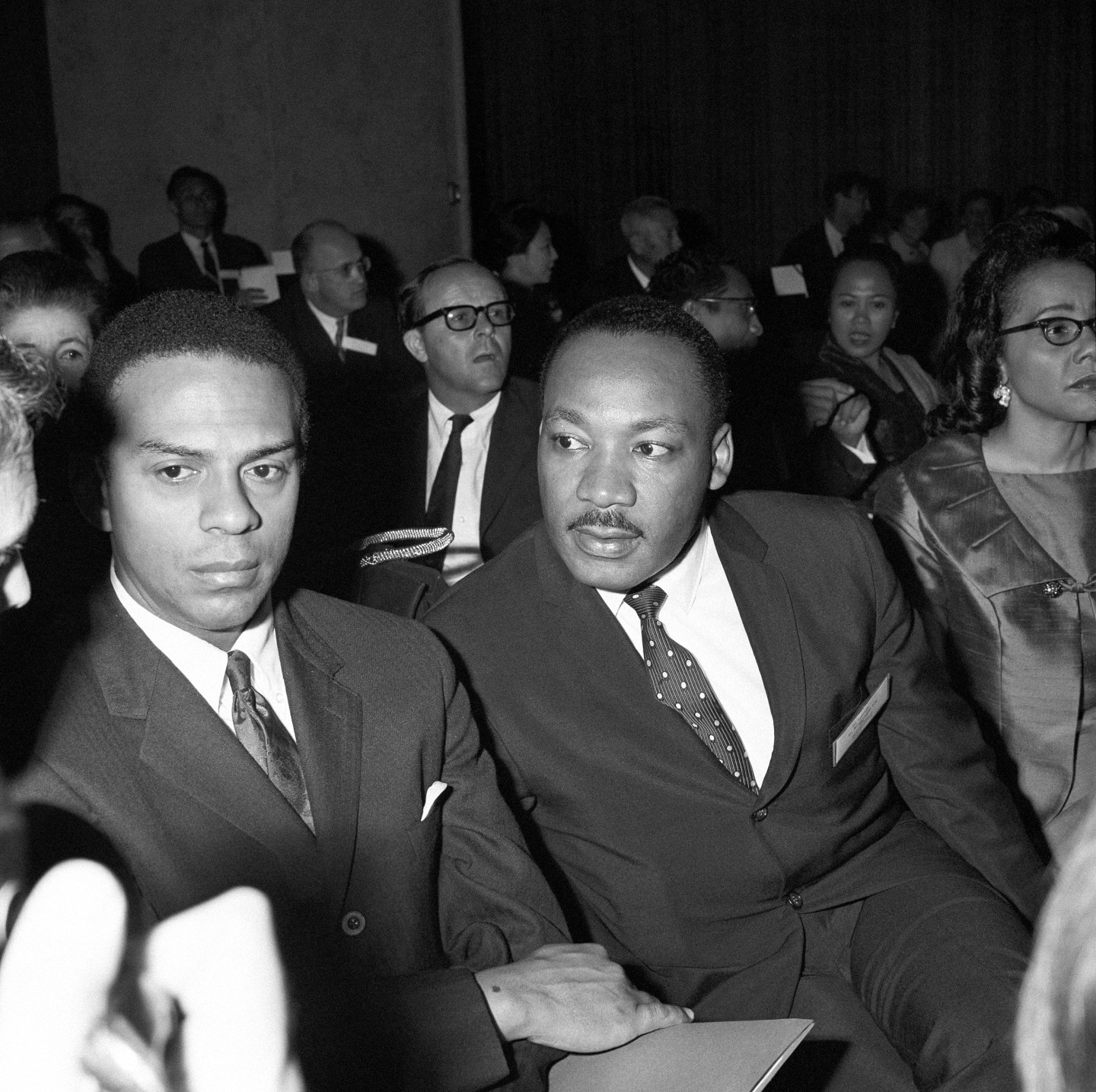
The Rev. Martin Luther King turns to answer a question from his seat in Geneva, May 28, 1967, as delegate to "Pacem In Terris II" unofficial conference on problems of peace, convoked by U.S. Center for the Study of Democratic Institutions. At left is his aide, Andrew Young of Atlanta, Georgia. (AP Photo)Photograph by AP

Dr. Martin Luther King Jr. wasn’t just a dreamer. He was a dream weaver. Certainly, he understood the power of rhetoric, and he possessed a commanding ability to inspire with his lofty orations. But in order to alchemize his vision of America, he had to think in terms of gold.

He was constantly thinking about financial issues, from the operational to the philosophical: how to finance his organization, the Southern Christian Leadership Conference, and how to right the economic injustices suffered by the dispossessed throughout the country. In this way, King was a deep economic thinker. He knew that to bring about sustained change, one had to adopt sustainable, even macroeconomic measures: don’t give a person a fish but teach them how to fish. He didn’t want to become a Good Samaritan on the Jericho Road but wanted to make sure folks weren’t beat up in the first place.

We know about King the reverend. But what about King the economist? No, he doesn’t make the pantheon of famous economists like John Maynard Keynes and Friedrich von Hayek. But then again, the father of classical economics, Adam Smith, wasn’t an “economist” (as “economics” wasn’t a distinct academic field in his times) but a professor of moral philosophy at Glasgow University. In his writings, Smith addressed rhetoric, philosophy, ethics, religion, empathy, and justice – topics on which King frequently opined.

On this Martin Luther King Jr. holiday, let’s consider three areas in which economics informed Dr. King’s message and actions.

First, rhetoric. King frequently spoke in household financial terms, language that everyone understood, so that his message could be absorbed more broadly. When he constructed the text of his “I Have a Dream” speech, he used the metaphor of a bad check to demonstrate the economic injustice that so many faced. He took a complex problem and translated it into practical pocketbook terminology:

“We’ve come to our nation’s capital to cash a check. When the architects of our Republic wrote the magnificent words of the Constitution and the Declaration of Independence, they were signing a promissory note to which every American was to fall heir…Instead of honoring this sacred obligation, America has given the Negro people a bad check, a check which has come back marked ‘insufficient funds.’ But we refuse to believe that bank of justice is bankrupt.”

Second, tactics. Before they were legends, civil rights leaders were operators who knew when, where, and how to stage a march so that it would be broadcast on the evening news. King and his team were on the lookout for ways to produce and dramatize events that would attract attention and instigate change. Because King knew that violent protests would worsen relations between whites and blacks, he set his sights on the green. He and his team supported and orchestrated boycotts to demonstrate the collective purchasing power of African Americans. Montgomery City Lines which operated the town’s bus service was already experiencing a decline in passengers and revenues in the early 1950s. The Montgomery bus boycott, which took place from December 1, 1955 to December 20, 1956, therefore exacerbated the company’s problems, and city officials grew angry, eventually jailing King. This great man didn’t have to throw a punch: he and his team hit their antagonists at the bottom line.

Third, policies. From the outset, King’s stated goal was to rid America from the triple evils of poverty, racism, and militarism. By and large, he made substantial progress on two of these fronts. He helped lessen institutional racism, with the passage of the Civil Rights Act of 1964 and Voting Rights Act of 1965. And he was an outspoken critic of the Vietnam War, decrying the violence that America was perpetuating throughout Southeast Asia. But what of his goal to end poverty?

He once observed that “This country has socialism for the rich, rugged individualism for the poor.” He indeed shifted his focus to economic issues, advocating for a bill of rights for workers and for Congress to pass anti-poverty legislation. Only a few weeks before he was assassinated, King was in the midst of organizing a “Poor People’s Campaign,” a march that was to take place in Washington DC. Even though the march still took place with 50,000 in attendance, the movement had lost steam with King’s death – and the economic legislation he desired was never adopted.
In other words, King’s dream is unfulfilled. And it will require more dream weavers to recognize how this great American political figure was also a consequential economic one.

Kabir Sehgal is the author of five books including New York Times bestseller Coined: The Rich Life of Money And How It’s History Has Shaped Us. He is a former vice president at J.P. Morgan and Grammy-winning producer.


About the Author
By Kabir Sehgal
See full bioRight Arrow Button Icon

Latest in Commentary

Finance
Lorem ipsum dolor sit amet, consectetur adipiscing elit, sed do eiusmod tempor incididunt ut labore et dolore magna aliqua. Ut enim ad minim veniam
By Fortune Editors
October 20, 2025
Finance
Lorem ipsum dolor sit amet, consectetur adipiscing elit, sed do eiusmod tempor incididunt ut labore et dolore magna aliqua. Ut enim ad minim veniam
By Fortune Editors
October 20, 2025
Finance
Lorem ipsum dolor sit amet, consectetur adipiscing elit, sed do eiusmod tempor incididunt ut labore et dolore magna aliqua. Ut enim ad minim veniam
By Fortune Editors
October 20, 2025
Finance
Lorem ipsum dolor sit amet, consectetur adipiscing elit, sed do eiusmod tempor incididunt ut labore et dolore magna aliqua. Ut enim ad minim veniam
By Fortune Editors
October 20, 2025
Finance
Lorem ipsum dolor sit amet, consectetur adipiscing elit, sed do eiusmod tempor incididunt ut labore et dolore magna aliqua. Ut enim ad minim veniam
By Fortune Editors
October 20, 2025
Finance
Lorem ipsum dolor sit amet, consectetur adipiscing elit, sed do eiusmod tempor incididunt ut labore et dolore magna aliqua. Ut enim ad minim veniam
By Fortune Editors
October 20, 2025

Most Popular

Finance
Lorem ipsum dolor sit amet, consectetur adipiscing elit, sed do eiusmod tempor incididunt ut labore et dolore magna aliqua. Ut enim ad minim veniam
By Fortune Editors
October 20, 2025
Finance
Lorem ipsum dolor sit amet, consectetur adipiscing elit, sed do eiusmod tempor incididunt ut labore et dolore magna aliqua. Ut enim ad minim veniam
By Fortune Editors
October 20, 2025
Finance
Lorem ipsum dolor sit amet, consectetur adipiscing elit, sed do eiusmod tempor incididunt ut labore et dolore magna aliqua. Ut enim ad minim veniam
By Fortune Editors
October 20, 2025
Finance
Lorem ipsum dolor sit amet, consectetur adipiscing elit, sed do eiusmod tempor incididunt ut labore et dolore magna aliqua. Ut enim ad minim veniam
By Fortune Editors
October 20, 2025
Finance
Lorem ipsum dolor sit amet, consectetur adipiscing elit, sed do eiusmod tempor incididunt ut labore et dolore magna aliqua. Ut enim ad minim veniam
By Fortune Editors
October 20, 2025
Finance
Lorem ipsum dolor sit amet, consectetur adipiscing elit, sed do eiusmod tempor incididunt ut labore et dolore magna aliqua. Ut enim ad minim veniam
By Fortune Editors
October 20, 2025
Fortune Secondary Logo
Rankings
  • 100 Best Companies
  • Fortune 500
  • Global 500
  • Fortune 500 Europe
  • Most Powerful Women
  • Future 50
  • World’s Most Admired Companies
  • See All Rankings
Sections
  • Finance
  • Fortune Crypto
  • Features
  • Leadership
  • Health
  • Commentary
  • Success
  • Retail
  • Mpw
  • Tech
  • Lifestyle
  • CEO Initiative
  • Asia
  • Politics
  • Conferences
  • Europe
  • Newsletters
  • Personal Finance
  • Environment
  • Magazine
  • Education
Customer Support
  • Frequently Asked Questions
  • Customer Service Portal
  • Privacy Policy
  • Terms Of Use
  • Single Issues For Purchase
  • International Print
Commercial Services
  • Advertising
  • Fortune Brand Studio
  • Fortune Analytics
  • Fortune Conferences
  • Business Development
About Us
  • About Us
  • Editorial Calendar
  • Press Center
  • Work At Fortune
  • Diversity And Inclusion
  • Terms And Conditions
  • Site Map
Fortune Secondary Logo
  • About Us
  • Editorial Calendar
  • Press Center
  • Work At Fortune
  • Diversity And Inclusion
  • Terms And Conditions
  • Site Map
  • Facebook icon
  • Twitter icon
  • LinkedIn icon
  • Instagram icon
  • Pinterest icon

Latest in Commentary

heitmann
CommentaryEntrepreneurship
Here’s how to build something that lasts, from the founder of a $300 million bootstrapped company that’s been growing for 28 years straight
By Tim HeitmannMarch 1, 2026
23 hours ago
world's fair
CommentaryRobots
Something big is happening in AI, but panic is the wrong reaction
By Peter CappelliFebruary 28, 2026
2 days ago
putin
CommentaryRussia
Exclusive analysis: we looked at the 400 western firms still in Russia. Their paltry size strips Putin’s bluff bare naked
By Jeffrey Sonnenfeld, Stephen Henriques, Jake Waldinger and Giuseppe ScottoFebruary 27, 2026
3 days ago
roth
CommentaryLeadership
The AI resource reallocation challenge: How can companies capture the value of time?
By Erik RothFebruary 27, 2026
3 days ago
will
CommentaryAdvertising
I’m one of America’s top pollsters and I’ve got a warning for the AI companies: customers aren’t sold on ads
By Will JohnsonFebruary 27, 2026
3 days ago
the pitt
CommentaryDEI
‘The Pitt’: a masterclass display of DEI in action 
By Robert RabenFebruary 26, 2026
4 days ago

Most Popular

placeholder alt text
Economy
Your grandparents are the reason the U.S. isn't in a recession right now. That won't last forever
By Eleanor PringleMarch 1, 2026
23 hours ago
placeholder alt text
Success
MacKenzie Scott's close relationship with Toni Morrison long before Amazon put her on the path give more than $1 billion to HBCUs
By Sasha RogelbergMarch 1, 2026
17 hours ago
placeholder alt text
Middle East
As Iran attacks Dubai, the tax-free haven for the global elite could see 'catastrophic' fallout — 'this can also send shockwaves globally'
By Jason MaMarch 1, 2026
15 hours ago
placeholder alt text
Personal Finance
Trump's universal 401(k) architect on why lower-income people distrust retirement accounts: 'they want to know what the catch is'
By Jacqueline MunisFebruary 28, 2026
2 days ago
placeholder alt text
Health
Gen Z men are eating ‘boy kibble,’ the human equivalent to dog food, to load up on protein cheaply
By Jake AngeloMarch 1, 2026
20 hours ago
placeholder alt text
Middle East
U.S. military gives Iran a taste of its own medicine with cheap copycat Shahed drones, while concern shifts to munitions supply in extended conflict
By Jason MaMarch 1, 2026
13 hours ago

© 2026 Fortune Media IP Limited. All Rights Reserved. Use of this site constitutes acceptance of our Terms of Use and Privacy Policy | CA Notice at Collection and Privacy Notice | Do Not Sell/Share My Personal Information
FORTUNE is a trademark of Fortune Media IP Limited, registered in the U.S. and other countries. FORTUNE may receive compensation for some links to products and services on this website. Offers may be subject to change without notice.