• Home
  • Latest
  • Fortune 500
  • Finance
  • Tech
  • Leadership
  • Lifestyle
  • Rankings
  • Multimedia

Trendingnow

1

Egg companies made $1.22 billion in profit off a $6 carton — now they’re buying their way out of a price-fixing case with 53 million donated eggs

2

Meet the Zillennials: The luckiest micro-generation in the workforce, born between 1993 and 1998

3

Even as Elon Musk calls philanthropy ‘very hard,’ every day Americans gave a record $617 billion—despite feeling the squeeze over the cost of living

1

Egg companies made $1.22 billion in profit off a $6 carton — now they’re buying their way out of a price-fixing case with 53 million donated eggs

2

Meet the Zillennials: The luckiest micro-generation in the workforce, born between 1993 and 1998

3

Even as Elon Musk calls philanthropy ‘very hard,’ every day Americans gave a record $617 billion—despite feeling the squeeze over the cost of living
LeadershipSaudi Arabia

Why a Saudi Aramco IPO Makes Absolutely No Sense for Saudi Arabia

By
Cyrus Sanati
Cyrus Sanati
Down Arrow Button Icon
By
Cyrus Sanati
Cyrus Sanati
Down Arrow Button Icon
January 13, 2016, 12:29 PM ET
SAUDI-DESERT-OIL-ARAMCO
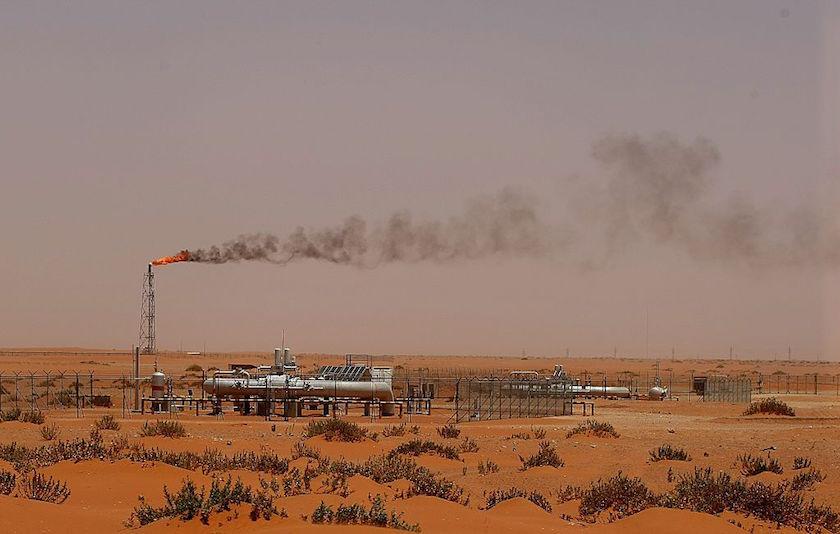
A flame from a Saudi Aramco oil installion known as "Pump 3" is seen in the desert near the oil-rich area of Khouris, 160 kms east of the Saudi capital Riyadh, on June 23, 2008. Oil producers are at war with speculators but they have been left speculating themselves over the future of their precious commodity after a unique summit, analysts said. Government ministers and traders alike are anxiously waiting to see which way prices go in coming weeks after Sunday's summit of consumers and producers, which Saudi Arabia called in response to the doubling of the cost of a barrel of oil over the past year to almost 140 dollars. AFP PHOTO/MARWAN NAAMANI (Photo credit should read MARWAN NAAMANI/AFP/Getty Images)Photograph by Marwan Naamani—AFP/Getty Images
Add Fortune on Google for similar content.

If Saudi Aramco goes public, Saudi Arabia will face an enormous existential dilemma.

The Saudi royal family’s total control of Arabia’s oil wealth is the root of all of its power, influence, and success. To loosen that grip, even a little, would be seen as weakness in the eyes of the Saud family’s (many) enemies and would diminish their legitimacy as the absolute rulers of Arabia, stewards of Mecca and Medina, and ultimate arbiters of price of oil.

But while Aramco confirmed on Monday that it will be looking at some proposals that envision taking the whole company public, it isn’t being considered very seriously, two persons with knowledge of the deal told Fortune. The focus remains squarely on the company’s foreign downstream refinery assets, as any sale of its upstream oil production division still remains “absolutely unthinkable,” one of these people said.

The idea of taking Saudi Aramco, officially, the Saudi Arabian Oil Company, public is not new. For years, there have been whispers in the palace that the Saud family were mulling the possibility of floating all or parts of the national oil company to investors. But those rumors were quickly dismissed as ridiculous.

What reason would the royal family even consider selling off its birthright? Could it be some foolish attempt at diversifying the Kingdom’s economy? Or perhaps it is to raise some quick cash for something lavish, like 5,000 new Airbus A380s filled with gold? Or maybe it is simply a fast way to cash out and run before the barbarians at the gate (Isis, Al-Qaeda, etc.) finally come crashing through the palace walls.

And yet, as farfetched as all this may seem, it appears that at least some members of the royal family are seriously considering doing just that. Crown Prince Mohammad bin Salman Al Saud, who is considered “the power behind the throne” of his father, King Salman bin Abdulaziz Al Saud, told the Economist magazine last week that the sale of shares in Aramco is, “something that is being reviewed,” and that he believes, “a decision will be made” on the matter “over the next few months.” Prince Salman, who is 29 years old, also said that he was “enthusiastic” about a possible share sale and that it would be done in “the interest of more transparency, and to counter corruption, if any, that may be circling around Aramco.”

On Monday, Aramco Chairman Khalid al-Falih confirmed that the company was looking into going public in some form. This would include not only the company’s downstream refining division, but would also include its more lucrative upstream exploration and production division. He didn’t elaborate on why this was happening, but he did take the time to refute Prince Salman’s assertion that it was part of an effort to fight corruption or encourage transparency.

If Aramco went public, it would easily be the most valuable company on earth, with some estimating its market capitalization as high as $10 trillion. That would make Aramco nearly 32 times more valuable than ExxonMobil, which is currently the world’s largest publicly traded energy company. If Aramco floated just 5% of its shares in an IPO, it would raise some $500 billion. That would easily make it by far the largest IPO in history, some 20 times more than what Alibaba raised when it went public last year. This is what has whipped the banking community into such a wild frenzy. The listing fees a bank could collect in taking a company the size of Aramco public would be absurdly huge. Even if a bank slashed the standard 7% IPO fee in half to 3.5%, it would still stand to make $17.5 billion off the deal. That would make for some major bonus checks.

Aramco’s value comes from its massive reserves of crude oil, which the company claims to be around 265 billion barrels. That’s enough oil to supply the entire planet with all its oil needs for nearly eight years at current consumption levels.

But Aramco doesn’t just have lots of oil; it has easily exploited reserves, which makes it far cheaper to pull oil out of the ground in Saudi Arabia than pretty much anywhere else in the world. The cost to bring up a barrel of oil out of Aramco’s supergiant Ghawar oilfield is around $4 a barrel, according to a person with knowledge of Aramco’s operations. In the United States, lifting that same barrel of oil could cost anywhere from $25 to $80. Aramco can also lift that oil out of the ground faster and in much larger quantities than any of its rivals. On any given day, Aramco can pull out as much as 13.5 million barrels of oil, according to a person familiar with Aramco’s operations. That’s roughly equal to around 15% of the world’s daily oil needs.

The Saud family derives a tremendous amount of power from its ability to unilaterally manipulate the price of oil whenever they want. Taking Aramco public might disrupt that power, as it would bring another element into the mix: investors. While the Saud family could still maintain control of Aramco even if it were to float a sizable chunk of the company’s shares on an exchange, it still would be expected to act in a way that puts profits above all else, even the geopolitical whims of some errant princes. This could prove fatal to the Saud family, which has used Aramco as their personal piggy bank to fund everything from the annual Hajj to the procurement of weapons from the United States. If Aramco went public, it would have to account for all its spending, something that could force them to consider public input and embarrass the royal family, linking them to the kind of corruption that Prince Salman said would end if the company opened its books and listed on an exchange.

To be sure, other state-controlled national oil companies have gone public, such as Rosneft in Russia and Petrobras in Brazil. But their shares have performed poorly despite their massive oil reserves, amid rampant corruption and profit skimming. A major scandal at Petrobras last year revealed a host of shadiness and self-serving behavior by government officials. Many shareholders chose to “vote with their feet” by selling their shares and investing elsewhere.

By alienating and marginalizing investors, the Brazilian state has destroyed billions of dollars of value. For Aramco to avoid the same fate, it would need to clean up its act and put the interests of its investors ahead of the king’s. Both seem at odds with the Saudi state, which thrives off palace intrigue and institutionalized bribery. It also complicates Saudi Arabia’s position in the OPEC oil cartel, as Aramco would now be expected to do what was in the best interest of investors, which could, at times, run counter to OPEC’s agenda. This could have far-reaching implications, forcing Saudi Arabia to possibly withdraw from the cartel and surrender fully to market prices. If you want to see really cheap oil, just hold out for that.

While taking Aramco public makes little sense from a geopolitical standpoint, it makes even less sense from a financial perspective. What would the royal family gain by selling off equity in Aramco to random investors? Money? It is doubtful that the richest family on earth is looking to quickly “cash out” like some venture capital firm. After nearly a century in power, it is clear that the Saud family is a long-term investor in the Arabian Peninsula. And even if they needed the money for some mega project, going public is a lousy way for them to raise capital. If Aramco, or the Saudi government, needed money, they could get it far more efficiently by issuing debt (bonds) than they could by selling equity (stock), especially in today’s low interest rate environment.

Taking Aramco public has nothing to do with the current state of Saudi Arabia’s finances. Despite views to the contrary, Saudi Arabia is not in desperate need of cash, even with oil falling below $30 a barrel for the first time in a decade. The country has over $600 billion in reserves to cushion the financial blow from prolonged weak oil prices. Indeed, it could maintain its lavish spending, which is projected to be 50% of GDP in 2016, and still run a surplus through the rest of the decade. After that, if it still needed money, it could raise debt on the international markets. By that point, while it may be prudent to start scaling back on spending, selling off pieces of Aramco still wouldn’t make sense.

There is simply no compelling reason for the Saudi royal family to take Aramco public. It seems to be doing fine on its own and has enough dry powder to keep the state going and the people happy for years to come by maintaining the status quo. Disturbing this careful balancing act could be highly detrimental to the state. At that point, it would probably be time to drop the “Saudi” in Saudi Arabia.

About the Author
By Cyrus Sanati
See full bioRight Arrow Button Icon
Add Fortune on Google for similar content.

Latest in Leadership

Finance
Lorem ipsum dolor sit amet, consectetur adipiscing elit, sed do eiusmod tempor incididunt ut labore et dolore magna aliqua. Ut enim ad minim veniam
By Fortune Editors
October 20, 2025
Finance
Lorem ipsum dolor sit amet, consectetur adipiscing elit, sed do eiusmod tempor incididunt ut labore et dolore magna aliqua. Ut enim ad minim veniam
By Fortune Editors
October 20, 2025
Finance
Lorem ipsum dolor sit amet, consectetur adipiscing elit, sed do eiusmod tempor incididunt ut labore et dolore magna aliqua. Ut enim ad minim veniam
By Fortune Editors
October 20, 2025
Finance
Lorem ipsum dolor sit amet, consectetur adipiscing elit, sed do eiusmod tempor incididunt ut labore et dolore magna aliqua. Ut enim ad minim veniam
By Fortune Editors
October 20, 2025
Finance
Lorem ipsum dolor sit amet, consectetur adipiscing elit, sed do eiusmod tempor incididunt ut labore et dolore magna aliqua. Ut enim ad minim veniam
By Fortune Editors
October 20, 2025
Finance
Lorem ipsum dolor sit amet, consectetur adipiscing elit, sed do eiusmod tempor incididunt ut labore et dolore magna aliqua. Ut enim ad minim veniam
By Fortune Editors
October 20, 2025

Most Popular

Finance
Lorem ipsum dolor sit amet, consectetur adipiscing elit, sed do eiusmod tempor incididunt ut labore et dolore magna aliqua. Ut enim ad minim veniam
By Fortune Editors
October 20, 2025
Finance
Lorem ipsum dolor sit amet, consectetur adipiscing elit, sed do eiusmod tempor incididunt ut labore et dolore magna aliqua. Ut enim ad minim veniam
By Fortune Editors
October 20, 2025
Finance
Lorem ipsum dolor sit amet, consectetur adipiscing elit, sed do eiusmod tempor incididunt ut labore et dolore magna aliqua. Ut enim ad minim veniam
By Fortune Editors
October 20, 2025
Finance
Lorem ipsum dolor sit amet, consectetur adipiscing elit, sed do eiusmod tempor incididunt ut labore et dolore magna aliqua. Ut enim ad minim veniam
By Fortune Editors
October 20, 2025
Finance
Lorem ipsum dolor sit amet, consectetur adipiscing elit, sed do eiusmod tempor incididunt ut labore et dolore magna aliqua. Ut enim ad minim veniam
By Fortune Editors
October 20, 2025
Finance
Lorem ipsum dolor sit amet, consectetur adipiscing elit, sed do eiusmod tempor incididunt ut labore et dolore magna aliqua. Ut enim ad minim veniam
By Fortune Editors
October 20, 2025
Fortune Secondary Logo
Rankings
  • 100 Best Companies
  • Fortune 500
  • Global 500
  • Fortune 500 Europe
  • Most Powerful Women
  • World's Most Admired Companies
  • See All Rankings
  • Lists Calendar
Sections
  • Finance
  • Fortune Crypto
  • Features
  • Leadership
  • Health
  • Commentary
  • Success
  • Retail
  • Mpw
  • Tech
  • Lifestyle
  • CEO Initiative
  • Asia
  • Politics
  • Conferences
  • Europe
  • Newsletters
  • Personal Finance
  • Environment
  • Magazine
  • Education
Customer Support
  • Frequently Asked Questions
  • Customer Service Portal
  • Privacy Policy
  • Terms Of Use
  • Single Issues For Purchase
  • International Print
Commercial Services
  • Advertising
  • Fortune Brand Studio
  • Fortune Analytics
  • Fortune Conferences
  • Business Development
  • Group Subscriptions
About Us
  • About Us
  • Press Center
  • Work At Fortune
  • Terms And Conditions
  • Site Map
  • About Us
  • Press Center
  • Work At Fortune
  • Terms And Conditions
  • Site Map
  • Facebook icon
  • Twitter icon
  • LinkedIn icon
  • Instagram icon
  • Pinterest icon

Latest in Leadership

Older worker sad at laptop
SuccessGen X
A quarter of young baby boomers and Gen Xers who’ve been laid off in the last decade are still unemployed—and 11% have taken pay cuts to work
By Emma BurleighJuly 4, 2026
3 hours ago
usa
North Americahistory
Before independence, America tried — and failed — to conquer Canada
By Sarah M.S. Pearsall and The ConversationJuly 4, 2026
3 hours ago
The 1964 box set that predicted Dylan going electric — and still explains American music today
Arts & EntertainmentMusic
The 1964 box set that predicted Dylan going electric — and still explains American music today
By Ted Olson and The ConversationJuly 4, 2026
3 hours ago
Ejay O'Donnell, Bart Szaniewski, and Grant Eastey wear Dad Gang hats in a factory
SuccessEntrepreneurship
Three dads started selling hats from a garage with $750—now they’ve sold $35 million worth, partnered with Gary Vee, and grown a community of fathers
By Preston ForeJuly 4, 2026
6 hours ago
loco
Travel & LeisureEntrepreneurship
The World Cup is just now discovering Middle America’s big heart. These Irish bingo kingpins built a $24 million business knowing it all along
By Nick LichtenbergJuly 4, 2026
7 hours ago
JPMorgan built a pipeline of female CEO candidates that was the envy of Wall Street. How did it fall apart?
MPWMost Powerful Women
JPMorgan built a pipeline of female CEO candidates that was the envy of Wall Street. How did it fall apart?
By Emma HinchliffeJuly 4, 2026
9 hours ago

Most Popular

Egg companies made $1.22 billion in profit off a $6 carton — now they’re buying their way out of a price-fixing case with 53 million donated eggs
Law
Egg companies made $1.22 billion in profit off a $6 carton — now they’re buying their way out of a price-fixing case with 53 million donated eggs
By Wyatte Grantham-Philips and The Associated PressJuly 2, 2026
2 days ago
Meet the Zillennials: The luckiest micro-generation in the workforce, born between 1993 and 1998
AI
Meet the Zillennials: The luckiest micro-generation in the workforce, born between 1993 and 1998
By Nick LichtenbergJuly 3, 2026
1 day ago
Even as Elon Musk calls philanthropy ‘very hard,’ every day Americans gave a record $617 billion—despite feeling the squeeze over the cost of living
Success
Even as Elon Musk calls philanthropy ‘very hard,’ every day Americans gave a record $617 billion—despite feeling the squeeze over the cost of living
By Preston ForeJuly 4, 2026
9 hours ago
Economists have found an answer to slowing cognitive decline: Avoid retiring early, study finds
Economy
Economists have found an answer to slowing cognitive decline: Avoid retiring early, study finds
By Sasha RogelbergJuly 2, 2026
2 days ago
$25 billion CEO says one-hour interviews are a waste of time—he puts candidates through six hours of tests and wants them to order wine at lunch
Success
$25 billion CEO says one-hour interviews are a waste of time—he puts candidates through six hours of tests and wants them to order wine at lunch
By Orianna Rosa RoyleJuly 3, 2026
1 day ago
On Wall Street, analysts increasingly don’t believe the U.S. government’s 'misleading' job numbers
Economy
On Wall Street, analysts increasingly don’t believe the U.S. government’s 'misleading' job numbers
By Jim EdwardsJuly 3, 2026
1 day ago

© 2026 Fortune Media IP Limited. All Rights Reserved. Use of this site constitutes acceptance of our Terms of Use and Privacy Policy | CA Notice at Collection and Privacy Notice | Do Not Sell/Share My Personal Information
FORTUNE is a trademark of Fortune Media IP Limited, registered in the U.S. and other countries. FORTUNE may receive compensation for some links to products and services on this website. Offers may be subject to change without notice.