• Home
  • Latest
  • Fortune 500
  • Finance
  • Tech
  • Leadership
  • Lifestyle
  • Rankings
  • Multimedia

Trendingnow

1

Markets tumble worldwide as Fed resets expectations: $400 billion wiped off SpaceX stock

2

After forcing workers back to the office, Goldman Sachs and JPMorgan Chase are now letting their staff work remotely—but only for the World Cup

3

Former U.S. Secret Service agent says bringing your authentic self to work stifles teamwork: 'You don’t get high performers, you get sloppiness'

1

Markets tumble worldwide as Fed resets expectations: $400 billion wiped off SpaceX stock

2

After forcing workers back to the office, Goldman Sachs and JPMorgan Chase are now letting their staff work remotely—but only for the World Cup

3

Former U.S. Secret Service agent says bringing your authentic self to work stifles teamwork: 'You don’t get high performers, you get sloppiness'
CommentaryWall Street

Why 2015 Was a Bad Year for Banking Reforms

By
Oz Shy
Oz Shy
Down Arrow Button Icon
By
Oz Shy
Oz Shy
Down Arrow Button Icon
December 31, 2015, 6:45 PM ET
137901328
NYC skyscrapersPhotograph by Masatoshi Aida—Getty Images/Flickr RM
Add Fortune on Google for similar content.

This year is ending the way it began for taxpayers without any sign of relief from the repeated burden of bailing out the banks during the financial crises and continued pressure to modify the Dodd-Frank Act in ways that favor bankers and lessen protections for taxpayers.

A year of continued concessions to the financial industry included: delaying a Dodd-Frank mandate that financial firms sell off bundled debt, known as collateralized loan obligations; exempting some private equity firms from registering with the Securities and Exchange Commission; and loosening regulations on derivatives. The recent requirement that banks increase their capital ratio to 16% or 18% in the next few years still leaves the taxpayer responsible for the remaining 80% of the losses.

Given that banks spend over $1 million per week on lobbying, is there any point in even raising the question of whether 2016 — a presidential election year — will be different? Judging from the past 85 years (since the Great Depression), it seems unlikely that politicians will begin to favor consumers over bankers who make plush campaign contributions.

So without proper, or at least more aggressive regulation, it is worth starting this new year asking the most pertinent question: What can we do to shore up our banking system? The answer is simple: replace some part of the current system with a non-bank alternative. Let me explain.

During the 1930s, after observing the total collapse of the banking system during the Great Depression, a group of economists at the University of Chicago, followed by Irving Fisher from Yale University, tried to convince President Roosevelt to separate deposit-taking activities from lending activities and to embed this separation into the 1933 Banking Act.

Two Nobel Prize laureates, Milton Friedman and James Tobin, later also proposed this solution. Economists often refer to the proposed structure as narrow banking because banks would be required to maintain 100% of depositors’ money in the form of cash or government-issued bonds, which are considered the safest assets. Both economists felt that more regulation was not the solution but that a change in the structure of the banking industry was. That continues to be true today.

However, since it is clear that in the current political climate, banks cannot be regulated without great difficulty, one feasible remedy would be to gradually replace traditional banking with non-banks that provide bank-like services.

Some examples of these non-bank service providers already exist. Consider companies, such as: PayPal, Venmo, Square Cash, Stripe, Dwolla, Walmart’s Bluebird Card, Green Dot, Target’s REDcard, and even Bitcoin (virtual currency). All these provide bank-like services at low cost to consumers with no risk to taxpayers because all transactions are prefunded by the payer.

[youtube https://www.youtube.com/watch?v=Uyge-Eyxh2s?rel=0&w=420&h=315]

On the lending side, companies, such as the LendingClub, Prosper, Lend Academy, CommonBond, and Crowdfund Insider, already provide loans with no reliance on taxpayer money. This new industry is often called FinTech (Financial Technology) because it provides superior financial services that utilize cyberspace at extremely low costs compared with traditional banking. Recognizing the importance of this growing industry, MIT now offers a course on FinTech. Similarly, FinTech clubs, such as MIT FinTech Club and Wharton FinTech, are trending at business schools, according to the American Banker.

Currently, non-banks that provide bank-like services are at a competitive disadvantage because they must obtain separate licenses and adhere to different regulations in each of the 50 U.S. states. In addition, they must deposit unused balances with traditional banks and pay fees. More importantly, FinTech companies do not have direct access to low-cost services provided by central banks, and therefore must settle their transactions via commercial banks.

A simple way to overcome these obstacles and to encourage competition with established banks is to allow non-bank financial service providers access to the same services that banks currently receive from central banks. Just like narrow banks, because the transactions performed via these service providers are prefunded, they maintain 100% cash reserves and therefore pose no risk on the system.

Given that it is unlikely that politicians will introduce necessary structural changes in this election year, perhaps the best way to judge 2016 would be to watch whether both Congress and central banks recognize the importance of FinTech and facilitate its entry into the marketplace even if banks intensify their lobbying activities to block these promising financial developments.

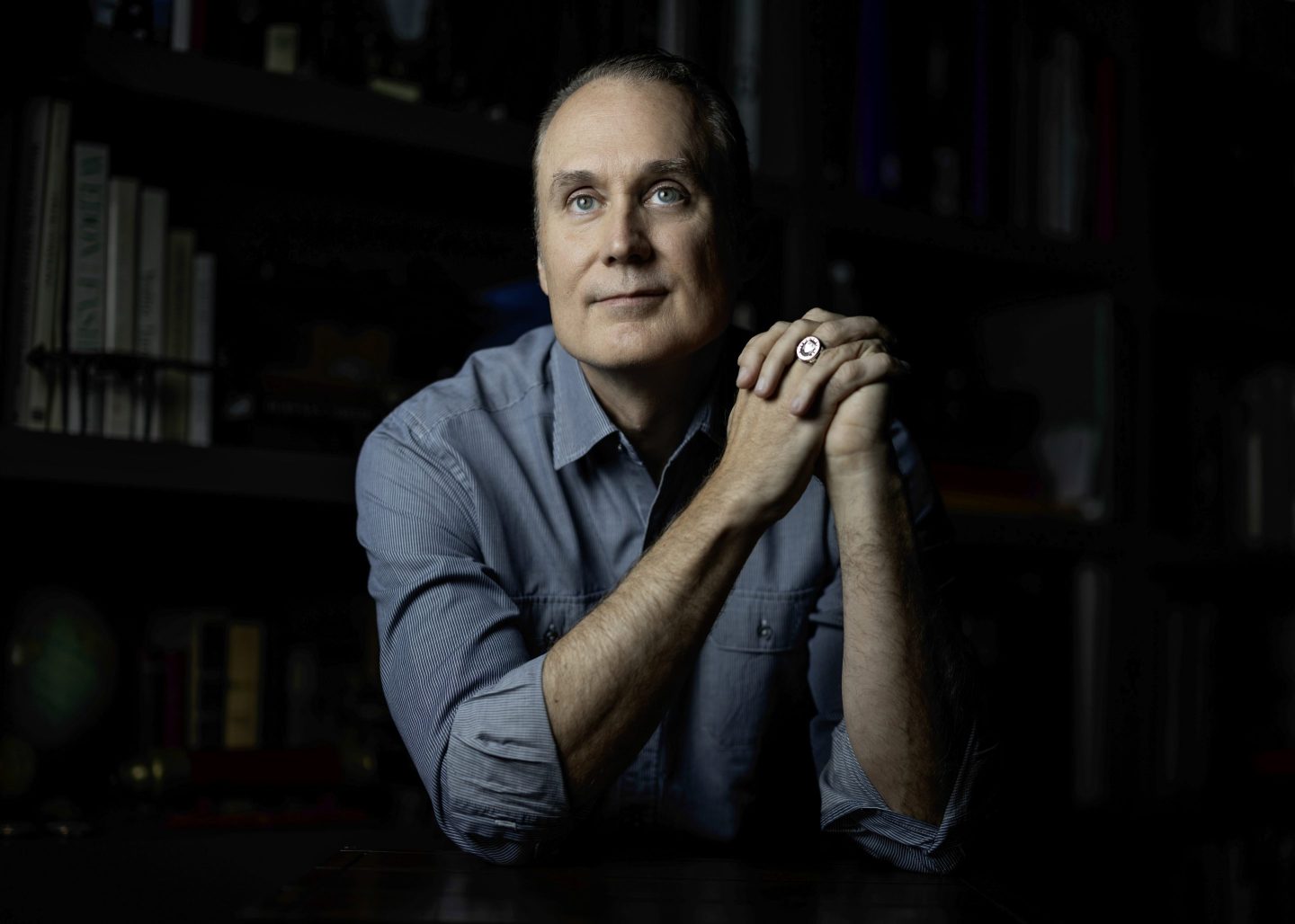
Oz Shy is a Sr. Lecturer teaching economics at MIT Sloan School of Management. He has published three books: How to Price, The Economics of Network Industries and Industrial Organization: Theory and Applications.

About the Author
By Oz Shy
See full bioRight Arrow Button Icon
Add Fortune on Google for similar content.

Latest in Commentary

Finance
Lorem ipsum dolor sit amet, consectetur adipiscing elit, sed do eiusmod tempor incididunt ut labore et dolore magna aliqua. Ut enim ad minim veniam
By Fortune Editors
October 20, 2025
Finance
Lorem ipsum dolor sit amet, consectetur adipiscing elit, sed do eiusmod tempor incididunt ut labore et dolore magna aliqua. Ut enim ad minim veniam
By Fortune Editors
October 20, 2025
Finance
Lorem ipsum dolor sit amet, consectetur adipiscing elit, sed do eiusmod tempor incididunt ut labore et dolore magna aliqua. Ut enim ad minim veniam
By Fortune Editors
October 20, 2025
Finance
Lorem ipsum dolor sit amet, consectetur adipiscing elit, sed do eiusmod tempor incididunt ut labore et dolore magna aliqua. Ut enim ad minim veniam
By Fortune Editors
October 20, 2025
Finance
Lorem ipsum dolor sit amet, consectetur adipiscing elit, sed do eiusmod tempor incididunt ut labore et dolore magna aliqua. Ut enim ad minim veniam
By Fortune Editors
October 20, 2025
Finance
Lorem ipsum dolor sit amet, consectetur adipiscing elit, sed do eiusmod tempor incididunt ut labore et dolore magna aliqua. Ut enim ad minim veniam
By Fortune Editors
October 20, 2025

Most Popular

Finance
Lorem ipsum dolor sit amet, consectetur adipiscing elit, sed do eiusmod tempor incididunt ut labore et dolore magna aliqua. Ut enim ad minim veniam
By Fortune Editors
October 20, 2025
Finance
Lorem ipsum dolor sit amet, consectetur adipiscing elit, sed do eiusmod tempor incididunt ut labore et dolore magna aliqua. Ut enim ad minim veniam
By Fortune Editors
October 20, 2025
Finance
Lorem ipsum dolor sit amet, consectetur adipiscing elit, sed do eiusmod tempor incididunt ut labore et dolore magna aliqua. Ut enim ad minim veniam
By Fortune Editors
October 20, 2025
Finance
Lorem ipsum dolor sit amet, consectetur adipiscing elit, sed do eiusmod tempor incididunt ut labore et dolore magna aliqua. Ut enim ad minim veniam
By Fortune Editors
October 20, 2025
Finance
Lorem ipsum dolor sit amet, consectetur adipiscing elit, sed do eiusmod tempor incididunt ut labore et dolore magna aliqua. Ut enim ad minim veniam
By Fortune Editors
October 20, 2025
Finance
Lorem ipsum dolor sit amet, consectetur adipiscing elit, sed do eiusmod tempor incididunt ut labore et dolore magna aliqua. Ut enim ad minim veniam
By Fortune Editors
October 20, 2025
Fortune Secondary Logo
Rankings
  • 100 Best Companies
  • Fortune 500
  • Global 500
  • Fortune 500 Europe
  • Most Powerful Women
  • World's Most Admired Companies
  • See All Rankings
  • Lists Calendar
Sections
  • Finance
  • Fortune Crypto
  • Features
  • Leadership
  • Health
  • Commentary
  • Success
  • Retail
  • Mpw
  • Tech
  • Lifestyle
  • CEO Initiative
  • Asia
  • Politics
  • Conferences
  • Europe
  • Newsletters
  • Personal Finance
  • Environment
  • Magazine
  • Education
Customer Support
  • Frequently Asked Questions
  • Customer Service Portal
  • Privacy Policy
  • Terms Of Use
  • Single Issues For Purchase
  • International Print
Commercial Services
  • Advertising
  • Fortune Brand Studio
  • Fortune Analytics
  • Fortune Conferences
  • Business Development
  • Group Subscriptions
About Us
  • About Us
  • Press Center
  • Work At Fortune
  • Terms And Conditions
  • Site Map
  • About Us
  • Press Center
  • Work At Fortune
  • Terms And Conditions
  • Site Map
  • Facebook icon
  • Twitter icon
  • LinkedIn icon
  • Instagram icon
  • Pinterest icon

Latest in Commentary

sb
Commentaryclimate change
The climate policy triangle: why leaders can no longer choose between growth, security and sustainability
By Sebastian BuckupJune 23, 2026
4 hours ago
brett
CommentaryManagement
Middle managers aren’t going extinct—they’re evolving into something more powerful
By Brett HurtJune 23, 2026
13 hours ago
ravi
CommentaryAI agents
Yale School of Management: surveillance pricing is just the beginning. AI agents will be the real test of corporate trust
By Ravi Dhar and Jon IwataJune 23, 2026
14 hours ago
elon
CommentaryElon Musk
Elon Musk’s trillion dollars aren’t real — and that’s the point
By Douglas P. McCormickJune 23, 2026
14 hours ago
gen z
CommentaryCareers
Gen Z: if you want to succeed at work, you need to start friction-maxxing
By Michelle SobelJune 23, 2026
15 hours ago
rp
CommentaryLaw
Cooley CEO: Big Law won’t survive if it treats AI as just an efficiency tool
By Rachel ProffittJune 23, 2026
15 hours ago

Most Popular

Markets tumble worldwide as Fed resets expectations: $400 billion wiped off SpaceX stock
Banking
Markets tumble worldwide as Fed resets expectations: $400 billion wiped off SpaceX stock
By Jim EdwardsJune 23, 2026
16 hours ago
After forcing workers back to the office, Goldman Sachs and JPMorgan Chase are now letting their staff work remotely—but only for the World Cup
Success
After forcing workers back to the office, Goldman Sachs and JPMorgan Chase are now letting their staff work remotely—but only for the World Cup
By Orianna Rosa RoyleJune 23, 2026
13 hours ago
Former U.S. Secret Service agent says bringing your authentic self to work stifles teamwork: 'You don’t get high performers, you get sloppiness'
Success
Former U.S. Secret Service agent says bringing your authentic self to work stifles teamwork: 'You don’t get high performers, you get sloppiness'
By Sydney LakeJune 21, 2026
3 days ago
Current price of oil as of June 22, 2026
Personal Finance
Current price of oil as of June 22, 2026
By Joseph HostetlerJune 22, 2026
2 days ago
Meet the 2 men putting New York's $300 billion pension fund in play for the first time in 20 years
Investing
Meet the 2 men putting New York's $300 billion pension fund in play for the first time in 20 years
By Nick LichtenbergJune 22, 2026
1 day ago
By 7 a.m., Bank of America’s CEO has already read 5 newspapers, his email inbox, and hit the gym—he says if you’re late to meetings, you’re ‘selfish’
Success
By 7 a.m., Bank of America’s CEO has already read 5 newspapers, his email inbox, and hit the gym—he says if you’re late to meetings, you’re ‘selfish’
By Preston ForeJune 22, 2026
1 day ago

© 2026 Fortune Media IP Limited. All Rights Reserved. Use of this site constitutes acceptance of our Terms of Use and Privacy Policy | CA Notice at Collection and Privacy Notice | Do Not Sell/Share My Personal Information
FORTUNE is a trademark of Fortune Media IP Limited, registered in the U.S. and other countries. FORTUNE may receive compensation for some links to products and services on this website. Offers may be subject to change without notice.