• Home
  • Latest
  • Fortune 500
  • Finance
  • Tech
  • Leadership
  • Lifestyle
  • Rankings
  • Multimedia
CommentaryOPEC

What Past Oil Crashes Say About Today’s Slump

By
George L. Perry
Down Arrow Button Icon
By
George L. Perry
Down Arrow Button Icon
December 19, 2015, 10:00 AM ET
Oil-Bust Veterans Brace For Storm Unseen By Shale-Boom Neophytes
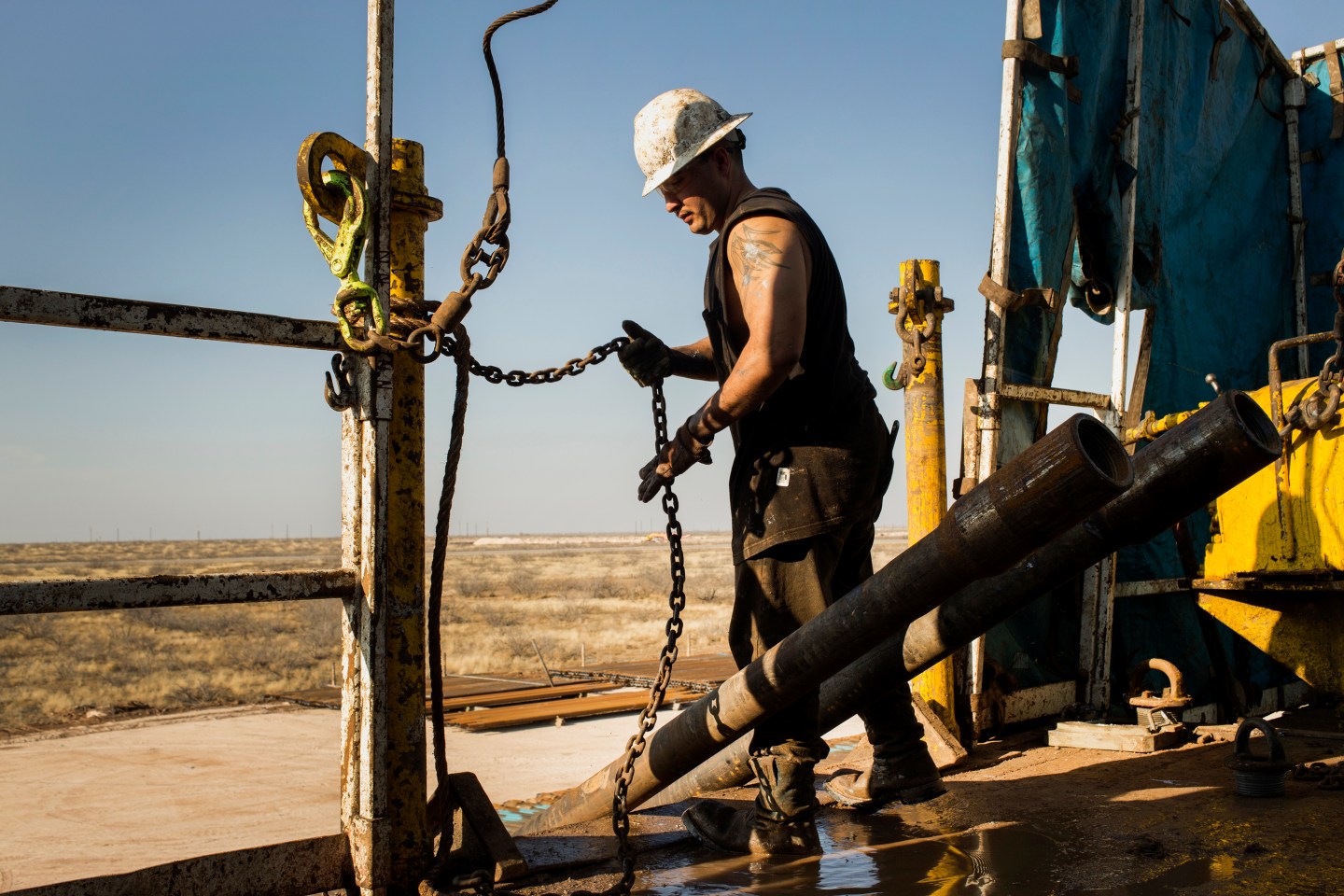
A worker prepares to lift drills by pulley to the main floor of Endeavor Energy Resources LP's Big Dog Drilling Rig 22 in the Permian basin outside of Midland, Texas, U.S., on Friday, Dec. 12, 2014. Of all the booming U.S. oil regions set soaring by a drilling renaissance in shale rock, the Permian and Bakken basins are among the most vulnerable to oil prices that settled at $57.81 a barrel Dec. 12. With enough crude by some counts to exceed the reserves of Saudi Arabia, theyre also the most critical to the future of the U.S. shale boom. Photographer: Brittany Sowacke/Bloomberg via Getty ImagesPhotograph by Brittany Sowacke—Bloomberg/Getty Images

The oil industry is going through its third crash in prices since the formation of the OPEC cartel. Many are wondering when the market will recover and what oil prices will be when it finally does.

The first price crash came in the mid-1980’s, a decade after OPEC’s formation. The second crash came at the onset of the Great Recession in 2008 when oil prices fell from over $100 a barrel to below $40. The third one is the present decline, which began around September 2014. What do the first two experiences tell us about how the present price collapse will play out?

Oil prices affect oil consumption slowly, and they affect oil production in non-OPEC countries very slowly. The OPEC cartel tries to maintain price targets by varying its own production in respo960nse to imbalances in the world oil market. This requires cooperation among its members and is far easier to do when the market pressure is pushing prices up than when it is pushing prices down. Maintaining prices is especially hard if the downward pressures are expected to be longer lasting rather than transitory.

The mid-1980s price decline proved to be long-lasting. When the major Mideast oil producers formed the OPEC cartel decades ago, they quadrupled the oil prices from $3 a barrel to $12 by producing a little less oil. Prices rose further in 1979 when the Shah of Iran was overthrown. The huge jumps in oil prices were a boon to oil producers. But they also brought about strong market responses that eventually pushed oil prices down. Non-OPEC production rose as a result of the creation of huge new fields in Alaska, the North Sea and elsewhere. Fuel efficiency became a key selling point in the aircraft and car markets. Oil prices collapsed when OPEC could not agree on output reductions to offset these changes in the global market. More importantly, these changes proved to be lasting, so that from the mid-1980s until 2000, prices rose only gradually from their 1986 lows.

The price collapse of 2008 happened differently and ended differently. By the turn of the century, changes in both the supply and demand side of the oil market started pushing up oil prices. New non-OPEC supplies were proving harder to find, war interrupted some Middle East production, and fuel demand from China expanded rapidly. By the summer of 2008, oil prices rose rapidly had gone above $100. And then the onset of the Great Recession crashed them to below $40. But this sharp drop in demand was transient: China’s fuel needs continued to surge and recovery started in the advanced economies, reviving their fuel demands. Production from the new shale oil industry added to global oil supply, but not enough to keep prices from rising. By 2012, the world oil price was back to over $100, and it stayed there until the present price collapse.

As this survey suggests, the key to today’s oil market is whether the forces that caused the price collapse in the past 15 months were temporary, like those in 2008, or long-lasting, like those in 1986. China’s growth has slowed, and that will be long lasting but may not be a big enough shift to dominate the oil outlook. The growth of the shale industry is much more important. Shale oil production will respond to the price of oil with only a modest lag—a key difference compared to the very slow response of conventional oil fields, and one that cuts both ways. It means supply will be curtailed more quickly in response to low prices. And it also means production will rise more quickly as prices recover.

The recent decline in shale production would suggest we are near a bottom in prices. But a couple of other factors will probably keep prices depressed longer. First, now that the embargo on Iranian exports has been lifted, Iran will be adding 0.5 million barrels per day to its output, and the other OPEC countries have refused to cut their production to accommodate that. Furthermore, oil inventories have been rising for several quarters and are at record levels. Reducing this overhang and absorbing the added production from Iran will both delay a return to normal production trends. The recovery, which might otherwise have started this winter, will probably be delayed until late next year.

When the market does return to trend, shale oil will be the marginal source of new oil and the price will depend on the evolving technology of this new industry. Shale output was soaring with prices at $100, and this rising supply, more than any other single development, is what caused the oil prices to plunge. When oil is back on its long-term price trend, the price is likely to be between $100, which brought forth too much oil, and $40, which in recent quarters was low enough to stop new drilling in some fields. A price near the middle of this range, $70, is a reasonable forecast at this distance.

George L. Perry is a Senior Fellow in Economic Studies at the Brookings Institution.

About the Author
By George L. Perry
See full bioRight Arrow Button Icon

Latest in Commentary

Finance
Lorem ipsum dolor sit amet, consectetur adipiscing elit, sed do eiusmod tempor incididunt ut labore et dolore magna aliqua. Ut enim ad minim veniam
By Fortune Editors
October 20, 2025
Finance
Lorem ipsum dolor sit amet, consectetur adipiscing elit, sed do eiusmod tempor incididunt ut labore et dolore magna aliqua. Ut enim ad minim veniam
By Fortune Editors
October 20, 2025
Finance
Lorem ipsum dolor sit amet, consectetur adipiscing elit, sed do eiusmod tempor incididunt ut labore et dolore magna aliqua. Ut enim ad minim veniam
By Fortune Editors
October 20, 2025
Finance
Lorem ipsum dolor sit amet, consectetur adipiscing elit, sed do eiusmod tempor incididunt ut labore et dolore magna aliqua. Ut enim ad minim veniam
By Fortune Editors
October 20, 2025
Finance
Lorem ipsum dolor sit amet, consectetur adipiscing elit, sed do eiusmod tempor incididunt ut labore et dolore magna aliqua. Ut enim ad minim veniam
By Fortune Editors
October 20, 2025
Finance
Lorem ipsum dolor sit amet, consectetur adipiscing elit, sed do eiusmod tempor incididunt ut labore et dolore magna aliqua. Ut enim ad minim veniam
By Fortune Editors
October 20, 2025

Most Popular

Finance
Lorem ipsum dolor sit amet, consectetur adipiscing elit, sed do eiusmod tempor incididunt ut labore et dolore magna aliqua. Ut enim ad minim veniam
By Fortune Editors
October 20, 2025
Finance
Lorem ipsum dolor sit amet, consectetur adipiscing elit, sed do eiusmod tempor incididunt ut labore et dolore magna aliqua. Ut enim ad minim veniam
By Fortune Editors
October 20, 2025
Finance
Lorem ipsum dolor sit amet, consectetur adipiscing elit, sed do eiusmod tempor incididunt ut labore et dolore magna aliqua. Ut enim ad minim veniam
By Fortune Editors
October 20, 2025
Finance
Lorem ipsum dolor sit amet, consectetur adipiscing elit, sed do eiusmod tempor incididunt ut labore et dolore magna aliqua. Ut enim ad minim veniam
By Fortune Editors
October 20, 2025
Finance
Lorem ipsum dolor sit amet, consectetur adipiscing elit, sed do eiusmod tempor incididunt ut labore et dolore magna aliqua. Ut enim ad minim veniam
By Fortune Editors
October 20, 2025
Finance
Lorem ipsum dolor sit amet, consectetur adipiscing elit, sed do eiusmod tempor incididunt ut labore et dolore magna aliqua. Ut enim ad minim veniam
By Fortune Editors
October 20, 2025
Rankings
  • 100 Best Companies
  • Fortune 500
  • Global 500
  • Fortune 500 Europe
  • Most Powerful Women
  • Future 50
  • World’s Most Admired Companies
  • See All Rankings
Sections
  • Finance
  • Leadership
  • Success
  • Tech
  • Asia
  • Europe
  • Environment
  • Fortune Crypto
  • Health
  • Retail
  • Lifestyle
  • Politics
  • Newsletters
  • Magazine
  • Features
  • Commentary
  • Mpw
  • CEO Initiative
  • Conferences
  • Personal Finance
  • Education
Customer Support
  • Frequently Asked Questions
  • Customer Service Portal
  • Privacy Policy
  • Terms Of Use
  • Single Issues For Purchase
  • International Print
Commercial Services
  • Advertising
  • Fortune Brand Studio
  • Fortune Analytics
  • Fortune Conferences
  • Business Development
About Us
  • About Us
  • Editorial Calendar
  • Press Center
  • Work At Fortune
  • Diversity And Inclusion
  • Terms And Conditions
  • Site Map

© 2025 Fortune Media IP Limited. All Rights Reserved. Use of this site constitutes acceptance of our Terms of Use and Privacy Policy | CA Notice at Collection and Privacy Notice | Do Not Sell/Share My Personal Information
FORTUNE is a trademark of Fortune Media IP Limited, registered in the U.S. and other countries. FORTUNE may receive compensation for some links to products and services on this website. Offers may be subject to change without notice.


Most Popular

placeholder alt text
Success
Billionaire philanthropy's growing divide: Mark Zuckerberg stops funding immigration reform as MacKenzie Scott doubles down on DEI
By Ashley LutzDecember 22, 2025
20 hours ago
placeholder alt text
Success
Former U.S. Secret Service agent says bringing your authentic self to work stifles teamwork: 'You don’t get high performers, you get sloppiness'
By Sydney LakeDecember 22, 2025
22 hours ago
placeholder alt text
Travel & Leisure
After pouring $450 million into Florida real estate, Larry Ellison plans to lure the ultrarich to an exclusive town just minutes from Mar-a-Lago
By Marco Quiroz-GutierrezDecember 22, 2025
24 hours ago
placeholder alt text
Future of Work
Meet a 55-year-old automotive technician in Arkansas who didn’t care if his kids went to college: ‘There are options’
By Muskaan ArshadDecember 21, 2025
2 days ago
placeholder alt text
Success
Multimillionaire musician Will.i.am says work-life balance is for people 'working on someone else’s dream'—he grinds from 5-to-9 after his 9-to-5
By Orianna Rosa RoyleDecember 21, 2025
2 days ago
placeholder alt text
Economy
Mitt Romney says the U.S. is on a cliff—and taxing the rich is now necessary 'given the magnitude of our national debt'
By Dave SmithDecember 22, 2025
21 hours ago

Latest in Commentary

beer
CommentaryFood and drink
Supporting moderation: beer’s structural advantage in the no-alcohol space
By Justin KissingerDecember 23, 2025
50 minutes ago
Chris Nicholas
CommentaryLeadership
I’m the Sam’s Club CEO and I’ve got an AI leadership reality check: let purpose, not promise, guide investment
By Chris NicholasDecember 22, 2025
24 hours ago
Geoff Green
Commentarymortgages
Your mortgage likely cost $11,500 to originate—and reams of paperwork. How Salesforce Agentforce is helping improve the process
By Geoff GreenDecember 22, 2025
1 day ago
sustainability
CommentarySustainability
2025: the year sustainability didn’t die 
By Andrew WinstonDecember 21, 2025
2 days ago
Thomas “Tom” McInerney is President, CEO and a Director of Genworth Financial
CommentaryCaregiving
I’m a CEO who’s spent nearly 40 years talking to presidents, lawmakers and leaders about our long-term care crisis. They knew this moment was coming
By Thomas McInerneyDecember 19, 2025
4 days ago
Kristin Olson
Commentaryinvesting advice
I lead Goldman Sachs’ alternatives for wealth globally. Around the world, investors want to know more 
By Kristin OlsonDecember 19, 2025
4 days ago