• Home
  • Latest
  • Fortune 500
  • Finance
  • Tech
  • Leadership
  • Lifestyle
  • Rankings
  • Multimedia
CommentaryCybersecurity

Cyber Espionage Is Reaching Crisis Levels

By
David J. Kappos
David J. Kappos
and
Pamela Passman
Pamela Passman
Down Arrow Button Icon
By
David J. Kappos
David J. Kappos
and
Pamela Passman
Pamela Passman
Down Arrow Button Icon
December 12, 2015, 10:00 AM ET
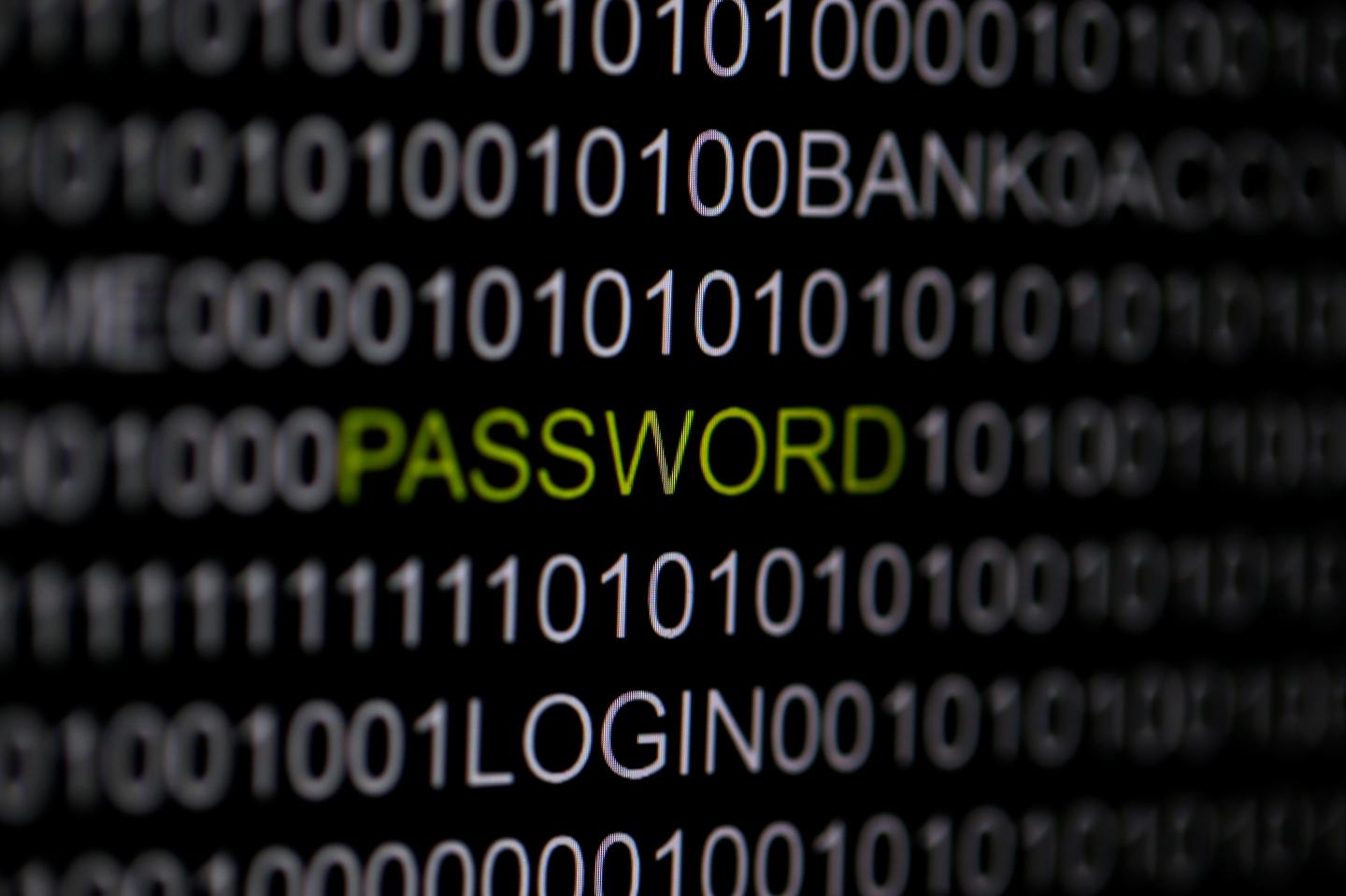
The word 'password' is pictured on a computer screen in this picture illustration taken in Berlin
The word 'password' is pictured on a computer screen in this picture illustration taken in Berlin May 21, 2013. The Financial Times' website and Twitter feeds were hacked May 17, 2013, renewing questions about whether the popular social media service has done enough to tighten security as cyber-attacks on the news media intensify. The attack is the latest in which hackers commandeered the Twitter account of a prominent news organization to push their agenda. Twitter's 200 million users worldwide send out more than 400 million tweets a day, making it a potent distributor of news. REUTERS/Pawel Kopczynski (GERMANY - Tags: CRIME LAW SCIENCE TECHNOLOGY) - RTXZUYOPhotograph by Pawel Kopczynski — Reuters

It’s no secret that companies work hard to protect their intellectual property from theft. For innovations where confidentiality is integral to value, trade secrecy law offers a bargain: make reasonable efforts to maintain confidentiality, and those efforts will be backed up by legal sanctions. However, the rise of cybercrime is forcing companies to reevaluate the way they protect their most valuable trade secrets.

Trade secret theft costs companies billions of dollars every year. Traditionally, these crimes took the form of bribing, dumpster-diving or, as in one famous case, aerial photography. These days, industrial espionage has gone digital, introducing new threats and magnifying the impact of established techniques. Even employee raiding, an age-old tactic of trade secret mis-appropriators, is made more problematic in modern times by the sheer volume of secrets that can be stolen via digital media.

But a still more ominous threat spawned by the digital age comes from remotely launched computer attacks. Cyber espionage has reached crisis levels. One study puts the cost of cybercrime at $24 billion to $120 billion in the U.S. and up to $1 trillion globally.

For modern corporations, the cross-border aspects of cyber espionage can cause significant challenges. One stark example of the difficulty of prosecuting international cyber espionage is the plight of AMSC, a U.S. firm specializing in software for wind turbines whose core product was allegedly stolen by Chinese turbine manufacturer Sinovel Wind Group Co. in 2011. Sinovel reportedly convinced an AMSC engineer to misappropriate code from Wisconsin, decrypt it in Austria, and email it to China. AMSC did not promptly detect the IT breach; rather, it identified the leak only after accidentally discovering its code in a Sinovel test facility in China.

By the time AMSC launched a cyber investigation, contacted the FBI, and ultimately obtained an indictment, counterfeit copies of their software had already been sold back into the United States in Sinovel’s products. Hamstrung by deficient cyber-intelligence, AMSC’s legal action proved to be too little too late. The named defendants are now all in non-extradition countries and Sinovel has deployed litigation defense tactics that have stalled the case in U.S. courts while AMSC’s stock has fallen from $370 per share to $5 per share.

The executive and legislative branches of the U.S. Government have ramped up anti-cyber espionage efforts and are on course to amend the Economic Espionage Act of 1996 to create a federal civil remedy for trade secret theft. These efforts, coupled with increased enforcement of trade secret laws at the state level, will address the majority of misappropriation that occurs domestically.

However, acts of trade secret theft originating from outside the U.S. continue to be difficult to address. In recent times, both domestic and international companies have begun to bring cases before the U.S. International Trade Commission (ITC). In 2011, the Federal Circuit concluded that the ITC “has authority to investigate and grant relief based in part on extraterritorial conduct insofar as it is necessary to protect domestic industries from injuries arising out of unfair competition in the domestic marketplace.”

This has been a helpful development, as the ITC is able to provide U.S. companies with a potent avenue of redress. It has the power to issue broad exclusion orders blocking importation and to draw adverse inferences against foreign parties who are non-responsive. Though the ITC cannot directly police the business practices of companies overseas, its adjudications can severely curtail the thieves’ advantages.

All this firepower needs to be backed up by robust trade secret identification and protection programs, along with vigorous misappropriation detection and response capabilities. These moves are critical to building the “evidence” that U.S. corporations need to successfully bring and win legal actions against cyber-facilitated trade secret theft, no matter its origin.

The implementation of an effective trade secret program is no longer within the skill set of any one department. Rather, cyber defense now requires a cross-functional dynamism between legal departments and internal cybersecurity information technology teams. These proactive joint efforts must align to identify and safeguard trade secrets before cyber thefts are carried out, and to respond when attacks do occur, in order to capture, isolate, retain and use the “evidence” needed to bring — and win — cases against cyber perpetrators.

By addressing trade secret protection in the broader context of “people, processes and technology,” companies can ensure that they are mitigating risks, more quickly identifying breaches and ultimately securing the information required to take meaningful action. This line of attack requires breaking down silos within companies and building strong, structured pathways for collaboration between cybersecurity and legal experts. This may require a realignment of organizational capabilities, but such a move is critical to enforcement and will ultimately deter cyber thieves, both domestic and foreign. At a projected annual savings in the many billions of dollars, innovative companies can hardly afford not to invest in this collaboration.

David J. Kappos is a partner at New York City-based law firm, Cravath, Swaine & Moore LLP, where he supports the firm’s clients with a wide range of intellectual property issues. From August 2009 to January 2013, Kappos served as director of the U.S. Patent and Trademark Office. He is a senior advisor for the Partnership for American Innovation. Pamela Passman is CEO of the Center for Responsible Enterprise and Trade (CREATe.org), an NGO that helps companies and their third parties prevent corruption and protect intellectual property and trade secrets. Prior to founding CREATe, she was CVP and Deputy General Counsel at Microsoft Corporation.


About the Authors
By David J. Kappos
See full bioRight Arrow Button Icon
By Pamela Passman
See full bioRight Arrow Button Icon

Latest in Commentary

Finance
Lorem ipsum dolor sit amet, consectetur adipiscing elit, sed do eiusmod tempor incididunt ut labore et dolore magna aliqua. Ut enim ad minim veniam
By Fortune Editors
October 20, 2025
Finance
Lorem ipsum dolor sit amet, consectetur adipiscing elit, sed do eiusmod tempor incididunt ut labore et dolore magna aliqua. Ut enim ad minim veniam
By Fortune Editors
October 20, 2025
Finance
Lorem ipsum dolor sit amet, consectetur adipiscing elit, sed do eiusmod tempor incididunt ut labore et dolore magna aliqua. Ut enim ad minim veniam
By Fortune Editors
October 20, 2025
Finance
Lorem ipsum dolor sit amet, consectetur adipiscing elit, sed do eiusmod tempor incididunt ut labore et dolore magna aliqua. Ut enim ad minim veniam
By Fortune Editors
October 20, 2025
Finance
Lorem ipsum dolor sit amet, consectetur adipiscing elit, sed do eiusmod tempor incididunt ut labore et dolore magna aliqua. Ut enim ad minim veniam
By Fortune Editors
October 20, 2025
Finance
Lorem ipsum dolor sit amet, consectetur adipiscing elit, sed do eiusmod tempor incididunt ut labore et dolore magna aliqua. Ut enim ad minim veniam
By Fortune Editors
October 20, 2025

Most Popular

Finance
Lorem ipsum dolor sit amet, consectetur adipiscing elit, sed do eiusmod tempor incididunt ut labore et dolore magna aliqua. Ut enim ad minim veniam
By Fortune Editors
October 20, 2025
Finance
Lorem ipsum dolor sit amet, consectetur adipiscing elit, sed do eiusmod tempor incididunt ut labore et dolore magna aliqua. Ut enim ad minim veniam
By Fortune Editors
October 20, 2025
Finance
Lorem ipsum dolor sit amet, consectetur adipiscing elit, sed do eiusmod tempor incididunt ut labore et dolore magna aliqua. Ut enim ad minim veniam
By Fortune Editors
October 20, 2025
Finance
Lorem ipsum dolor sit amet, consectetur adipiscing elit, sed do eiusmod tempor incididunt ut labore et dolore magna aliqua. Ut enim ad minim veniam
By Fortune Editors
October 20, 2025
Finance
Lorem ipsum dolor sit amet, consectetur adipiscing elit, sed do eiusmod tempor incididunt ut labore et dolore magna aliqua. Ut enim ad minim veniam
By Fortune Editors
October 20, 2025
Finance
Lorem ipsum dolor sit amet, consectetur adipiscing elit, sed do eiusmod tempor incididunt ut labore et dolore magna aliqua. Ut enim ad minim veniam
By Fortune Editors
October 20, 2025
Fortune Secondary Logo
Rankings
  • 100 Best Companies
  • Fortune 500
  • Global 500
  • Fortune 500 Europe
  • Most Powerful Women
  • Future 50
  • World’s Most Admired Companies
  • See All Rankings
Sections
  • Finance
  • Fortune Crypto
  • Features
  • Leadership
  • Health
  • Commentary
  • Success
  • Retail
  • Mpw
  • Tech
  • Lifestyle
  • CEO Initiative
  • Asia
  • Politics
  • Conferences
  • Europe
  • Newsletters
  • Personal Finance
  • Environment
  • Magazine
  • Education
Customer Support
  • Frequently Asked Questions
  • Customer Service Portal
  • Privacy Policy
  • Terms Of Use
  • Single Issues For Purchase
  • International Print
Commercial Services
  • Advertising
  • Fortune Brand Studio
  • Fortune Analytics
  • Fortune Conferences
  • Business Development
  • Group Subscriptions
About Us
  • About Us
  • Editorial Calendar
  • Press Center
  • Work At Fortune
  • Diversity And Inclusion
  • Terms And Conditions
  • Site Map
  • About Us
  • Editorial Calendar
  • Press Center
  • Work At Fortune
  • Diversity And Inclusion
  • Terms And Conditions
  • Site Map
  • Facebook icon
  • Twitter icon
  • LinkedIn icon
  • Instagram icon
  • Pinterest icon

Latest in Commentary

messi
CommentaryFlorida
Apollo and FC Barcelona just proved legacy markets are losing their grip on business
By Mike SimasApril 2, 2026
14 hours ago
kroenke
CommentarySoccer
Why American billionaires are abandoning Wall Street for English soccer clubs
By Andrés MartinezApril 2, 2026
16 hours ago
wyle
CommentaryTV
What HBO’s ‘The Pitt’ gets right—and wrong—about treating alcohol use disorder
By Jonathan Hunt-GlassmanApril 2, 2026
20 hours ago
nic
CommentaryInsider trading
Prediction markets caught insider traders in real time. Congress wants to shut them down anyway
By Nic PuckrinApril 2, 2026
21 hours ago
elon
CommentarySpaceX
The SpaceX IPO is great — but it won’t deliver 100x returns 
By Jeffrey StewartApril 1, 2026
1 day ago
gary
Commentaryregulation
The biggest mistake CEOs make with AI has nothing to do with the technology
By Gary ShapiroApril 1, 2026
2 days ago

Most Popular

Gen Z fled San Francisco for Texas and Florida. Now they’re turning ‘welcomer cities’ into the next big tech towns
Real Estate
Gen Z fled San Francisco for Texas and Florida. Now they’re turning ‘welcomer cities’ into the next big tech towns
By Fortune EditorsApril 2, 2026
1 day ago
Major 4-day workweek study suggests that when we work 5 days we spend one doing basically nothing
Success
Major 4-day workweek study suggests that when we work 5 days we spend one doing basically nothing
By Fortune EditorsApril 2, 2026
18 hours ago
Current price of gold as of April 1, 2026
Personal Finance
Current price of gold as of April 1, 2026
By Fortune EditorsApril 1, 2026
2 days ago
Current price of oil as of April 2, 2026
Personal Finance
Current price of oil as of April 2, 2026
By Fortune EditorsApril 2, 2026
19 hours ago
Paul Krugman smacks down Trump speech with argument that $4 gas is ‘less than half’ of the Hormuz hit. Here’s what he’s talking about
Economy
Paul Krugman smacks down Trump speech with argument that $4 gas is ‘less than half’ of the Hormuz hit. Here’s what he’s talking about
By Fortune EditorsApril 2, 2026
14 hours ago
The tax escape map: Billionaires are bolting for Florida from the West Coast and taking billions in tax revenue with them
Real Estate
The tax escape map: Billionaires are bolting for Florida from the West Coast and taking billions in tax revenue with them
By Fortune EditorsApril 2, 2026
1 day ago

© 2026 Fortune Media IP Limited. All Rights Reserved. Use of this site constitutes acceptance of our Terms of Use and Privacy Policy | CA Notice at Collection and Privacy Notice | Do Not Sell/Share My Personal Information
FORTUNE is a trademark of Fortune Media IP Limited, registered in the U.S. and other countries. FORTUNE may receive compensation for some links to products and services on this website. Offers may be subject to change without notice.