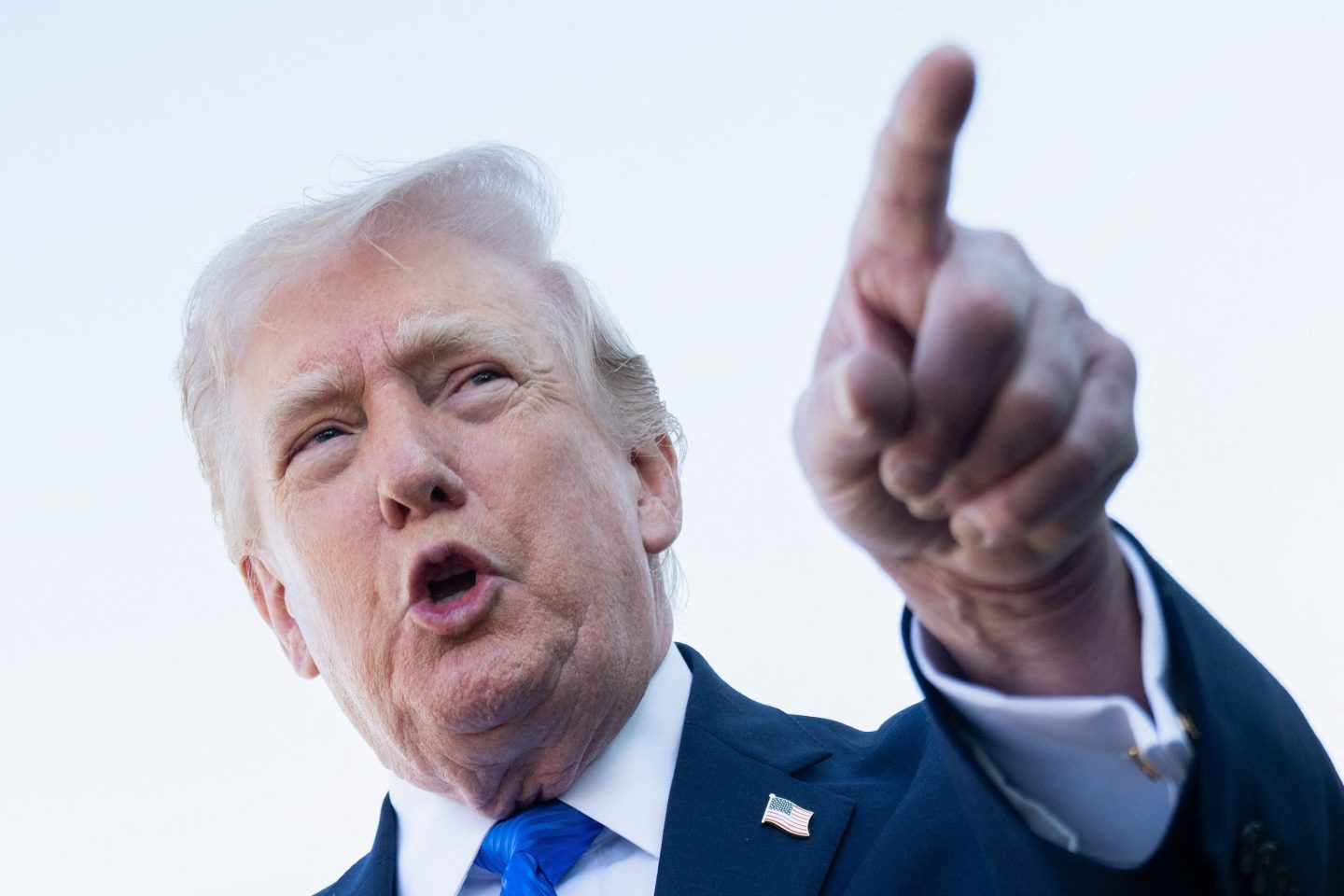
There’s one thing that scares Republicans more than the prospect of Donald Trump refusing to drop out of the GOP presidential race. And that’s the notion that he would drop out — only to mount an independent bid.
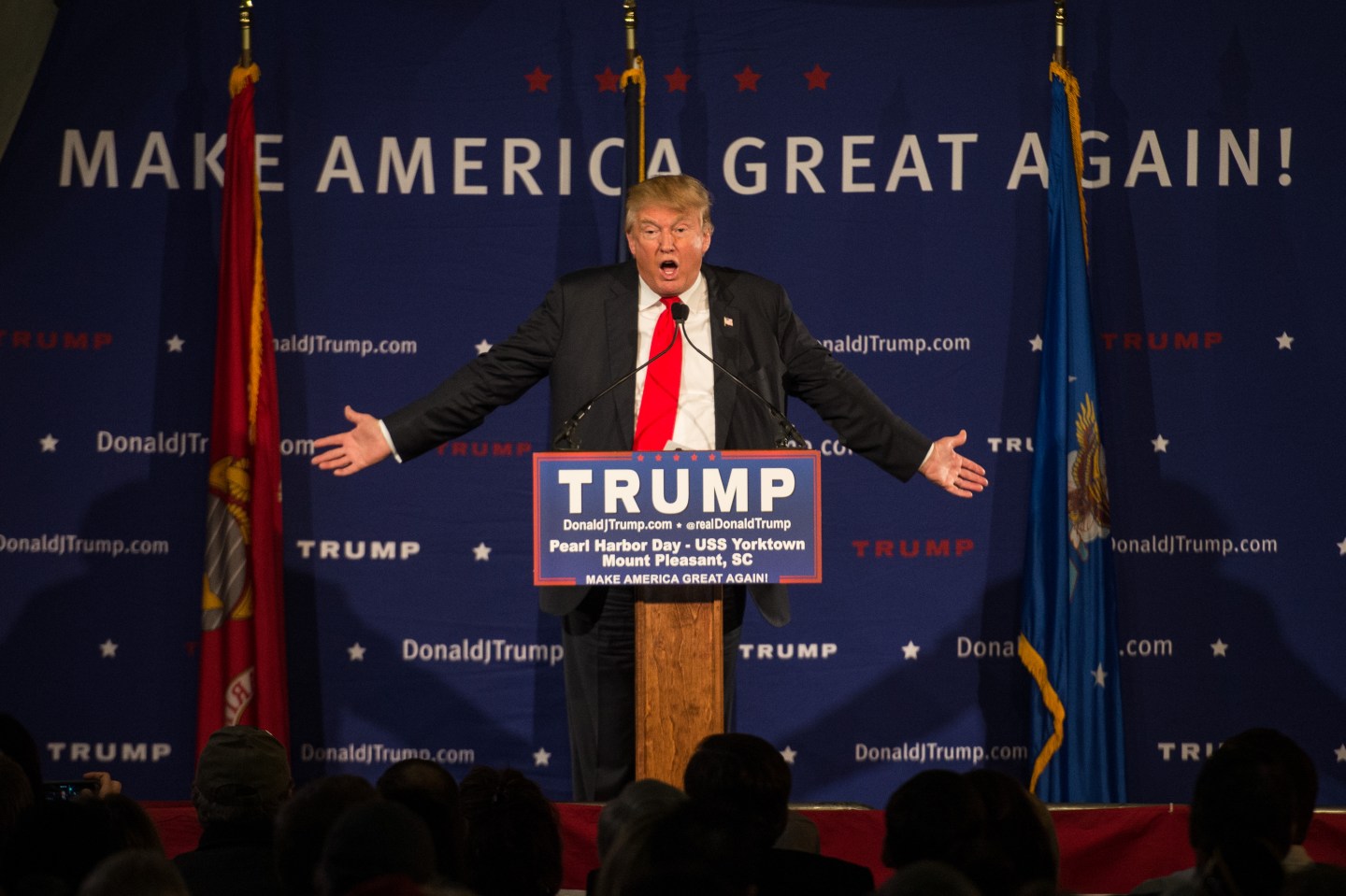
Trump would be an exceedingly long shot to win. He’d likely bring the Republican nominee down with him by splitting the conservative vote. It amounts to a nuclear option the longstanding frontrunner likes to trot out — a finger dangling over a red button — when the GOP closes ranks against him, as they did this week when he proposed banning all Muslim travel to the U.S.
You may recall Trump signing a loyalty oath to the Republican Party back in September, pledging to support the eventual GOP standard-bearer. Republican National Committee leaders hatched the exercise specifically to guard against an independent run by Trump. But the candidate has since indicated he doesn’t feel bound to honor the commitment. On Tuesday, in response to the blowback from party leaders to his anti-Muslim proposal, he pointed in a tweet to a poll showing 68% of his supporters would follow him if he bolted. Appearing on CNN on Wednesday night, Trump called the possibility “highly unlikely” but added, “If they don’t treat me with a certain amount of decorum and respect … then certainly all options are open.”
What would it take for Trump to make good on the threat? Launching a serious independent candidacy would require him to get his name on 50 different state ballots, which is ordinarily a tricky endeavor.
Yet Trump can already count on two of the three key resources that project demands. He’s got more than enough money to cover the costs, which would quickly extend into the millions — for filing fees, lawyers to navigate the thicket of state election laws, and ground troops to gather signatures for filing petitions in the 48 states that require them. And as his stadium-filling rallies have demonstrated, just by showing up, he can summon the hordes of devotees he’ll need to actually sign those petitions on his behalf (figure more than a half-million verified signatures, though there’s some wiggle room).
The third resource — time — could prove a bigger headache. Trump seems intent on contesting at least the first run of primaries, which kick off Feb. 1 in Iowa. They reach an early crescendo in the first two weeks of March, when 25 states stage their events — including, crucially, Texas and Ohio. Both states have “sore loser” laws to prohibit a candidate from getting on the ballot as an independent after competing as a member of another party.
Trump could likely mount successful legal challenges to both, says Richard Winger, editor of Ballot Access News. In Texas, he’d have to hurry: the Lone Star State requires independent candidates to file their ballot access petitions in May, one of the earliest deadlines.
And in Ohio, Secretary of State John Husted has already said that because Trump participated in the first GOP debate, in Cleveland back in August, he has effectively declared himself a Republican and won’t be eligible for the ballot there as an independent. Winger said that decision likely wouldn’t hold up, pointing to the fact that Lyndon LaRouche competed in three successive presidential elections in the state, starting in 1984, each time running first as a Democrat and then an independent.
Historical precedent suggests it’s doable. Ross Perot didn’t launch his 1992 independent presidential bid until March of that year. He managed to appear on every ballot, ultimately earning close to 19% of the popular vote nationwide, the best independent showing in a presidential race in a century. In 1980, John Anderson contested a score of Republican primary events before dropping out in April to launch an independent bid. He managed to make every ballot, despite having missed a handful of filing deadlines. Pulling off this feat required him to win five lawsuits, including one, against Ohio, that went to the U.S. Supreme Court. “It can be done,” Winger says, “but it’s a lot of work.”
And Trump’s team would have to manage the ballot access campaign alongside his presidential bid itself—a dynamic that Republicans could exploit to try to knock him off balance. In 2004, Democrats filed 29 complaints against Ralph Nader’s campaign to drain resources and focus from a candidacy that threatened to siphon support from their nominee, according to Oliver Hall, founder of the Center for Competitive Democracy. “Trump’s money makes it not as big a problem,” Hall said. “But the human resources matter. You have to know what you’re doing to run a successful petition drive.”
The ultimate hurdle for Trump is more philosophical. He’s said repeatedly he’s only running to win. Mounting an independent bid would almost assuredly mean giving up on that goal. Would the draw of the crowds and attention compel him to keep going anyway? Only Trump can answer.