• Home
  • Latest
  • Fortune 500
  • Finance
  • Tech
  • Leadership
  • Lifestyle
  • Rankings
  • Multimedia

Trendingnow

1

Jeff Bezos wants the bottom half of earners to pay zero income tax—he says nurses making just $75K should save $12K a year

2

Indeed chief economist says we’re entering an era of ‘great mismatch’ thanks to a generational imbalance of workers

3

Microsoft reports are exposing AI's real cost problem: Using the tech is more expensive than paying human employees

1

Jeff Bezos wants the bottom half of earners to pay zero income tax—he says nurses making just $75K should save $12K a year

2

Indeed chief economist says we’re entering an era of ‘great mismatch’ thanks to a generational imbalance of workers

3

Microsoft reports are exposing AI's real cost problem: Using the tech is more expensive than paying human employees
CommentaryNRG Energy

America’s energy industry just lost a visionary leader

By
Nicholas Moore Eisenberger
Down Arrow Button Icon
By
Nicholas Moore Eisenberger
Down Arrow Button Icon
December 4, 2015, 11:36 AM ET
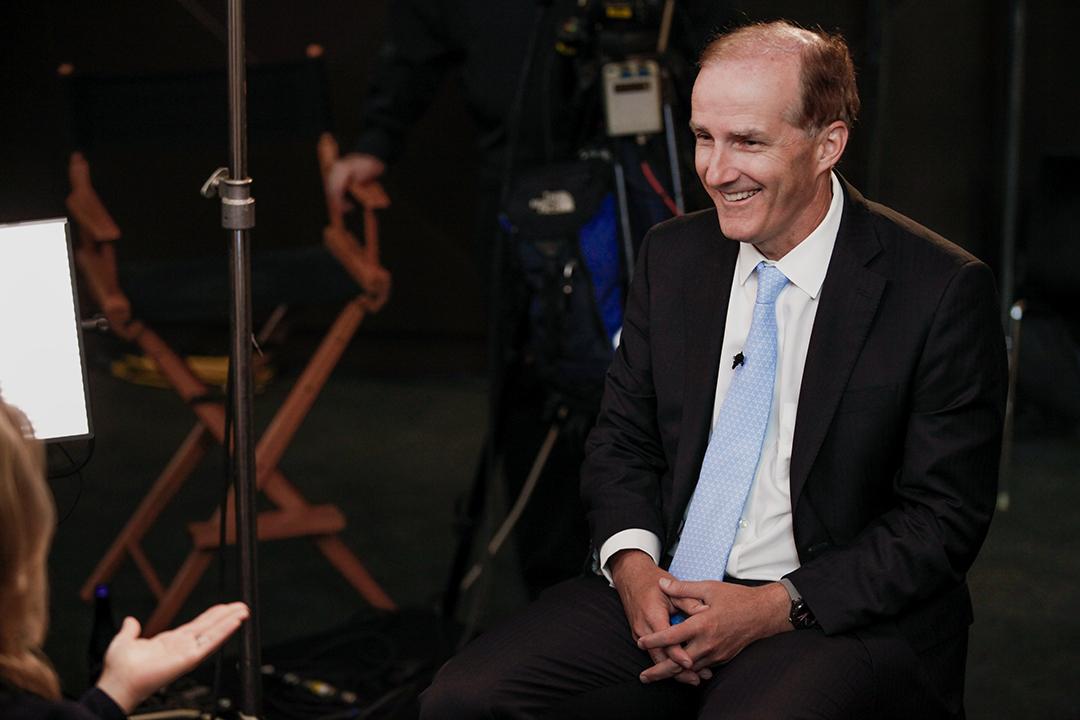
Photograph by Chris Goodney — Bloomberg via Getty Images

When I heard the news about David Crane stepping down as CEO of NRG, my first thought was… darn, the empire strikes back, again!

Indeed, I have seen this movie before. In my former life as a sustainability strategy advisor, I worked with former CEO John Browne at BP (BP) and ex CEO Jim Rogers at Duke Energy (AKAM), both visionary leaders trying to transform the energy business.

Like Crane, they both sat astride big energy companies and saw that the long-term profitability, even viability, of the businesses they ran would be threatened if they did not reduce their reliance on fossil-based energy. Both developed strategies for leading their companies toward a lower-carbon future. Both made boldly articulated (but frankly still measured) steps in that direction … and both failed. Even their modest efforts were roundly rejected by the system. Yes, there were other factors that can explain why they failed. Yes, they were both flawed human beings like the rest of us. But at the core, their efforts at transformation failed because today’s energy business is horribly resistant to change.

For comparison, the pharmaceutical industry invests over 15% of its profits on research and development each year. The software industry over 13%. The energy industry? Less than1%. Conventional energy businesses resist change not because they are run by bad people in the thrall of the dark side. They do so because of the incentives they face. Utility regulators require micro-second reliability (but does it really matter if your fridge has power now versus 5 to10 seconds from now?) and pay power companies for the volume of power provided and power assets deployed, not the intrinsic value they create for customers. And certainly not for providing less energy. As former Exelon CEO John Rowe once said, if you want utilities to deliver energy more efficiently, “the rat must smell the cheese.”

The increasing short term-ism embedded in the stock market is also to blame. At the end of the Second World War, investors held stocks for four years on average. By 2000, that was down to eight months, and by 2012, a mere five days. The pressure to deliver short-term results is massive. As a result, companies across the energy sector (and others) are spending more money on buying back their stock from shareholders to boost immediate returns than they are in investing in cleaner forms of energy that can take them into the future.

Crane saw clearly where this leads business and society. As the CEO of the nation’s largest independent power producer, he saw an opportunity to chart a different path than his regulated brethren. He believed it was possible to build an energy company more like Google (GOOG) and Apple (AAPL) – one based on serving customers’ broader needs rather than simply delivering a commodity that they take for granted. He understood how digital technologies are making it increasingly possible to completely re-think how energy is produced, delivered, and used. He embraced the rapid growth of distributed, renewable energy and saw the limited runway that the central-station, fossil-dependent utility model has left.

In March of 2014, Crane wrote an open letter to shareholders declaring his intentions. Forward-thinking people were electrified. Crane was toasted at conferences and in the press. Talented employees flocked to NRG to work for him and create this new kind of energy company. NRG invested in building its utility, commercial, and residential solar businesses, which grew rapidly. It bought an electric vehicle charging company. They announced audacious carbon-reduction goals and launched a business to capture and commercialize the carbon emitted by their conventional power plants.

But shareholders were apparently appalled. NRG’s stock price fell from over $37 a share in June of 2014 to under $11 a share at the beginning of this month. The traditional energy investors that make up the bulk of NRG’s shareholder base wanted predictable, reliable cash flows and dividends, not innovation and growth.

While much of the stock slide could be attributed to the overall bear market in the energy sector, they used it to pressure Crane to sell off a majority share in NRG’s green businesses. Despite announcing a plan to do exactly that in September, the stock continued to fall. And now, the game is up. Crane has resigned.

I am sure there will be a lot of finger pointing, much of it at Crane. And like Browne and Rogers before him, he had his flaws. But this was a huge lost opportunity for the energy sector and all of us. I saw up close how Crane reacted to the pressure he was under and it was abundantly clear that he was not interested in just maintaining his position of power. His goal was to transform the energy business.

With the steep decline in NRG’s stock price, there was a brief opportunity for investors who shared this vision to step in and buy the whole company cheaply and create a juggernaut, innovation-driven power company that would progressively shed its fossil-assets and grow its green businesses. But it seems that’s not to be, at least for now. I can’t think of anyone in the conventional energy sector who has the same passion, vision, or seat of power that Crane had. That someone like that – warts and all – has been prevented from investing in the future is the real dark side of the way the market works today. Even though the “Force Awakens” will be release later this month, I sadly think we’ll be waiting a good long time for the return of another energy sector Jedi.

Nicholas Moore Eisenberger is a co-founder and Managing Partner at SuperCollider, an investment and venture design firm focused on early stage companies using digital technologies to transform how we use energy and resources. Neither Eisenberger nor SuperCollider are investors of NRG Energy.

About the Author
By Nicholas Moore Eisenberger
See full bioRight Arrow Button Icon

Latest in Commentary

Finance
Lorem ipsum dolor sit amet, consectetur adipiscing elit, sed do eiusmod tempor incididunt ut labore et dolore magna aliqua. Ut enim ad minim veniam
By Fortune Editors
October 20, 2025
Finance
Lorem ipsum dolor sit amet, consectetur adipiscing elit, sed do eiusmod tempor incididunt ut labore et dolore magna aliqua. Ut enim ad minim veniam
By Fortune Editors
October 20, 2025
Finance
Lorem ipsum dolor sit amet, consectetur adipiscing elit, sed do eiusmod tempor incididunt ut labore et dolore magna aliqua. Ut enim ad minim veniam
By Fortune Editors
October 20, 2025
Finance
Lorem ipsum dolor sit amet, consectetur adipiscing elit, sed do eiusmod tempor incididunt ut labore et dolore magna aliqua. Ut enim ad minim veniam
By Fortune Editors
October 20, 2025
Finance
Lorem ipsum dolor sit amet, consectetur adipiscing elit, sed do eiusmod tempor incididunt ut labore et dolore magna aliqua. Ut enim ad minim veniam
By Fortune Editors
October 20, 2025
Finance
Lorem ipsum dolor sit amet, consectetur adipiscing elit, sed do eiusmod tempor incididunt ut labore et dolore magna aliqua. Ut enim ad minim veniam
By Fortune Editors
October 20, 2025

Most Popular

Finance
Lorem ipsum dolor sit amet, consectetur adipiscing elit, sed do eiusmod tempor incididunt ut labore et dolore magna aliqua. Ut enim ad minim veniam
By Fortune Editors
October 20, 2025
Finance
Lorem ipsum dolor sit amet, consectetur adipiscing elit, sed do eiusmod tempor incididunt ut labore et dolore magna aliqua. Ut enim ad minim veniam
By Fortune Editors
October 20, 2025
Finance
Lorem ipsum dolor sit amet, consectetur adipiscing elit, sed do eiusmod tempor incididunt ut labore et dolore magna aliqua. Ut enim ad minim veniam
By Fortune Editors
October 20, 2025
Finance
Lorem ipsum dolor sit amet, consectetur adipiscing elit, sed do eiusmod tempor incididunt ut labore et dolore magna aliqua. Ut enim ad minim veniam
By Fortune Editors
October 20, 2025
Finance
Lorem ipsum dolor sit amet, consectetur adipiscing elit, sed do eiusmod tempor incididunt ut labore et dolore magna aliqua. Ut enim ad minim veniam
By Fortune Editors
October 20, 2025
Finance
Lorem ipsum dolor sit amet, consectetur adipiscing elit, sed do eiusmod tempor incididunt ut labore et dolore magna aliqua. Ut enim ad minim veniam
By Fortune Editors
October 20, 2025
Fortune Secondary Logo
Rankings
  • 100 Best Companies
  • Fortune 500
  • Global 500
  • Fortune 500 Europe
  • Most Powerful Women
  • World's Most Admired Companies
  • See All Rankings
  • Lists Calendar
Sections
  • Finance
  • Fortune Crypto
  • Features
  • Leadership
  • Health
  • Commentary
  • Success
  • Retail
  • Mpw
  • Tech
  • Lifestyle
  • CEO Initiative
  • Asia
  • Politics
  • Conferences
  • Europe
  • Newsletters
  • Personal Finance
  • Environment
  • Magazine
  • Education
Customer Support
  • Frequently Asked Questions
  • Customer Service Portal
  • Privacy Policy
  • Terms Of Use
  • Single Issues For Purchase
  • International Print
Commercial Services
  • Advertising
  • Fortune Brand Studio
  • Fortune Analytics
  • Fortune Conferences
  • Business Development
  • Group Subscriptions
About Us
  • About Us
  • Press Center
  • Work At Fortune
  • Terms And Conditions
  • Site Map
  • About Us
  • Press Center
  • Work At Fortune
  • Terms And Conditions
  • Site Map
  • Facebook icon
  • Twitter icon
  • LinkedIn icon
  • Instagram icon
  • Pinterest icon

Latest in Commentary

employees
CommentarySuccession
Millions of business owners are about to retire. They should sell to their employees
By Matt Helmer and Maxwell JohnsonMay 23, 2026
5 hours ago
Ashley Yetman
Commentarydisruption
Everyone is blaming AI for the death of ‘craft.’ Take a good look in the mirror
By Ashley YetmanMay 23, 2026
5 hours ago
clay
CommentaryLoneliness
I’ve spent 25 years studying loneliness. AI is about to make it much worse
By Clay RoutledgeMay 23, 2026
7 hours ago
ambrose
CommentaryRobotics
Former NASA Robotics Chief: America is building the wrong kind of robots — and China knows it
By Robert AmbroseMay 23, 2026
7 hours ago
morris
CommentaryEntrepreneurship
My startup hit $200 million ARR. But first I walked away from 2.5 million YouTube subscribers and nearly went bankrupt
By Joel MorrisMay 23, 2026
9 hours ago
brotman
CommentaryVenture Capital
I’ve spent 25 years in venture capital. Here’s how it quietly shut ordinary Americans out of the AI wealth boom—and what could fix it
By Steve BrotmanMay 22, 2026
1 day ago

Most Popular

Jeff Bezos wants the bottom half of earners to pay zero income tax—he says nurses making just $75K should save $12K a year
Success
Jeff Bezos wants the bottom half of earners to pay zero income tax—he says nurses making just $75K should save $12K a year
By Preston ForeMay 21, 2026
2 days ago
Indeed chief economist says we’re entering an era of ‘great mismatch’ thanks to a generational imbalance of workers
Success
Indeed chief economist says we’re entering an era of ‘great mismatch’ thanks to a generational imbalance of workers
By Emma BurleighMay 22, 2026
1 day ago
Microsoft reports are exposing AI's real cost problem: Using the tech is more expensive than paying human employees
AI
Microsoft reports are exposing AI's real cost problem: Using the tech is more expensive than paying human employees
By Jake AngeloMay 22, 2026
23 hours ago
Apple’s Steve Wozniak says he cofounded the tech giant after 5 rejections from HP—not to ‘make money.’ For years, his paycheck was just $50
Success
Apple’s Steve Wozniak says he cofounded the tech giant after 5 rejections from HP—not to ‘make money.’ For years, his paycheck was just $50
By Preston ForeMay 22, 2026
1 day ago
Despite a $500 million net worth, Shaq just finished his fourth degree. He warns graduates: 'Your character will take you further than your resume'
Success
Despite a $500 million net worth, Shaq just finished his fourth degree. He warns graduates: 'Your character will take you further than your resume'
By Preston ForeMay 20, 2026
3 days ago
Bolt CEO says he let go of his entire HR team for creating problems that didn’t exist: ‘Those problems disappeared when I let them go’ 
Workplace Culture
Bolt CEO says he let go of his entire HR team for creating problems that didn’t exist: ‘Those problems disappeared when I let them go’ 
By Preston ForeMay 19, 2026
4 days ago

© 2026 Fortune Media IP Limited. All Rights Reserved. Use of this site constitutes acceptance of our Terms of Use and Privacy Policy | CA Notice at Collection and Privacy Notice | Do Not Sell/Share My Personal Information
FORTUNE is a trademark of Fortune Media IP Limited, registered in the U.S. and other countries. FORTUNE may receive compensation for some links to products and services on this website. Offers may be subject to change without notice.