
• Home
  • Latest
  • Fortune 500
  • Finance
  • Tech
  • Leadership
  • Lifestyle
  • Rankings
  • Multimedia
TechNSA

No, NSA Phone Spying Has Not Ended

Robert Hackett
By
Robert Hackett
Robert Hackett
Down Arrow Button Icon
Robert Hackett
By
Robert Hackett
Robert Hackett
Down Arrow Button Icon
December 1, 2015, 12:05 AM ET
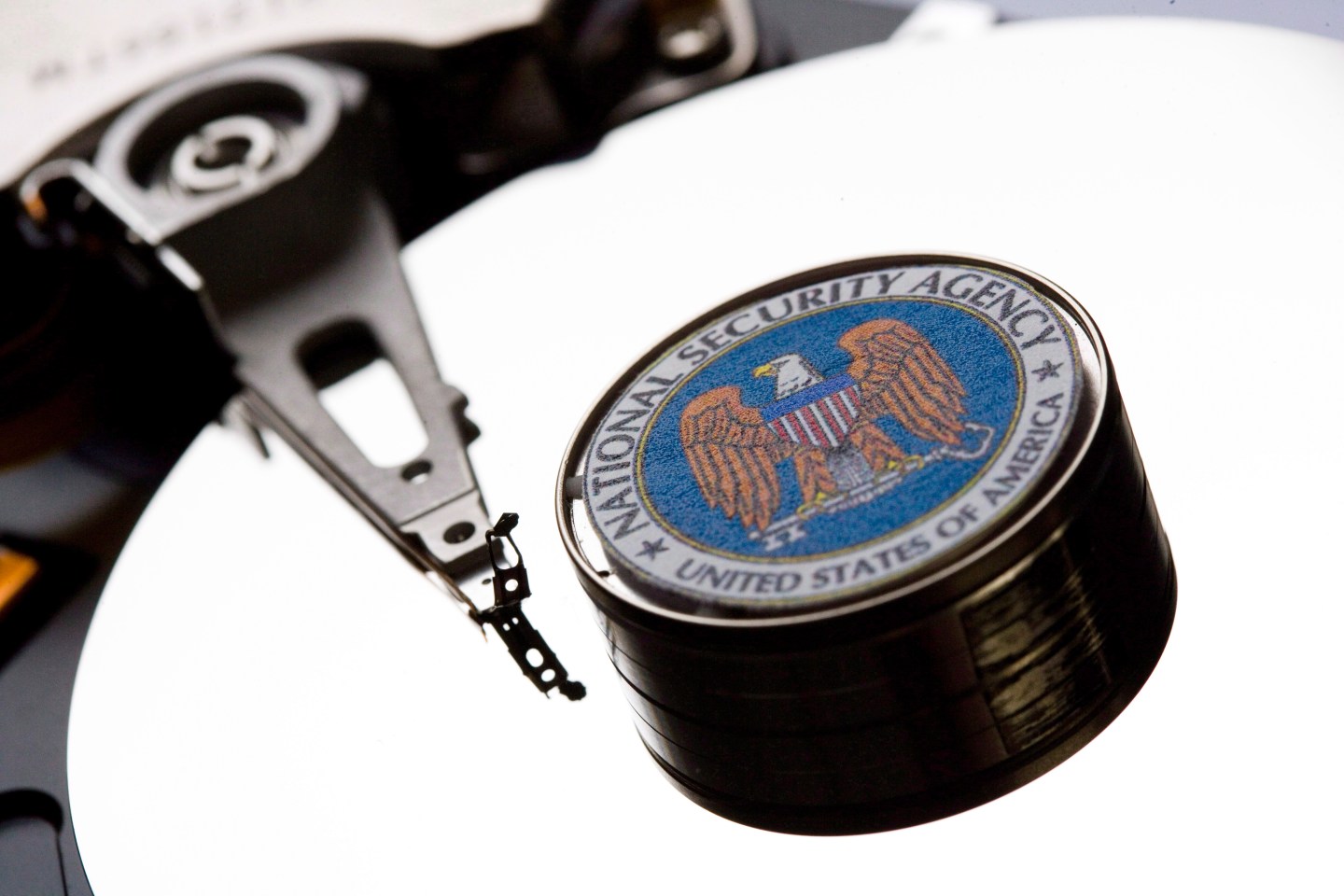
Symbol Photo Computer Hard Drive With NSA Logo.
GERMANY, BONN - DECEMBER 12: Symbol photo of a computer hard drive with the logo of the National Security Agency (NSA), on December 12, 2014 in Bonn, Germany. (Photo by Ulrich Baumgarten via Getty Images)Photograph by Ulrich Baumgarten—Getty Images

At 11:59 P.M. on Saturday night, the U.S. National Security Agency supposedly yanked the cord on its bulk telephone records collection, thereby ending an expansive surveillance program that the nation’s intelligence community put in place in the wake of the September 11, 2001 terror attacks.

“There will be no analytic access to the collected metadata after this time,” the Office of the Director of National Intelligence (ODNI) said in a statement.

The public learned of the agency’s spying program after Edward Snowden—ex-NSA contractor and whistleblower extraordinaire—leaked information about it to news outlets in 2013. That revelation provoked an uproar among privacy advocates, and Congress eventually reacted by replacing parts of the U.S.A. Patriot Act, which authorized the privacy-invasive program, with a seemingly-less-intrusive piece of legislation, the U.S.A. Freedom Act, over the summer.

It would be wrong to conclude, however, that this moment signaled the demise of the agency’s surveillance powers. Rather, the NSA has transitioned to a new system. The reformed scheme addresses the most controversial aspects of the collection program, but questions remain about its implementation. Here’s everything you need to know about the change.

What happened at midnight on Saturday?

When the clock struck midnight, a 6-month-long “orderly transition” period for the NSA expired. After the Freedom Act became law in early June, the agency was granted a 180-day grace period to get its affairs in order before putting an end to the bulk phone metadata collection program authorized by a particular portion—Section 215—of the Patriot Act. Under the new guidelines, the NSA no longer may directly collect and hold data about the domestic phone records of U.S. citizens.

Instead, telecom companies will retain and access the data on their customers. The NSA may then seek warrants from the secretive courts created by the Foreign Intelligence Surveillance Act (FISA) in order to compel these companies to hand over pertinent information on terrorism suspects and affiliates. The requests are not done in bulk, but rather require “specific selectors” such as the phone number of an individual. The NSA then has up to 180-days to query the telecom companies for more data—on socially connected persons of interest, so-called one-to-two degree “hops” on their networks—before seeking a renewed authority from a FISA court.

There are exceptions to these items though.

What kinds of exceptions?

Notably, the NSA’s bulk collection database still exists. The agency has requested permission to keep its records for the past five years intact through Feb. 29, 2016. This will ostensibly allow the agency to make sure nothing has gone awry during the transition. Access will be “limited to technical personnel and solely for the purpose of verifying that the new targeted production mechanism authorized by the USA FREEDOM Act is working as intended,” ODNI said in a statement. The database is “hands off” for analysts. Additionally, it’s worth noting that the NSA must retain these records until all lawsuits regarding the original program are resolved.

What’s inside the database?

As mentioned, the database contains metadata. It includes information on phone calls such as who, when, and how long—for instance, the identity of the sender and recipient, the duration, and the time and date. Metadata does not include the content of conversations. However, that doesn’t make it any less of a treasure trove for dot-connecting investigators.

Why did the NSA need such broad powers to begin with?

The agency argued that it needed quick insight about possible terrorists’ networks in case another attack struck. That way the NSA could find out vital intel in emergency situations at the drop of a hat.

On the face of it, that capability might seem reasonable. The argument gains support in the wake of the recent terror attacks in Paris as well as other places around the world. An investigation into the success of the program, however, revealed no evidence that the program ever helped in any case. “We have not identified a single instance involving a threat to the United States in which the telephone records program made a concrete difference in the outcome of a counterterrorism investigation,” concluded a privacy and civil liberties board set up by the president last year, which reviewed the program’s efficacy (or lack thereof).

Plus, privacy advocates have been quick to note the potential for abuse and lack of checks and balances for whomever has access to the database.

Will any parts of the old program continue?

In addition to the technical extension of the database until Feb. 29, 2016, as mentioned above, there is another quandary. An overlooked clause in a note accompanying the Patriot Act seems to authorize bulk collection indefinitely for “ongoing investigations.” There’s some debate about what this means exactly, as the New York Times has reported. For instance, does the authority of that supplementary note supersede the Freedom Act? The answer is not immediately clear. Also, do campaigns against al-Qaeda and ISIS qualify as ongoing investigations? And if so, if they drag on—does this then give intelligence agencies carte blanche to continue collecting phone metadata in bulk? Also unclear.

Are there any other potential legal loopholes?

In fact, yes. An executive order—number 12333—signed originally by Ronald Reagan—could be interpreted to authorize the continuance of bulk collection, so long as it is “incidentally collected in the course of a lawful foreign intelligence investigation,” as the Washington Post explains. Given the global nature of the world’s telecommunications infrastructure, that capability could easily allow the agency to continue its snooping on just about anyone. The national security blogger Marcy Wheeler recently raised this point on her site Empty Wheel, suggesting that the agency’s phone metadata dragnet could potentially continue unabated under the earlier authority. By justifying the program through other means, the NSA could find a functional workaround just as it did for its seemingly retired email metadata bulk collection program, Stellarwind.

How big a deal is the program’s sunsetting really?

The American Civil Liberties Union called the Freedom Act’s passage a “milestone.” Snowden called it “an important step.” One of the reasons so much attention has been paid to the bulk collection program for phone metadata is because it represented the first explosive revelation that the Guardian published from Snowden’s files. In that sense, this Saturday marked a significant and tangible victory springing from his leaks.

But there is plenty of surveillance still going on. For instance, the NSA continues to collect tremendous amounts of Internet data—a practice that has been slightly less controversial since it focuses on international targets. Of course, the agency almost certainly scoops up domestic data in the process.

The NSA responded to Fortune’s request for comment about the transition with links to an official statement and fact sheet from the Offices of the Director of National Intelligence.

Follow Robert Hackett on Twitter at @rhhackett. Read his cybersecurity, technology, and business coverage here. And subscribe to Data Sheet, Fortune’s daily newsletter on the business of technology, where he writes a weekly column.

For more about the NSA, watch the video below:

About the Author
Robert Hackett
By Robert Hackett
Instagram iconLinkedIn iconTwitter icon
See full bioRight Arrow Button Icon

Latest in Tech

Finance
Lorem ipsum dolor sit amet, consectetur adipiscing elit, sed do eiusmod tempor incididunt ut labore et dolore magna aliqua. Ut enim ad minim veniam
By Fortune Editors
October 20, 2025
Finance
Lorem ipsum dolor sit amet, consectetur adipiscing elit, sed do eiusmod tempor incididunt ut labore et dolore magna aliqua. Ut enim ad minim veniam
By Fortune Editors
October 20, 2025
Finance
Lorem ipsum dolor sit amet, consectetur adipiscing elit, sed do eiusmod tempor incididunt ut labore et dolore magna aliqua. Ut enim ad minim veniam
By Fortune Editors
October 20, 2025
Finance
Lorem ipsum dolor sit amet, consectetur adipiscing elit, sed do eiusmod tempor incididunt ut labore et dolore magna aliqua. Ut enim ad minim veniam
By Fortune Editors
October 20, 2025
Finance
Lorem ipsum dolor sit amet, consectetur adipiscing elit, sed do eiusmod tempor incididunt ut labore et dolore magna aliqua. Ut enim ad minim veniam
By Fortune Editors
October 20, 2025
Finance
Lorem ipsum dolor sit amet, consectetur adipiscing elit, sed do eiusmod tempor incididunt ut labore et dolore magna aliqua. Ut enim ad minim veniam
By Fortune Editors
October 20, 2025

Most Popular

Finance
Lorem ipsum dolor sit amet, consectetur adipiscing elit, sed do eiusmod tempor incididunt ut labore et dolore magna aliqua. Ut enim ad minim veniam
By Fortune Editors
October 20, 2025
Finance
Lorem ipsum dolor sit amet, consectetur adipiscing elit, sed do eiusmod tempor incididunt ut labore et dolore magna aliqua. Ut enim ad minim veniam
By Fortune Editors
October 20, 2025
Finance
Lorem ipsum dolor sit amet, consectetur adipiscing elit, sed do eiusmod tempor incididunt ut labore et dolore magna aliqua. Ut enim ad minim veniam
By Fortune Editors
October 20, 2025
Finance
Lorem ipsum dolor sit amet, consectetur adipiscing elit, sed do eiusmod tempor incididunt ut labore et dolore magna aliqua. Ut enim ad minim veniam
By Fortune Editors
October 20, 2025
Finance
Lorem ipsum dolor sit amet, consectetur adipiscing elit, sed do eiusmod tempor incididunt ut labore et dolore magna aliqua. Ut enim ad minim veniam
By Fortune Editors
October 20, 2025
Finance
Lorem ipsum dolor sit amet, consectetur adipiscing elit, sed do eiusmod tempor incididunt ut labore et dolore magna aliqua. Ut enim ad minim veniam
By Fortune Editors
October 20, 2025
Fortune Secondary Logo
Rankings
  • 100 Best Companies
  • Fortune 500
  • Global 500
  • Fortune 500 Europe
  • Most Powerful Women
  • Future 50
  • World’s Most Admired Companies
  • See All Rankings
Sections
  • Finance
  • Fortune Crypto
  • Features
  • Leadership
  • Health
  • Commentary
  • Success
  • Retail
  • Mpw
  • Tech
  • Lifestyle
  • CEO Initiative
  • Asia
  • Politics
  • Conferences
  • Europe
  • Newsletters
  • Personal Finance
  • Environment
  • Magazine
  • Education
Customer Support
  • Frequently Asked Questions
  • Customer Service Portal
  • Privacy Policy
  • Terms Of Use
  • Single Issues For Purchase
  • International Print
Commercial Services
  • Advertising
  • Fortune Brand Studio
  • Fortune Analytics
  • Fortune Conferences
  • Business Development
  • Group Subscriptions
About Us
  • About Us
  • Editorial Calendar
  • Press Center
  • Work At Fortune
  • Diversity And Inclusion
  • Terms And Conditions
  • Site Map
  • About Us
  • Editorial Calendar
  • Press Center
  • Work At Fortune
  • Diversity And Inclusion
  • Terms And Conditions
  • Site Map
  • Facebook icon
  • Twitter icon
  • LinkedIn icon
  • Instagram icon
  • Pinterest icon

Latest in Tech

Even Nvidia’s own research teams can’t get enough GPUs amid the race for AI computing power
NewslettersEye on AI
Even Nvidia’s own research teams can’t get enough GPUs amid the race for AI computing power
By Sharon GoldmanApril 9, 2026
14 hours ago
You’re looking at the AI revolution all wrong, top economist says: 40% unemployment and a 3-day work week are the same thing
AIdisruption
You’re looking at the AI revolution all wrong, top economist says: 40% unemployment and a 3-day work week are the same thing
By Nick LichtenbergApril 9, 2026
14 hours ago
Zoom CEO Eric Yuan
Successthe future of work
‘I hate working 5 days’: Zoom CEO says traditional work schedules are becoming obsolete—and predicts a 3-day workweek by 2031
By Preston ForeApril 9, 2026
15 hours ago
Nutella seen aboard the Orion spacecraft Integrity.
RetailFood and drink
Nutella jumps on the best product placement money can’t buy: A trip to the far side of the Moon
By Catherina GioinoApril 9, 2026
16 hours ago
kash
Cybersecuritycyber
Trump’s ‘cease-fire’ won’t stop Iranian hackers for long, cyber experts say
By David Klepper and The Associated PressApril 9, 2026
17 hours ago
lego
PoliticsIran
AI-savvy pro-Iran groups troll America with Lego Movie-style propaganda videos mocking American failure
By Sam McNeil and The Associated PressApril 9, 2026
17 hours ago

Most Popular

The U.S. government is spending $88 billion a month in interest on national debt—equal to spending on defense and education combined
Economy
The U.S. government is spending $88 billion a month in interest on national debt—equal to spending on defense and education combined
By Fortune EditorsApril 9, 2026
19 hours ago
A Meta employee created a dashboard so coworkers can compete to be the company's No. 1 AI token user—and Zuckerberg doesn't even rank in the top 250
AI
A Meta employee created a dashboard so coworkers can compete to be the company's No. 1 AI token user—and Zuckerberg doesn't even rank in the top 250
By Fortune EditorsApril 9, 2026
21 hours ago
Gen Z doesn't want your full-time job. They want several part-time roles, and it's reshaping the entire workforce
Success
Gen Z doesn't want your full-time job. They want several part-time roles, and it's reshaping the entire workforce
By Fortune EditorsApril 9, 2026
22 hours ago
White-collar workers are quietly rebelling against AI as 80% outright refuse adoption mandates
AI
White-collar workers are quietly rebelling against AI as 80% outright refuse adoption mandates
By Fortune EditorsApril 9, 2026
20 hours ago
2 years ago, Saudi Arabia quietly canceled the ‘petrodollar’ deal with America that wired the world economy for 50 years. Then war broke out in Iran
Energy
2 years ago, Saudi Arabia quietly canceled the ‘petrodollar’ deal with America that wired the world economy for 50 years. Then war broke out in Iran
By Fortune EditorsApril 7, 2026
2 days ago
Gen Z workers are so fearful AI will take their job they’re intentionally sabotaging their company’s AI rollout
AI
Gen Z workers are so fearful AI will take their job they’re intentionally sabotaging their company’s AI rollout
By Fortune EditorsApril 8, 2026
2 days ago

© 2026 Fortune Media IP Limited. All Rights Reserved. Use of this site constitutes acceptance of our Terms of Use and Privacy Policy | CA Notice at Collection and Privacy Notice | Do Not Sell/Share My Personal Information
FORTUNE is a trademark of Fortune Media IP Limited, registered in the U.S. and other countries. FORTUNE may receive compensation for some links to products and services on this website. Offers may be subject to change without notice.