• Home
  • Latest
  • Fortune 500
  • Finance
  • Tech
  • Leadership
  • Lifestyle
  • Rankings
  • Multimedia

Trendingnow

1

Analysts expected oil to surge above $200 but China has quietly kept prices half of that—and can’t for much longer

2

Corporate America has been draining the world's water. Matt Damon's new campaign calls on Gap, Starbucks, and Amazon to help give it back

3

Current price of oil as of June 11, 2026

1

Analysts expected oil to surge above $200 but China has quietly kept prices half of that—and can’t for much longer

2

Corporate America has been draining the world's water. Matt Damon's new campaign calls on Gap, Starbucks, and Amazon to help give it back

3

Current price of oil as of June 11, 2026
LeadershipChina

Here’s Why Donald Trump Won’t Like the IMF’s China Decision

By
Chris Matthews
Chris Matthews
Down Arrow Button Icon
By
Chris Matthews
Chris Matthews
Down Arrow Button Icon
November 30, 2015, 4:54 PM ET
CHINA-ECONOMY-CURRENCY
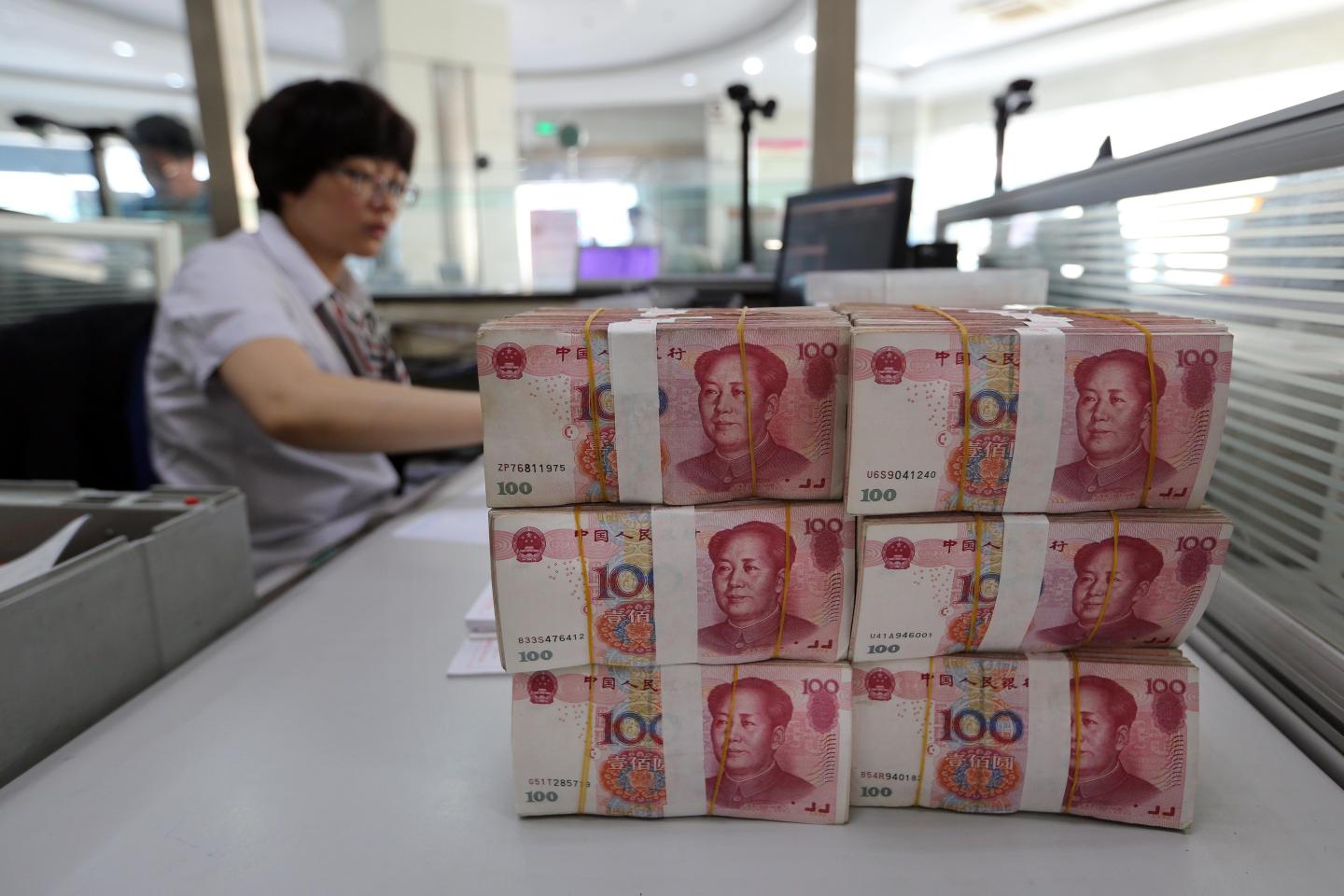
Renminbi banknotes are placed on a bank staff's table in a bank in Lianyungang, east China's Jiangsu province on August 11, 2015. China's central bank on August 11 devalued its yuan currency by nearly two percent against the US dollar, as authorities seek to push market reforms and bolster the world's second-largest economy. CHINA OUT AFP PHOTO (Photo credit should read STR/AFP/Getty Images)STR AFP—Getty Images

Donald Trump and the technocrats at the International Monetary Fund don’t agree on much, and you can bet your last yuan that the Republican presidential nominee will not favor the IMF’s most recent decision. On Monday, the international institution decided to include the Chinese renminbi as the fifth component to join the basket of currencies that make up the IMF’s lending reserve, called special drawing rights (SDR).

Inclusion in the SDR has been a political goal for the Chinese government for some time, as it seeks to wield more power in the long-term over organizations like the IMF as well as to stop capital from fleeing its own economy, which is suffering from slowing growth after years of government-sponsored over-investment.

Indeed, it’s easy to see today’s decision as having more to do with politics than finance. Unlike the other currencies that make up the SDR, such as the U.S. dollar or the euro, the Chinese yuan cannot be bought and sold without restriction. The Chinese government dictates the price of yuan in dollar terms, and manages the ability of international investors to move money in and out of the country. Such restrictions mean that regardless of the IMF’s stance on the matter, there remain serious hurdles to investor reliance on the Chinese yuan as a reserve currency. Recognizing as much, IMF head Christine Lagarde called Monday’s decision, “A milestone in a journey that will include certainly more reforms.”

In other words, the move is a gesture on the part of Western bureaucrats to welcome Chinese integration into its financial system even as elected officials here in the U.S. have done their utmost to alienate the Chinese. As Donald Trump’s campaign has shown, it makes good politics to blame China for economic problems in the United States. And it’s not a partisan issue either, as both Democrats and Republicans have argued for taking a tougher stance against Chinese “currency manipulation” whenever possible.

But the imbalances that exist in the global economy go much deeper than exchange rates. Despite the claims of U.S. politicians that China’s actively holds down the value of its currency to undercut U.S. exports, by most measures the Chinese yuan is no longer undervalued. In fact, the yuan might even be too expensive these days. The renminbi, as the yuan is also known, has gained more than 35% against the dollar since China’s 1994 devaluation. More recently, the Chinese government’s pegging the yuan to the dollar has caused the Chinese currency to appreciate significantly. That’s why the Chinese central bank was forced to cheapen its currency this summer—to help stop the flight of capital that was seeking cheaper prices abroad.

But just because Donald Trump is wrong about Chinese currency being overvalued doesn’t mean that he isn’t right about Chinese economic policy negatively affecting the U.S. exporters. Despite the recent increase in value of the yuan, China’s trade surplus has remained at record highs. That suggests there are other distortions at play. Michael Pettis, who teaches finance at Peking University’s Guanghua School of Management, has argued that one of the single biggest ways the Chinese government manipulates global trade is through what economists call financial repression, or the government’s imposition of extremely low interest rates on the Chinese consumer.

The Chinese government maintains near-total control over the Chinese banking system through it’s central bank, the People’s Bank of China. The average Chinese consumer, unlike his counterpart in the United States, basically has just one option for investing his savings, and that is through bank deposits. A few Chinese consumers have ventured into the stock market in the past few years, but given the volatility of Chinese stocks this year, that’s likely to slow. And the Chinese government puts strict caps on what can be earned from bank deposits–between just 2% and 4% for most of the past fifteen years. This is incredibly low for an economy that has grown, on average, at about 10% per year on average after inflation, and well over 20% some years on a nominal basis.

In other words, the Chinese government is imposing massive losses, after inflation, on its consumers every year, and funneling that money to private businesses, the government, and state-owned enterprises in the form of cheap loans. What’s more, financial repression in China also means its economy responds differently to monetary policy than the U.S. economy does. Cutting interest rates often has the effect of increasing the savings rate, because it forces the average Chinese to save more money for retirement and emergencies to generate the same income. And that’s what has happen this year. The government responded to slowing growth and stock market volatility this year by cutting interest rates. That has caused Chinese consumers to cut back on spending as well, particularly on imports. As a result, while Chinese exports have fallen, imports have declined more, maintaining the near-record China-US trade gap.

Western exporters, especially those in the United States, have been put at a disadvantage by Chinese economic policy for many years now, but the reasons go far beyond exchange rates. And that’s why the IMF rolled out the welcome mat for the renminbi, albeit with reservations, on Monday. It must continue to court the factions within China’s government that realize the need to rebalance the global economy and bolster the power of the Chinese consumer, while recognizing that this will be a very difficult and complex task.

From Brazil in the 1980s to Japan in the 1990s, history is littered with the corpses of economies that could not manage to shift from investment to consumer driven economies without triggering a financial crisis. China is the latest to try, but its relative size makes the stakes much higher this time around. And despite the ravings of the American political class, it’s a dance that will involve much more than exchange rates.


About the Author
By Chris Matthews
See full bioRight Arrow Button Icon

Latest in Leadership

Finance
Lorem ipsum dolor sit amet, consectetur adipiscing elit, sed do eiusmod tempor incididunt ut labore et dolore magna aliqua. Ut enim ad minim veniam
By Fortune Editors
October 20, 2025
Finance
Lorem ipsum dolor sit amet, consectetur adipiscing elit, sed do eiusmod tempor incididunt ut labore et dolore magna aliqua. Ut enim ad minim veniam
By Fortune Editors
October 20, 2025
Finance
Lorem ipsum dolor sit amet, consectetur adipiscing elit, sed do eiusmod tempor incididunt ut labore et dolore magna aliqua. Ut enim ad minim veniam
By Fortune Editors
October 20, 2025
Finance
Lorem ipsum dolor sit amet, consectetur adipiscing elit, sed do eiusmod tempor incididunt ut labore et dolore magna aliqua. Ut enim ad minim veniam
By Fortune Editors
October 20, 2025
Finance
Lorem ipsum dolor sit amet, consectetur adipiscing elit, sed do eiusmod tempor incididunt ut labore et dolore magna aliqua. Ut enim ad minim veniam
By Fortune Editors
October 20, 2025
Finance
Lorem ipsum dolor sit amet, consectetur adipiscing elit, sed do eiusmod tempor incididunt ut labore et dolore magna aliqua. Ut enim ad minim veniam
By Fortune Editors
October 20, 2025

Most Popular

Finance
Lorem ipsum dolor sit amet, consectetur adipiscing elit, sed do eiusmod tempor incididunt ut labore et dolore magna aliqua. Ut enim ad minim veniam
By Fortune Editors
October 20, 2025
Finance
Lorem ipsum dolor sit amet, consectetur adipiscing elit, sed do eiusmod tempor incididunt ut labore et dolore magna aliqua. Ut enim ad minim veniam
By Fortune Editors
October 20, 2025
Finance
Lorem ipsum dolor sit amet, consectetur adipiscing elit, sed do eiusmod tempor incididunt ut labore et dolore magna aliqua. Ut enim ad minim veniam
By Fortune Editors
October 20, 2025
Finance
Lorem ipsum dolor sit amet, consectetur adipiscing elit, sed do eiusmod tempor incididunt ut labore et dolore magna aliqua. Ut enim ad minim veniam
By Fortune Editors
October 20, 2025
Finance
Lorem ipsum dolor sit amet, consectetur adipiscing elit, sed do eiusmod tempor incididunt ut labore et dolore magna aliqua. Ut enim ad minim veniam
By Fortune Editors
October 20, 2025
Finance
Lorem ipsum dolor sit amet, consectetur adipiscing elit, sed do eiusmod tempor incididunt ut labore et dolore magna aliqua. Ut enim ad minim veniam
By Fortune Editors
October 20, 2025
Fortune Secondary Logo
Rankings
  • 100 Best Companies
  • Fortune 500
  • Global 500
  • Fortune 500 Europe
  • Most Powerful Women
  • World's Most Admired Companies
  • See All Rankings
  • Lists Calendar
Sections
  • Finance
  • Fortune Crypto
  • Features
  • Leadership
  • Health
  • Commentary
  • Success
  • Retail
  • Mpw
  • Tech
  • Lifestyle
  • CEO Initiative
  • Asia
  • Politics
  • Conferences
  • Europe
  • Newsletters
  • Personal Finance
  • Environment
  • Magazine
  • Education
Customer Support
  • Frequently Asked Questions
  • Customer Service Portal
  • Privacy Policy
  • Terms Of Use
  • Single Issues For Purchase
  • International Print
Commercial Services
  • Advertising
  • Fortune Brand Studio
  • Fortune Analytics
  • Fortune Conferences
  • Business Development
  • Group Subscriptions
About Us
  • About Us
  • Press Center
  • Work At Fortune
  • Terms And Conditions
  • Site Map
  • About Us
  • Press Center
  • Work At Fortune
  • Terms And Conditions
  • Site Map
  • Facebook icon
  • Twitter icon
  • LinkedIn icon
  • Instagram icon
  • Pinterest icon

Latest in Leadership

fort
CommentaryFlorida
Ken Griffin has Miami. Stephen Ross has West Palm Beach. Fort Lauderdale had Wayne Huizenga — and it’s been winning ever since
By Jenni MorejonJune 12, 2026
3 hours ago
Notion takes a quiet approach to designing AI features: ‘You can’t have every new tool screaming at you’
AsiaAI agents
Notion takes a quiet approach to designing AI features: ‘You can’t have every new tool screaming at you’
By Angelica AngJune 12, 2026
4 hours ago
How Elon Musk sold a $1.77 trillion dream—and what other CEOs can learn from the SpaceX IPO
NewslettersCEO Daily
How Elon Musk sold a $1.77 trillion dream—and what other CEOs can learn from the SpaceX IPO
By Diane BradyJune 12, 2026
4 hours ago
The chaos at CBS News shows the limits of ‘blow it up’ leadership
C-SuiteLeadership
The chaos at CBS News shows the limits of ‘blow it up’ leadership
By Claire ZillmanJune 12, 2026
7 hours ago
Three ways that Asia’s enterprises are adopting AI—and where they are falling behind
CommentaryOracle
Three ways that Asia’s enterprises are adopting AI—and where they are falling behind
By Garrett IlgJune 11, 2026
17 hours ago
Testosil Review (2026): Testosterone Supplement Reviewed
HealthDietary Supplements
Testosil Review (2026): Testosterone Supplement Reviewed
By Christina SnyderJune 11, 2026
18 hours ago

Most Popular

Analysts expected oil to surge above $200 but China has quietly kept prices half of that—and can’t for much longer
Energy
Analysts expected oil to surge above $200 but China has quietly kept prices half of that—and can’t for much longer
By Sasha RogelbergJune 10, 2026
2 days ago
Corporate America has been draining the world's water. Matt Damon's new campaign calls on Gap, Starbucks, and Amazon to help give it back
Environment
Corporate America has been draining the world's water. Matt Damon's new campaign calls on Gap, Starbucks, and Amazon to help give it back
By Catherina GioinoJune 9, 2026
3 days ago
Current price of oil as of June 11, 2026
Personal Finance
Current price of oil as of June 11, 2026
By Joseph HostetlerJune 11, 2026
1 day ago
When SpaceX starts trading, some 'shareholders' will discover they own nothing at all
Investing
When SpaceX starts trading, some 'shareholders' will discover they own nothing at all
By Jim EdwardsJune 12, 2026
3 hours ago
Marc Lore’s robots make 500 burrito bowls an hour. A human can make 45
Innovation
Marc Lore’s robots make 500 burrito bowls an hour. A human can make 45
By Amanda GerutJune 9, 2026
3 days ago
Costco CEO Ron Vachris rose from forklift driver to the C-suite without a college degree: ‘Don’t chase a title’ is the career advice that got him there
Success
Costco CEO Ron Vachris rose from forklift driver to the C-suite without a college degree: ‘Don’t chase a title’ is the career advice that got him there
By Preston ForeJune 8, 2026
4 days ago

© 2026 Fortune Media IP Limited. All Rights Reserved. Use of this site constitutes acceptance of our Terms of Use and Privacy Policy | CA Notice at Collection and Privacy Notice | Do Not Sell/Share My Personal Information
FORTUNE is a trademark of Fortune Media IP Limited, registered in the U.S. and other countries. FORTUNE may receive compensation for some links to products and services on this website. Offers may be subject to change without notice.