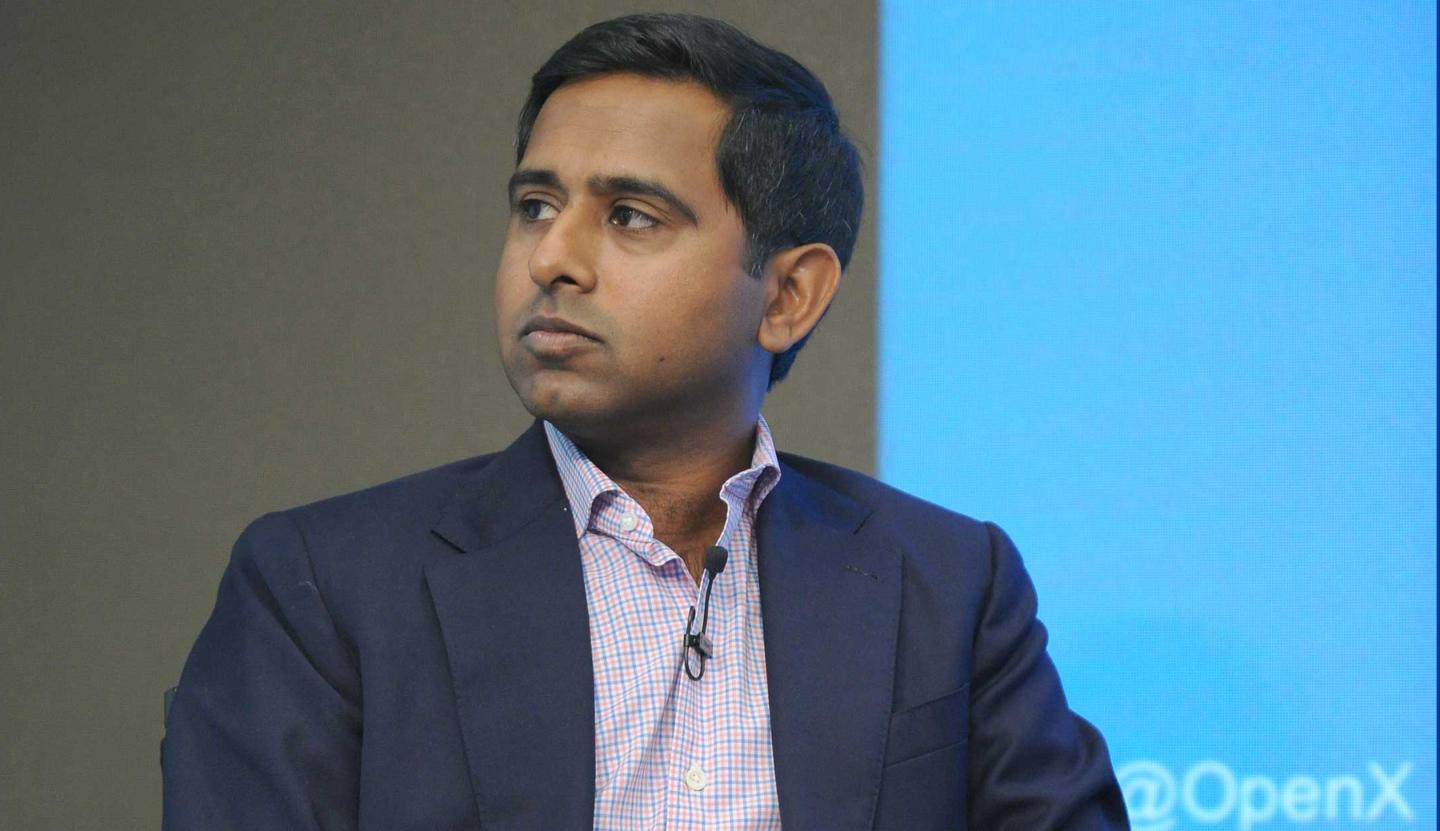
In 2009, when venture investor Marc Andreessen showed up to a small dinner in the San Francisco Bay Area set up by journalist Josh Quittner, Time Inc. executive Vivek Shah began grilling him on the future of media. How could Time Inc., which makes most of its revenue from print magazines, become a digital company?, Shah asked. As the executive responsible for the digital business of Time Inc. (Fortune’s parent company), the question was urgently important to Shah. Andreessen is not known to pussyfoot around when it comes to topics like digital disruption. Without realizing it, his answer may have saved Shah’s future company from extinction.
Andreessen flatly told Shah to “burn the boats” behind him. If Time Inc. completely shut down its print media business, Andreessen reasoned, it would be impossible to do anything but look forward. Time Inc. would only figure out a new business model if it had no legacy print revenue to coast on.
His suggestion wasn’t all that radical. Two decades into the Web, it’s hard to find a media commentator who believes legacy print brands can transform themselves into digital contenders. Just look at the reactions to the new publishing platforms offered by Google, Apple and Facebook, each of which have won cooperation from the largest media companies in various online programs. Venture investor Om Malik recently tweeted that publishers were “merely shining light on their own technical incompetence.” Anthony de Rosa, a prominent editor, replied, “they’re all 10+ years too late.” Some publishers, like Hearst-owned Cosmopolitan, have stopped trying to integrate print and digital operations, running them out of entirely different offices instead.
One person who wasn’t confused was Time Inc.’s Shah, long a wunderkind at the 93-year-old media company and seen by many as a future CEO, despite his tender age of 35 at the time of the Andreessen dinner. Shah would do exactly what Andreessen urged, but not at Time Inc., which still publishes plenty of print magazines, including Fortune. Instead he would burn the boats at another venerable publisher, the technology trade-publication company Ziff-Davis.

Already shipwrecked
Shah began hunting for legacy media “boats” that were struggling to transition to digital. He found Ziff Davis, an 88-year-old publishing company that had changed hands many times in the last two decades, starting in 1994, when private-equity investor Forstmann Little & Co. bought it from the Ziff family for $1.4 billion.
A year later Forstmann sold Ziff Davis to Japanese conglomerate Softbank Corporation for more than $2 billion. The company went public in 1998. Just as the tech bubble was bursting in 2000, Willis Stein took it private for $780 million. The company went bankrupt in 2008 and emerged, controlled by its lenders, the next year.
Shah was drawn to Ziff Davis, in part, because he knew it would be easy to kill the print business at a distressed company just out of bankruptcy. “The boats are easy to burn because they’re already shipwrecked,” he says. Indeed, Ziff Davis exited the print business a year before Shah joined, publishing its final print edition of PC Magazine, its flagship publication, in 2009.
What’s more, Ziff Davis publications had always created content that helped people make buying decisions, starting with its first publication for flying enthusiasts, Popular Aviation. Bill Ziff, Jr., who was once called “the Henry Ford of informational vehicles,” famously touted his company’s emphasis on products over all other content. On the Web, that’s called “purchase intent,” something ad-based businesses like Google have turned into a source of massive profits.
Shah put together a business plan and pitched a handful of private equity firms with his strategy: Digital content companies cannot survive on display advertising alone. The new, digital Ziff Davis would earn revenue from video ads, affiliate links (a way publishers get credit when their readers purchase items), demand generation, and licensing. It would expand its audience at PCmag.com into adjacent brands and categories. To do that, it would acquire companies and technology.
Shah made a prescient bet that audience data and targeting technology would play an increasingly large role in the way marketers buy ads. He also bet that he could turn a media audience into an audience of shoppers.
In 2010, Great Hill Partners, a private equity firm, and Shah acquired the company from the lenders that had taken over when Ziff Davis emerged from bankruptcy. They paid $27 million in equity for Ziff Davis, comprised of nine media properties, including PCMag.com, AppScout, and TechSaver.com.
Open for business
Shah’s first task as CEO of Ziff Davis wasn’t in his business plan. He had to motivate Ziff Davis’ beleaguered staff to move faster. “It’s very hard to change the mindset and culture at a company that was losing. Not only losing, they lost. The season was over,” he says. So he brought in a new management team to reset the company’s pace.
“The company was moving in old-fashioned magazine time,” says Christopher Gaffney, managing director at Great Hill Partners, who led the deal for the firm. “And [Shah] was going to move them to Internet time.”
Also not on Shah’s initial business plan: convincing people that Ziff Davis was alive. He had to somehow show advertisers, partners, vendors and new recruits that his company was indeed a going concern. Even getting a lease for a new office was a hustle. “When you declare bankruptcy, people don’t want to spend money with you because they don’t know if you’re going to be here next week,” he says.
Beyond those early challenges, Shah says his original plan for Ziff Davis was 90% right. The company acquired seven companies, including Toolbox.com, a professional collaboration site; NetShelter, a display advertising business; TechBargains, a deal information site; and IGN Entertainment, a media property focused on gaming. Add-on capital from Great Hill brought Ziff Davis’ total investment to approximately $50 million. (Great Hill had once owned IGN. It took the company private in the dark days after the tech bubble burst. News Corp. bought IGN in 2005 for $650 million and sold it for a fraction of that amount to Shah’s group.)
In its first year under Shah and Great Hill, Ziff Davis generated $11 million in revenue and $1 million in earnings before interest, tax, depreciation and amortization (Ebitda), according to data supplied by Ziff Davis. By 2012, it had $50 million in revenue and $11 million in Ebitda.
“Everything he said he would do absolutely happened,” Gaffney says. Only one deal struggled, a lead generation business called Focus, which Ziff Davis re-branded and stocked with new management. It’s now “the core of an important part of the company,” Shah says.

“We’re not touting a CMS for God’s sake”
Thanks to his private equity backers, Shah focused on efficiency — getting a return on every investment. He shut down IGN’s growing e-sports business, even though the category of competitive video gaming began to pick up buzz. It wasn’t profitable and that was that.
“We don’t try to build equity value on buzz,” Shah says. “We’ve never done that. We’re not out there touting a CMS for God’s sake.” Slick publishing software, or content management systems (CMS), has boosted the valuations of digital media startups like Vox Media, BuzzFeed and Business Insider. But publishers, including the ones just mentioned, don’t earn revenue from their publishing software.
Shah explains that riding on buzz means most of a company’s value is wrapped up in one or two key people. “It’s a business model, it’s just not our model,” he says. “I can’t chase sizzle and buzz.” Of course, Ziff Davis couldn’t chase sizzle and buzz because it had none. The only way to save it was the old-fashioned way: profits and growth.
“They’re the sort of boring, block-and-tackling kind of guys that are not paying a lot [for acquisitions], but then turning them into hugely profitable businesses that are growing,” says Terence Kawaja, CEO of LUMA Partners, an advisory firm involved on various deals with the company. It’s rare to find businesses that are both profitable and growing in media, he says, noting there is a lot less competition for the “less sexy stuff.”
That profitable growth attracted the interest of Richard Ressler, chairman of j2 Global, in 2012. J2 (JCOM) offers business-related cloud services, a high margin but slow growth business. The company wanted to diversify its digital media holdings by buying Ziff Davis. In turn, j2 could give Ziff Davis public equity to do more acquisitions. j2 acquired Ziff Davis for $167 million, earning Great Hill Partners three times its money in a little over two years.
Since then, Ziff Davis has become a key growth driver for the company, thanks to its “mid-teens” organic growth and expanding margins, according to Shyam Patil, an analyst with Susquehanna Financial Group. Since it sold to j2, Ziff Davis’ revenue has nearly quadrupled to $190 million (trailing twelve months) and its Ebitda more than quadrupled to $66 million. (The business touts impressive 35% margins.)
Today, Ziff Davis makes up around 30% of parent company j2’s $600 million in annual revenue (2014), growing 15% to 20% organically each year. Gregory Burns, an analyst at Sidoti & Company, calculates that Ziff Davis is worth $1.9 billion, using the same math that garnered Business Insider a $450 million valuation in its sale to Axel Springer. (“Business Insider is growing faster but is not nearly as profitable as j2’s media business, which we think justifies a higher multiple,” Burns wrote in a September report.)
j2’s stock has more than doubled in value since it bought Ziff Davis. Having seen the company’s continued growth, Great Hill’s Gaffney wishes he’d held his equity longer.
In its 88 years, Ziff Davis made some investors very rich, trading hands for more than $2 billion. For other investors, it destroyed hundreds of millions of dollars in value. Now, as a growth driver hidden in a mid-cap public company, Ziff Davis is back in the business of value creation. It’s not a buzzy story, but it’s a profitable one, which is exactly how its CEO prefers it.
Subscribe to Data Sheet, Fortune’s daily newsletter on the business of technology.