• Home
  • Latest
  • Fortune 500
  • Finance
  • Tech
  • Leadership
  • Lifestyle
  • Rankings
  • Multimedia

Trendingnow

1

The U.S. spent $30 billion to ditch textbooks for laptops and tablets: The result is the first generation less cognitively capable than their parents

2

The U.S. and Iran can't agree on fully reopening the Strait of Hormuz. The solution could be straight out of the Old Testament

3

A Trump Account could make your kid a millionaire by 45—but financial experts say the app's projections come with a catch

1

The U.S. spent $30 billion to ditch textbooks for laptops and tablets: The result is the first generation less cognitively capable than their parents

2

The U.S. and Iran can't agree on fully reopening the Strait of Hormuz. The solution could be straight out of the Old Testament

3

A Trump Account could make your kid a millionaire by 45—but financial experts say the app's projections come with a catch
Finance

These pipelines could help investors refuel

By
Ryan Derousseau
Ryan Derousseau
Down Arrow Button Icon
By
Ryan Derousseau
Ryan Derousseau
Down Arrow Button Icon
October 25, 2015, 11:00 AM ET
Kinder Morgan
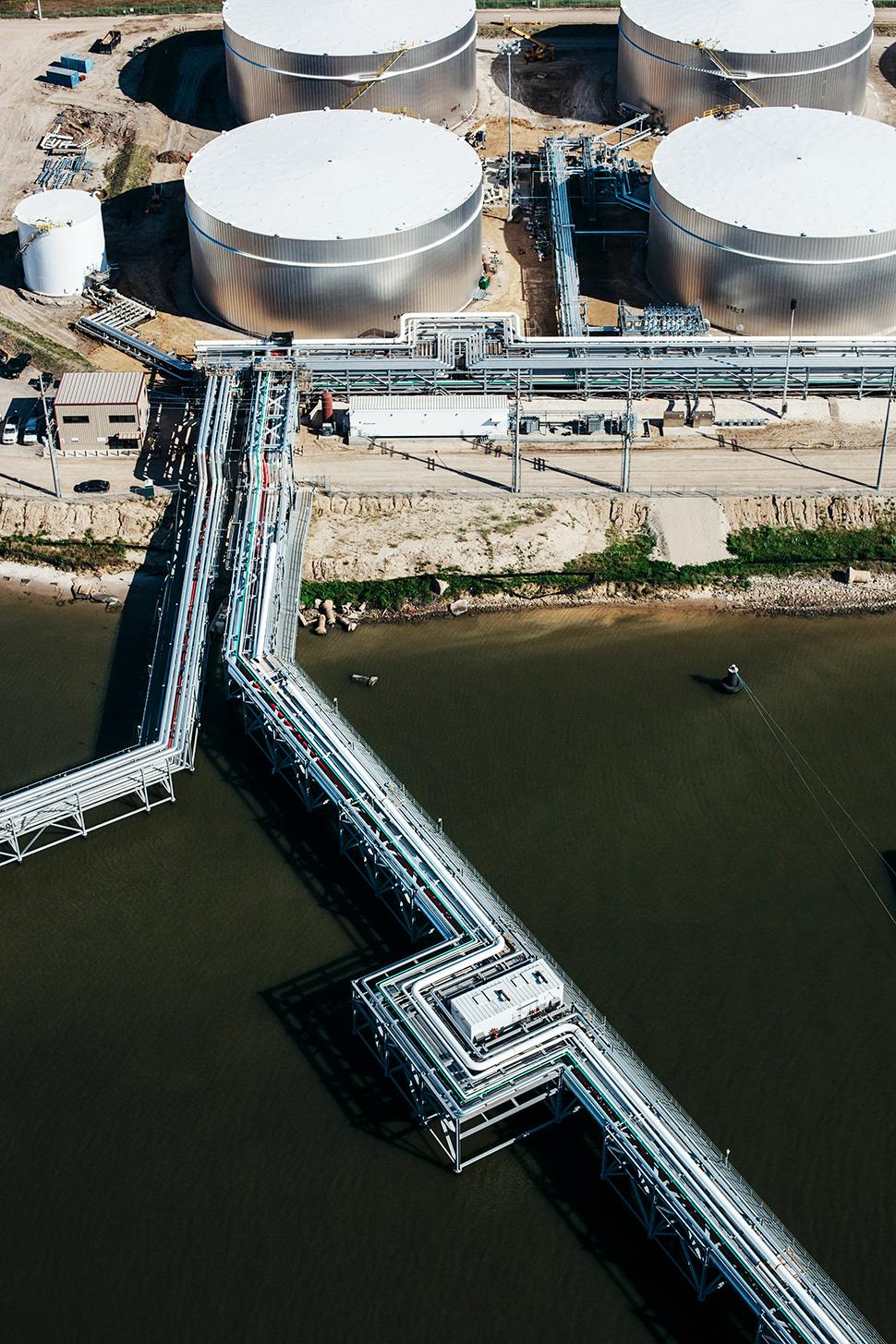
The BOSTCO TerminalPhotograph by Benjamin Rasmussen for Fortune Magazine
Add Fortune on Google for similar content.

For energy investors, the past 18 months have been almost unrelentingly grim. Weakening global demand and overproduction have driven the prices of crude oil and natural gas down more than 55% from their 2014 highs, and energy-industry stocks have joined those commodities in a collective swan dive.

But even as investors have taken a beating, some have spotted an anomaly: Shares in pipeline operators, the “midstream” firms that carry oil and gas between producers on one end and refiners and distributors on the other, have fallen even harder than other energy stocks. The S&P MLP index, which tracks pipelines and their operators, has dropped 26% in 2015, compared with 19% for the S&P index that tracks oil exploration and production companies. And that washout has given investors an opportunity to buy relatively big, stable companies at unusually low valuations—even as recent commodity-price moves suggest that the worst of the oversupply crisis may be over.

To some energy insiders, the pipeline plunge always looked puzzling. Pipeline companies usually lock in their revenue with long-term, fixed-rate contracts, so their income isn’t heavily dependent on oil and gas prices. But the stocks of master limited partnerships (MLPs) and other midstreamers have suffered anyway, dragged down by what Global X Funds research director Jay Jacobs calls a “negative oil sentiment” that didn’t reflect their underlying financial health.

It’s true the industry faces long-term challenges. Suppressed demand discourages producers from drilling new wells, which “leads to less need for infrastructure,” says Edward Jones analyst Rob Desai. Fewer new pipelines today, in turn, can mean slower long-term growth. But contemplating a post-boom future has prompted some midstream companies to alter their business models, while spurring consolidation—trends that could leave the surviving companies in better shape to thrive down the road. (In the biggest such deal, in September, Energy Transfer Equity announced it would buy fellow pipeline operator Williams Cos. for $32.6 billion plus debt and liabilities.)

Interest-rate worries contributed just as much to these stocks’ recent woes. Many pipeline operators are structured as MLPs, which frees them from tax liabilities but gives them incentives to distribute nearly all their profits to shareholders. MLPs have always been darlings of income seekers, and right now the stocks yield an eye-popping average of 7.1%. Still, fears that the Federal Reserve will raise rates soon have scared away many investors, says Adam Babson, manager of the Russell Global Infrastructure Fund. (Higher rates would make bonds, a less volatile asset class, look more attractive.)

Pipeline bulls counter that interest-rate risk is now fully priced into the stocks. They also find encouragement in recent history: The last time the Fed increased rates, between June 2004 and June 2006, the S&P MLP index rose 17%, beating the S&P 500’s 12% gain. And Jacobs of Global X says the price-to-sales ratio of MLPs is now 0.8, compared with 1.8 for the S&P 500—the lowest level since 2010 and “an attractive entry point.”

INV.11.01.15 stocks chart

Brian Watson, senior portfolio manager of the $3.6 billion Oppenheimer SteelPath MLP Alpha mutual fund, applied that reasoning to Magellan Midstream Partners (MMP): He bought 330,000 shares earlier this year, even as its stock sank 16%. Magellan runs one of the country’s largest refinery-transport operations, with a growing presence in Texas’s Permian Basin, and Watson notes that oil’s price plunge didn’t hurt its ability to pay investors, as measured by “distributable cash flow.” That figure was $456 million in the first half of 2015, an increase of 1.6% from the year-earlier period, and the stock has a yield of 4.1%.

The payouts from MLPs do come with a tax headache, however: They’re taxed as regular income rather than at the lower rates that apply to dividends, and the paperwork can be onerous. Investors who don’t have an accountant on call may prefer to own shares in pipeline management firms. These firms are often partners with or owners of MLPs, but they pay traditional dividends—and because they’re not under pressure to distribute most of their profits, they can invest more in their businesses to spur growth.

To avoid tax hassles, some mutual funds and ETFs focus on these management companies, investing no more than 25% of their assets in MLPs. The Global X MLP & Energy Infrastructure ETF (MLPX), which has annual expenses of 0.45%, is one cost-effective example.

Among individual companies, firms that manage natural-gas pipelines look particularly attractive to some managers. Calgary-based Enbridge (ENB), Canada’s largest pipeline company, has been diversifying by expanding its terminals and storage facilities on the Gulf Coast, and it pays a 3.3% dividend. Another gas-focused operator, Columbia Pipeline Group (CPPL), completed its spin-off from Indiana-based utility NiSource in July and has exposure to the huge reserves of the Marcellus Shale. Desai of Edward Jones says Columbia is in “quick growth mode,” having committed $10 billion over the next five years to construction projects, and he estimates that it will increase its dividend by 15% a year through 2020.

Another potential winner is the industry’s giant: Houston-based Kinder Morgan (KMI), a $70 billion company with an 80,000-mile pipeline network. Last year, Kinder Morgan began a reorganization in which it bought out its affiliated MLPs. While its price-to-distributable-cash-flow ratio, at 13, is higher than the industry average of 11.5, Kinder Morgan still offers a 5.8% yield. And its new structure and great scale should help it expand at a lower cost, says Desai—putting it in an enviable position if and when the energy sector recovers from today’s lows.

[fortune-brightcove videoid=4539332842001]

A version of this article appears in the November 1, 2015 issue of Fortune with the headline “Pipes that could help investors refuel.”

About the Author
By Ryan Derousseau
See full bioRight Arrow Button Icon
Add Fortune on Google for similar content.

Latest in Finance

Finance
Lorem ipsum dolor sit amet, consectetur adipiscing elit, sed do eiusmod tempor incididunt ut labore et dolore magna aliqua. Ut enim ad minim veniam
By Fortune Editors
October 20, 2025
Finance
Lorem ipsum dolor sit amet, consectetur adipiscing elit, sed do eiusmod tempor incididunt ut labore et dolore magna aliqua. Ut enim ad minim veniam
By Fortune Editors
October 20, 2025
Finance
Lorem ipsum dolor sit amet, consectetur adipiscing elit, sed do eiusmod tempor incididunt ut labore et dolore magna aliqua. Ut enim ad minim veniam
By Fortune Editors
October 20, 2025
Finance
Lorem ipsum dolor sit amet, consectetur adipiscing elit, sed do eiusmod tempor incididunt ut labore et dolore magna aliqua. Ut enim ad minim veniam
By Fortune Editors
October 20, 2025
Finance
Lorem ipsum dolor sit amet, consectetur adipiscing elit, sed do eiusmod tempor incididunt ut labore et dolore magna aliqua. Ut enim ad minim veniam
By Fortune Editors
October 20, 2025
Finance
Lorem ipsum dolor sit amet, consectetur adipiscing elit, sed do eiusmod tempor incididunt ut labore et dolore magna aliqua. Ut enim ad minim veniam
By Fortune Editors
October 20, 2025

Most Popular

Finance
Lorem ipsum dolor sit amet, consectetur adipiscing elit, sed do eiusmod tempor incididunt ut labore et dolore magna aliqua. Ut enim ad minim veniam
By Fortune Editors
October 20, 2025
Finance
Lorem ipsum dolor sit amet, consectetur adipiscing elit, sed do eiusmod tempor incididunt ut labore et dolore magna aliqua. Ut enim ad minim veniam
By Fortune Editors
October 20, 2025
Finance
Lorem ipsum dolor sit amet, consectetur adipiscing elit, sed do eiusmod tempor incididunt ut labore et dolore magna aliqua. Ut enim ad minim veniam
By Fortune Editors
October 20, 2025
Finance
Lorem ipsum dolor sit amet, consectetur adipiscing elit, sed do eiusmod tempor incididunt ut labore et dolore magna aliqua. Ut enim ad minim veniam
By Fortune Editors
October 20, 2025
Finance
Lorem ipsum dolor sit amet, consectetur adipiscing elit, sed do eiusmod tempor incididunt ut labore et dolore magna aliqua. Ut enim ad minim veniam
By Fortune Editors
October 20, 2025
Finance
Lorem ipsum dolor sit amet, consectetur adipiscing elit, sed do eiusmod tempor incididunt ut labore et dolore magna aliqua. Ut enim ad minim veniam
By Fortune Editors
October 20, 2025
Fortune Secondary Logo
Rankings
  • 100 Best Companies
  • Fortune 500
  • Global 500
  • Fortune 500 Europe
  • Most Powerful Women
  • World's Most Admired Companies
  • See All Rankings
  • Lists Calendar
Sections
  • Finance
  • Fortune Crypto
  • Features
  • Leadership
  • Health
  • Commentary
  • Success
  • Retail
  • Mpw
  • Tech
  • Lifestyle
  • CEO Initiative
  • Asia
  • Politics
  • Conferences
  • Europe
  • Newsletters
  • Personal Finance
  • Environment
  • Magazine
  • Education
Customer Support
  • Frequently Asked Questions
  • Customer Service Portal
  • Privacy Policy
  • Terms Of Use
  • Single Issues For Purchase
  • International Print
Commercial Services
  • Advertising
  • Fortune Brand Studio
  • Fortune Analytics
  • Fortune Conferences
  • Business Development
  • Group Subscriptions
About Us
  • About Us
  • Press Center
  • Work At Fortune
  • Terms And Conditions
  • Site Map
  • About Us
  • Press Center
  • Work At Fortune
  • Terms And Conditions
  • Site Map
  • Facebook icon
  • Twitter icon
  • LinkedIn icon
  • Instagram icon
  • Pinterest icon

Latest in Finance

Rising tempo of combat in battle for Hormuz threatens market’s confidence that the worst is over on Iran. ‘There’s a lot of complacency’
InvestingIran
Rising tempo of combat in battle for Hormuz threatens market’s confidence that the worst is over on Iran. ‘There’s a lot of complacency’
By Jason MaJuly 12, 2026
3 hours ago
Trump embraces Australian retirement system backed by Larry Fink
Personal FinanceRetirement
Trump embraces Australian retirement system backed by Larry Fink
By Brianna Sosa and BloombergJuly 12, 2026
5 hours ago
Russia’s economy is an ‘illusion’ built on debt, and a banking crisis is ready to explode, intel report says, while the Kremlin may seize pensions
BankingRussia
Russia’s economy is an ‘illusion’ built on debt, and a banking crisis is ready to explode, intel report says, while the Kremlin may seize pensions
By Jason MaJuly 12, 2026
6 hours ago
The ‘facade’ of the U.S.-Iran ceasefire crumbles after largest round of fighting in months — ‘an undeclared naval war can escalate’
Middle EastIran
The ‘facade’ of the U.S.-Iran ceasefire crumbles after largest round of fighting in months — ‘an undeclared naval war can escalate’
By Jason MaJuly 12, 2026
8 hours ago
Hormuz route open despite Iran declaration, maritime group says
EnergyIran
Hormuz route open despite Iran declaration, maritime group says
By Sara Gharaibeh and The Associated PressJuly 12, 2026
11 hours ago
Trinidad and Tobago signs deals with U.S. companies for data centers, despite history of chronic water shortages and intermittent supply
AIData centers
Trinidad and Tobago signs deals with U.S. companies for data centers, despite history of chronic water shortages and intermittent supply
By Anselm Gibbs and The Associated PressJuly 12, 2026
11 hours ago

Most Popular

The U.S. spent $30 billion to ditch textbooks for laptops and tablets: The result is the first generation less cognitively capable than their parents
Innovation
The U.S. spent $30 billion to ditch textbooks for laptops and tablets: The result is the first generation less cognitively capable than their parents
By Sasha RogelbergJuly 12, 2026
14 hours ago
The U.S. and Iran can't agree on fully reopening the Strait of Hormuz. The solution could be straight out of the Old Testament
Middle East
The U.S. and Iran can't agree on fully reopening the Strait of Hormuz. The solution could be straight out of the Old Testament
By Jason MaJuly 11, 2026
1 day ago
A Trump Account could make your kid a millionaire by 45—but financial experts say the app's projections come with a catch
Personal Finance
A Trump Account could make your kid a millionaire by 45—but financial experts say the app's projections come with a catch
By Sydney LakeJuly 12, 2026
15 hours ago
Peter Thiel and other tech billionaires are publicly shielding their children from the products that made them rich
Big Tech
Peter Thiel and other tech billionaires are publicly shielding their children from the products that made them rich
By Marco Quiroz-GutierrezJuly 12, 2026
14 hours ago
Wyoming officials say Meta’s 715,000-square-foot data center is responsible for contaminating its water system with a rare bacterium
Environment
Wyoming officials say Meta’s 715,000-square-foot data center is responsible for contaminating its water system with a rare bacterium
By Sasha RogelbergJuly 10, 2026
2 days ago
Global oil demand is falling, and crude prices are down. But here's why gasoline, diesel and other refined products are still costly
Energy
Global oil demand is falling, and crude prices are down. But here's why gasoline, diesel and other refined products are still costly
By Cathy Bussewitz and The Associated PressJuly 11, 2026
1 day ago

© 2026 Fortune Media IP Limited. All Rights Reserved. Use of this site constitutes acceptance of our Terms of Use and Privacy Policy | CA Notice at Collection and Privacy Notice | Do Not Sell/Share My Personal Information
FORTUNE is a trademark of Fortune Media IP Limited, registered in the U.S. and other countries. FORTUNE may receive compensation for some links to products and services on this website. Offers may be subject to change without notice.