• Home
  • Latest
  • Fortune 500
  • Finance
  • Tech
  • Leadership
  • Lifestyle
  • Rankings
  • Multimedia
Commentary

An investment in America’s infrastructure could cost taxpayers nothing

By
Sheila Tschinkel
Sheila Tschinkel
and
Marcelle Arak
Marcelle Arak
Down Arrow Button Icon
By
Sheila Tschinkel
Sheila Tschinkel
and
Marcelle Arak
Marcelle Arak
Down Arrow Button Icon
October 8, 2015, 11:15 AM ET
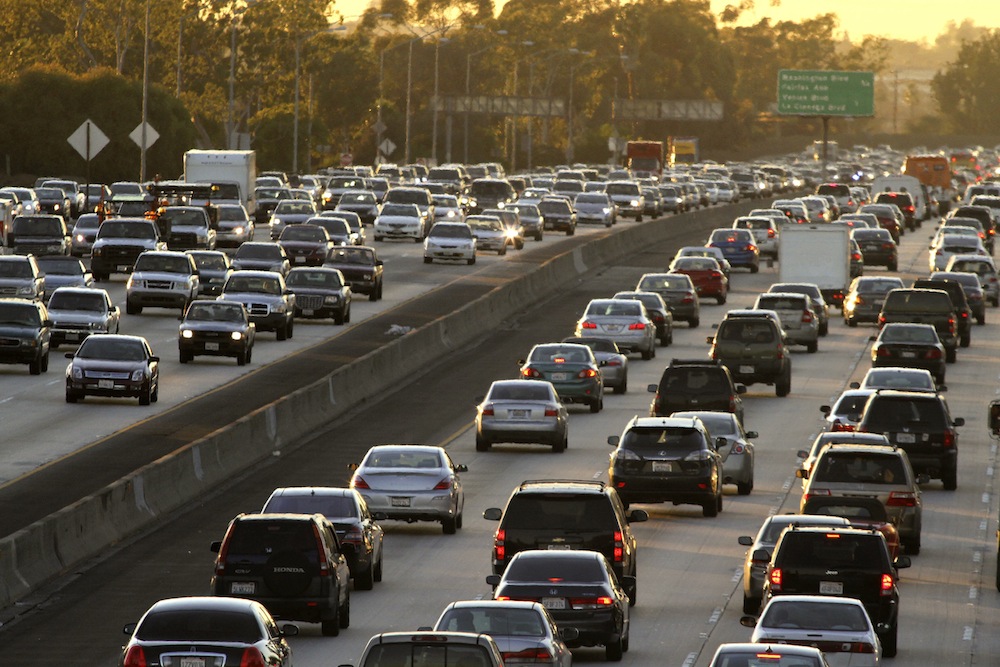
Heavy traffic at rush hour on the Interstate 10 Freeway in Los Angeles, California
Photograph by Jonathan Alcorn — Bloomberg via Getty Images

A recent report showed unexpectedly slow job growth over the summer, raising the odds of a stall in the already sluggish U.S. economic recovery. While this in itself is disappointing, the even greater disappointment is the failure to do anything about it, particularly when there’s an obvious and costless solution: borrow hundreds of billions of dollars for essentially nothing and spend it on our nation’s crumbling infrastructure. Doing so would boost gross domestic product (GDP) by far more than it costs and create hundreds of thousands of jobs.

One part of the equation is sitting before Congress right now: the highways bill, which has been mired in gridlock and needs to pass by the end of the month to maintain funding for our nation’s roads and bridges. Passing a beefed-up version that ensures our highways get the long-term funding they need would be a good start, but much more needs to be done.

U.S. infrastructure doesn’t make the grade
The condition of infrastructure in the U.S. is very bad. There are over 240,000 water main breaks each year, and the cost of rail congestion is enormous. For example, Midwest farmers alone lost over $500 million in 2013 and 2014 due to rail delays. And anyone who has ridden on our potholed roads can attest firsthand that most of our major highways are in mediocre or poor condition.

Indeed, the overall quality of roads, bridges, schools and other basic national and local facilities in the U.S. received a grade of D+ from the American Society of Civil Engineers in 2013. Many commentators have highlighted this study, which is the most recent one, but nothing has happened since then.

Transportation spending as a percent of GDP has remained about the same in recent years. Some recent improvement in state and local spending in this area was offset by a decline at the federal level. With the average ages of bridges and roads exceeding 45 years and carrying more cars than ever before, it is easy to see problems ahead. In 1998, the last year for which data are available, the average elementary school buildingwas around 45 years old. It is doubtful that enough new facilities have been built to reduce our reliance on crumbling school structures. Many schools can scarcely find room for new students.

Infrastructure costs and benefits
While it is difficult to precisely measure gains from improvements in infrastructure, it should be obvious that improved roads and bridges as well as other forms of transport make businesses and workers more productive and save money. Our substandard roads, for example, cost urban motorists $700 to $1,000 per driver in repairs, wear and tear, and fuel. This doesn’t count the lost time involved in lower speeds and detours. And upgraded, modern school buildings are better equipped for today’s educational needs, which are far more reliant on technology than before.

Right now, the costs of investing in our infrastructure are as low as they have ever been. In fact, we would be paid back for making these investments in terms of increased economic activity and other benefits. So why wait any longer to make these necessary investments? On October 2, the U.S. Treasury was able to borrow for 10 years at an interest rate of roughly 2%. If we assume inflation is about 2% over the next several years, the “real rate” of interest on this borrowing, which subtracts inflation from the nominal rate, would be essentially zero.

The benefits of improved infrastructure spending on economic growth, however, would be considerably higher, so the actual cost to taxpayers is nothing, even if rates go up a little, as is expected once the Federal Reserve begins the return to normal. Most businesses would jump at the chance for a tiny real interest rate to support investments with a substantial positive return. Thus, “business economics” says that this would be a wise decision.

Giving the recovery a boost
In addition, it would be a wise macroeconomic move. The U.S. economic recovery has been disappointingly slow for the past six years. The employment report for September as well as revisions to earlier data suggest the below-normal pace of economic growth will be sustained unless something is done to push growth faster.

The Federal Reserve policy rate is zero, and it holds a record volume of Treasury and mortgage-related securities. Further expansion of its efforts is neither desirable nor would it achieve much. Now that interest rates (adjusted for inflation) are close to zero for longer-term bonds and negative for very short-term notes, we cannot expect the central bank to provide more macroeconomic stimulus.

Sustained investment in U.S. infrastructure could add hundreds of thousands of jobs in the short term. Even a very modest program of $18 billion in annual investment in infrastructure, financed by debt, would yield, a $29 billion increase in GDP and a net addition of 216,000 jobs by the end of the first year, according to the Economic Policy Institute think tank. Our infrastructure needs, however, are substantially greater right now, possibly requiring well over $1 trillion, according to the American Society of Civil Engineers report. So the impact on employment of a fully implemented program could easily surpass one million jobs.

In addition to employing more labor, an improvement in roads, bridges and other heavily used infrastructure could entice business to expand plant and equipment in the U.S., as opposed to building in other nations where bridges, trains, airports and the like are newer and shorten travel times. (Instead of building a wall at one of our borders to keep people out, building decent roads, bridges, waterways and other basic infrastructure will better serve the economy.) Improving the quality of school buildings at all levels will raise educational productivity and make current students able to achieve more.

Now is the right time for a substantial program of greatly needed public infrastructure investment. One of the main objections to this kind of investment – the growth of the federal budget deficit that temporarily results from more spending on infrastructure – is not worrisome because of the gains in economic productivity and potential output. Indeed, it will pay for itself over time: if the real cost of financing the borrowing is close to zero and the return is well above zero, it is as if we are being paid to do this. Let’s not reject a “free lunch.”

It is hard to think of a timelier win-win proposal.

Sheila Tschinkel is visiting faculty in economics at Emory University and Marcelle Arak is a professor of finance emerita at the University of Colorado, Denver. This article originally appeared on The Conversation.
The Conversation

About the Authors
By Sheila Tschinkel
See full bioRight Arrow Button Icon
By Marcelle Arak
See full bioRight Arrow Button Icon

Latest in Commentary

Finance
Lorem ipsum dolor sit amet, consectetur adipiscing elit, sed do eiusmod tempor incididunt ut labore et dolore magna aliqua. Ut enim ad minim veniam
By Fortune Editors
October 20, 2025
Finance
Lorem ipsum dolor sit amet, consectetur adipiscing elit, sed do eiusmod tempor incididunt ut labore et dolore magna aliqua. Ut enim ad minim veniam
By Fortune Editors
October 20, 2025
Finance
Lorem ipsum dolor sit amet, consectetur adipiscing elit, sed do eiusmod tempor incididunt ut labore et dolore magna aliqua. Ut enim ad minim veniam
By Fortune Editors
October 20, 2025
Finance
Lorem ipsum dolor sit amet, consectetur adipiscing elit, sed do eiusmod tempor incididunt ut labore et dolore magna aliqua. Ut enim ad minim veniam
By Fortune Editors
October 20, 2025
Finance
Lorem ipsum dolor sit amet, consectetur adipiscing elit, sed do eiusmod tempor incididunt ut labore et dolore magna aliqua. Ut enim ad minim veniam
By Fortune Editors
October 20, 2025
Finance
Lorem ipsum dolor sit amet, consectetur adipiscing elit, sed do eiusmod tempor incididunt ut labore et dolore magna aliqua. Ut enim ad minim veniam
By Fortune Editors
October 20, 2025

Most Popular

Finance
Lorem ipsum dolor sit amet, consectetur adipiscing elit, sed do eiusmod tempor incididunt ut labore et dolore magna aliqua. Ut enim ad minim veniam
By Fortune Editors
October 20, 2025
Finance
Lorem ipsum dolor sit amet, consectetur adipiscing elit, sed do eiusmod tempor incididunt ut labore et dolore magna aliqua. Ut enim ad minim veniam
By Fortune Editors
October 20, 2025
Finance
Lorem ipsum dolor sit amet, consectetur adipiscing elit, sed do eiusmod tempor incididunt ut labore et dolore magna aliqua. Ut enim ad minim veniam
By Fortune Editors
October 20, 2025
Finance
Lorem ipsum dolor sit amet, consectetur adipiscing elit, sed do eiusmod tempor incididunt ut labore et dolore magna aliqua. Ut enim ad minim veniam
By Fortune Editors
October 20, 2025
Finance
Lorem ipsum dolor sit amet, consectetur adipiscing elit, sed do eiusmod tempor incididunt ut labore et dolore magna aliqua. Ut enim ad minim veniam
By Fortune Editors
October 20, 2025
Finance
Lorem ipsum dolor sit amet, consectetur adipiscing elit, sed do eiusmod tempor incididunt ut labore et dolore magna aliqua. Ut enim ad minim veniam
By Fortune Editors
October 20, 2025
Fortune Secondary Logo
Rankings
  • 100 Best Companies
  • Fortune 500
  • Global 500
  • Fortune 500 Europe
  • Most Powerful Women
  • Future 50
  • World’s Most Admired Companies
  • See All Rankings
Sections
  • Finance
  • Fortune Crypto
  • Features
  • Leadership
  • Health
  • Commentary
  • Success
  • Retail
  • Mpw
  • Tech
  • Lifestyle
  • CEO Initiative
  • Asia
  • Politics
  • Conferences
  • Europe
  • Newsletters
  • Personal Finance
  • Environment
  • Magazine
  • Education
Customer Support
  • Frequently Asked Questions
  • Customer Service Portal
  • Privacy Policy
  • Terms Of Use
  • Single Issues For Purchase
  • International Print
Commercial Services
  • Advertising
  • Fortune Brand Studio
  • Fortune Analytics
  • Fortune Conferences
  • Business Development
  • Group Subscriptions
About Us
  • About Us
  • Editorial Calendar
  • Press Center
  • Work At Fortune
  • Diversity And Inclusion
  • Terms And Conditions
  • Site Map
Fortune Secondary Logo
  • About Us
  • Editorial Calendar
  • Press Center
  • Work At Fortune
  • Diversity And Inclusion
  • Terms And Conditions
  • Site Map
  • Facebook icon
  • Twitter icon
  • LinkedIn icon
  • Instagram icon
  • Pinterest icon

Latest in Commentary

tired
CommentaryProductivity
AI can double output. Human biology can’t
By Scott HutchesonMarch 10, 2026
3 hours ago
sharma
CommentaryRisk
The AI risk that few organizations are governing
By Raj SharmaMarch 10, 2026
3 hours ago
trump
CommentaryOil
Something will cause inflation to go up this year, but it’s not oil
By Steve H. Hanke and John GreenwoodMarch 9, 2026
16 hours ago
Commentaryphilanthropy
Asia’s family offices and corporations must step up to replace a cash-strapped UN and fill the SDG funding gap
By Naina Subberwal BatraMarch 8, 2026
2 days ago
herrick
CommentaryWealth
I’ve been advising wealthy family offices on real estate for decades. This market requires another look at your 100-year plan
By Belinda G. SchwartzMarch 7, 2026
3 days ago
adams
CommentaryVaccines
Trump’s former Surgeon General: voters widely support vaccine access and want Washington to focus elsewhere
By Jerome AdamsMarch 7, 2026
3 days ago

Most Popular

placeholder alt text
Real Estate
Billionaires Elon Musk and Mark Zuckerberg used mortgages to buy multimillion-dollar mansions. Here’s why that’s a savvy financial decision
By Sydney LakeMarch 9, 2026
21 hours ago
placeholder alt text
Energy
Trump promised to fill America’s oil reserves ‘right to the top.’ A year later, oil has exceeded $100 and they’re still less than 60% full
By Tristan BoveMarch 9, 2026
20 hours ago
placeholder alt text
Personal Finance
Current price of silver as of Monday, March 9, 2026
By Joseph HostetlerMarch 9, 2026
24 hours ago
placeholder alt text
Energy
Oil over $100, markets in free fall, and Iran's new supreme leader is Trump's 'worst case' scenario
By Jim EdwardsMarch 9, 2026
1 day ago
placeholder alt text
Middle East
Like Trump, Iran’s new supreme leader is a real estate mogul, with a house on ‘Billionaires’ Row,’ a villa in Dubai, and upscale European hotels
By Jason MaMarch 9, 2026
19 hours ago
placeholder alt text
Investing
Oracle is under pressure from more than $100 billion in debt and massive layoffs as it pushes ahead with Larry Ellison's 3-step transformation 
By Amanda GerutMarch 9, 2026
13 hours ago

© 2026 Fortune Media IP Limited. All Rights Reserved. Use of this site constitutes acceptance of our Terms of Use and Privacy Policy | CA Notice at Collection and Privacy Notice | Do Not Sell/Share My Personal Information
FORTUNE is a trademark of Fortune Media IP Limited, registered in the U.S. and other countries. FORTUNE may receive compensation for some links to products and services on this website. Offers may be subject to change without notice.