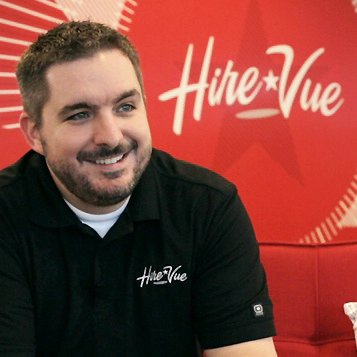
The Leadership Insider network is an online community where the most thoughtful and influential people in business contribute answers to timely questions about careers and leadership. Today’s answer to the question “How do you build trust with your employees?” is by Mark Newman, founder and CEO of HireVue.
As we know too well, workplace news can make headlines overnight — for better or worse. Throughout my career, I’ve witnessed a wide range of practices that build employee trust — and an equal share of those that erode it instantaneously. From these experiences, I’ve learned that fostering trust at work comes down to being honest: setting expectations early and delivering on promises. These values should be clearly defined and reinforced as core components of the company culture — from the top down, day in and day out. It sounds simple in theory, but companies of all sizes stumble in the execution.
According to the Bureau of Labor Statistics’ most recent Job Openings and Labor Turnover Survey, 2.7 million people quit their jobs in the month of July alone. A recent Ernst & Young survey, conducted by Harris Research, attributes this to a dire expectations gap between management and employees nationwide. This gap often stems from a perfect storm of miscommunication and mismanaged employer expectations. The result: Both employee and employer suffer the consequences of stalled employee productivity, engagement, and even worse, turnover.
The top five work-life challenges leading to unhappiness — and ultimately turnover — identified in the study are: minimal wage increases, lack of advancement opportunities, excessive overtime, the work environment and lack of encouraged teamwork, and an inflexible work schedule. Each of these contribute to companies’ eroding trust with employees, slowly yet surely.
It’s a candidate-driven hiring market, so how do we change this dynamic here and now?
See also: What CEOs still get wrong about running a business
Set expectations early – before you make them an offer
Dating, friendships, marriages and family relationships all require establishing trust early on to succeed, but we tend to lose sight of this in a business setting. Here’s a novel idea: Let’s be honest with our employees from the start. In fact, let’s practice transparency before we even make candidates an offer. This may sound outlandish, but leading talent-driven organizations — such as Delta Air Lines (DAL) — are already doing it by sharing all the nuances of the company, from culture to business goals to details of the available position. Perhaps the greatest manifestation of accurately characterizing expectations and realities of a position is Delta’s flight attendant job preview video, which showcases what it’s really like to be a flight attendant — hectic travel schedules, missed holidays with family, cancelled flights and waiting on standby for hours. That transparency is what candidates crave and deserve today.
At HireVue, we utilize VueNation as a platform for transparency for our potential employees. We openly publish what it’s like to be an employee by sharing our top 10 core values, our company culture (centered on hard work and strong results) and our benefits.
Isn’t it more beneficial for poor fits to opt themselves out of the interviewing process based on a true sense of your company and the job than for you to tackle performance and engagement issues down the road — not to mention a costly relationship based on little or no trust?
Continue the transparency once talent is on board
At one point, transparency was a nice-to-have concept embraced by “cutting-edge” organizations. Today, it’s a must. And if you’re not already peeling back the curtain with your employee base, forums such as Glassdoor are doing it for you. Thanks to social media, bloggers and reporters have instant access to employees to get the real story behind the headlines. So once you have the right hire in the door, continue the openness to build up the foundation of trust.
Read all answers to the Leadership Insider question: How do you build trust with your employees?
The secret perk that helps build trust with employees by Sarah Kauss, CEO and founder of S’well.
Why you should never cover up your mistakes at work by Tom Gimbel, CEO of the LaSalle Network.
Why employers need to stop policing social media by Ryan Holmes, CEO of Hootsuite.
You can’t be a great leader without doing this by Brad Smith, CEO of Intuit.
Proof you’re not making business decisions quick enough by Todd McKinnon, CEO and co-founder of Okta.
Managers, here’s why honest feedback matters at work by Rich Cavallaro, president and CEO of Skanska USA.
How a boombox helped this CEO build trust with his employees by Kyle Wong, CEO of Pixlee.
Want your employees to work harder? Eliminate your officesby Lars Albright, co-founder and CEO of SessionM.
How this CEO regained trust with his employees by David DeWolf, president and CEO of 3Pillar Global.
This is the best way to build trust with your employees by Ryan Harwood, CEO of PureWow.
The real reason your employees quit by Robert Hohman, CEO of Glassdoor.