By the end of last week, Bangkok’s Erawan shrine was showing signs of healing. Thailand’s economy, less so.
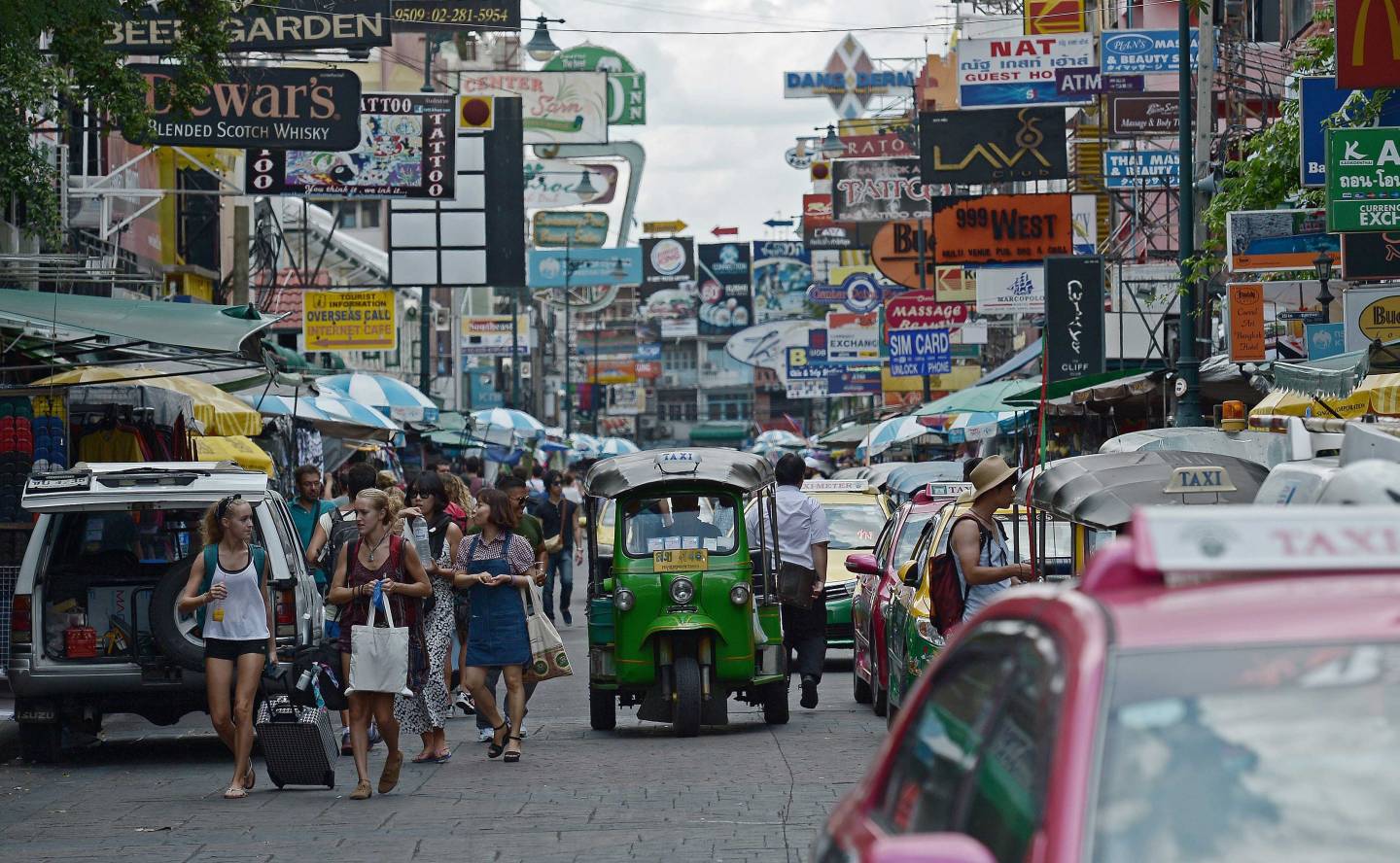
The Hindu holy spot, the site where 20 people died in an Aug. 17 bombing that was Thailand’s worst terrorist attack ever, was quickly re-opened to visitors, hundreds of whom laid flowers as camps of photographers popped pictures. Tourists again crowded the area around the shrine, a main avenue in the center of town. Mike Argabright, a retired engineer from Ventura, Calif., who has lived in Bangkok for eight years, came out to see the scene for himself. He said he hadn’t noticed dramatic changes in the city since the bombing: “Maybe a few more police checkpoints.”
In many people’s minds, the immediate question for Thailand’s economy was what effect the explosion would have on tourism. And for good reason: Tourism drove all of the 2.8% second quarter expansion in Thailand’s economy; without the flood of Chinese and Singaporean visitors, its economy would have recorded zero growth. Last week, cancellations hit expensive restaurants and hotels. But analysts have already turned sanguine, predicting the bombing’s effect on visitors will taper off in time for the high season that starts in October (assuming that no other fatal attack follows it).

As serious as the Erawan bombing, was, the attention it attracted was also a distraction from Thailand’s much larger problems. In the past couple of months, a struggling China has emerged as the biggest threat to Thailand’s weak recovery. When pundits talk about the fallout from China’s slowdown, they are essentially talking about Thailand: China is Thailand’s largest export market, and Chinese tourists were responsible for 85% of the growth in arrivals this year, according to Credit Suisse.
The country’s Oxford-educated former finance minister, Korn Chatikavanij, says Thai economists began the year worrying about the Fed raising U.S. interest rates. “Everyone paid lip service to the problems out of China,” says Chatikavanij. “Now all of a sudden, what the U.S. does with interest rates is insignificant relative to the contraction of the Chinese economy.” After China devalued its currency this month, for example, in a move at least partially aimed at making Chinese exports more competitive at the expense of its neighbors’, Thailand’s government forecaster cut GDP growth predictions for this year by 0.3%, to 2.7%.
Unfortunately for Thais, no matter what happens in China, the country is facing a bigger and longer-term problem: their economy is a shining example of what economists call the middle-income trap. Such stagnation often hits developing economies that quickly rise because of cheap labor and big capital investments but then fail to advance once those advantages dry up. Thailand’s people might not be very poor anymore, but they’re not moving to the rich category either, unlike some of their Asia Pacific neighbors.
Over the past two decades, Thailand has exported high-quality products to the West—cars for U.S. and Japanese automakers, hard-disk drives—but it hasn’t created the kinds of innovations that are measures of a maturing economy. One venture capitalist in Bangkok told me Thailand is still waiting for its first prominent startup. In 2010, Thais made $4,300 annually on average, the same as the Chinese. By 2014, the average Chinese income had grown by 70% to $7,380, according to the World Bank. Thailand, by contrast saw incomes increase only 25%, to $5,400.
“You can understand why nothing much is happening,” says Chatikavanij. “The growth of the past 15 years has largely been driven by exports, which have fueled investment to meet export demand. But the kinds of things we export are going out of fashion. Our largest exports were hard-disk drives. Who uses that anymore?”
The economy’s current growth rate feels like a recession in a country that almost everyone agrees has the potential to be growing at least 5% a year.
“We know we have to create new products,” says Somprawin Manprasert, an associate professor of economics at Bangkok’s Chulalongkorn University. “We’ve been developed for one or two decades. What’s holding us back?” He concludes it is a mix of weak business law protecting intellectual property (fake DVDs and shoes can be found everywhere in Thailand) and an engrained tendency to fight foreign competition by cutting prices—not improving quality. Both problems stall innovation and economic progress. “The problem is deep and structural,” Manprasert says.
A number of crises, both natural and manmade, have struck Thailand over the past several years. The country experienced devastating floods in 2006, then again in 2011, before crippling political protests starting in 2013 eventually led to the latest coup d’état in May 2014. (Thailand has witnessed 12 successful coups.)
Now in its second year of governing, the junta has focused its attention on problems long plaguing Thailand—airline safety, human trafficking, government corruption—but not on the economy directly. Public money pledged for infrastructure projects has been slow to appear, analysts say, as the projects are subjected to a new rigorous bid process to weed out graft. While that may benefit the economy in the long run, for now it’s further stalling a weak recovery.
The sputtering growth is having domino effects. Foreign investors, which include automakers Ford and Honda and drive makers Seagate and Western Digital, are wary of investing before economic growth improves. Last year approvals from the government for U.S. company investments rose five-fold, but investment hasn’t followed the applications. That means “companies have approval to move forward, but they are taking a wait and see approach,” says Citibank’s head of Thailand Darren Buckley.
Buckley, who’s also president of the American Chamber of Commerce in Thailand, says U.S. businesses have told him that arrests in the Erawan bombing case would go a long way to calm jitters among potential investors. The search for the bombers is ongoing. But Thailand’s past bombing investigations, many of which have ended without any arrests, don’t inspire confidence.
Many Thais are getting used to what they see as a normal routine of coups and bombings. “We’ve been in this limbo for so long that we’re sort of immune to it,” says Nucha Sibunruang, 33, who runs a fuel technology company and trucking business, over drinks at an upscale restaurant one subway stop down from the bombed shrine. It’s a hot humid night. We’re surround by half a dozen of his friends, young people in business, who—in between gulps of beer poured over ice cubes—laugh off questions about the bombing changing their routine.
Sibunruang belongs to the fourth generation in his family’s business conglomerate. He says friends of his who own hotels suffered through 30% occupancy two years ago during political protests, but his company has grown steadily—private businesses are a counterbalance to the country’s less productive government-owned sector. (Private production comprises about 40% of Thai GDP.)
Sibunruang’s wife, Vasana Jantarach, 35, a member of the second generation in her family’s food business Exotic Foods, says she also paid little attention to the bombing. Currency fluctuations are her bigger worry. When the dollar is strong, Exotic Foods’ Thai sauces are cheaper and sell well in the U.S.; when the euro weakens, business falls in Europe. Sales were up recently in China, where buyers use Exotic Foods’ green curry paste as a dip for barbeque meat, but this month’s yuan devaluation will make sauces more expensive for the Chinese, a problem higher on Jantarach’s mind than an isolated attack in Bangkok.
Locals are looking for bright spots in the economic malaise. “I usually tell my friends in the States, these are the best of times to visit Thailand because of the bargains,” says the retired Argabright. “After every negative event, tourism always eventually comes back.” The bigger question is when the broader economy will follow.
For more on the global impact of China’s economic slowdown, see this recent Fortune video.