• Home
  • Latest
  • Fortune 500
  • Finance
  • Tech
  • Leadership
  • Lifestyle
  • Rankings
  • Multimedia
Tech

How leaf blight could destroy the global economy

By
David Z. Morris
David Z. Morris
Down Arrow Button Icon
By
David Z. Morris
David Z. Morris
Down Arrow Button Icon
August 28, 2015, 4:16 PM ET
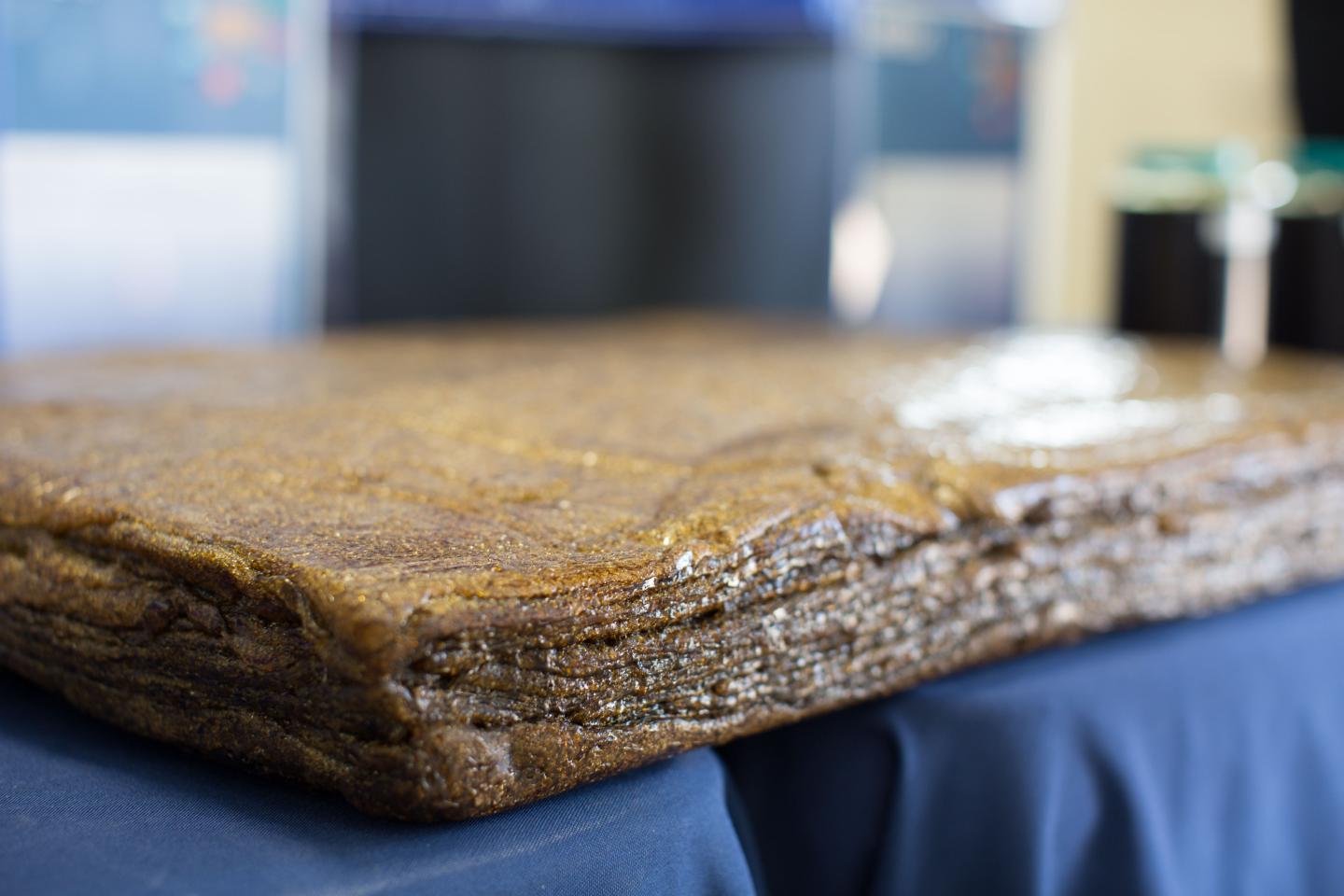
block of rubber from Guayule plant
Hilmy Photography

On August 18 and 19, tire maker Cooper successfully demonstrated passenger car tires made using natural rubber extracted from the wiry, tiny-leafed guayule bush. Cooper’s work, funded by a 2012 USDA grant and undertaken in cooperation with the agricultural firm PanAridus, is the latest milestone in a very long and spotty history of alternative rubber development. That development, experts say, is crucial to insulating against one of the global economy’s largest but least-understood vulnerabilities.

Natural rubber is vital to the modern world, a major component of everything from medical equipment to tanks to, most importantly, tires. No synthetic rubber can replicate its properties, and it currently comes almost entirely from one incredibly vulnerable source. More than 90% of the world’s rubber is derived from hevea brasiliensis, the rubber tree, and grown in southeast Asia, where it was transplanted from South America in the 1800s.

The limited type and range of rubber sourcing is a problem for many reasons. Production currently depends on high levels of low-cost manual labor, which may become less available as the region develops economically. The region may not be able to support rising demand from India and China. And supplies are vulnerable to geopolitical disruption, as demonstrated during World War II when Japan took control of the world’s rubber supplies.

But the main problem is that southeast Asian rubber is nearly fated to be ravaged by disease.

Rubber is not grown at commercial scale in South America because of the presence of South American leaf blight, a fungal infection that tears through any trees planted too close together. Henry Ford struggled for years to industrialize rubber production, but leaf blight struck him a rare defeat. For decades, countries like Thailand and Malaysia have tightly restricted travel and trade from South America, hoping to keep leaf blight from crossing the Pacific.

But that quarantine is becoming less effective as the world globalizes—leaf blight was recently rumored in both Thailand and India. And the prospects for fighting it are bleak. Asian rubber is planted tightly; the trees come from nearly uniform genetic stock; the disease itself is pernicious; and the majority of rubber is grown by small farmers with few resources to combat it. As Wade Davis wrote in Fortune in 1996, leaf blight’s spread would be the end of the natural rubber industry as we know it.

“It’s amazing we haven’t come to some terrible disaster already,” says Dr. Katrina Cornish of Ohio State University. “The recession we’ve just been crawling out of, it would be nothing compared to what will happen if we can’t get rubber.

“Our entire infrastructure would collapse.”

Cornish has been one of the leading researchers in alternative rubbers for nearly three decades, exploring not just guayule, but other promising sources, such as a rubbery dandelion native to areas around Uzbekistan.

Guayule has many advantages as an alternative rubber. As Cooper demonstrated, it produces rubber nearly identical to the rubber tree’s. It can be harvested mechanically, rather than by hand. Most of all, it thrives in arid environments like the American southwest, needs very little water, and essentially produces its own pesticide.

There are challenges, though. Rather than neatly dripping rubber sap like trees, guayule’s thin branches must be harvested whole, then processed using solvents and centrifuges. And its genetic stock is relatively undeveloped. All of that makes guayule rubber, at least for now, considerably more expensive than hevea rubber.

Some promising startups are betting they can change that. PanAridus, which provides the guayule for Cooper’s project, has worked to develop more efficient processing technologies and breed new strains with higher rubber content. A competing company, Yulex, has helped develop products like Patagonia’s guayule-rubber wetsuits. Yulex also developed one of the earliest widespread commercial uses of guayule rubber, in medical tools safe for those with particular latex allergies.

But experts agree that development of a competitive domestic rubber industry, and a robust global market, still needs serious investment. Government support has in the past proven fickle. After Japan’s surrender reopened global connections to southeast Asian rubber, the U.S. didn’t just stop investing in guayule research—much of the research stock was destroyed. Research was abandoned almost as abruptly after brief interest during the oil crisis of the 1970s, when synthetic rubber prices spiked.

Cornish finds this approach infuriating, blaming both government and corporate shortsightedness.

“We need to diversify it now,” she says. “Why wait for a disaster before you get yourself ready?”

Sign up for Data Sheet, Fortune’s daily newsletter about the business of technology.

About the Author
By David Z. Morris
See full bioRight Arrow Button Icon

Latest in Tech

Finance
Lorem ipsum dolor sit amet, consectetur adipiscing elit, sed do eiusmod tempor incididunt ut labore et dolore magna aliqua. Ut enim ad minim veniam
By Fortune Editors
October 20, 2025
Finance
Lorem ipsum dolor sit amet, consectetur adipiscing elit, sed do eiusmod tempor incididunt ut labore et dolore magna aliqua. Ut enim ad minim veniam
By Fortune Editors
October 20, 2025
Finance
Lorem ipsum dolor sit amet, consectetur adipiscing elit, sed do eiusmod tempor incididunt ut labore et dolore magna aliqua. Ut enim ad minim veniam
By Fortune Editors
October 20, 2025
Finance
Lorem ipsum dolor sit amet, consectetur adipiscing elit, sed do eiusmod tempor incididunt ut labore et dolore magna aliqua. Ut enim ad minim veniam
By Fortune Editors
October 20, 2025
Finance
Lorem ipsum dolor sit amet, consectetur adipiscing elit, sed do eiusmod tempor incididunt ut labore et dolore magna aliqua. Ut enim ad minim veniam
By Fortune Editors
October 20, 2025
Finance
Lorem ipsum dolor sit amet, consectetur adipiscing elit, sed do eiusmod tempor incididunt ut labore et dolore magna aliqua. Ut enim ad minim veniam
By Fortune Editors
October 20, 2025

Most Popular

Finance
Lorem ipsum dolor sit amet, consectetur adipiscing elit, sed do eiusmod tempor incididunt ut labore et dolore magna aliqua. Ut enim ad minim veniam
By Fortune Editors
October 20, 2025
Finance
Lorem ipsum dolor sit amet, consectetur adipiscing elit, sed do eiusmod tempor incididunt ut labore et dolore magna aliqua. Ut enim ad minim veniam
By Fortune Editors
October 20, 2025
Finance
Lorem ipsum dolor sit amet, consectetur adipiscing elit, sed do eiusmod tempor incididunt ut labore et dolore magna aliqua. Ut enim ad minim veniam
By Fortune Editors
October 20, 2025
Finance
Lorem ipsum dolor sit amet, consectetur adipiscing elit, sed do eiusmod tempor incididunt ut labore et dolore magna aliqua. Ut enim ad minim veniam
By Fortune Editors
October 20, 2025
Finance
Lorem ipsum dolor sit amet, consectetur adipiscing elit, sed do eiusmod tempor incididunt ut labore et dolore magna aliqua. Ut enim ad minim veniam
By Fortune Editors
October 20, 2025
Finance
Lorem ipsum dolor sit amet, consectetur adipiscing elit, sed do eiusmod tempor incididunt ut labore et dolore magna aliqua. Ut enim ad minim veniam
By Fortune Editors
October 20, 2025
Fortune Secondary Logo
Rankings
  • 100 Best Companies
  • Fortune 500
  • Global 500
  • Fortune 500 Europe
  • Most Powerful Women
  • World's Most Admired Companies
  • See All Rankings
  • Lists Calendar
Sections
  • Finance
  • Fortune Crypto
  • Features
  • Leadership
  • Health
  • Commentary
  • Success
  • Retail
  • Mpw
  • Tech
  • Lifestyle
  • CEO Initiative
  • Asia
  • Politics
  • Conferences
  • Europe
  • Newsletters
  • Personal Finance
  • Environment
  • Magazine
  • Education
Customer Support
  • Frequently Asked Questions
  • Customer Service Portal
  • Privacy Policy
  • Terms Of Use
  • Single Issues For Purchase
  • International Print
Commercial Services
  • Advertising
  • Fortune Brand Studio
  • Fortune Analytics
  • Fortune Conferences
  • Business Development
  • Group Subscriptions
About Us
  • About Us
  • Press Center
  • Work At Fortune
  • Terms And Conditions
  • Site Map
  • About Us
  • Press Center
  • Work At Fortune
  • Terms And Conditions
  • Site Map
  • Facebook icon
  • Twitter icon
  • LinkedIn icon
  • Instagram icon
  • Pinterest icon

Latest in Tech

Elon Musk arrives at the courthouse during his trial against OpenAI
CryptoElon Musk
Elon Musk likes Bitcoin—but he just told a jury most crypto coins are scams
By Jack KubinecApril 30, 2026
42 minutes ago
Jamie Dimon, chief executive officer of JPMorgan Chase & Co., at the Norges Bank Investment Management annual investment conference in Oslo, Norway, on Tuesday, April 28, 2026.
EconomyJamie Dimon
For years, the risk Jamie Dimon was most concerned about was geopolitics. His answer has shifted
By Eleanor PringleApril 30, 2026
1 hour ago
google
InvestingMarkets
Google shares hit all-time high on blowout earnings, market cap doubles to $4.4 trillion in just a year
By Michael Liedtke and The Associated PressApril 30, 2026
2 hours ago
AWS
Big TechMarkets
Amazon’s cloud sales are growing the most in 15 quarters. Investors sent the stock down on AI capex fears
By Anne D'Innocenzio and The Associated PressApril 30, 2026
2 hours ago
AstraZeneca CFO Aradhana Sarin
BankingCFO Daily
How AstraZeneca’s 17,000 AI-certified employees are helping it reach a ‘stretch goal’ of $80 billion in revenue
By Sheryl EstradaApril 30, 2026
4 hours ago
agentic
CommentaryAI agents
Why your data infrastructure — not your AI model — will determine whether Agentic AI scales
By Jeffrey Sonnenfeld, Stephen Henriques, Catherine Dai and Zander JeinthanuttkanontApril 30, 2026
4 hours ago

Most Popular

Apple cofounder Ronald Wayne—whose stake would be worth up to $400 billion had he not sold it in 1976—says that at 91, he has no regrets
Success
Apple cofounder Ronald Wayne—whose stake would be worth up to $400 billion had he not sold it in 1976—says that at 91, he has no regrets
By Preston ForeApril 27, 2026
3 days ago
Jamie Dimon gets candid about national debt: ‘There will be a bond crisis, and then we’ll have to deal with it’
Economy
Jamie Dimon gets candid about national debt: ‘There will be a bond crisis, and then we’ll have to deal with it’
By Eleanor PringleApril 29, 2026
1 day ago
‘They left me no choice’: Powell isn’t going anywhere—blocking Trump from another Fed appointee
Banking
‘They left me no choice’: Powell isn’t going anywhere—blocking Trump from another Fed appointee
By Eva RoytburgApril 29, 2026
21 hours ago
‘The cost of compute is far beyond the costs of the employees’: Nvidia executive says right now AI is more expensive than paying human workers
AI
‘The cost of compute is far beyond the costs of the employees’: Nvidia executive says right now AI is more expensive than paying human workers
By Sasha RogelbergApril 28, 2026
2 days ago
Google Cloud revenue is now 18% of Alphabet's business. Is this the beginning of the end of Google's search identity?
Big Tech
Google Cloud revenue is now 18% of Alphabet's business. Is this the beginning of the end of Google's search identity?
By Alexei OreskovicApril 29, 2026
15 hours ago
‘Take the money and run’: Johns Hopkins economist Steve Hanke on why the UAE quit OPEC
Energy
‘Take the money and run’: Johns Hopkins economist Steve Hanke on why the UAE quit OPEC
By Shawn TullyApril 29, 2026
1 day ago

© 2026 Fortune Media IP Limited. All Rights Reserved. Use of this site constitutes acceptance of our Terms of Use and Privacy Policy | CA Notice at Collection and Privacy Notice | Do Not Sell/Share My Personal Information
FORTUNE is a trademark of Fortune Media IP Limited, registered in the U.S. and other countries. FORTUNE may receive compensation for some links to products and services on this website. Offers may be subject to change without notice.