• Home
  • News
  • Fortune 500
  • Tech
  • Finance
  • Leadership
  • Lifestyle
  • Rankings
  • Multimedia
Commentarytrans-pacific partnership

What China’s currency devaluation means for the world’s trade deals

By
Alan Wolff
Alan Wolff
Down Arrow Button Icon
By
Alan Wolff
Alan Wolff
Down Arrow Button Icon
August 19, 2015, 3:07 PM ET
China Scraps Yuan Peg To US dollar
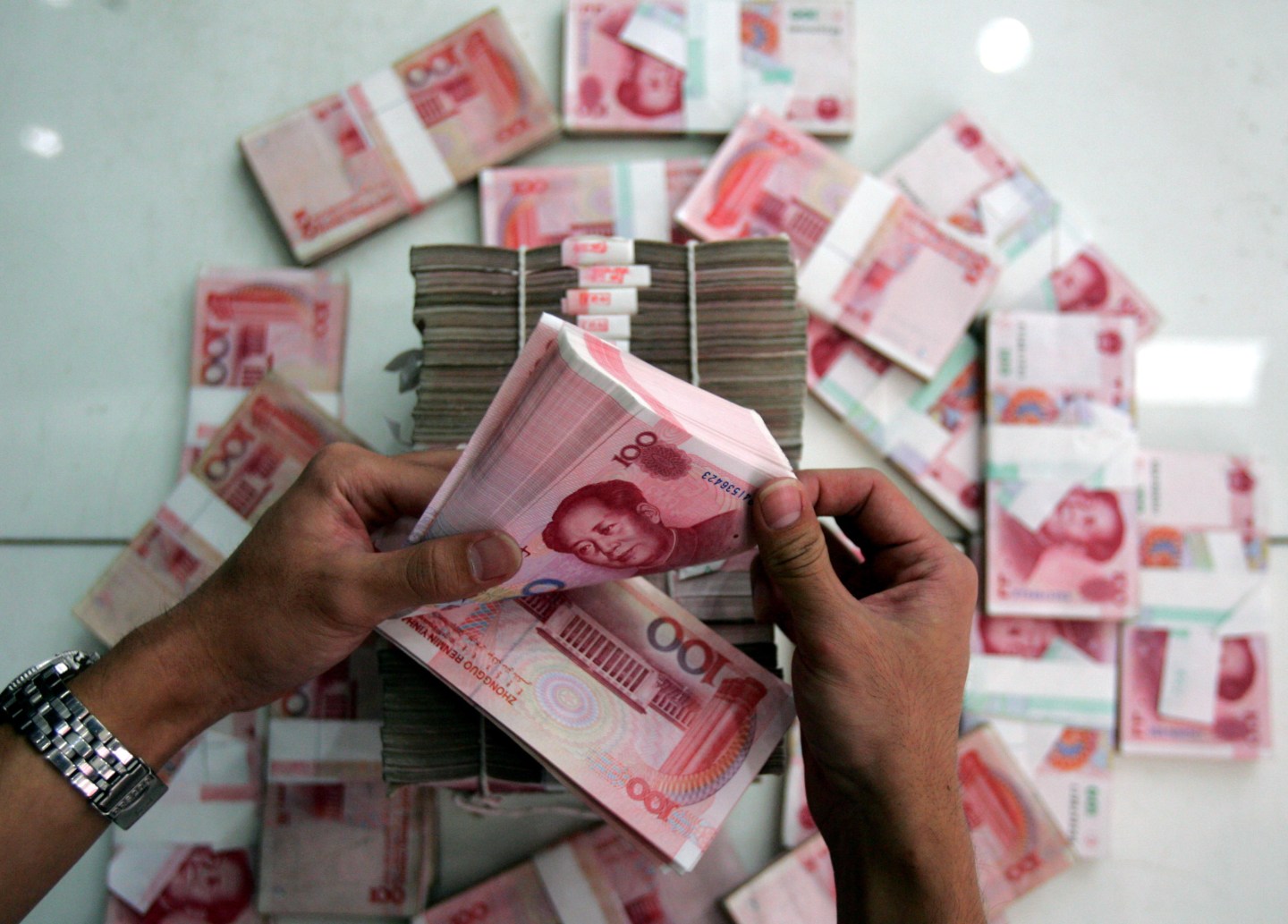
A clerk counts stacks of Chinese yuan at a bank on July 22, 2005 in Beijing, China. Photograph by China Photos/Getty Images

With the sudden depreciation of China’s renminbi, it’s worth looking at the link between currency values and trade agreements. China’s currency last week dropped by a cumulative 4.4% against the U.S. dollar, making Chinese exports cheaper and imports into China more expensive by that amount.

The effect on trade can be substantial. With the U.S. average tariff on industrial goods well under 2%, this change in China’s currency value easily swamps most U.S. tariffs. And given the fact that the U.S. dollar was already strong, this move is an added disadvantage to U.S. exports headed for China compared to exports from other countries.

As world leaders continue negotiating what’s poised to be a landmark trade deal across the Pacific Rim, some U.S. lawmakers have responded with criticism: “Today’s provocative act by the Chinese government to lower the value of the yuan is just the latest in a long history of cheating,” said Republican U.S. Sen. Lindsey Graham, who along with Democratic New York Sen. Chuck Schumer had sought to include a tough provision against currency manipulation in the Trans-Pacific Partnership Agreement (TPP).
China is not a part of the TPP negotiations, but the trade deal has an open architecture — other countries can negotiate accession to the agreement anytime after the current 12 participants conclude the deal. For this reason, and because there was Congressional concern voiced last Spring over currency manipulation during consideration of trade legislation, China’s action has freshened the focus on the linkage of currency values to trade.

The subject is controversial. There is no international (or domestic) agreement on what constitutes currency manipulation. Countries such as Brazil have criticized the U.S. Federal Reserve’s monetary policies (designed to stimulate U.S. economic recovery) for weakening the greenback U.S. auto companies have complained about Japanese currency manipulation, although the U.S. Treasury has not cited direct intervention in the currency markets (or even indirect intervention – taking the yen’s value down) while Prime Minister Abe has been in office. China’s case is also complicated. The value of the RMB had been rising against the dollar over the last two decades – by over 30%. In May, the International Monetary Fund declared that it no longer considered the RMB to be undervalued.

China’s latest currency move has drawn muted responses from the IMF and U.S. Treasury. As quoted in The New York Times, the IMF said “China’s new plan for determining the value of the renminbi ‘appears a welcome step as it should allow market forces to have a greater role.’ But the IMF also carefully noted that “the exact impact will depend on how the new mechanism is implemented in practice.” The U.S. Treasury’s statement followed a similar line.

Nonetheless, Congress, in the recently passed trade promotion authority, set out as a principal that any trade deal the U.S. negotiates will have zero tolerance for currency manipulation.This negotiating objective, and a companion provision dealing with unfair currency practices, are applicable to TPP.

To be responsive to this Congressional mandate, the U.S. Treasury is working with its TPP country counterparts on a currency understanding. This would provide that finance officials and central bankers meet to promote greater accountability with respect to currency values and to avoid exchange rate manipulation. The proposal is envisaged as a forum for addressing these questions without binding dispute settlement being available to settle differences.

This does not go as far as many in Congress seek, but it is a step in the direction of giving some substance to what in fact has been the international trade rule on exchange rates since 1947: countries are not to undermine their trade commitments by actions they take on exchange rates.

Alan Wolff practices law at Dentons in Washington D.C. He is chairman of the National Foreign Trade Council (NFTC), and a former U.S. Deputy Trade Representative.


About the Author
By Alan Wolff
See full bioRight Arrow Button Icon

Latest in Commentary

jobs
Commentaryprivate equity
There is a simple fix for America’s job-quality crisis: actually give workers a piece of the business 
By Pete StavrosDecember 9, 2025
13 hours ago
Jon Rosemberg
CommentaryProductivity
The cult of productivity is killing us
By Jon RosembergDecember 9, 2025
13 hours ago
Trump
CommentaryTariffs and trade
AI doctors will be good at science but bad at business, and big talk with little action means even higher drugs prices: 10 healthcare predictions for 2026 from top investors
By Bob Kocher, Bryan Roberts and Siobhan Nolan ManginiDecember 9, 2025
13 hours ago
Google.org
CommentaryTech
Nonprofits are solving 21st century problems—they need 21st century tech
By Maggie Johnson and Shannon FarleyDecember 8, 2025
2 days ago
Will Dunham is President and Chief Executive Officer of the American Investment Council
CommentaryRetirement
Private equity is being villainized in the retirement debate — even as it provides diversification and outperforms public markets long-term
By Will DunhamDecember 8, 2025
2 days ago
Justin Hotard, CEO of Nokia
CommentaryGen Z
Nokia CEO: The workforce is becoming AI-native. Leadership has to evolve
By Justin HotardDecember 8, 2025
2 days ago

Most Popular

placeholder alt text
Success
When David Ellison was 13, his billionaire father Larry bought him a plane. He competed in air shows before leaving it to become a Hollywood executive
By Dave SmithDecember 9, 2025
16 hours ago
placeholder alt text
Real Estate
The 'Great Housing Reset' is coming: Income growth will outpace home-price growth in 2026, Redfin forecasts
By Nino PaoliDecember 6, 2025
4 days ago
placeholder alt text
Success
Craigslist founder signs the Giving Pledge, and his fortune will go to military families, fighting cyberattacks—and a pigeon rescue
By Sydney LakeDecember 8, 2025
1 day ago
placeholder alt text
Uncategorized
Transforming customer support through intelligent AI operations
By Lauren ChomiukNovember 26, 2025
13 days ago
placeholder alt text
Investing
Baby boomers have now 'gobbled up' nearly one-third of America's wealth share, and they're leaving Gen Z and millennials behind
By Sasha RogelbergDecember 8, 2025
1 day ago
placeholder alt text
Economy
‘Fodder for a recession’: Top economist Mark Zandi warns about so many Americans ‘already living on the financial edge’ in a K-shaped economy 
By Eva RoytburgDecember 9, 2025
5 hours ago
Rankings
  • 100 Best Companies
  • Fortune 500
  • Global 500
  • Fortune 500 Europe
  • Most Powerful Women
  • Future 50
  • World’s Most Admired Companies
  • See All Rankings
Sections
  • Finance
  • Leadership
  • Success
  • Tech
  • Asia
  • Europe
  • Environment
  • Fortune Crypto
  • Health
  • Retail
  • Lifestyle
  • Politics
  • Newsletters
  • Magazine
  • Features
  • Commentary
  • Mpw
  • CEO Initiative
  • Conferences
  • Personal Finance
  • Education
Customer Support
  • Frequently Asked Questions
  • Customer Service Portal
  • Privacy Policy
  • Terms Of Use
  • Single Issues For Purchase
  • International Print
Commercial Services
  • Advertising
  • Fortune Brand Studio
  • Fortune Analytics
  • Fortune Conferences
  • Business Development
About Us
  • About Us
  • Editorial Calendar
  • Press Center
  • Work At Fortune
  • Diversity And Inclusion
  • Terms And Conditions
  • Site Map

© 2025 Fortune Media IP Limited. All Rights Reserved. Use of this site constitutes acceptance of our Terms of Use and Privacy Policy | CA Notice at Collection and Privacy Notice | Do Not Sell/Share My Personal Information
FORTUNE is a trademark of Fortune Media IP Limited, registered in the U.S. and other countries. FORTUNE may receive compensation for some links to products and services on this website. Offers may be subject to change without notice.