• Home
  • Latest
  • Fortune 500
  • Finance
  • Tech
  • Leadership
  • Lifestyle
  • Rankings
  • Multimedia

Trendingnow

1

After forcing workers back to the office, Goldman Sachs and JPMorgan Chase are now letting their staff work remotely—but only for the World Cup

2

The Pentagon said Iran War costs $29 billion,but the real cost is closer to $200 billion—and counting

3

Markets tumble worldwide as Fed resets expectations: $400 billion wiped off SpaceX stock

1

After forcing workers back to the office, Goldman Sachs and JPMorgan Chase are now letting their staff work remotely—but only for the World Cup

2

The Pentagon said Iran War costs $29 billion,but the real cost is closer to $200 billion—and counting

3

Markets tumble worldwide as Fed resets expectations: $400 billion wiped off SpaceX stock
Finance

The thing about flat stock markets

By
Joshua Brown
Joshua Brown
Down Arrow Button Icon
By
Joshua Brown
Joshua Brown
Down Arrow Button Icon
July 30, 2015, 11:05 AM ET
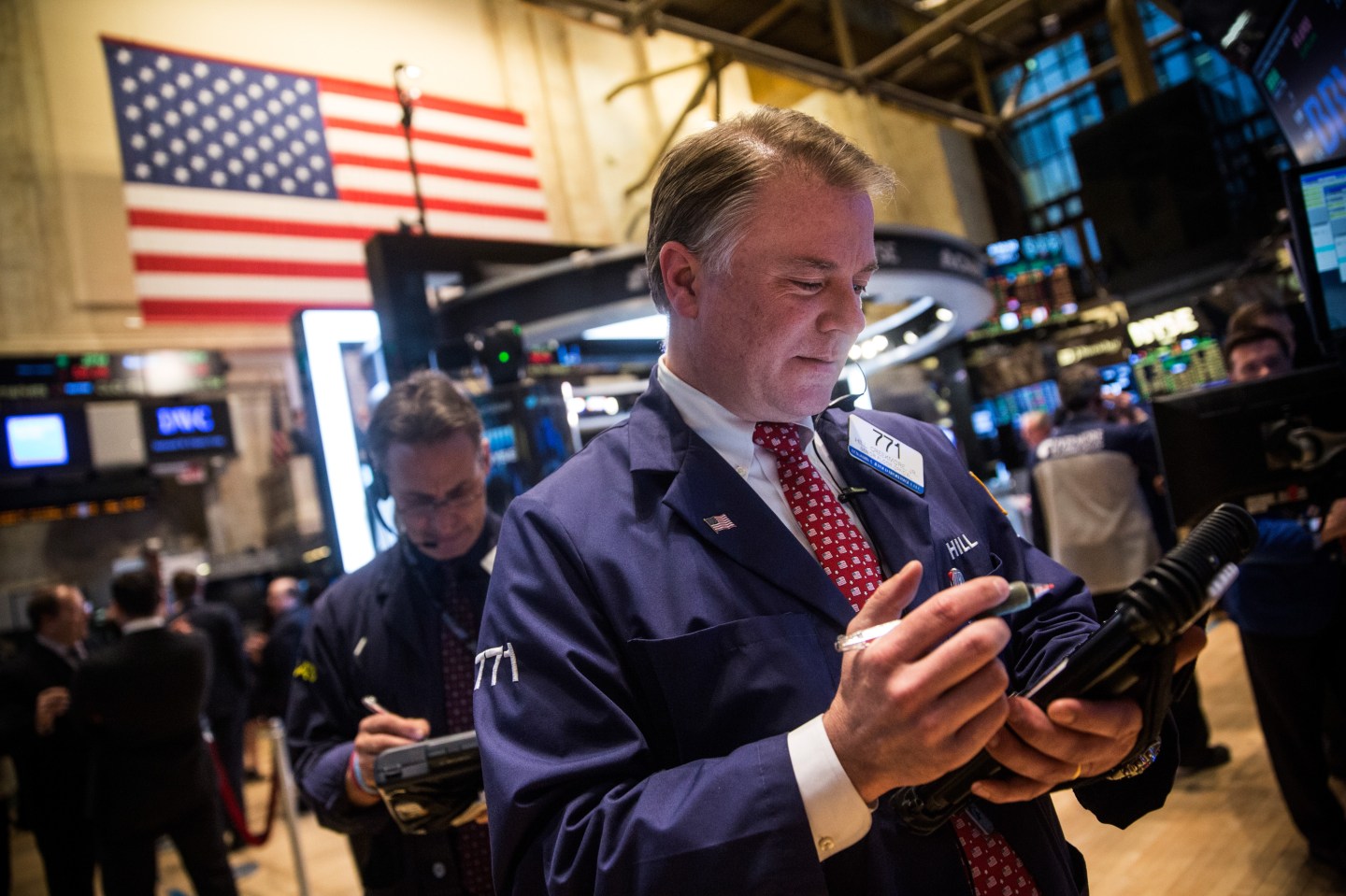
Dow Jones Index Crosses 18,000 Mark
NEW YORK, NY - FEBRUARY 13: A trader works on the floor of the New York Stock Exchange during the afternoon of February 13, 2015 in New York City. The Dow Jones Industrial Average closed above 18,000 points for the first time in market history. (Photo by Andrew Burton/Getty Images)Photograph by Andrew Burton — Getty Images
Add Fortune on Google for similar content.

You might have looked at your last brokerage statement and wondered why you’re no longer seeing the asset balance increasing like it had been. You may have taken a glance at your 401(k) the other day and wondered why it’s barely budged since Thanksgiving, excluding the contributions you’ve been making every two weeks.

You’re not crazy. The U.S. stock market has essentially gone nowhere in over 120 days. For every area of the market reaching new heights—think healthcare, software, and consumer discretionary—there’s one that’s been dragging the major averages back to the flatline; energy, materials, and industrial stocks, for example.

There’s a litany of reasons why the impossible rally that began in the fall of 2011 has hit a wall.

One could point to the (quite possibly) imminent start of an interest rate hike cycle along with the current plunge in commodity prices. We could also cite the slow but undeniable rise in employment costs, which threatens profit margins at such bellwether companies as Wal-Mart and McDonald’s.

Then there’s the fact that corporate earnings have stopped growing, putting the pressure on companies to keep up a continued expansion of price-earnings multiples for which there is zero justification. Bulls point out that, if you take energy stocks out of the S&P 500, earnings growth overall looks pretty decent. That’s great; and if we took Jar-Jar Binks out of Star Wars: The Phantom Menace and edited out all the stuff with the six-year-old kid, it’s a decent movie. But we can’t. The Phantom Menace was an atrocity and S&P 500 earnings have now gone, shall we say, ex-growth.

And so, in the absence of a robust economy, and in the face of a potentially less accommodating Federal Reserve and peaking corporate profits, we go nowhere. The treadmill continues on as fewer stocks participate in each successive challenge to beat the S&P 500’s all-time record high. Only a handful of stocks and sectors are delivering uptrends on their own. The 52-week low list swells and the percentage of stocks below their 200-day moving average begins to resemble a highway pile-up at rush hour.

Market watchers have noted that the trading range (difference between the market’s highs and lows) so far in 2015 is among the narrowest ever recorded. The fact that this sort of mass indecision is transpiring just a few percentage points away from record highs is a fascinating development and possibly presages a major turning point in the predominant trend.

Put simply, we’re running out of both breadth and breath.

The important thing to remember, however, is that flat markets are not necessarily predictive of what will happen in the immediate future. I took a look at the historical record to get a sense of what happens when the S&P 500 finishes the first seven months of the year flat. There were some genuine surprises in the data.

There have only been 12 years since 1926 in which the S&P 500 was trading between up or down 2% through the end of July. That’s roughly 13% of the time in a 90-year sample set. So, the first observation we should make is that a flat market this late in the year is relatively rare.

When we think of a flat market, we think of choppiness, but volatility has actually been muted during the years in question. Looking at standard deviation, it turns out that the average volatility of these 12 flat years was substantially lower than the volatility of a typical year in the stock market. The flat years featured standard deviations of just 11.5% versus almost 19% for a typical year.


“But Josh”, you may be asking, “what happens next?”

If I knew the answer to that, I’d be halfway to my own private Aegean Island with the cast of Taylor Swift’s ‘Bad Blood’ video and a 10-gallon drum of ranch dressing (don’t ask).

Unfortunately, I don’t have a concrete answer. Fortunately, I’m not completely useless. I come armed with a range of outcomes worth considering based on how flat markets have resolved throughout history.

Let’s start with the worst case scenario on record, the flat market through July 1930 that ended up horribly to the downside, an August to December plunge of 28.5%. It happened, no sense in denying that it’s possible. But, and this is a major but, please bear in mind that this was right after the Crash of 1929 and 1930 was the year that ushered in the Great Depression.

When we look at the next two worst outcomes, we see how much of an outlier 1930’s resolution was. In 1941, the S&P dropped by 17.5% in the last five months of the year, punctuated by the events at Pearl Harbor in December. In 1990, another recession year, the S&P fell out of the flatline and finished down by 6% as America fought through the first Gulf War and the Savings & Loans Crisis put a dent in the economy.

In only one instance of our 12 years, 1994, did we see the year end unchanged. By the end of 1994, the stock market closed down 1.5% as markets recovered from the shock of Alan Greenspan’s surprise summer rate hike.

But that’s it for the losses. The S&P 500 declined in only three of the years of our sample and was flat in one. In the other eight years, investors were rewarded—in some cases, very handsomely. In 1942, 1949, and 2010, the S&P 500 delivered returns of between 9% and 13% once the stalemate of the first seven months was broken.

The median return for all 12 flat-market years has been 6%. This is about half of the median return for all years since 1926, but it’s not exactly chopped liver. And remember, this is against the backdrop of substantially lower volatility, on average.

Flat markets do not necessarily suggest any particular outcome when the S&P 500 finally breaks out of its slumber. It’s been down three times, flat once, and markedly higher in the other eight instances. All those narratives on what’s about to happen based on the current trading range should be discounted or ignored with extreme prejudice. The most common resolution has been a gain with much less volatility than usual, but the outcomes have been all over the map.

Keep this grain of salt handy for the next time someone tells you otherwise.

About the Author
By Joshua Brown
See full bioRight Arrow Button Icon
Add Fortune on Google for similar content.

Latest in Finance

Finance
Lorem ipsum dolor sit amet, consectetur adipiscing elit, sed do eiusmod tempor incididunt ut labore et dolore magna aliqua. Ut enim ad minim veniam
By Fortune Editors
October 20, 2025
Finance
Lorem ipsum dolor sit amet, consectetur adipiscing elit, sed do eiusmod tempor incididunt ut labore et dolore magna aliqua. Ut enim ad minim veniam
By Fortune Editors
October 20, 2025
Finance
Lorem ipsum dolor sit amet, consectetur adipiscing elit, sed do eiusmod tempor incididunt ut labore et dolore magna aliqua. Ut enim ad minim veniam
By Fortune Editors
October 20, 2025
Finance
Lorem ipsum dolor sit amet, consectetur adipiscing elit, sed do eiusmod tempor incididunt ut labore et dolore magna aliqua. Ut enim ad minim veniam
By Fortune Editors
October 20, 2025
Finance
Lorem ipsum dolor sit amet, consectetur adipiscing elit, sed do eiusmod tempor incididunt ut labore et dolore magna aliqua. Ut enim ad minim veniam
By Fortune Editors
October 20, 2025
Finance
Lorem ipsum dolor sit amet, consectetur adipiscing elit, sed do eiusmod tempor incididunt ut labore et dolore magna aliqua. Ut enim ad minim veniam
By Fortune Editors
October 20, 2025

Most Popular

Finance
Lorem ipsum dolor sit amet, consectetur adipiscing elit, sed do eiusmod tempor incididunt ut labore et dolore magna aliqua. Ut enim ad minim veniam
By Fortune Editors
October 20, 2025
Finance
Lorem ipsum dolor sit amet, consectetur adipiscing elit, sed do eiusmod tempor incididunt ut labore et dolore magna aliqua. Ut enim ad minim veniam
By Fortune Editors
October 20, 2025
Finance
Lorem ipsum dolor sit amet, consectetur adipiscing elit, sed do eiusmod tempor incididunt ut labore et dolore magna aliqua. Ut enim ad minim veniam
By Fortune Editors
October 20, 2025
Finance
Lorem ipsum dolor sit amet, consectetur adipiscing elit, sed do eiusmod tempor incididunt ut labore et dolore magna aliqua. Ut enim ad minim veniam
By Fortune Editors
October 20, 2025
Finance
Lorem ipsum dolor sit amet, consectetur adipiscing elit, sed do eiusmod tempor incididunt ut labore et dolore magna aliqua. Ut enim ad minim veniam
By Fortune Editors
October 20, 2025
Finance
Lorem ipsum dolor sit amet, consectetur adipiscing elit, sed do eiusmod tempor incididunt ut labore et dolore magna aliqua. Ut enim ad minim veniam
By Fortune Editors
October 20, 2025
Fortune Secondary Logo
Rankings
  • 100 Best Companies
  • Fortune 500
  • Global 500
  • Fortune 500 Europe
  • Most Powerful Women
  • World's Most Admired Companies
  • See All Rankings
  • Lists Calendar
Sections
  • Finance
  • Fortune Crypto
  • Features
  • Leadership
  • Health
  • Commentary
  • Success
  • Retail
  • Mpw
  • Tech
  • Lifestyle
  • CEO Initiative
  • Asia
  • Politics
  • Conferences
  • Europe
  • Newsletters
  • Personal Finance
  • Environment
  • Magazine
  • Education
Customer Support
  • Frequently Asked Questions
  • Customer Service Portal
  • Privacy Policy
  • Terms Of Use
  • Single Issues For Purchase
  • International Print
Commercial Services
  • Advertising
  • Fortune Brand Studio
  • Fortune Analytics
  • Fortune Conferences
  • Business Development
  • Group Subscriptions
About Us
  • About Us
  • Press Center
  • Work At Fortune
  • Terms And Conditions
  • Site Map
  • About Us
  • Press Center
  • Work At Fortune
  • Terms And Conditions
  • Site Map
  • Facebook icon
  • Twitter icon
  • LinkedIn icon
  • Instagram icon
  • Pinterest icon

Latest in Finance

Top CD rates from major banks June 24, 2026: Chase CDs, Bank of America CDs, Citibank CDs, and more
Personal FinanceCertificates of Deposit (CDs)
Top CD rates from major banks on June 24, 2026: Chase CDs, Bank of America CDs, Citibank CDs, and more
By Joseph HostetlerJune 24, 2026
1 hour ago
Current price of gold as of June 24, 2026
Personal Financegold prices
Current price of gold as of June 24, 2026
By Danny BakstJune 24, 2026
1 hour ago
Current price of Ethereum for June 24, 2026
Personal FinanceEthereum
Current price of Ethereum for June 24, 2026
By Joseph HostetlerJune 24, 2026
1 hour ago
Current price of Bitcoin for June 24, 2026
Personal FinanceCryptocurrency
Current price of Bitcoin for June 24, 2026
By Joseph HostetlerJune 24, 2026
1 hour ago
Taktile cofounders Maik Taro Wehmeyer (left) and Maximilian Eber (right) stand side by side, smiling at the camera.
Startups & VentureVenture Capital
Exclusive: Taktile raises $110 million from Goldman Sachs, Tiger Global to automate high-stakes financial decisions 
By Camila Grigera NaónJune 24, 2026
1 hour ago
price-of-oil-06-23-2026
Personal FinanceOil
Current price of oil as of June 24, 2026
By Joseph HostetlerJune 24, 2026
1 hour ago

Most Popular

After forcing workers back to the office, Goldman Sachs and JPMorgan Chase are now letting their staff work remotely—but only for the World Cup
Success
After forcing workers back to the office, Goldman Sachs and JPMorgan Chase are now letting their staff work remotely—but only for the World Cup
By Orianna Rosa RoyleJune 23, 2026
1 day ago
The Pentagon said Iran War costs $29 billion,but the real cost is closer to $200 billion—and counting
Economy
The Pentagon said Iran War costs $29 billion,but the real cost is closer to $200 billion—and counting
By Jacqueline MunisJune 24, 2026
7 hours ago
Markets tumble worldwide as Fed resets expectations: $400 billion wiped off SpaceX stock
Banking
Markets tumble worldwide as Fed resets expectations: $400 billion wiped off SpaceX stock
By Jim EdwardsJune 23, 2026
1 day ago
Current price of oil as of June 23, 2026
Personal Finance
Current price of oil as of June 23, 2026
By Joseph HostetlerJune 23, 2026
1 day ago
Texas and Charlotte used to build huge McMansions—now they're copying the California design tricks they once mocked
Real Estate
Texas and Charlotte used to build huge McMansions—now they're copying the California design tricks they once mocked
By Sydney LakeJune 22, 2026
2 days ago
Current price of gold as of June 23, 2026
Personal Finance
Current price of gold as of June 23, 2026
By Danny BakstJune 23, 2026
1 day ago

© 2026 Fortune Media IP Limited. All Rights Reserved. Use of this site constitutes acceptance of our Terms of Use and Privacy Policy | CA Notice at Collection and Privacy Notice | Do Not Sell/Share My Personal Information
FORTUNE is a trademark of Fortune Media IP Limited, registered in the U.S. and other countries. FORTUNE may receive compensation for some links to products and services on this website. Offers may be subject to change without notice.