• Home
  • Latest
  • Fortune 500
  • Finance
  • Tech
  • Leadership
  • Lifestyle
  • Rankings
  • Multimedia
CommentaryDodd-Frank

Five years later, Dodd-Frank naysayers are still wrong

By
Dean Baker
Dean Baker
Down Arrow Button Icon
By
Dean Baker
Dean Baker
Down Arrow Button Icon
July 16, 2015, 5:00 AM ET
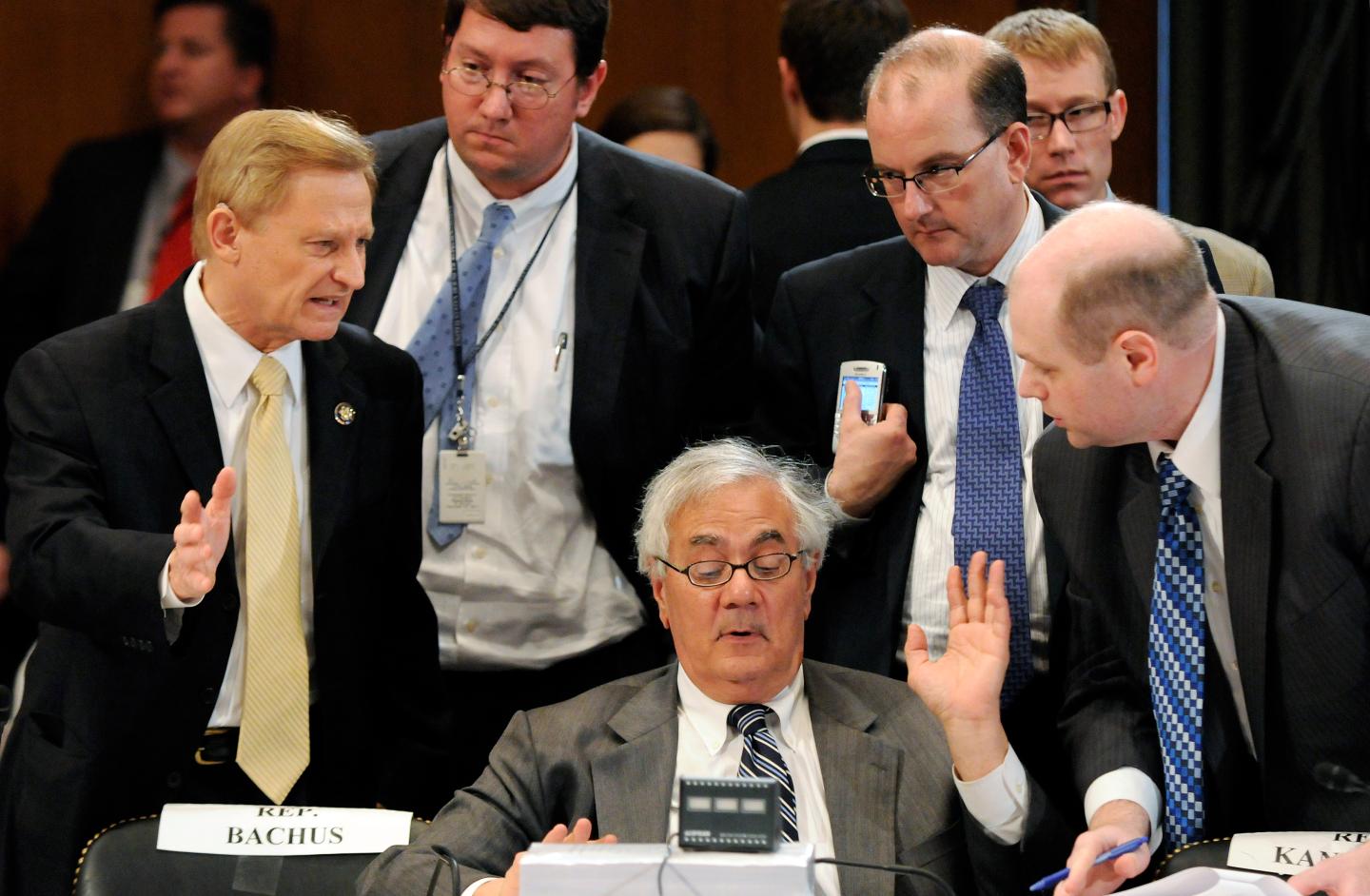
Frank talks with a group including Bachus during a recess from a committee conference on Wall Street reform on Capitol Hill
House Financial Services Committee Chairman Barney Frank (D-MA), center, talks with a group during a recess from a committee conference on Wall Street reform to hammer out sweeping changes in financial regulation legislation on Capitol Hill in Washington June 24, 2010. Photograph by Jonathan Ernst — Reuters

As we approach the fifth anniversary of the passage of the Dodd-Frank financial reform bill next week, it is worth reflecting on the history of the opposition to the bill. This is useful because opponents of the bill would still like to roll back many of the bill’s provisions, if not its outright repeal.

First and foremost the complaint was that the bill would make it more difficult for businesses to raise capital. This argument has not held up well in the last five years. Certainly the businesses that can raise money in the stock market have little basis for complaint. With price to earnings ratios in the stock market at their highest level since the tech bubble, these companies can raise money at extraordinarily low prices.

This is true for bonds as well, as we see both very low interest rates and unusually low spreads between the interest rate paid by even relatively high risk companies and Treasury bonds. In fact, these spreads are so low that Federal Reserve Chair Janet Yellen saw fit to warn markets about a bubble in the high yield market last summer. And for smaller businesses, according to the Federal Reserve Board’s data, banks made an average of more than $230 billion in new loans in the last three years, up from an average of just over $200 billion in the 3 years before the crash.

We also had warnings that the Consumer Financial Protection Bureau (CFPB) — the creation of which was authorized by Dodd-Frank — was going to impose such high costs through rules and regulations that it would sharply limit access to consumer credit. This also does not appear to be happening. Consumer credit overall is up by almost a third since the passage of Dodd-Frank. In fact, the news in the consumer credit market is in the abuses in the subprime auto loan market, a market not covered by the CFPB thanks to lobbying by the auto dealers.

While the dire predictions of Dodd-Frank opponents have not panned out, they recently have adopted a new theme. Dodd-Frank is supposedly crushing liquidity. While that sounds terribly ominous, it’s not clear what the critics mean by this or even what they think they mean.

Liquidity means that markets are smooth moving and that people who want to buy or sell assets – stocks, bonds, derivatives, etc. – can do so in a relatively short period of time while reasonably certain of the price. If there have been accounts of people being unable to sell their Treasury bonds, shares of GE stock (GE), or futures on corn and wheat, the Dodd-Frank opponents have neglected to call them to our attention.

In fact, the one piece of evidence they can muster to support the argument is the unusual swing in Treasury bond prices on October 15th, 2014. For reasons that no one has been able to clearly explain, the yields on 10-year Treasury bonds fell sharply in early morning trading. They then reversed course so that yield ended down by 6 basis points for the day. This is a substantial, but not unusual movement for a single day.

This swing meant that some traders may have earned or lost a substantial amount of money that day, but those not directly engaged in trading probably were not even aware of the unusual price swings. They had no impact on the economy.

It is important to show that the liquidity complaints have no merit both to protect existing reforms and also to open the path to going further. After all, a modest financial transactions tax will certainly lower trading volume, but still leave our markets at least as liquid as they were 20 years ago.

The bottom line is that the lack of liquidity on major markets can be a serious concern, but we just have no reason to believe that it is one now or likely to be as a result of Dodd- Frank or other financial reforms. One peculiar day in October doesn’t change that reality.

Dean Baker is a macroeconomist and co-director of the Center for Economic and Policy Research in Washington, DC. He previously worked as a senior economist at the Economic Policy Institute and an assistant professor at Bucknell University.

About the Author
By Dean Baker
See full bioRight Arrow Button Icon

Latest in Commentary

Finance
Lorem ipsum dolor sit amet, consectetur adipiscing elit, sed do eiusmod tempor incididunt ut labore et dolore magna aliqua. Ut enim ad minim veniam
By Fortune Editors
October 20, 2025
Finance
Lorem ipsum dolor sit amet, consectetur adipiscing elit, sed do eiusmod tempor incididunt ut labore et dolore magna aliqua. Ut enim ad minim veniam
By Fortune Editors
October 20, 2025
Finance
Lorem ipsum dolor sit amet, consectetur adipiscing elit, sed do eiusmod tempor incididunt ut labore et dolore magna aliqua. Ut enim ad minim veniam
By Fortune Editors
October 20, 2025
Finance
Lorem ipsum dolor sit amet, consectetur adipiscing elit, sed do eiusmod tempor incididunt ut labore et dolore magna aliqua. Ut enim ad minim veniam
By Fortune Editors
October 20, 2025
Finance
Lorem ipsum dolor sit amet, consectetur adipiscing elit, sed do eiusmod tempor incididunt ut labore et dolore magna aliqua. Ut enim ad minim veniam
By Fortune Editors
October 20, 2025
Finance
Lorem ipsum dolor sit amet, consectetur adipiscing elit, sed do eiusmod tempor incididunt ut labore et dolore magna aliqua. Ut enim ad minim veniam
By Fortune Editors
October 20, 2025

Most Popular

Finance
Lorem ipsum dolor sit amet, consectetur adipiscing elit, sed do eiusmod tempor incididunt ut labore et dolore magna aliqua. Ut enim ad minim veniam
By Fortune Editors
October 20, 2025
Finance
Lorem ipsum dolor sit amet, consectetur adipiscing elit, sed do eiusmod tempor incididunt ut labore et dolore magna aliqua. Ut enim ad minim veniam
By Fortune Editors
October 20, 2025
Finance
Lorem ipsum dolor sit amet, consectetur adipiscing elit, sed do eiusmod tempor incididunt ut labore et dolore magna aliqua. Ut enim ad minim veniam
By Fortune Editors
October 20, 2025
Finance
Lorem ipsum dolor sit amet, consectetur adipiscing elit, sed do eiusmod tempor incididunt ut labore et dolore magna aliqua. Ut enim ad minim veniam
By Fortune Editors
October 20, 2025
Finance
Lorem ipsum dolor sit amet, consectetur adipiscing elit, sed do eiusmod tempor incididunt ut labore et dolore magna aliqua. Ut enim ad minim veniam
By Fortune Editors
October 20, 2025
Finance
Lorem ipsum dolor sit amet, consectetur adipiscing elit, sed do eiusmod tempor incididunt ut labore et dolore magna aliqua. Ut enim ad minim veniam
By Fortune Editors
October 20, 2025
Fortune Secondary Logo
Rankings
  • 100 Best Companies
  • Fortune 500
  • Global 500
  • Fortune 500 Europe
  • Most Powerful Women
  • World's Most Admired Companies
  • See All Rankings
  • Lists Calendar
Sections
  • Finance
  • Fortune Crypto
  • Features
  • Leadership
  • Health
  • Commentary
  • Success
  • Retail
  • Mpw
  • Tech
  • Lifestyle
  • CEO Initiative
  • Asia
  • Politics
  • Conferences
  • Europe
  • Newsletters
  • Personal Finance
  • Environment
  • Magazine
  • Education
Customer Support
  • Frequently Asked Questions
  • Customer Service Portal
  • Privacy Policy
  • Terms Of Use
  • Single Issues For Purchase
  • International Print
Commercial Services
  • Advertising
  • Fortune Brand Studio
  • Fortune Analytics
  • Fortune Conferences
  • Business Development
  • Group Subscriptions
About Us
  • About Us
  • Press Center
  • Work At Fortune
  • Terms And Conditions
  • Site Map
  • About Us
  • Press Center
  • Work At Fortune
  • Terms And Conditions
  • Site Map
  • Facebook icon
  • Twitter icon
  • LinkedIn icon
  • Instagram icon
  • Pinterest icon

Latest in Commentary

agentic
CommentaryAI agents
Why your data infrastructure — not your AI model — will determine whether Agentic AI scales
By Jeffrey Sonnenfeld, Stephen Henriques, Catherine Dai and Zander JeinthanuttkanontApril 30, 2026
1 hour ago
hoskins
Commentaryoffices
Gensler Co-Chair: Hot-desking was supposed to save money. It may be costing you your culture
By Diane HoskinsApril 30, 2026
3 hours ago
tillis
CommentaryCongress
Thom Tillis: Free markets built American prosperity. Government intervention puts it at risk
By Thom Tillis and John StanfordApril 30, 2026
4 hours ago
iran
CommentaryIran
The Strait of Hormuz is a data problem, not just a military one
By Erik Bethel and Ami DanielApril 30, 2026
5 hours ago
hollywood
CommentaryMarketing
I spent 20 years learning to navigate an industry. Then I built a campaign for the man who’s dismantling it
By Matti YahavApril 29, 2026
24 hours ago
aging
HealthLongevity
We’re the CEOs of Peloton and the Hospital for Special Surgery. Living longer isn’t enough, we need to live better, too
By Bryan T. Kelly and Peter SternApril 29, 2026
1 day ago

Most Popular

Apple cofounder Ronald Wayne—whose stake would be worth up to $400 billion had he not sold it in 1976—says that at 91, he has no regrets
Success
Apple cofounder Ronald Wayne—whose stake would be worth up to $400 billion had he not sold it in 1976—says that at 91, he has no regrets
By Preston ForeApril 27, 2026
3 days ago
Jamie Dimon gets candid about national debt: ‘There will be a bond crisis, and then we’ll have to deal with it’
Economy
Jamie Dimon gets candid about national debt: ‘There will be a bond crisis, and then we’ll have to deal with it’
By Eleanor PringleApril 29, 2026
1 day ago
‘The cost of compute is far beyond the costs of the employees’: Nvidia executive says right now AI is more expensive than paying human workers
AI
‘The cost of compute is far beyond the costs of the employees’: Nvidia executive says right now AI is more expensive than paying human workers
By Sasha RogelbergApril 28, 2026
2 days ago
‘Take the money and run’: Johns Hopkins economist Steve Hanke on why the UAE quit OPEC
Energy
‘Take the money and run’: Johns Hopkins economist Steve Hanke on why the UAE quit OPEC
By Shawn TullyApril 29, 2026
1 day ago
‘They left me no choice’: Powell isn’t going anywhere—blocking Trump from another Fed appointee
Banking
‘They left me no choice’: Powell isn’t going anywhere—blocking Trump from another Fed appointee
By Eva RoytburgApril 29, 2026
18 hours ago
More than two-thirds of U.S. schools say they’re unable to afford the cost of student free lunch—and MAHA’s dietary guidelines may make it worse
Economy
More than two-thirds of U.S. schools say they’re unable to afford the cost of student free lunch—and MAHA’s dietary guidelines may make it worse
By Sasha RogelbergApril 29, 2026
1 day ago

© 2026 Fortune Media IP Limited. All Rights Reserved. Use of this site constitutes acceptance of our Terms of Use and Privacy Policy | CA Notice at Collection and Privacy Notice | Do Not Sell/Share My Personal Information
FORTUNE is a trademark of Fortune Media IP Limited, registered in the U.S. and other countries. FORTUNE may receive compensation for some links to products and services on this website. Offers may be subject to change without notice.