• Home
  • Latest
  • Fortune 500
  • Finance
  • Tech
  • Leadership
  • Lifestyle
  • Rankings
  • Multimedia
FinanceChina

China’s brokers pledge to buy stocks to prop shaky markets

By
Reuters
Reuters
Down Arrow Button Icon
By
Reuters
Reuters
Down Arrow Button Icon
July 4, 2015, 8:10 AM ET
China stock market
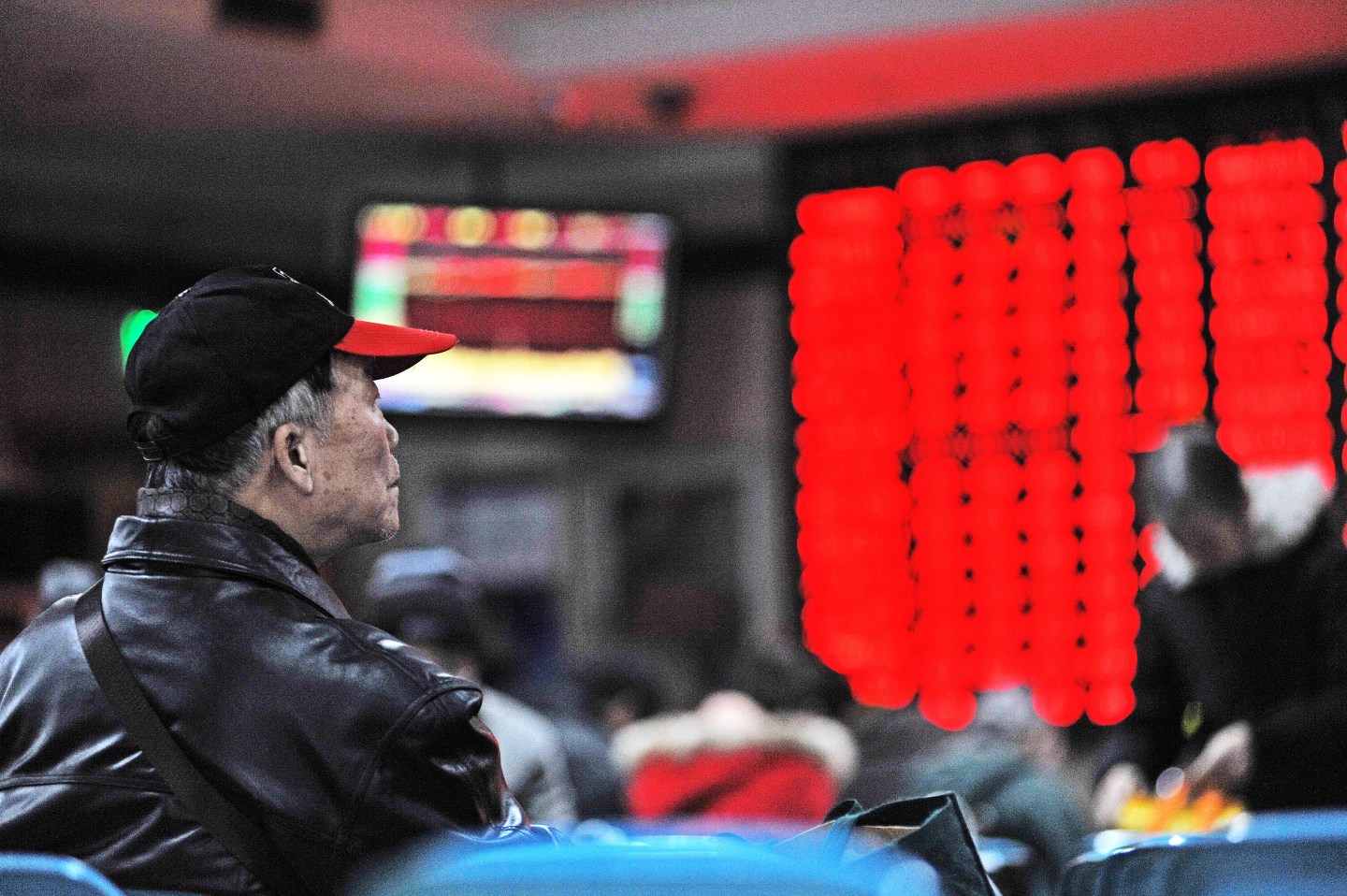
China's brokers are buying stocks to prop up shaky marketsPhotograph by ChinaFotoPress via Getty Images

BEIJING – China’s top securities brokerages said on Saturday that they would collectively buy at least 120 billion yuan ($19.3 billion) of shares in a bid to stabilize the country’s stock markets after a slump of nearly 30% since mid-June.

The pledge follows near-daily official policy moves over the past week, including an interest rate cut and a relaxation of margin lending rules, that have so far failed to arrest the sell-off, which some market watchers fear could turn into a full-blown crash.

The rout in China’s highly leveraged stock market has become a major worry for international investors, who fear a meltdown could further destabilize the global economy even as Greece risks crashing out of the European common currency.

China stocks had more than doubled over the past year, fueled in large part by investors using borrowed money to speculate on further gains.

The brokerages met on Saturday in Beijing to discuss the market situation and expressed “full confidence” in the development of China’s capital markets, a statement on the website of the Securities Association of China said.

“Twenty-one securities brokerages will jointly invest 15 percent of net assets as of the end of June, or no less than 120 billion yuan, in blue chip exchange traded funds,” it said.

The brokerages will not sell off holdings as long as the Shanghai Composite Index is below 4,500 points, the statement said.

That could leave them saddled with heavy losses on paper from the start. The SSEC index fell 5.8 percent on Friday to end at 3,684 points.

Listed securities companies among the 21 brokerages, along with their major shareholders, also would buy back shares.

Hong Hao, a chief strategist at BOCOM International, said he was confused by the slew of measures announced recently.

Hao doubted the latest plan would be enough to arrest the price slide and said it could sow the seeds of fresh problems in the future by further distorting the market.

“Around 120 billion yuan is not enough, but if leverage (more borrowing) is used, it could expand to over 500 billion yuan and that may have some effect,” he said.

Moreover, while brokerages were likely to focus on stronger, blue-chip companies, Hao said there would be little interest in saving small and wildly overvalued “growth” firms. Such companies are favored by ordinary investors from cashiers to taxi drivers, but have suffered some of the most savage declines in recent weeks.

POLICY CONFUSION?

Just a few months ago, state media had been exhorting the market’s rise, saying China’s bull market had just begun and denying that it was in a bubble. Investors big and small took that as a government signal to buy.

Now, Beijing is struggling to find a policy formula to restore confidence in the market before too much damage is done to the world’s second-largest economy.

Weighed down by a property downturn, factory overcapacity and high levels of local government debt, China’s economic growth had already been expected to slow to around 7 percent in 2015, robust by global standards but its weakest annual expansion in a quarter of a century.

After the market close on Friday, the China Securities Regulatory Commission (CSRC) said China would cut initial public offerings and capital raisings and support long-term investors entering the market to help stabilize prices.

The People’s Bank of China (PBOC) also rolled over 250 billion yuan of medium-term loans to banks late on Friday to ensure adequate liquidity in the system.

Investors say constant tinkering with monetary policy and regulations to try to temper the stock market slide raises wider questions about whether China is ready to open up its capital markets and have more influence in the international financial system. ($1 = 6.2047 Chinese yuan)


About the Author
By Reuters
See full bioRight Arrow Button Icon

Latest in Finance

InvestingSports
Big 12 in advanced talks for deal with RedBird-backed fund
By Giles Turner and BloombergDecember 13, 2025
4 hours ago
Spanish Prime Minister Pedro Sánchez often praises the financial and social benefits that immigrants bring to the country.
EuropeSpain
In a continent cracking down on immigration and berated by Trump’s warnings of ‘civilizational erasure,’ Spain embraces migrants
By Suman Naishadham and The Associated PressDecember 13, 2025
6 hours ago
EconomyAgriculture
More financially distressed farmers are expected to lose their property soon as loan repayments and incomes continue to falter
By Jason MaDecember 13, 2025
7 hours ago
InvestingStock
There have been head fakes before, but this time may be different as the latest stock rotation out of AI is just getting started, analysts say
By Jason MaDecember 13, 2025
10 hours ago
Politicsdavid sacks
Can there be competency without conflict in Washington?
By Alyson ShontellDecember 13, 2025
11 hours ago
Investingspace
SpaceX sets $800 billion valuation, confirms 2026 IPO plans
By Loren Grush, Edward Ludlow and BloombergDecember 13, 2025
12 hours ago

Most Popular

placeholder alt text
Success
Apple cofounder Ronald Wayne sold his 10% stake for $800 in 1976—today it’d be worth up to $400 billion
By Preston ForeDecember 12, 2025
2 days ago
placeholder alt text
Economy
Tariffs are taxes and they were used to finance the federal government until the 1913 income tax. A top economist breaks it down
By Kent JonesDecember 12, 2025
2 days ago
placeholder alt text
Success
40% of Stanford undergrads receive disability accommodations—but it’s become a college-wide phenomenon as Gen Z try to succeed in the current climate
By Preston ForeDecember 12, 2025
2 days ago
placeholder alt text
Economy
The Fed just ‘Trump-proofed’ itself with a unanimous move to preempt a potential leadership shake-up
By Jason MaDecember 12, 2025
1 day ago
placeholder alt text
Economy
For the first time since Trump’s tariff rollout, import tax revenue has fallen, threatening his lofty plans to slash the $38 trillion national debt
By Sasha RogelbergDecember 12, 2025
1 day ago
placeholder alt text
Success
Apple CEO Tim Cook out-earns the average American’s salary in just 7 hours—to put that into context, he could buy a new $439,000 home in just 2 days
By Emma BurleighDecember 12, 2025
1 day ago
Rankings
  • 100 Best Companies
  • Fortune 500
  • Global 500
  • Fortune 500 Europe
  • Most Powerful Women
  • Future 50
  • World’s Most Admired Companies
  • See All Rankings
Sections
  • Finance
  • Leadership
  • Success
  • Tech
  • Asia
  • Europe
  • Environment
  • Fortune Crypto
  • Health
  • Retail
  • Lifestyle
  • Politics
  • Newsletters
  • Magazine
  • Features
  • Commentary
  • Mpw
  • CEO Initiative
  • Conferences
  • Personal Finance
  • Education
Customer Support
  • Frequently Asked Questions
  • Customer Service Portal
  • Privacy Policy
  • Terms Of Use
  • Single Issues For Purchase
  • International Print
Commercial Services
  • Advertising
  • Fortune Brand Studio
  • Fortune Analytics
  • Fortune Conferences
  • Business Development
About Us
  • About Us
  • Editorial Calendar
  • Press Center
  • Work At Fortune
  • Diversity And Inclusion
  • Terms And Conditions
  • Site Map

© 2025 Fortune Media IP Limited. All Rights Reserved. Use of this site constitutes acceptance of our Terms of Use and Privacy Policy | CA Notice at Collection and Privacy Notice | Do Not Sell/Share My Personal Information
FORTUNE is a trademark of Fortune Media IP Limited, registered in the U.S. and other countries. FORTUNE may receive compensation for some links to products and services on this website. Offers may be subject to change without notice.