• Home
  • Latest
  • Fortune 500
  • Finance
  • Tech
  • Leadership
  • Lifestyle
  • Rankings
  • Multimedia
Leadership

Top CEOs make more than 300 times the average worker

By
Paul Hodgson
Paul Hodgson
Down Arrow Button Icon
By
Paul Hodgson
Paul Hodgson
Down Arrow Button Icon
June 22, 2015, 9:59 AM ET
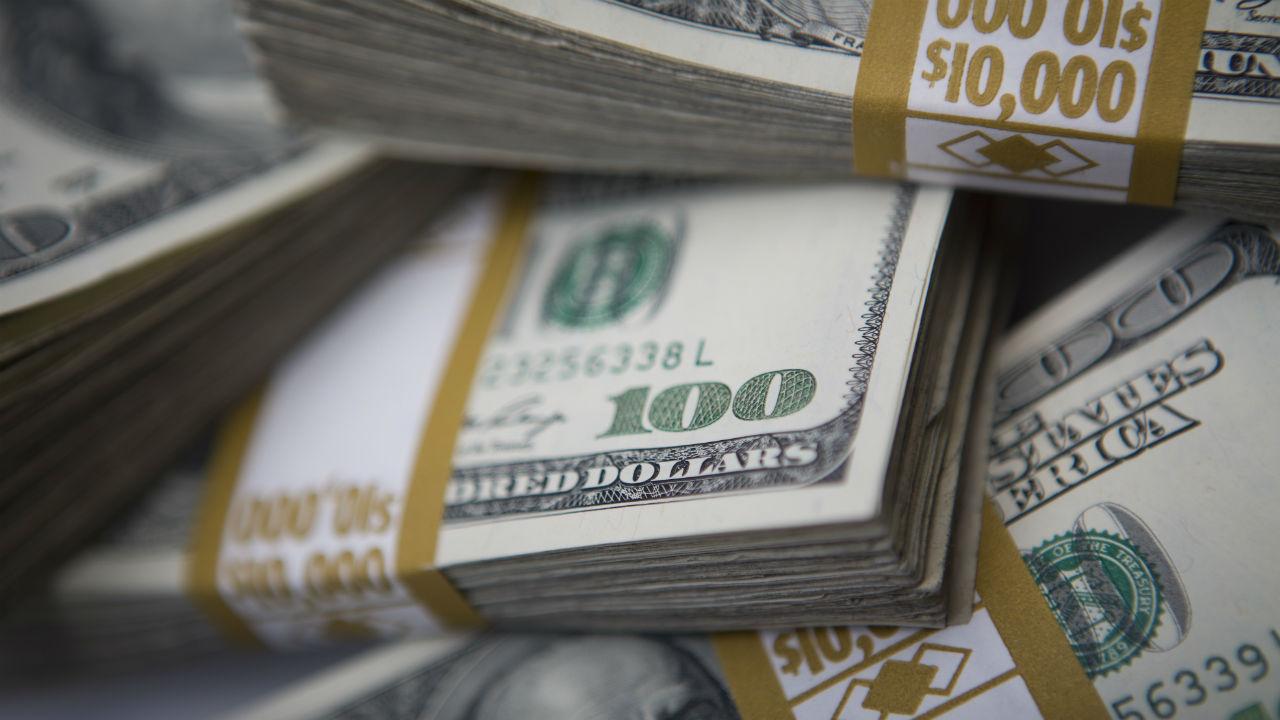
Photograph by Scott Eells — Getty Images

In between 1978 and 2014, inflation-adjusted CEO pay increased by almost 1,000%, according to a report released on Sunday by the Economic Policy Institute. Meanwhile, typical workers in the U.S. saw a pay raise of just 11% during that same period.

With these increases in mind, it should come as no surprise that the ratio between average American CEO pay and worker pay is now 303-to-1. This ratio is lower than its peak in 2000, when it was 376-to-1, but it’s in excess of the 1965 ratio of 20-to 1.

Average realized pay for CEOs at the top 350 firms as measured by revenue was up 3.9% between 2013 and 2014, and up by 54.3% since the recovery began in 2009. Meanwhile, most other workers have faced stagnant wages.

But pay increases and ratios only tell part of the story. The stark differences are made concrete when translated into dollars and cents. In 1965, CEOs earned an average of $832,000 annually compared to $40,200 for workers. In 2014, CEO pay had risen to an average of $16,316,000 compared to only $53,200 for workers.

EPI’s report finds that CEO pay rises and falls along with the stock market—it peaked in 2000, dropped due to the financial crisis and increased during the market’s recovery. Such broad market fluctuations may not have anything to do with how well an individual CEO is performing. Instead most CEOs receive pay in in the form of stock, and so they are able to cash in at the most beneficial times.

In economic parlance, this power of CEOs is described as “rents.” Being a CEO gives you the power to extract concessions from corporate boards, and so CEO pay rises in excess of any real increase in performance.

Lawrence Mishel, an economist and president of the EPI, said, “The escalation in CEO pay was not accompanied by a corresponding increase in output. They didn’t make the pie bigger but they are taking a bigger piece of it. What that means is that everyone else has a smaller piece.”

Defenders of CEO pay claim that this kind of pay data shows that all highly skilled and highly paid workers have benefited and that talented people are being rewarded appropriately. But, again, the EPI’s report shows that CEO pay is six times that of the top 0.1% of earners.

These same defenders of CEO pay also claim that if CEO pay were reduced, there would be an exodus of CEOs from publicly traded companies to privately traded ones. At the same time, it’s unclear if all of these handsomely rewarded CEOs are as irreplaceable as we may think. The EPI was explicit in its conclusion that the CEO pay raises were “not by virtue of their [the CEOs] contribution to economic output but by virtue of their position.”

EPI also proposes that increasing taxes for the highest earners might even put a cap on CEOs’ power play for higher compensation. It also proposes removing tax breaks for certain kinds of pay, like stock options, which have propelled most of the growth in CEO pay.

But aren’t these CEOs the cream of the crop? After all, movie stars earn more than provincial actors, sports stars earn more than college football players.

“The key here,” Mishel said, “is that if you look at the household heads of the top 1% of income earners, 40% of them are executives, and that does not even including any executives from finance,” such as Wall St, the hedge fund industry. “That’s another 20%.”

“It’s actually a lot of people,” he added, “two-thirds of the top 1%, while there are very few sports stars and movie stars.”

Although it is clear that a lot of people do care, very much, about CEO pay, why should shareholders—a CEO’s employers, so to speak—care about income disparity? Does it affect performance?

“Being mindful of the income gap,” said Mishel, “reflects a certain mindset in a corporation. It reflects the way a board and a compensation committee is making decisions. Not only that, those gaps are important to the people who work at those corporations who have to get out of bed and go to work in the morning to do a good job.”

Employees witnessing a growing disparity between their pay and that of the CEO may not be as willing to put in extra effort. Such pay gaps do not make it easy for managers to reveal the bad news that there will be no pay bump again this year.

And a corporate board that’s aware of these potentially detrimental effects to employee morale is likely doing a better job setting the kind of strategies that will increase a company’s value to shareholders.

About the Author
By Paul Hodgson
See full bioRight Arrow Button Icon

Latest in Leadership

Finance
Lorem ipsum dolor sit amet, consectetur adipiscing elit, sed do eiusmod tempor incididunt ut labore et dolore magna aliqua. Ut enim ad minim veniam
By Fortune Editors
October 20, 2025
Finance
Lorem ipsum dolor sit amet, consectetur adipiscing elit, sed do eiusmod tempor incididunt ut labore et dolore magna aliqua. Ut enim ad minim veniam
By Fortune Editors
October 20, 2025
Finance
Lorem ipsum dolor sit amet, consectetur adipiscing elit, sed do eiusmod tempor incididunt ut labore et dolore magna aliqua. Ut enim ad minim veniam
By Fortune Editors
October 20, 2025
Finance
Lorem ipsum dolor sit amet, consectetur adipiscing elit, sed do eiusmod tempor incididunt ut labore et dolore magna aliqua. Ut enim ad minim veniam
By Fortune Editors
October 20, 2025
Finance
Lorem ipsum dolor sit amet, consectetur adipiscing elit, sed do eiusmod tempor incididunt ut labore et dolore magna aliqua. Ut enim ad minim veniam
By Fortune Editors
October 20, 2025
Finance
Lorem ipsum dolor sit amet, consectetur adipiscing elit, sed do eiusmod tempor incididunt ut labore et dolore magna aliqua. Ut enim ad minim veniam
By Fortune Editors
October 20, 2025

Most Popular

Finance
Lorem ipsum dolor sit amet, consectetur adipiscing elit, sed do eiusmod tempor incididunt ut labore et dolore magna aliqua. Ut enim ad minim veniam
By Fortune Editors
October 20, 2025
Finance
Lorem ipsum dolor sit amet, consectetur adipiscing elit, sed do eiusmod tempor incididunt ut labore et dolore magna aliqua. Ut enim ad minim veniam
By Fortune Editors
October 20, 2025
Finance
Lorem ipsum dolor sit amet, consectetur adipiscing elit, sed do eiusmod tempor incididunt ut labore et dolore magna aliqua. Ut enim ad minim veniam
By Fortune Editors
October 20, 2025
Finance
Lorem ipsum dolor sit amet, consectetur adipiscing elit, sed do eiusmod tempor incididunt ut labore et dolore magna aliqua. Ut enim ad minim veniam
By Fortune Editors
October 20, 2025
Finance
Lorem ipsum dolor sit amet, consectetur adipiscing elit, sed do eiusmod tempor incididunt ut labore et dolore magna aliqua. Ut enim ad minim veniam
By Fortune Editors
October 20, 2025
Finance
Lorem ipsum dolor sit amet, consectetur adipiscing elit, sed do eiusmod tempor incididunt ut labore et dolore magna aliqua. Ut enim ad minim veniam
By Fortune Editors
October 20, 2025
Fortune Secondary Logo
Rankings
  • 100 Best Companies
  • Fortune 500
  • Global 500
  • Fortune 500 Europe
  • Most Powerful Women
  • World's Most Admired Companies
  • See All Rankings
  • Lists Calendar
Sections
  • Finance
  • Fortune Crypto
  • Features
  • Leadership
  • Health
  • Commentary
  • Success
  • Retail
  • Mpw
  • Tech
  • Lifestyle
  • CEO Initiative
  • Asia
  • Politics
  • Conferences
  • Europe
  • Newsletters
  • Personal Finance
  • Environment
  • Magazine
  • Education
Customer Support
  • Frequently Asked Questions
  • Customer Service Portal
  • Privacy Policy
  • Terms Of Use
  • Single Issues For Purchase
  • International Print
Commercial Services
  • Advertising
  • Fortune Brand Studio
  • Fortune Analytics
  • Fortune Conferences
  • Business Development
  • Group Subscriptions
About Us
  • About Us
  • Press Center
  • Work At Fortune
  • Terms And Conditions
  • Site Map
  • About Us
  • Press Center
  • Work At Fortune
  • Terms And Conditions
  • Site Map
  • Facebook icon
  • Twitter icon
  • LinkedIn icon
  • Instagram icon
  • Pinterest icon

Latest in Leadership

mark
ConferencesHospitality
Hyatt’s CEO has built a ‘family’ culture for 20 years. Now he’s leaning on it
By Nick LichtenbergApril 30, 2026
33 minutes ago
hoskins
Commentaryoffices
Gensler Co-Chair: Hot-desking was supposed to save money. It may be costing you your culture
By Diane HoskinsApril 30, 2026
2 hours ago
The $665 billion question: Will Big Tech’s AI gamble pay off?
NewslettersCEO Daily
The $665 billion question: Will Big Tech’s AI gamble pay off?
By Diane BradyApril 30, 2026
3 hours ago
Aerie built a $2 billion brand by rejecting Victoria’s Secret’s old playbook. Now it wants to win the AI backlash.
C-SuiteRetail
Aerie built a $2 billion brand by rejecting Victoria’s Secret’s old playbook. Now it wants to win the AI backlash.
By Phil WahbaApril 30, 2026
6 hours ago
Google Cloud revenue is now 18% of Alphabet’s business. Is this the beginning of the end of Google’s search identity?
Big TechGoogle
Google Cloud revenue is now 18% of Alphabet’s business. Is this the beginning of the end of Google’s search identity?
By Alexei OreskovicApril 29, 2026
11 hours ago
A man in a suit and tie
InvestingMeta
Meta just bumped its 2026 capex forecast up to as much as $145 billion for the AI boom—and investors flinched
By Amanda GerutApril 29, 2026
13 hours ago

Most Popular

Apple cofounder Ronald Wayne—whose stake would be worth up to $400 billion had he not sold it in 1976—says that at 91, he has no regrets
Success
Apple cofounder Ronald Wayne—whose stake would be worth up to $400 billion had he not sold it in 1976—says that at 91, he has no regrets
By Preston ForeApril 27, 2026
3 days ago
‘Take the money and run’: Johns Hopkins economist Steve Hanke on why the UAE quit OPEC
Energy
‘Take the money and run’: Johns Hopkins economist Steve Hanke on why the UAE quit OPEC
By Shawn TullyApril 29, 2026
1 day ago
Jamie Dimon gets candid about national debt: ‘There will be a bond crisis, and then we’ll have to deal with it’
Economy
Jamie Dimon gets candid about national debt: ‘There will be a bond crisis, and then we’ll have to deal with it’
By Eleanor PringleApril 29, 2026
1 day ago
‘The cost of compute is far beyond the costs of the employees’: Nvidia executive says right now AI is more expensive than paying human workers
AI
‘The cost of compute is far beyond the costs of the employees’: Nvidia executive says right now AI is more expensive than paying human workers
By Sasha RogelbergApril 28, 2026
2 days ago
‘They left me no choice’: Powell isn’t going anywhere—blocking Trump from another Fed appointee
Banking
‘They left me no choice’: Powell isn’t going anywhere—blocking Trump from another Fed appointee
By Eva RoytburgApril 29, 2026
17 hours ago
More than two-thirds of U.S. schools say they’re unable to afford the cost of student free lunch—and MAHA’s dietary guidelines may make it worse
Economy
More than two-thirds of U.S. schools say they’re unable to afford the cost of student free lunch—and MAHA’s dietary guidelines may make it worse
By Sasha RogelbergApril 29, 2026
1 day ago

© 2026 Fortune Media IP Limited. All Rights Reserved. Use of this site constitutes acceptance of our Terms of Use and Privacy Policy | CA Notice at Collection and Privacy Notice | Do Not Sell/Share My Personal Information
FORTUNE is a trademark of Fortune Media IP Limited, registered in the U.S. and other countries. FORTUNE may receive compensation for some links to products and services on this website. Offers may be subject to change without notice.