• Home
  • Latest
  • Fortune 500
  • Finance
  • Tech
  • Leadership
  • Lifestyle
  • Rankings
  • Multimedia
Commentary

Here’s the secret to Tesla going mainstream

By
Nancy E. Pfund
Nancy E. Pfund
Down Arrow Button Icon
By
Nancy E. Pfund
Nancy E. Pfund
Down Arrow Button Icon
June 11, 2015, 12:13 PM ET
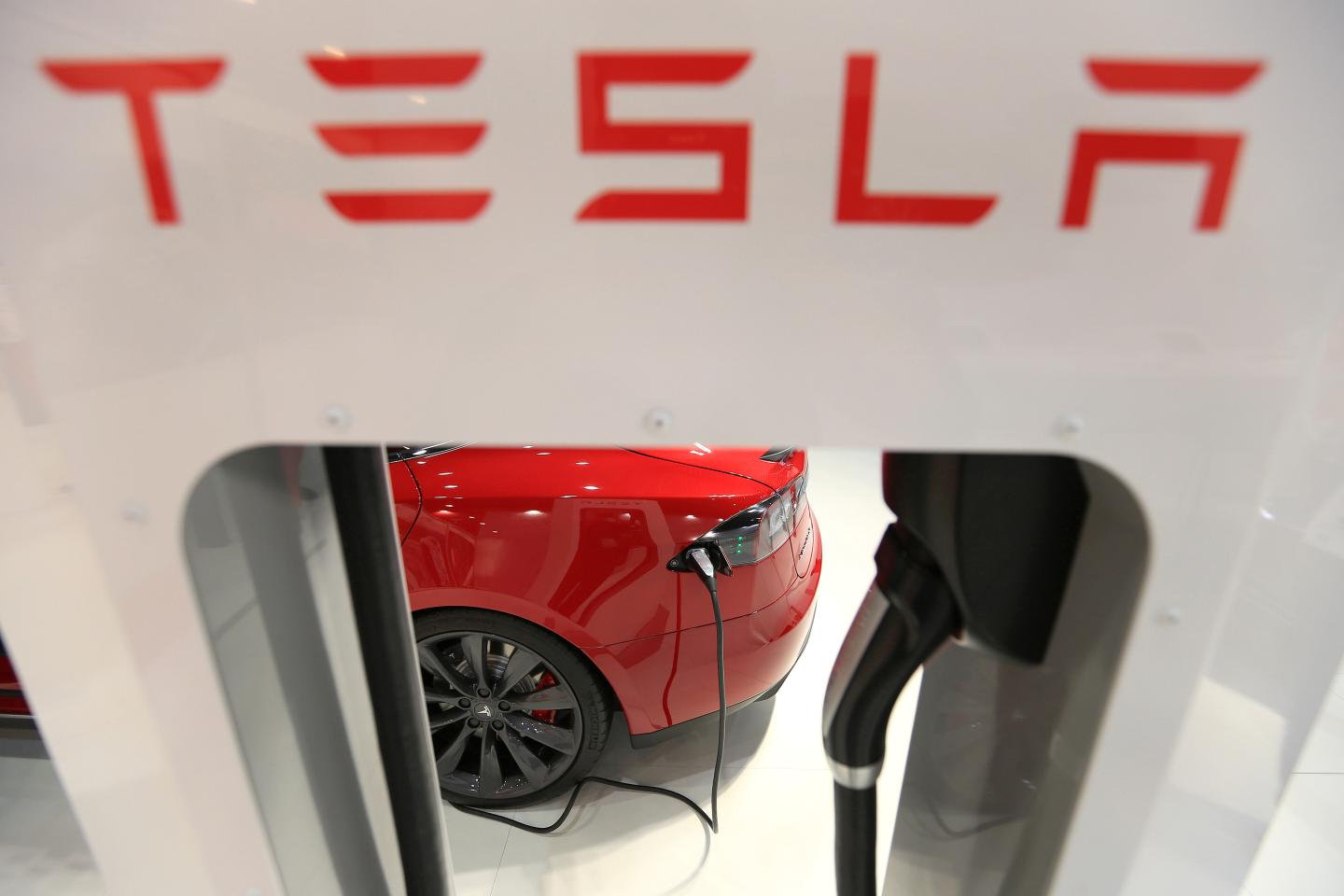
Automobiles On Display At The Auto Mobil International Show
A Tesla Model S automobile, manufactured by Tesla Motors Inc., stands connected to an electrical charger at the Auto Mobil International (AMI) automotive trade fair, at Leipziger Messe in Leipzig, Germany, on Friday, May 30, 2014. Car sales in Germany, Europe's largest market at about one-quarter of deliveries, fell 3.6 percent in April, while Italy's gain was just 1.9 percent. Photographer: Krisztian Bocsi/Bloomberg via Getty ImagesPhoto by Bloomberg—Getty Images

Like rooftop solar—now one of America’s fastest growing industries—electric cars are poised to hit their tipping point. As we’ve seen with other clean energy technologies, each product generation brings rapid improvement. Starting this fall, the second generation of electric cars will be arriving at showrooms —starting with the Tesla Model X and Chevy Volt – offering greater range and more model choices.

As with renewable energy, taking the electric vehicle market to the next level will require big investments in creating a robust network of public charging stations and creating new business models to make such investments worth it.

It has been widely recognized that the lack of publicly available charging infrastructure – including at workplaces and apartment buildings —is a key barrier to mass adoption of electric vehicles. The infrastructure gap is in large part a “financing gap.” As a recent National Academies of Science study on electric vehicle barriers confirms, it is hard to identify any standalone private sector entities that have an “attractive business case for absorbing the full capital costs of investments in public charging infrastructure.

Utility companies are in the unique position to finance charging stations because they can capture the grid-wide benefits of large-scale electrification, especially the benefit of greater utilization of fixed assets. However, the conundrum for owners of charging stations is that while a safety net of more stations is needed to drive sales and further reliance of cars using electricity for their fuel, the vast majority of the charging is still likely to happen at home. By creating incentives for home charging to happen duringoff peak hours, utility companies can generaterevenues that exceed their cost of service, even with time-of-use rates.This is because the distribution system and other fixed assets are sized to meet peak loads and thus are underutilized during off-peak hours.

The problem is how to build EV load, and to do such you need a “safety net” to reduce “range anxiety” which then drives adoption, but because the network is more of a safety net, it will not be the primary location to charge, versus at home. So a network drives EV adoption and load, which then predominately occurs off peak which allows utility to increase their capacity utilization rates of fixed assets, which then allows them to collect more net revenues.

This creates a rare “win-win” situation where electric vehicle drivers, utilities and all utility customers can benefit from increased investments in electrification. A recent California study estimated that utility companies could earn $2.26 to $8.11 billion in net revenues from large-scale commercialization of EVs. This is sufficient to allow utilities to invest both in installing charging infrastructure and return some of the revenues to their customers in the form of lower rates.

The value of having a flexible load on the grid will grow even further with higher amounts of wind and solar. Electric vehicles can be programmed to charge during peak solar or wind generation periods, preventing this valuable electricity from being wasted. In the future, electric vehicles could increase their value by putting electricity back into the grid as well (commonly known as “Vehicle-to-Grid” or V2G).

California is leading the way. The three largest utilities – Pacific Gas & Electric, Southern California Edison, and San Diego Gas & Electric – are seeking to invest $1.1 billion in infrastructure deployment to support 60,000 publicly available charging ports. In comparison, the federal government as part of the American Recovery and Reinvestment Act of 2009 stimulus packageappropriated about $400 million for the nation to help install infrastructure stations. Other utilities across the country are also moving forward with installing charging stations, including Southern Company and Kansas City Power and Light.

While there is legitimate debate as to whether utilities should go as far as owning and operating recharge stations, there is broad agreement among stakeholders — including charging companies, utilities, automakers, and NGOs — that utilities should expand their investments in publicly available infrastructure, as evidenced by a recent decision at the California Public Utilities Commission. By partnering with charging companies and automakers, utility companies have the opportunity to make the most effective use of their investments.

[fortune-brightcove videoid=4242916567001]

The future low carbon economy will critically depend on replacing coal, oil and natural gas with zero carbon energy. Charging electric vehicles on renewable electricity is a key strategy for achieving deep reductions in carbon pollution. Utility investments in charging infrastructure, partnered with charging companies EV manufacturers and renewable energy providers, offer a rare win-win-win opportunity to accelerate this vision. More broadly, the utilities have a critical role to play through the infrastructure investment, including software and other systems needed to integrate EVs, storage, and customer demand solutions with intermittent renewable energy production . Together, these new collaborative business models offer tremendous promise to address climate change while driving innovation and better grid utilization.

Nancy E. Pfund is founder and managing partner of DBL Partners, a San Francisco-based venture capital firm. DBL owns SolarCity, which was an early investor of Tesla. Pfund sits on the board of directors of SolarCity.

About the Author
By Nancy E. Pfund
See full bioRight Arrow Button Icon

Latest in Commentary

Finance
Lorem ipsum dolor sit amet, consectetur adipiscing elit, sed do eiusmod tempor incididunt ut labore et dolore magna aliqua. Ut enim ad minim veniam
By Fortune Editors
October 20, 2025
Finance
Lorem ipsum dolor sit amet, consectetur adipiscing elit, sed do eiusmod tempor incididunt ut labore et dolore magna aliqua. Ut enim ad minim veniam
By Fortune Editors
October 20, 2025
Finance
Lorem ipsum dolor sit amet, consectetur adipiscing elit, sed do eiusmod tempor incididunt ut labore et dolore magna aliqua. Ut enim ad minim veniam
By Fortune Editors
October 20, 2025
Finance
Lorem ipsum dolor sit amet, consectetur adipiscing elit, sed do eiusmod tempor incididunt ut labore et dolore magna aliqua. Ut enim ad minim veniam
By Fortune Editors
October 20, 2025
Finance
Lorem ipsum dolor sit amet, consectetur adipiscing elit, sed do eiusmod tempor incididunt ut labore et dolore magna aliqua. Ut enim ad minim veniam
By Fortune Editors
October 20, 2025
Finance
Lorem ipsum dolor sit amet, consectetur adipiscing elit, sed do eiusmod tempor incididunt ut labore et dolore magna aliqua. Ut enim ad minim veniam
By Fortune Editors
October 20, 2025

Most Popular

Finance
Lorem ipsum dolor sit amet, consectetur adipiscing elit, sed do eiusmod tempor incididunt ut labore et dolore magna aliqua. Ut enim ad minim veniam
By Fortune Editors
October 20, 2025
Finance
Lorem ipsum dolor sit amet, consectetur adipiscing elit, sed do eiusmod tempor incididunt ut labore et dolore magna aliqua. Ut enim ad minim veniam
By Fortune Editors
October 20, 2025
Finance
Lorem ipsum dolor sit amet, consectetur adipiscing elit, sed do eiusmod tempor incididunt ut labore et dolore magna aliqua. Ut enim ad minim veniam
By Fortune Editors
October 20, 2025
Finance
Lorem ipsum dolor sit amet, consectetur adipiscing elit, sed do eiusmod tempor incididunt ut labore et dolore magna aliqua. Ut enim ad minim veniam
By Fortune Editors
October 20, 2025
Finance
Lorem ipsum dolor sit amet, consectetur adipiscing elit, sed do eiusmod tempor incididunt ut labore et dolore magna aliqua. Ut enim ad minim veniam
By Fortune Editors
October 20, 2025
Finance
Lorem ipsum dolor sit amet, consectetur adipiscing elit, sed do eiusmod tempor incididunt ut labore et dolore magna aliqua. Ut enim ad minim veniam
By Fortune Editors
October 20, 2025
Fortune Secondary Logo
Rankings
  • 100 Best Companies
  • Fortune 500
  • Global 500
  • Fortune 500 Europe
  • Most Powerful Women
  • Future 50
  • World’s Most Admired Companies
  • See All Rankings
Sections
  • Finance
  • Fortune Crypto
  • Features
  • Leadership
  • Health
  • Commentary
  • Success
  • Retail
  • Mpw
  • Tech
  • Lifestyle
  • CEO Initiative
  • Asia
  • Politics
  • Conferences
  • Europe
  • Newsletters
  • Personal Finance
  • Environment
  • Magazine
  • Education
Customer Support
  • Frequently Asked Questions
  • Customer Service Portal
  • Privacy Policy
  • Terms Of Use
  • Single Issues For Purchase
  • International Print
Commercial Services
  • Advertising
  • Fortune Brand Studio
  • Fortune Analytics
  • Fortune Conferences
  • Business Development
  • Group Subscriptions
About Us
  • About Us
  • Editorial Calendar
  • Press Center
  • Work At Fortune
  • Diversity And Inclusion
  • Terms And Conditions
  • Site Map
  • About Us
  • Editorial Calendar
  • Press Center
  • Work At Fortune
  • Diversity And Inclusion
  • Terms And Conditions
  • Site Map
  • Facebook icon
  • Twitter icon
  • LinkedIn icon
  • Instagram icon
  • Pinterest icon

Latest in Commentary

crowell
CommentaryRetirement
Retirees are facing a $345,000 bill they never saw coming — and most aren’t prepared
By Andrew CrowellApril 14, 2026
16 hours ago
AI agents are acting like employees, but company structures still treat them like software
CommentaryOkta
AI agents are acting like employees, but company structures still treat them like software
By Dan MountstephenApril 13, 2026
1 day ago
trump
CommentaryWhite House
The futility of Trump’s grandiose personal branding of public assets, from ballrooms and bills to ships and planes
By Jeffrey Sonnenfeld and Steven TianApril 13, 2026
1 day ago
mueller
CommentaryEntrepreneurship
I grew up in a family of entrepreneurs. Here’s what I had to unlearn to build a $1 billion business
By Samuel MuellerApril 12, 2026
3 days ago
boomer
CommentaryLongevity
America is not ready for its own longevity crisis — and 2026 is the wake-up call
By Aimee DeCamillo and Diane TyApril 12, 2026
3 days ago
layoff
CommentaryManagement
The middle manager cuts saving you millions today will cost you everything in 2028
By Kristien TurnerApril 12, 2026
3 days ago

Most Popular

Billionaire philanthropist MacKenzie Scott has donated again—a week after gifting millions to a college, she's just given $70 million to Meals on Wheels America
Success
Billionaire philanthropist MacKenzie Scott has donated again—a week after gifting millions to a college, she's just given $70 million to Meals on Wheels America
By Fortune EditorsApril 13, 2026
1 day ago
Retirees are facing a $345,000 bill they never saw coming — and most aren't prepared
Commentary
Retirees are facing a $345,000 bill they never saw coming — and most aren't prepared
By Fortune EditorsApril 14, 2026
16 hours ago
He was coding at 12 like Elon Musk and became one of Google’s youngest-ever CMOs—but now says Gen Z is better off ice skating than learning to code
Success
He was coding at 12 like Elon Musk and became one of Google’s youngest-ever CMOs—but now says Gen Z is better off ice skating than learning to code
By Fortune EditorsApril 14, 2026
19 hours ago
Current price of gold as of April 13, 2026
Personal Finance
Current price of gold as of April 13, 2026
By Fortune EditorsApril 13, 2026
2 days ago
Anthropic is facing a wave of user backlash over reports of performance issues with its Claude AI chatbot
AI
Anthropic is facing a wave of user backlash over reports of performance issues with its Claude AI chatbot
By Fortune EditorsApril 14, 2026
17 hours ago
New drones are giving Ukraine a battlefield advantage and ravaging Russia’s oil industry
Innovation
New drones are giving Ukraine a battlefield advantage and ravaging Russia’s oil industry
By Fortune EditorsApril 13, 2026
1 day ago

© 2026 Fortune Media IP Limited. All Rights Reserved. Use of this site constitutes acceptance of our Terms of Use and Privacy Policy | CA Notice at Collection and Privacy Notice | Do Not Sell/Share My Personal Information
FORTUNE is a trademark of Fortune Media IP Limited, registered in the U.S. and other countries. FORTUNE may receive compensation for some links to products and services on this website. Offers may be subject to change without notice.