• Home
  • Latest
  • Fortune 500
  • Finance
  • Tech
  • Leadership
  • Lifestyle
  • Rankings
  • Multimedia
Commentary

5 skills employers want that you won’t see in a job ad

By
Ernest J. Wilson III
Down Arrow Button Icon
By
Ernest J. Wilson III
Down Arrow Button Icon
June 10, 2015, 11:43 AM ET
Job Seekers Attend Job Fair In San Francisco
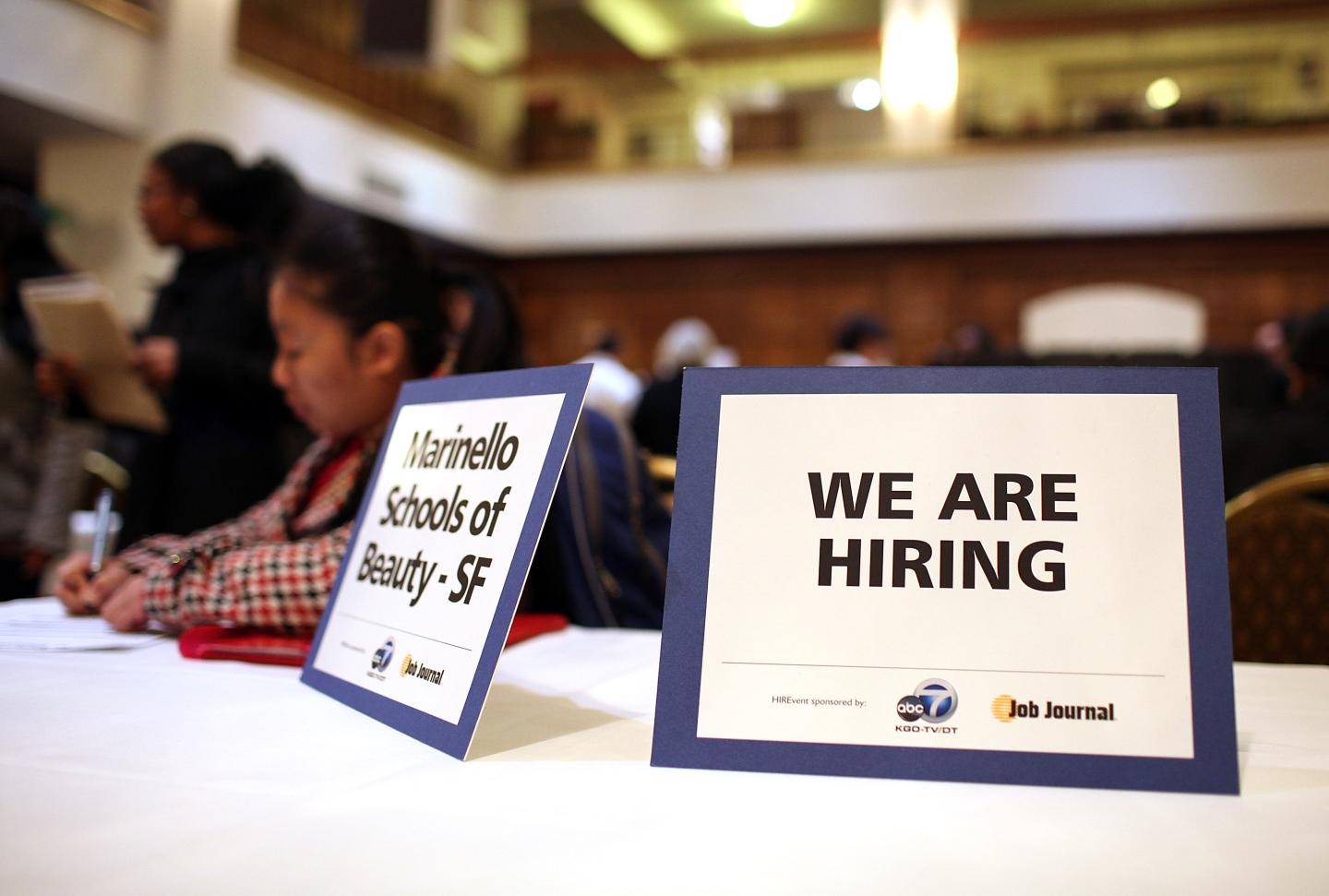
SAN FRANCISCO, CA - MARCH 27: A "we are hiring" sign is displayed on a table during the San Francisco Hirevent job fair at the Hotel Whitcomb on March 27, 2012 in San Francisco, California. As the national unemployment rate stands at 8.3 percent, job seekers turned out to meet with recruiters at the San Francisco Hirevent job fair where hundreds of jobs were available. (Photo by Justin Sullivan/Getty Images)Photograph by Justin Sullivan — Getty Images

Ask senior executives in New York, Los Angeles, Palo Alto, Seattle, Shanghai, Beijing or London what their biggest concern is and they will all tell you the same thing. It’s not capital, technology, regulatory changes or economic uncertainty. It’s talent. And not just talent generally, but talent possessing some specific soft skills beyond conventional business and engineering training.

That was the answer leaders and key faculty from the Annenberg School of Communication and Journalism at the University of Southern California heard during three years of research, including in-depth interviews with C-Suite and senior executives from a broad range of industries and from Fortune 50 companies to start-ups.

That soft skills are in short supply isn’t news. What is news is what executives expect those soft skills to bring to their organizations. They’re not looking for hazily defined “leaders,” but for people whose soft skills can be brought to bear directly on hard challenges—innovation, shrinking product cycles, and industry disruption.

From further research, including extensive surveys, follow-up interviews and analyses of a Korn-Ferry data base of 1,887 executives, five essential talents that companies need emerged:

Intellectual Curiosity: a deep hunger to learn and grow and a willingness to experiment in order to learn. Where is it most lacking? Among senior executives, according to our research.

360-Degree Thinking: the ability to think holistically, recognize patterns, and make imaginative leaps based on those patterns. More than 90% of our respondents see it as a critical skill for senior executives and most lacking among recent graduates and entry-level employees.

Cultural Competence: the capacity to think and act across the boundaries of functions, organizational cultures and global cultures. Senior executives see it as most critical for middle managers and most lacking among them.


Empathy: a deep emotional intelligence, closely connected to cultural competence, that enables those who possess it to see the world through others’ eyes, and understand their unique perspectives. It is most lacking, said our respondents, among middle managers and senior executives.

Adaptability: mental agility, comfort with ambiguity, and the capacity to change old behaviors in light of new evidence. Senior executives indicated that adaptability was most lacking among middle managers and most likely to be found among recent graduates.

Fundamentally, these are skills of communication—of absorbing, connecting, interpreting and sharing information across boundaries, whether of disciplines, cultures or persons. Together these competencies constitute a “third space” distinct from the competencies typically found in the other two critical areas in many organizations: the business space and the engineering/technology space. People who can “code switch” between their hard and soft sides can integrate the two to yield both power and subtlety, turning third space talents into third space thinking. These are, by far, the most valuable executives.

Consider the birth of IBM’s “Smarter Planet” initiative. Shortly after the millennium, IBM (IBM) experts were searching for what would define the “post-PC” era. Jon Iwata, senior vice president, marketing and communications, IBM, asked his team to look at how IBM was helping clients apply new types of technology beyond traditional computing. The answers that came back were seemingly random: radio frequency identification (RFID) tags to inventory chickens, sensors embedded in a Texas city’s power grid, digital cameras that could read license plates for a Scandinavian city that wanted to reduce traffic congestion.

Iwata and his team looked for meaningful patterns, eventually concluding that these apparently unrelated phenomena actually added up to a significant change—the then unrecognized fact that information systems were being embedded in everything, tied together by the internet, and generating vast amounts of data. This insight into what we now call the “internet of things” and “big data” led them to explore the possibilities of knitting together the enormous amount of information becoming increasingly available from disparate sources, especially in cities.

The IBM team then met with mayors from around the world, listening to their descriptions of local challenges, whether in law enforcement, water and transportation systems, public works, the power grid, or any of their other complex systems. They sought the input of deep industry experts, engineers, designers and other creative people inside and outside the company. What emerged was the concept of a “war room” for cities—a citywide system integrating data from multiple agencies and departments under a single roof and enabling real-time responsiveness to events. Today such centralized operations centers may be found in many cities around the world.

[fortune-brightcove videoid=3785576282001]


Iwata was a communications professional by trade, but he successfully led a renowned business and technology campaign that revitalized the IBM brand and its worldwide relevance by applying all the elements of third space thinking: adaptability to ask the initial expansive questions, intellectual curiosity to learn more about unfamiliar topics, 360-degree thinking to recognize patterns, cultural competence to work across disciplines as well as national borders, and empathy to listen to and collaborate with experts across government, business, engineering and beyond.

The company has designed physical spaces designed to encourage third space thinking. An entire floor in one of IBM’s flagship buildings in Manhattan was converted into a design studio for next-generation programs, software, and apps. The goal was to compress the conventional cycles of product development by adopting a method that accelerates product iterations and enhanced communication and collaboration.

IBM employees from various disciplines and functions, including Marketing, Product Development, members of the Chief Information Officer’s department, and key staff from IBM’s marketing agencies literally work shoulder-to-shoulder in envisioning, creating, testing and launching new products. No hand-offs, checkpoints, or time-consuming linear development. The experiment has been so successful that IBM now has more than 20 such labs around the world, where third space thinking is a way of life.

The need for such thinking has significant implications—for individuals, educators, and company leaders. Individuals with third space talents will likely have a very different trajectory over the course of their careers than those who do not. Business schools, engineering and technology programs, and communications schools like mine will need to develop innovative ways to integrate those skills with traditional professional training.

If you are a leader, the implications are even more immediate.

Do you need an extreme competency makeover—a crash course in third space talents? No. These skills are hard to learn and take time to teach, and few people have them all. But you can surround yourself with people who are strong in skills you may lack—people who can communicate, innovate and collaborate across the boundaries of business and engineering and turn third space talents into third space thinking that makes a real difference in the market place.

Ernest J. Wilson III is Walter Annenberg Chair in Communication and Dean of the Annenberg School for Communication and Journalism at the University of Southern California.

About the Author
By Ernest J. Wilson III
See full bioRight Arrow Button Icon

Latest in Commentary

Finance
Lorem ipsum dolor sit amet, consectetur adipiscing elit, sed do eiusmod tempor incididunt ut labore et dolore magna aliqua. Ut enim ad minim veniam
By Fortune Editors
October 20, 2025
Finance
Lorem ipsum dolor sit amet, consectetur adipiscing elit, sed do eiusmod tempor incididunt ut labore et dolore magna aliqua. Ut enim ad minim veniam
By Fortune Editors
October 20, 2025
Finance
Lorem ipsum dolor sit amet, consectetur adipiscing elit, sed do eiusmod tempor incididunt ut labore et dolore magna aliqua. Ut enim ad minim veniam
By Fortune Editors
October 20, 2025
Finance
Lorem ipsum dolor sit amet, consectetur adipiscing elit, sed do eiusmod tempor incididunt ut labore et dolore magna aliqua. Ut enim ad minim veniam
By Fortune Editors
October 20, 2025
Finance
Lorem ipsum dolor sit amet, consectetur adipiscing elit, sed do eiusmod tempor incididunt ut labore et dolore magna aliqua. Ut enim ad minim veniam
By Fortune Editors
October 20, 2025
Finance
Lorem ipsum dolor sit amet, consectetur adipiscing elit, sed do eiusmod tempor incididunt ut labore et dolore magna aliqua. Ut enim ad minim veniam
By Fortune Editors
October 20, 2025

Most Popular

Finance
Lorem ipsum dolor sit amet, consectetur adipiscing elit, sed do eiusmod tempor incididunt ut labore et dolore magna aliqua. Ut enim ad minim veniam
By Fortune Editors
October 20, 2025
Finance
Lorem ipsum dolor sit amet, consectetur adipiscing elit, sed do eiusmod tempor incididunt ut labore et dolore magna aliqua. Ut enim ad minim veniam
By Fortune Editors
October 20, 2025
Finance
Lorem ipsum dolor sit amet, consectetur adipiscing elit, sed do eiusmod tempor incididunt ut labore et dolore magna aliqua. Ut enim ad minim veniam
By Fortune Editors
October 20, 2025
Finance
Lorem ipsum dolor sit amet, consectetur adipiscing elit, sed do eiusmod tempor incididunt ut labore et dolore magna aliqua. Ut enim ad minim veniam
By Fortune Editors
October 20, 2025
Finance
Lorem ipsum dolor sit amet, consectetur adipiscing elit, sed do eiusmod tempor incididunt ut labore et dolore magna aliqua. Ut enim ad minim veniam
By Fortune Editors
October 20, 2025
Finance
Lorem ipsum dolor sit amet, consectetur adipiscing elit, sed do eiusmod tempor incididunt ut labore et dolore magna aliqua. Ut enim ad minim veniam
By Fortune Editors
October 20, 2025
Fortune Secondary Logo
Rankings
  • 100 Best Companies
  • Fortune 500
  • Global 500
  • Fortune 500 Europe
  • Most Powerful Women
  • World's Most Admired Companies
  • See All Rankings
  • Lists Calendar
Sections
  • Finance
  • Fortune Crypto
  • Features
  • Leadership
  • Health
  • Commentary
  • Success
  • Retail
  • Mpw
  • Tech
  • Lifestyle
  • CEO Initiative
  • Asia
  • Politics
  • Conferences
  • Europe
  • Newsletters
  • Personal Finance
  • Environment
  • Magazine
  • Education
Customer Support
  • Frequently Asked Questions
  • Customer Service Portal
  • Privacy Policy
  • Terms Of Use
  • Single Issues For Purchase
  • International Print
Commercial Services
  • Advertising
  • Fortune Brand Studio
  • Fortune Analytics
  • Fortune Conferences
  • Business Development
  • Group Subscriptions
About Us
  • About Us
  • Lists Calendar
  • Press Center
  • Work At Fortune
  • Terms And Conditions
  • Site Map
  • About Us
  • Lists Calendar
  • Press Center
  • Work At Fortune
  • Terms And Conditions
  • Site Map
  • Facebook icon
  • Twitter icon
  • LinkedIn icon
  • Instagram icon
  • Pinterest icon

Latest in Commentary

one piece
CommentaryPersonal Finance
Gen Z is doing (almost) everything right with money—and still getting burned
By Beth KoblinerApril 22, 2026
5 hours ago
beard
CommentaryEducation
Yale asked the right question. Now the rest of higher education owes an answer
By Steve BeardApril 22, 2026
5 hours ago
trump
Commentarynational debt
America’s national debt is heading to 175% of GDP. Here’s why no president—including Trump—has the will to stop it
By Steve H. Hanke and David M. WalkerApril 22, 2026
6 hours ago
edelman
CommentaryHealth
70% of people believe at least one divisive health claim. Science needs a new playbook
By Richard EdelmanApril 22, 2026
7 hours ago
gas
CommentaryMiddle class
The $100 oil shock is hitting the middle class like a margin call
By Katica RoyApril 21, 2026
1 day ago
trump
CommentarySocial Security
What happens if nothing is done to fix Social Security by 2032?
By Martha SheddenApril 21, 2026
1 day ago

Most Popular

The tables have turned: Florida and Texas are the biggest losers in the housing market as Ohio emerges a surprise winner
Real Estate
The tables have turned: Florida and Texas are the biggest losers in the housing market as Ohio emerges a surprise winner
By Sydney LakeApril 21, 2026
22 hours ago
'Something sinister could be happening': FBI looks into dead or missing nuclear and space defense scientists tied to NASA, Blue Origin, and SpaceX
Politics
'Something sinister could be happening': FBI looks into dead or missing nuclear and space defense scientists tied to NASA, Blue Origin, and SpaceX
By Catherina GioinoApril 21, 2026
21 hours ago
$166 billion in tariff refunds just became available, but small businesses may already be at a disadvantage
Law
$166 billion in tariff refunds just became available, but small businesses may already be at a disadvantage
By Sasha RogelbergApril 20, 2026
2 days ago
Jeff Bezos once gave Eva Longoria and the admiral behind Osama bin Laden's capture $100 million—but she says you don't need wealth to give back
Success
Jeff Bezos once gave Eva Longoria and the admiral behind Osama bin Laden's capture $100 million—but she says you don't need wealth to give back
By Orianna Rosa RoyleApril 21, 2026
1 day ago
John Ternus, the man stepping into Tim Cook and Steve Jobs' shoes, is a 25-year Apple veteran with zero LinkedIn posts
C-Suite
John Ternus, the man stepping into Tim Cook and Steve Jobs' shoes, is a 25-year Apple veteran with zero LinkedIn posts
By Kelvin Chan and The Associated PressApril 21, 2026
24 hours ago
‘Something sinister’: What we know about the FBI probe into dead and missing scientists linked to space and military industries
Economy
‘Something sinister’: What we know about the FBI probe into dead and missing scientists linked to space and military industries
By Jim EdwardsApril 22, 2026
6 hours ago

© 2026 Fortune Media IP Limited. All Rights Reserved. Use of this site constitutes acceptance of our Terms of Use and Privacy Policy | CA Notice at Collection and Privacy Notice | Do Not Sell/Share My Personal Information
FORTUNE is a trademark of Fortune Media IP Limited, registered in the U.S. and other countries. FORTUNE may receive compensation for some links to products and services on this website. Offers may be subject to change without notice.