• Home
  • Latest
  • Fortune 500
  • Finance
  • Tech
  • Leadership
  • Lifestyle
  • Rankings
  • Multimedia
Retail

Antibiotics in meat: A public health controversy that isn’t going away

By
Mark Koba
Mark Koba
Down Arrow Button Icon
By
Mark Koba
Mark Koba
Down Arrow Button Icon
June 3, 2015, 11:47 AM ET
Food and Farm Livestock Antibiotics
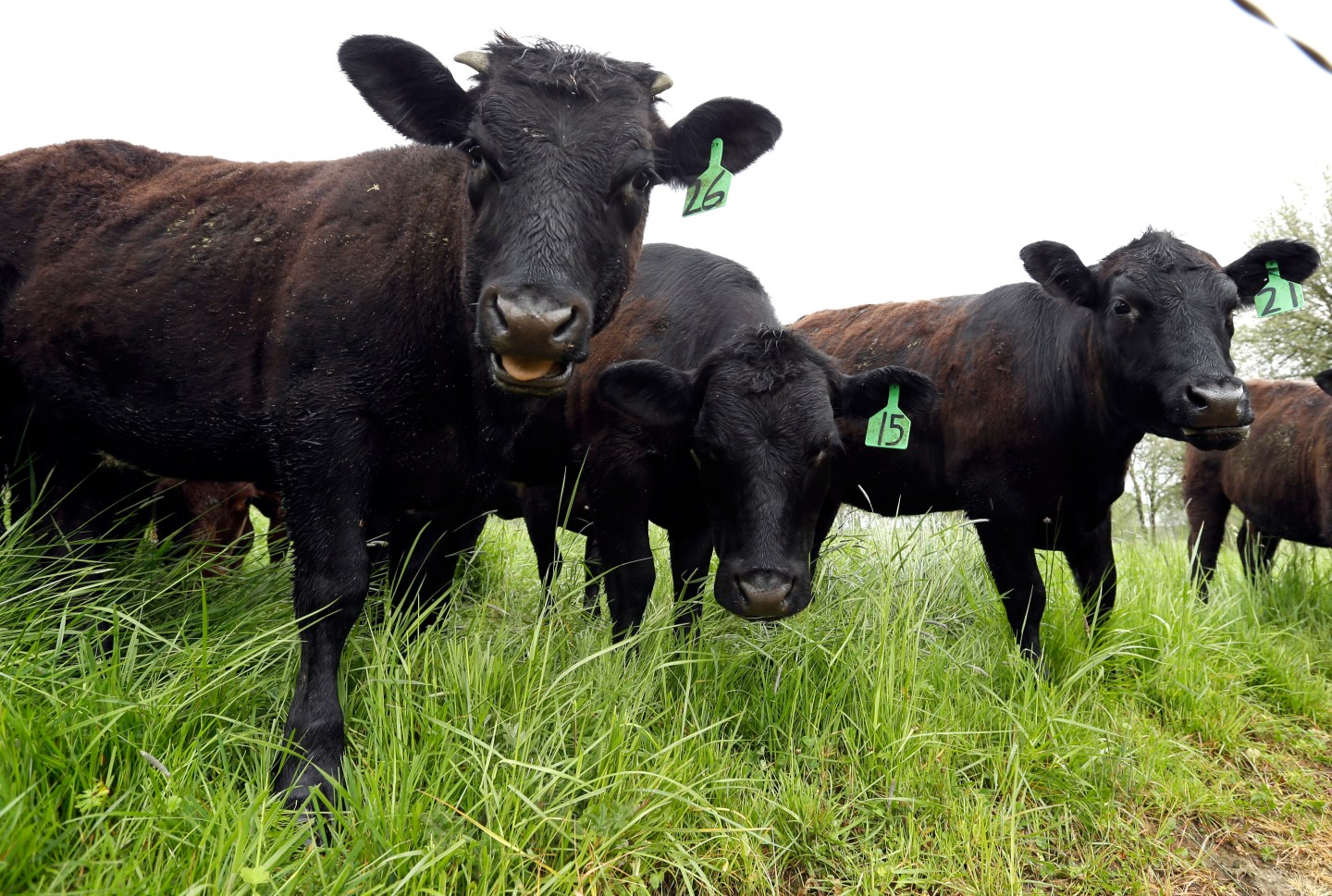
Cattle that are grass-fed, antibiotic and growth hormone free gather at Kookoolan Farm in Yamhill, Ore., Thursday, April 23, 2015. Oregon legislators are debating whether to curtail the practice over concern that repeated use of the antibiotics could make germs more resistant to the drugs and result in infections being passed on to humans who consume the meat. If the legislation passes, Oregon would be the first in the nation to mandate stricter rules on livestock antibiotics.(AP Photo/Don Ryan)Photograph by Don Ryan — AP

A recent study by the Food and Drug Administration has renewed the controversy over antibiotic use in food producing animals. According to the FDA report released in April, sales of antibiotics used in beef, pork and poultry increased 20% between 2009 and 2013. And there was a 3% increase from 2012 to 2013. The worry is that overuse of antibiotics in animals helps contribute to deadly drug resistant bacteria that can be passed on to humans.

According to FDA data, about 80% of the antibiotics used in the U.S. are for livestock. But more food outlets are pledging to reduce or do away with antibiotic use in animals. Last year, Panera Breads said it would cut back on giving its pork supply antibiotics. The restaurant has used antibiotic-free chicken since 2004. Perdue Foods also said in 2014 that it would no longer use human antibiotics in its chicken hatcheries. Five years ago, Perdue used human antibiotics in all of its chickens. The company has said that it has stopped feeding the drugs to animals to make them grow faster, and it now uses them only to treat or control disease.

This past March, McDonald’s said it agreed to phase out the routine use of antibiotics in its chicken. Tyson, the nation’s biggest chicken producer and supplier of McNuggets, promised in April of this year to stop feeding its chicken antibiotics used in humans. For years, restaurant chain Chipotle has said it voluntarily cut back on serving meat from animals given human antibiotics.

Meanwhile, the White House said on Tuesday it will request federal agencies to begin purchasing meat that is produced with “responsible antibiotic-use.” Earlier in the week, California based poultry giant Foster Farms said it would stop using all antibiotics in its chickens that are used to combat infection in humans.

So why have sales of antibiotics in meat climbed? “A lot of these announcements came in either late 2013 or in 2014, so we don’t really expect to see that reflected in the data we’re looking at right now,” Gail Hansen, a senior officer for Pew Charitable Trusts’ antibiotic resistance project, told Reuters. “At some point, though, we should be seeing a decrease.” Meat industry analysts –including the North American Meat Industry– say they weren’t sure why sales climbed in the FDA’s data. It could be because food producing animal herds are growing in numbers or due to actual diseases. (The FDA report didn’t speculate on the reasons, and a spokesperson said it would not comment beyond the report.) However, experts point out there’s a difference between sales and actual usage of the antibiotics—though that may be splitting hairs and some media reports didn’t quite see the distinction.

The FDA says it’s working hard to limit the antibiotics used in animals. In May, it proposed a new rule to seek specific sale and distribution figures on antibiotics by animal species, in order to keep track of which animals might be getting antibiotics. Currently, the FDA collects information on drug sales for agricultural purposes from drug makers– but they are not required to submit sales or distribution data by particular species.

More to the point, in 2016, a new FDA policy will force veterinarians and not farmers, to decide whenever antibiotics used by people are given to animals. “We take this issue of antibiotic use in animals very seriously,” said Dr. Mike Apley, a veterinarian and a member of the National Cattlemen’s Beef Association. “The goal is not to use antibiotics unless we need to.”

But that goal should be met sooner than later, said Felicia Wu, a professor of food science and human nutrition at Michigan State University. “There’s an urgent need to develop alternative methods to combat bacteria and enhance animal growth in agricultural production without the use, or with much lower use, of antibiotics,” she said.

Farmers, growers and ranchers have used certain antibiotics in the food supply of animals for decades. And only a few antibiotics are used in both animals and humans. One reason is preventive medicine to keep the animals healthy and avoid any kind of disease or sickness in the first place.

But they’re also used for non-medical reasons—specifically to make cattle, pigs and chickens heavier and more cost effective for a producers’ bottom line, said Eric Kades, a professor at William and Mary law school and who has written about the topic. Make the animals fatter and they’ll produce more food while increasing income, he said.

And as more and more antibiotics are used in humans and animals, there’s a greater chance for bacteria to become resistant in both. The worry is that antibiotic resistance is moving from the bacteria in food producing animals to bacteria that infect people.

At least one report states that germs from humans are passed on to animals, where they become drug resistant and then are passed back to humans. Public health officials already are urging for the reduction of antibiotic use, due to rising fears of anti-drug resistance from the deadly superbugs that kill about 23,000 people in the U.S. each year.

Meat industry executives, meanwhile, say antibiotics in animals are long gone before reaching humans. Eric Mittenthal, vice president of public affairs for the North American Meat Institute, said there is significant withdrawal time between when an animal gets an antibiotic and when that animal is processed. He said animals are tested by the U.S. Department of Agriculture, ensuring that nearly 99 percent of them tested free of antibiotics.

But it’s not enough to have animals cleared of antibiotics before processing, said cardiologist Dr. Jack Wolfson. He argued the antibiotics in animals can enter the nation’s water system through urination and not filtered out at most treatment facilities.

Mark Koba is a freelance journalist living in New Jersey. Follow him on Twitter at @mkoba1234

About the Author
By Mark Koba
See full bioRight Arrow Button Icon

Latest in Retail

Finance
Lorem ipsum dolor sit amet, consectetur adipiscing elit, sed do eiusmod tempor incididunt ut labore et dolore magna aliqua. Ut enim ad minim veniam
By Fortune Editors
October 20, 2025
Finance
Lorem ipsum dolor sit amet, consectetur adipiscing elit, sed do eiusmod tempor incididunt ut labore et dolore magna aliqua. Ut enim ad minim veniam
By Fortune Editors
October 20, 2025
Finance
Lorem ipsum dolor sit amet, consectetur adipiscing elit, sed do eiusmod tempor incididunt ut labore et dolore magna aliqua. Ut enim ad minim veniam
By Fortune Editors
October 20, 2025
Finance
Lorem ipsum dolor sit amet, consectetur adipiscing elit, sed do eiusmod tempor incididunt ut labore et dolore magna aliqua. Ut enim ad minim veniam
By Fortune Editors
October 20, 2025
Finance
Lorem ipsum dolor sit amet, consectetur adipiscing elit, sed do eiusmod tempor incididunt ut labore et dolore magna aliqua. Ut enim ad minim veniam
By Fortune Editors
October 20, 2025
Finance
Lorem ipsum dolor sit amet, consectetur adipiscing elit, sed do eiusmod tempor incididunt ut labore et dolore magna aliqua. Ut enim ad minim veniam
By Fortune Editors
October 20, 2025

Most Popular

Finance
Lorem ipsum dolor sit amet, consectetur adipiscing elit, sed do eiusmod tempor incididunt ut labore et dolore magna aliqua. Ut enim ad minim veniam
By Fortune Editors
October 20, 2025
Finance
Lorem ipsum dolor sit amet, consectetur adipiscing elit, sed do eiusmod tempor incididunt ut labore et dolore magna aliqua. Ut enim ad minim veniam
By Fortune Editors
October 20, 2025
Finance
Lorem ipsum dolor sit amet, consectetur adipiscing elit, sed do eiusmod tempor incididunt ut labore et dolore magna aliqua. Ut enim ad minim veniam
By Fortune Editors
October 20, 2025
Finance
Lorem ipsum dolor sit amet, consectetur adipiscing elit, sed do eiusmod tempor incididunt ut labore et dolore magna aliqua. Ut enim ad minim veniam
By Fortune Editors
October 20, 2025
Finance
Lorem ipsum dolor sit amet, consectetur adipiscing elit, sed do eiusmod tempor incididunt ut labore et dolore magna aliqua. Ut enim ad minim veniam
By Fortune Editors
October 20, 2025
Finance
Lorem ipsum dolor sit amet, consectetur adipiscing elit, sed do eiusmod tempor incididunt ut labore et dolore magna aliqua. Ut enim ad minim veniam
By Fortune Editors
October 20, 2025
Rankings
  • 100 Best Companies
  • Fortune 500
  • Global 500
  • Fortune 500 Europe
  • Most Powerful Women
  • Future 50
  • World’s Most Admired Companies
  • See All Rankings
Sections
  • Finance
  • Leadership
  • Success
  • Tech
  • Asia
  • Europe
  • Environment
  • Fortune Crypto
  • Health
  • Retail
  • Lifestyle
  • Politics
  • Newsletters
  • Magazine
  • Features
  • Commentary
  • Mpw
  • CEO Initiative
  • Conferences
  • Personal Finance
  • Education
Customer Support
  • Frequently Asked Questions
  • Customer Service Portal
  • Privacy Policy
  • Terms Of Use
  • Single Issues For Purchase
  • International Print
Commercial Services
  • Advertising
  • Fortune Brand Studio
  • Fortune Analytics
  • Fortune Conferences
  • Business Development
About Us
  • About Us
  • Editorial Calendar
  • Press Center
  • Work At Fortune
  • Diversity And Inclusion
  • Terms And Conditions
  • Site Map
  • Facebook icon
  • Twitter icon
  • LinkedIn icon
  • Instagram icon
  • Pinterest icon

Latest in Retail

EnvironmentProcter & Gamble
Procter & Gamble thinks it’s unlocked the future of the $25 billion laundry industry. Meet the Tide evo tile, a waterless detergent pod
By Matty Merritt and Morning BrewFebruary 18, 2026
1 hour ago
LawFood and drink
Buffalo Wild Wings wins legal debate after a customer discovered his boneless wings contained no real wing meat at all
By Jake AngeloFebruary 18, 2026
5 hours ago
wendy's
BankingRestaurants
Wendy’s closes hundreds of restaurants after plunge in same-store sales worse than Wall Street expected
By Dee-Ann Durbin and The Associated PressFebruary 16, 2026
2 days ago
RetailRetail
Victoria’s Secret CEO says new customers are embracing the escape provided by the glamorous brand: ‘We were living in a beige world for awhile’
By Emma HinchliffeFebruary 16, 2026
2 days ago
white lotus
CommentaryLuxury
Elites are the villains we love to hate. It’s American culture’s most paradoxical obsession
By Alexa BeckFebruary 15, 2026
3 days ago
haque
CommentarySocial Media
I’m the CEO of the 1980s most viral restaurant, Tony Roma’s. We’re still thriving but viral brands keep turning into pumpkins
By Mina HaqueFebruary 15, 2026
3 days ago

Most Popular

placeholder alt text
AI
Thousands of CEOs just admitted AI had no impact on employment or productivity—and it has economists resurrecting a paradox from 40 years ago
By Sasha RogelbergFebruary 17, 2026
1 day ago
placeholder alt text
Personal Finance
You need $2 million to retire and 'almost no one is close,' BlackRock CEO warns, a problem that Gen X will make 'harder and nastier'
By Sydney LakeFebruary 17, 2026
1 day ago
placeholder alt text
Economy
$56 trillion national debt leading to a spiraling crisis: Budget watchdog warns the U.S. is walking a crumbling path
By Nick LichtenbergFebruary 17, 2026
1 day ago
placeholder alt text
Economy
Trump crackdown drives 80% plunge in immigrant employment, reshaping labor market, Goldman says
By Nick LichtenbergFebruary 17, 2026
24 hours ago
placeholder alt text
Personal Finance
Current price of silver as of Tuesday, February 17, 2026
By Joseph HostetlerFebruary 17, 2026
1 day ago
placeholder alt text
Commentary
Something big is happening in AI — and most people will be blindsided
By Matt ShumerFebruary 11, 2026
7 days ago

© 2026 Fortune Media IP Limited. All Rights Reserved. Use of this site constitutes acceptance of our Terms of Use and Privacy Policy | CA Notice at Collection and Privacy Notice | Do Not Sell/Share My Personal Information
FORTUNE is a trademark of Fortune Media IP Limited, registered in the U.S. and other countries. FORTUNE may receive compensation for some links to products and services on this website. Offers may be subject to change without notice.