• Home
  • Latest
  • Fortune 500
  • Finance
  • Tech
  • Leadership
  • Lifestyle
  • Rankings
  • Multimedia

Trendingnow

1

Corporate America has been draining the world's water. Matt Damon's new campaign calls on Gap, Starbucks, and Amazon to help give it back

2

When SpaceX starts trading, some 'shareholders' will discover they own nothing at all

3

Analysts expected oil to surge above $200 but China has quietly kept prices half of that—and can’t for much longer

1

Corporate America has been draining the world's water. Matt Damon's new campaign calls on Gap, Starbucks, and Amazon to help give it back

2

When SpaceX starts trading, some 'shareholders' will discover they own nothing at all

3

Analysts expected oil to surge above $200 but China has quietly kept prices half of that—and can’t for much longer
TechUAVs

Why BNSF Railway is using drones to inspect thousands of miles of rail lines

By
David Z. Morris
David Z. Morris
Down Arrow Button Icon
By
David Z. Morris
David Z. Morris
Down Arrow Button Icon
May 29, 2015, 2:18 PM ET
Oil Collapse-Railroads
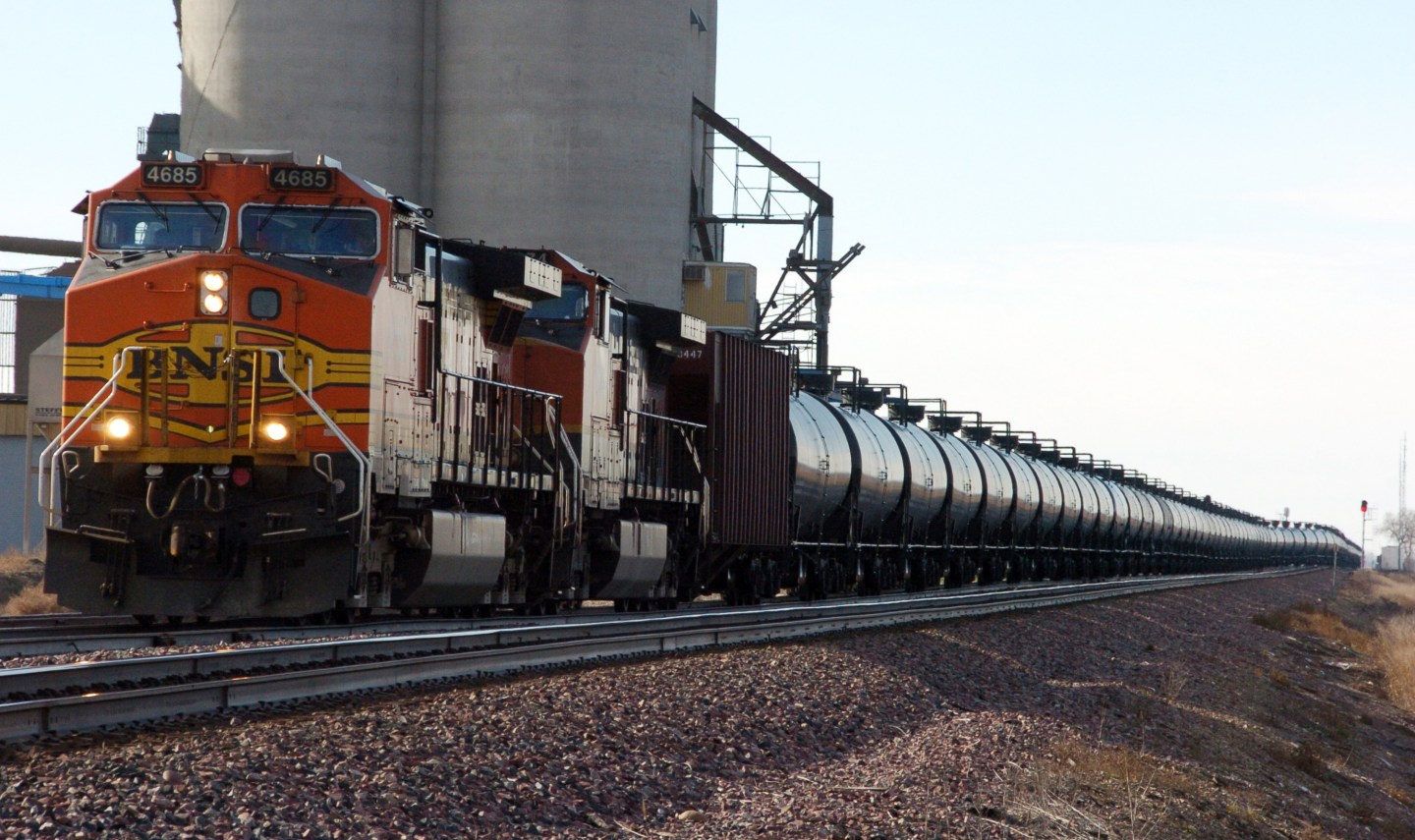
FILE - In this Nov. 6, 2013, file photo, a BNSF Railway train hauls crude oil near Wolf Point, Mont. A collapse in oil prices won't derail the railroads’ profit engine even if it does slow the tremendous growth in crude oil shipments seen in recent years. Railroads went from hauling 9,500 carloads of crude oil in 2008 to 435,560 last year, as production boomed and oil routinely sold for $90 a barrel or more. But even with the surge, crude oil shipments remain less than 2 percent of all the carloads major U.S. railroads deliver. (AP Photo/Matthew Brown, File)Photograph by Matthew Brown — AP

After years of accusations of foot-dragging on unmanned aerial vehicle (UAV) regulation, the Federal Aviation Administration has recently been speeding exemption approvals and announcing new regulatory programs. One beneficiary is BNSF Railway, which has gained approval for a pilot(less) program to use drones to inspect its far-flung network of rails. The inspections could help reduce derailments and other safety problems—and though BNSF isn’t saying so, lead to lower labor costs in the long run.

Rail safety is drawing new focus after May’s catastrophic Amtrak derailment. Though that accident’s immediate cause was excessive speed, the Federal Railroad Administration reports that nearly 500 derailments were caused by defective track in 2014, making up more than a third of total rail accidents. Those derailments caused 35 injuries and $94 million in damages last year. BNSF says its drones will allow for more frequent track inspections, which should reduce track-caused derailments.

The FAA has greenlit more than 400 so-called “333 exemptions” for limited drone operations since this February. But unlike most operators, BNSF will be testing UAV’s outside of direct visual contact with their operator, referred to as “beyond visual line of sight,” or BVLOS, operation. BVLOS operation is regarded as more risky by the FAA.

BNSF has earned this special right as part of the FAA’s Pathfinder program, an initiative to develop UAV regulation in collaboration with industry that was announced in May. CNN and the drone systems maker PrecisionHawk USA are the other two inaugural participants, and the FAA has invited applicants from other sectors.

The ability to fly drones long distances is crucial to BNSF’s goals for the program. The railway owns over 32,500 miles of rail line across the U.S., and says that every foot of track is inspected in person twice a week. But some of that track is hundreds of miles from any major population center, increasing the expense and inconvenience of manned inspection. BNSF has emphasized that its drone program would allow for more frequent inspections, rather than replacing human crews.

A few technical obstacles do face the program. BNSF announced that its initial UAV fleet will include AirRobot models AR180 and AR200, and 3DRobotics Spektres. Those three models are multi-rotor copters, which would be able to hover for closer inspection of areas of concern, but the range of rotor UAV’s is generally quite limited. The AR180, for instance, flies less than four miles on a charge.

The imaging payloads for these drones is also still a question mark. While visible-spectrum cameras could detect some obvious obstructions, some crucial railway faults are invisible to the naked eye. Inspection teams today use ultrasound equipment weighing up to hundreds of pounds—vastly more than even a large drone could tote.

According to University of Oklahoma-based UAV expert James Grimsley, one alternative is laser-based profiling, or LIDAR. The Canadian company Pavemetrics has shown its laser-based system can detect hairline cracks in rails and ties, and DARPA is developing a chip-based LIDAR that would be very lightweight.

BNSF representatives have emphasized that safety is the program’s only immediate goal. Though the Federal Railroad Administration reports that rail accident rates have fallen by 43 percent since 2000, freight derailments are still potentially catastrophic. The increasing presence of crude oil on the rails is a particular concern—two crude oil tankers have derailed in Philadelphia in the last two years, just around the corner from last month’s Amtrak crash.

Drones could also save lives even without inspecting track. Hundreds of people are killed every year while trespassing on railroad property—many times more than are killed while travelling on passenger rail. Aerial drones would be significantly more effective than landbound security forces in detecting trespassers.

But, despite BNSF’s public emphasis on safety, drone-based inspections also present a huge potential labor efficiency. The work is both remote and demanding, with the FRA’s description making sure to mention that inspectors may have to deal with “disagreeable insects, toxic vegetation, or poisonous snakes.”

Though injury and fatality rates for rail inspectors specifically are not tracked by the government, the Bureau of Labor Statistics has found that railroad workers as a whole suffer more than twice the national worker fatality rate, with more than ¼ of fatalities among pedestrian workers struck by trains. Those conditions help push private rail inspector salaries to a mean of more than $71,000 a year, according to the BLS. Equipping those inspectors with drones could eventually allow the same work to be done by far fewer people.


About the Author
By David Z. Morris
See full bioRight Arrow Button Icon

Latest in Tech

Finance
Lorem ipsum dolor sit amet, consectetur adipiscing elit, sed do eiusmod tempor incididunt ut labore et dolore magna aliqua. Ut enim ad minim veniam
By Fortune Editors
October 20, 2025
Finance
Lorem ipsum dolor sit amet, consectetur adipiscing elit, sed do eiusmod tempor incididunt ut labore et dolore magna aliqua. Ut enim ad minim veniam
By Fortune Editors
October 20, 2025
Finance
Lorem ipsum dolor sit amet, consectetur adipiscing elit, sed do eiusmod tempor incididunt ut labore et dolore magna aliqua. Ut enim ad minim veniam
By Fortune Editors
October 20, 2025
Finance
Lorem ipsum dolor sit amet, consectetur adipiscing elit, sed do eiusmod tempor incididunt ut labore et dolore magna aliqua. Ut enim ad minim veniam
By Fortune Editors
October 20, 2025
Finance
Lorem ipsum dolor sit amet, consectetur adipiscing elit, sed do eiusmod tempor incididunt ut labore et dolore magna aliqua. Ut enim ad minim veniam
By Fortune Editors
October 20, 2025
Finance
Lorem ipsum dolor sit amet, consectetur adipiscing elit, sed do eiusmod tempor incididunt ut labore et dolore magna aliqua. Ut enim ad minim veniam
By Fortune Editors
October 20, 2025

Most Popular

Finance
Lorem ipsum dolor sit amet, consectetur adipiscing elit, sed do eiusmod tempor incididunt ut labore et dolore magna aliqua. Ut enim ad minim veniam
By Fortune Editors
October 20, 2025
Finance
Lorem ipsum dolor sit amet, consectetur adipiscing elit, sed do eiusmod tempor incididunt ut labore et dolore magna aliqua. Ut enim ad minim veniam
By Fortune Editors
October 20, 2025
Finance
Lorem ipsum dolor sit amet, consectetur adipiscing elit, sed do eiusmod tempor incididunt ut labore et dolore magna aliqua. Ut enim ad minim veniam
By Fortune Editors
October 20, 2025
Finance
Lorem ipsum dolor sit amet, consectetur adipiscing elit, sed do eiusmod tempor incididunt ut labore et dolore magna aliqua. Ut enim ad minim veniam
By Fortune Editors
October 20, 2025
Finance
Lorem ipsum dolor sit amet, consectetur adipiscing elit, sed do eiusmod tempor incididunt ut labore et dolore magna aliqua. Ut enim ad minim veniam
By Fortune Editors
October 20, 2025
Finance
Lorem ipsum dolor sit amet, consectetur adipiscing elit, sed do eiusmod tempor incididunt ut labore et dolore magna aliqua. Ut enim ad minim veniam
By Fortune Editors
October 20, 2025
Fortune Secondary Logo
Rankings
  • 100 Best Companies
  • Fortune 500
  • Global 500
  • Fortune 500 Europe
  • Most Powerful Women
  • World's Most Admired Companies
  • See All Rankings
  • Lists Calendar
Sections
  • Finance
  • Fortune Crypto
  • Features
  • Leadership
  • Health
  • Commentary
  • Success
  • Retail
  • Mpw
  • Tech
  • Lifestyle
  • CEO Initiative
  • Asia
  • Politics
  • Conferences
  • Europe
  • Newsletters
  • Personal Finance
  • Environment
  • Magazine
  • Education
Customer Support
  • Frequently Asked Questions
  • Customer Service Portal
  • Privacy Policy
  • Terms Of Use
  • Single Issues For Purchase
  • International Print
Commercial Services
  • Advertising
  • Fortune Brand Studio
  • Fortune Analytics
  • Fortune Conferences
  • Business Development
  • Group Subscriptions
About Us
  • About Us
  • Press Center
  • Work At Fortune
  • Terms And Conditions
  • Site Map
  • About Us
  • Press Center
  • Work At Fortune
  • Terms And Conditions
  • Site Map
  • Facebook icon
  • Twitter icon
  • LinkedIn icon
  • Instagram icon
  • Pinterest icon

Latest in Tech

Elon Musk stands behind the Nasdaq opening bell and in front of a "SpaceX" background.
Future of WorkElon Musk
Despite his new trillionaire status, Elon Musk says money ‘will stop being relevant’ in the future because of AI
By Sasha RogelbergJune 12, 2026
29 minutes ago
AI was supposed to cut health care costs. One of its first jobs was charging you more, PwC report shows
AIHealth Care Service
AI was supposed to cut health care costs. One of its first jobs was charging you more, PwC report shows
By Whizy Kim and Tech BrewJune 12, 2026
1 hour ago
paul
AIWorld Cup
Machine learning gives the U.S. a 1% chance of winning the World Cup final in its own backyard
By Achim Zeileis and The ConversationJune 12, 2026
1 hour ago
DoorDash wants you to stop scrolling and just tell its new AI chatbot what you’re hungry for
RetailDoorDash
DoorDash wants you to stop scrolling and just tell its new AI chatbot what you’re hungry for
By Dave Lozo and Morning BrewJune 12, 2026
1 hour ago
Man in a blue shirt gesturing
AIBrainstorm Tech
AOL cofounder Steve Case on AI— major upside, real risk, and ‘probably a net negative’ for jobs
By Amanda GerutJune 12, 2026
2 hours ago
Astronaut costumes, teenage crypto millionaires, and a $300 million bet: Scenes from the SpaceX IPO
AISpaceX
Astronaut costumes, teenage crypto millionaires, and a $300 million bet: Scenes from the SpaceX IPO
By Eva RoytburgJune 12, 2026
2 hours ago

Most Popular

Corporate America has been draining the world's water. Matt Damon's new campaign calls on Gap, Starbucks, and Amazon to help give it back
Environment
Corporate America has been draining the world's water. Matt Damon's new campaign calls on Gap, Starbucks, and Amazon to help give it back
By Catherina GioinoJune 9, 2026
3 days ago
When SpaceX starts trading, some 'shareholders' will discover they own nothing at all
Investing
When SpaceX starts trading, some 'shareholders' will discover they own nothing at all
By Jim EdwardsJune 12, 2026
9 hours ago
Analysts expected oil to surge above $200 but China has quietly kept prices half of that—and can’t for much longer
Energy
Analysts expected oil to surge above $200 but China has quietly kept prices half of that—and can’t for much longer
By Sasha RogelbergJune 10, 2026
2 days ago
Current price of oil as of June 11, 2026
Personal Finance
Current price of oil as of June 11, 2026
By Joseph HostetlerJune 11, 2026
1 day ago
American taxpayers have spent $33 billion on sports stadiums. They got fewer seats—and higher prices
Success
American taxpayers have spent $33 billion on sports stadiums. They got fewer seats—and higher prices
By Catherina GioinoJune 11, 2026
1 day ago
Current price of oil as of June 12, 2026
Personal Finance
Current price of oil as of June 12, 2026
By Joseph HostetlerJune 12, 2026
7 hours ago

© 2026 Fortune Media IP Limited. All Rights Reserved. Use of this site constitutes acceptance of our Terms of Use and Privacy Policy | CA Notice at Collection and Privacy Notice | Do Not Sell/Share My Personal Information
FORTUNE is a trademark of Fortune Media IP Limited, registered in the U.S. and other countries. FORTUNE may receive compensation for some links to products and services on this website. Offers may be subject to change without notice.