• Home
  • Latest
  • Fortune 500
  • Finance
  • Tech
  • Leadership
  • Lifestyle
  • Rankings
  • Multimedia
Commentaryskills gap

How U.S. companies can fill the skills gap

By
Richard Dobbs
Richard Dobbs
,
James Manyika
James Manyika
, and
Jonathan Woetzel
Jonathan Woetzel
Down Arrow Button Icon
By
Richard Dobbs
Richard Dobbs
,
James Manyika
James Manyika
, and
Jonathan Woetzel
Jonathan Woetzel
Down Arrow Button Icon
May 12, 2015, 5:00 AM ET
The Science Museum Unveils Their Latest Exhibition "Robotville" Displaying The Most Cutting Edge In European Design
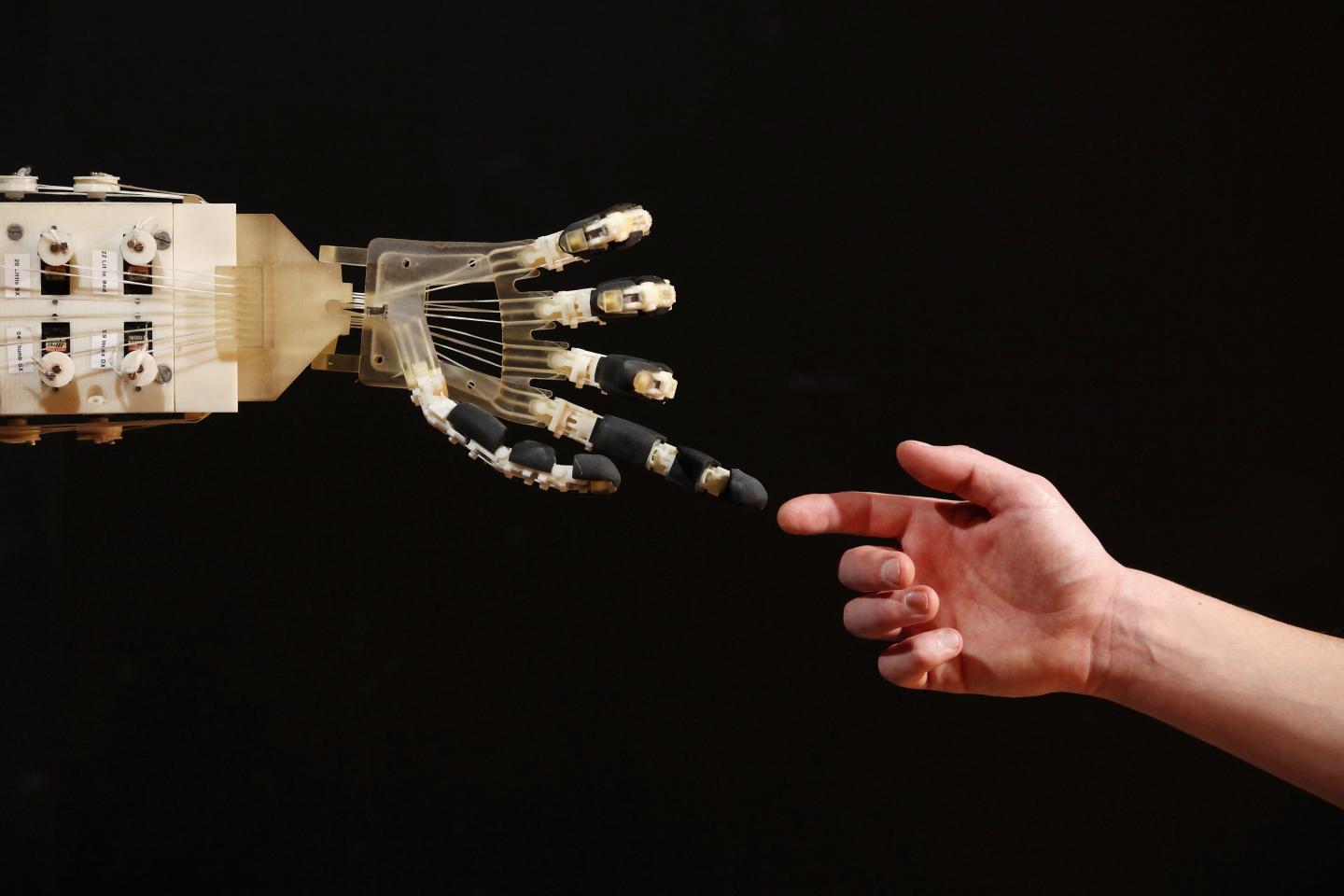
LONDON, ENGLAND - NOVEMBER 29: Robotics student Gildo Andreoni interacts with a Dexmart robotic hand built at the University of Bologna in the Robotville exhibition at the Science Museum on November 29, 2011 in London, England. The Science Museum's Robotville exhibition showcases 20 unique and cutting-edge robots from European research laboratories, it is free to enter and runs from December 1-4, 2011. (Photo by Oli Scarff/Getty Images)Photograph by Oli Scarff — Getty Images

Our intuition about the world of work needs to be reset. In the United States, labor-force participation is lower than at any time in the past three decades, and jobless economic recovery seems the new normal. More types of jobs are being automated, yet a shortage of skilled workers is looming worldwide, including in China, despite its huge pool of labor. Technology also makes it possible for employers to redesign and disaggregate work, and to reassign routine tasks to lower-skilled employees. In health care, for example, chronic disease management can be assigned to nurse practitioners rather than to physicians.

These and other changes are part of the larger disruptive forces which are fundamentally reshaping the global economy. In the labor market, some of these shifts are already evident—and the disruption they bring about will only get larger.

As a result of new technologies that automated work, and the ability to tap into the vast, newly engaged labor pools from the likes of China, Mexico and India, companies in advanced countries have been able to maintain or even increase productivity during times of growth as well as in downturns. In the two most recent US recessions, in 2001 and 2008-2009, reduced employment accounted for 98% of the decline in GDP, while productivity was barely affected.

The labor market, meanwhile, has steadily bifurcated, with menial low-wage jobs on one end and high-skill, high-wage careers on the other. Technology and competition from emerging markets have undermined those in the middle. Yet at the same time, there’s a skills gap: in the US, nearly two-thirds of companies report having positions for which they cannot find qualified applicants. The problem is especially acute in technology and health care.

Today we stand on the edge of another disruption. This one is again driven by technology. The technologies that automated millions of routine transaction and production jobs are now rapidly encroaching on higher-skilled -skill interaction jobs as well, that is to say, jobs which require personal interaction, problem solving and a range of critical-thinking skills. The information tools that helped improve productivity are now being used to disaggregate jobs into specialized tasks that can be scheduled down to the hour of a workweek with flexible labor and can increasingly be done remotely.

This process of disaggregation can give rise to new businesses and recruiting models. Websites and online talent-sourcing platforms are proliferating. In some cases, registered workers bid for simple work, such as a few hours of writing merchandising copy for websites. Other platforms offer the services of high-skill professionals or entire teams for projects such as software development.

Because technology changes jobs across sectors and geographies, employers around the world need to rethink whom, where, and how they recruit; how they can use technology to substitute for skills, not just personnel; and how they adapt their ways of working. The jobs the US economy has been creating in the past two years are very different in nature from the ones that were lost in the recession that followed the 2008 financial crisis. The labor market itself is now quite different. Technology is not only automating ever more jobs and increasing the skill gaps for the jobs that remain; it is changing the very nature of work and giving us ever less time to adapt.

As technological churn renders new skills outdated at an ever-faster pace, new skill gaps are showing up more often and in more places, increasingly decoupling labor supply and demand. By 2020, around the world, there is likely to be a shortage of approximately 40 million high- skilled workers and 45 million medium-skill workers. Against that will be a surplus of 95 million low-skilled workers. If the previous era was defined by millions of workers in China joining the global labor force, the next era will see skill gaps emerge even in China, as its number of young workers shrinks by nearly 50% between today and 2030 and the country falls short of 23 million high-skilled workers.

The contradictions and gaps in labor markets won’t resolve themselves. Governments, companies, and individuals will need to reset the way they think about labor markets, where to find workers, and the relationship between technology and work. They will have to focus on developing the skills and institutions needed to keep up with changing technologies. Companies will also need to explore new pools of talent and update their recruiting and training practices in order to respond to the labor challenge in an agile way..

In addition to looking abroad, companies could tap into growing pools of underused talent at home: older workers, women, and youth. In Japan, Toyota is recruiting retiring employees to work in part-time production roles. In the US, the e-commerce company Etsy (ETSY), based in Brooklyn, in 2013 launched the “Craft Entrepreneurship” program, which helps chronically underemployed people turn their craft and manufacturing skills into supplemental income. On its site, some 88% of sellers are women, in a country where only 57% of women participate in the workforce.

The scale of technological change, the disruption in the way we work, and the mismatches between skills and jobs are all daunting challenges in the new global labor market. But they’re not insurmountable. At least since the introduction of the printing press, every time a new technology revolution has unleashed its powerful forces, humans have figured out a way to adapt, find new endeavors, and prosper. That, hopefully, is one long-term trend that is not being disrupted.

Richard Dobbs, James Manyika, and Jonathan Woetzel are directors of the McKinsey Global Institute, the business and research arm of McKinsey & Company, and co-authors of No Ordinary Disruption: The Four Global Forces Breaking All the Trends (Public Affairs, May 2015).

About the Authors
By Richard Dobbs
See full bioRight Arrow Button Icon
By James Manyika
See full bioRight Arrow Button Icon
By Jonathan Woetzel
See full bioRight Arrow Button Icon

Latest in Commentary

Finance
Lorem ipsum dolor sit amet, consectetur adipiscing elit, sed do eiusmod tempor incididunt ut labore et dolore magna aliqua. Ut enim ad minim veniam
By Fortune Editors
October 20, 2025
Finance
Lorem ipsum dolor sit amet, consectetur adipiscing elit, sed do eiusmod tempor incididunt ut labore et dolore magna aliqua. Ut enim ad minim veniam
By Fortune Editors
October 20, 2025
Finance
Lorem ipsum dolor sit amet, consectetur adipiscing elit, sed do eiusmod tempor incididunt ut labore et dolore magna aliqua. Ut enim ad minim veniam
By Fortune Editors
October 20, 2025
Finance
Lorem ipsum dolor sit amet, consectetur adipiscing elit, sed do eiusmod tempor incididunt ut labore et dolore magna aliqua. Ut enim ad minim veniam
By Fortune Editors
October 20, 2025
Finance
Lorem ipsum dolor sit amet, consectetur adipiscing elit, sed do eiusmod tempor incididunt ut labore et dolore magna aliqua. Ut enim ad minim veniam
By Fortune Editors
October 20, 2025
Finance
Lorem ipsum dolor sit amet, consectetur adipiscing elit, sed do eiusmod tempor incididunt ut labore et dolore magna aliqua. Ut enim ad minim veniam
By Fortune Editors
October 20, 2025

Most Popular

Finance
Lorem ipsum dolor sit amet, consectetur adipiscing elit, sed do eiusmod tempor incididunt ut labore et dolore magna aliqua. Ut enim ad minim veniam
By Fortune Editors
October 20, 2025
Finance
Lorem ipsum dolor sit amet, consectetur adipiscing elit, sed do eiusmod tempor incididunt ut labore et dolore magna aliqua. Ut enim ad minim veniam
By Fortune Editors
October 20, 2025
Finance
Lorem ipsum dolor sit amet, consectetur adipiscing elit, sed do eiusmod tempor incididunt ut labore et dolore magna aliqua. Ut enim ad minim veniam
By Fortune Editors
October 20, 2025
Finance
Lorem ipsum dolor sit amet, consectetur adipiscing elit, sed do eiusmod tempor incididunt ut labore et dolore magna aliqua. Ut enim ad minim veniam
By Fortune Editors
October 20, 2025
Finance
Lorem ipsum dolor sit amet, consectetur adipiscing elit, sed do eiusmod tempor incididunt ut labore et dolore magna aliqua. Ut enim ad minim veniam
By Fortune Editors
October 20, 2025
Finance
Lorem ipsum dolor sit amet, consectetur adipiscing elit, sed do eiusmod tempor incididunt ut labore et dolore magna aliqua. Ut enim ad minim veniam
By Fortune Editors
October 20, 2025
Fortune Secondary Logo
Rankings
  • 100 Best Companies
  • Fortune 500
  • Global 500
  • Fortune 500 Europe
  • Most Powerful Women
  • World's Most Admired Companies
  • See All Rankings
  • Lists Calendar
Sections
  • Finance
  • Fortune Crypto
  • Features
  • Leadership
  • Health
  • Commentary
  • Success
  • Retail
  • Mpw
  • Tech
  • Lifestyle
  • CEO Initiative
  • Asia
  • Politics
  • Conferences
  • Europe
  • Newsletters
  • Personal Finance
  • Environment
  • Magazine
  • Education
Customer Support
  • Frequently Asked Questions
  • Customer Service Portal
  • Privacy Policy
  • Terms Of Use
  • Single Issues For Purchase
  • International Print
Commercial Services
  • Advertising
  • Fortune Brand Studio
  • Fortune Analytics
  • Fortune Conferences
  • Business Development
  • Group Subscriptions
About Us
  • About Us
  • Lists Calendar
  • Press Center
  • Work At Fortune
  • Terms And Conditions
  • Site Map
  • About Us
  • Lists Calendar
  • Press Center
  • Work At Fortune
  • Terms And Conditions
  • Site Map
  • Facebook icon
  • Twitter icon
  • LinkedIn icon
  • Instagram icon
  • Pinterest icon

Latest in Commentary

tenzin
Commentaryclean energy
The Iran War just made the clean energy transition non-negotiable
By Tenzin SeldonApril 23, 2026
3 hours ago
Software developers discussing programming code and planning how to create innovative software at co-working office. Two software developers checking programming code on computer screen. working through a coding problem together.
Commentaryregulation
Inflated AI claims are under fire—and the regulatory reckoning is coming
By Perrie M. WeinerApril 23, 2026
4 hours ago
Kemba Walden served as Acting National Cyber Director of the United States and is President of the Paladin Global Institute.
CommentaryHacking
Former national cyber director: Anthropic’s ‘Mythos’ AI can hack nearly anything and we aren’t ready
By Tristan Bove and Kemba WaldenApril 23, 2026
6 hours ago
frank
CommentaryVisa
Visa CMO: AI agents are your new customers — here’s how to sell to them
By Frank Cooper IIIApril 22, 2026
21 hours ago
shlomit
Commentarycyber
The Mythos meeting focused on the wrong AI risk to banks. Here’s the one nobody is talking about
By Shlomit WagmanApril 22, 2026
23 hours ago
one piece
CommentaryPersonal Finance
Gen Z is doing (almost) everything right with money—and still getting burned
By Beth KoblinerApril 22, 2026
1 day ago

Most Popular

‘Something sinister’: What we know about the FBI probe into dead and missing scientists linked to space and military industries
Economy
‘Something sinister’: What we know about the FBI probe into dead and missing scientists linked to space and military industries
By Jim EdwardsApril 22, 2026
1 day ago
Cursor’s 25-year-old CEO is a former Google intern who just inked a $60 billion deal with SpaceX
AI
Cursor’s 25-year-old CEO is a former Google intern who just inked a $60 billion deal with SpaceX
By Marco Quiroz-GutierrezApril 22, 2026
20 hours ago
Officials will flush 50,000 toilets to flood a Utah lake in order to generate electricity
Environment
Officials will flush 50,000 toilets to flood a Utah lake in order to generate electricity
By Mead Gruver, Dorany Pineda and The Associated PressApril 22, 2026
19 hours ago
The tables have turned: Florida and Texas are the biggest losers in the housing market as Ohio emerges a surprise winner
Real Estate
The tables have turned: Florida and Texas are the biggest losers in the housing market as Ohio emerges a surprise winner
By Sydney LakeApril 21, 2026
2 days ago
'Something sinister could be happening': FBI looks into dead or missing nuclear and space defense scientists tied to NASA, Blue Origin, and SpaceX
Politics
'Something sinister could be happening': FBI looks into dead or missing nuclear and space defense scientists tied to NASA, Blue Origin, and SpaceX
By Catherina GioinoApril 21, 2026
2 days ago
Palantir published a mini manifesto calling some cultures ‘harmful’ and ‘middling’ and said Silicon Valley has ‘a moral debt’ to the U.S.
AI
Palantir published a mini manifesto calling some cultures ‘harmful’ and ‘middling’ and said Silicon Valley has ‘a moral debt’ to the U.S.
By Marco Quiroz-GutierrezApril 22, 2026
1 day ago

© 2026 Fortune Media IP Limited. All Rights Reserved. Use of this site constitutes acceptance of our Terms of Use and Privacy Policy | CA Notice at Collection and Privacy Notice | Do Not Sell/Share My Personal Information
FORTUNE is a trademark of Fortune Media IP Limited, registered in the U.S. and other countries. FORTUNE may receive compensation for some links to products and services on this website. Offers may be subject to change without notice.