• Home
  • Latest
  • Fortune 500
  • Finance
  • Tech
  • Leadership
  • Lifestyle
  • Rankings
  • Multimedia
Commentary

How tech can stop the looming food crisis

By
Jason Jay
Jason Jay
Down Arrow Button Icon
By
Jason Jay
Jason Jay
Down Arrow Button Icon
May 1, 2015, 5:00 AM ET
Interior Of Loblaws Grocery Store
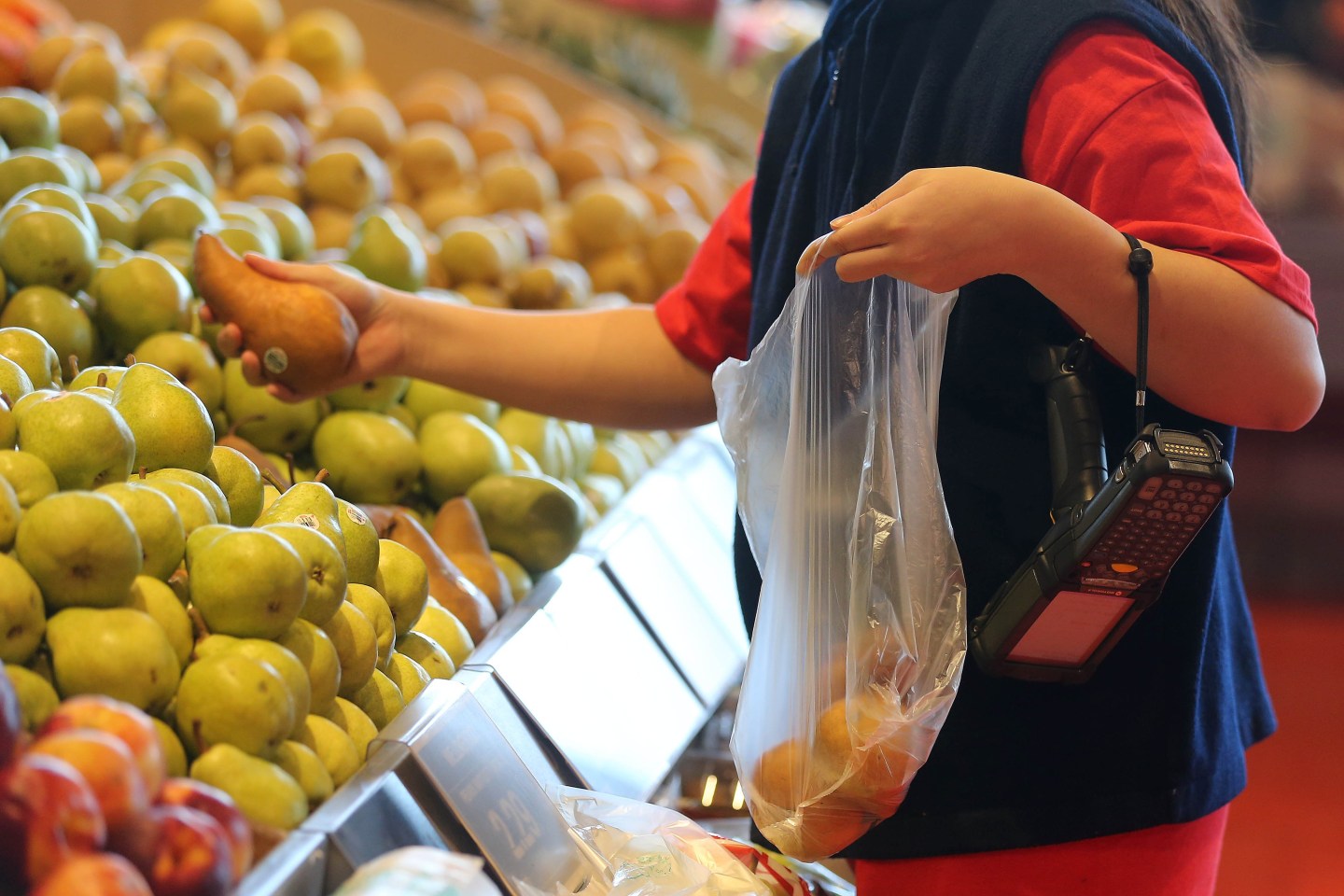
TORONTO, ON - MARCH 9: Click and Collect shopper getting an order ready selects fruit. Loblaws on Monday released more detail about how it plans to spend $1.2-billion on infrastructure in 2015, and the plan includes 50 new stores along with renovations to stores like this one at Leslie and Lake Shore and 20,000 jobs, including 15,000 in construction. (Steve Russell/Toronto Star via Getty Images)Photograph by Steve Russell — Toronto Star via Getty Images

The world’s population is expected to increase from 7 billion today to 9 or 10 billion by the end of the century, according to the United Nations. We also can expect more pressure on the food supply as people in the developing world adopt middle class lifestyles, which usually involve eating more meat. To satisfy global demand, we will need to roughly double today’s output, which means getting smarter about how we produce and manage food.

The good news is that innovation is coming to the farm. Advanced information technology, improved communications systems, robotics, drones, and other new technologies have the potential to boost agricultural yields and reduce waste while tempering environmental degradation.

In the past, the world fed a growing population largely by cultivating undeveloped land and increasing agricultural inputs, including fertilizer and water. These are not very good options today. Clearing more land for agriculture now often means destroying rainforests and other valuable natural areas. Adding inputs makes sense in some poorer countries, where fertilizer and other resources are underutilized, but in most parts of the world, this strategy will mean heavier nutrient loads in waterways, depleted water supplies, and higher greenhouse gas emissions. Genetically modified crops have helped to boost production in recent years, but it appears that this strategy too may have limits – certainly political and possibly biological.

If our best chance of escaping a future food crisis is innovation, then an obvious place to look for solutions is food waste. No one knows for certain how much food the world wastes, but it seems that somewhere between 30% to 50% of the food we grow around the world goes uneaten. Waste occurs at almost every point in the chain—from farm to truck to warehouse to grocer to restaurant to household kitchen.

On farms in many parts of the world, food spoils because cold storage and transport are inadequate or non-existent. An obvious answer would be to install refrigeration in more farms, trucks, and warehouses, but this can be very costly. Another more economical approach is to equip farmers with better information and communications tools—smartphones are an obvious choice—so that farmers have information about markets at their fingertips and can better plan their harvests and distribution.

At the other end of the supply chain, retailers often find themselves with food that is bruised or otherwise unattractive but still edible. New IT and communications devices could help to connect this food with people who could use it. A pair of MIT Sloan students recently launched Spoiler Alert, a website, smartphone app and online marketplace that finds good uses for spoiled, expiring, and excess food.

Spoiler Alert and similar approaches enable food banks and other poverty-focused organizations to find out about these products and claim them. And if food truly is unfit for human consumption, it can be directed to places that want it for animal feed, fermentation, or biofuels. This year’s MIT Sustainability Summit, on the theme of Farming, Food, and the Future, focused on these “circular economy” approaches to food system strains.

Another way that innovation helps on the farm is in managing agricultural inputs. For the past dozen years or so, farmers have used tractors equipped with GPS and computers to collect data on how much fertilizer, water, and seeds are delivered where. The next generation of devices and systems includes robots that can move along rows of crops and identify where inputs are needed. Drones can gather similar information through high-resolution thermal and visual imagery.

These and other innovations will make agriculture more precise, which will increase yields and reduce inputs. But like earlier agricultural revolutions, this one too will find its limits. For agriculture to be truly sustainable, we will need to take a hard look at deeply ingrained attitudes and behaviors. For example, might Americans re-think a diet that includes meat twice a day every day? As wondrous as innovations in agriculture may prove to be, there are cultural challenges they will not be able to overcome.

Jason Jay is Senior Lecturer and Director of the Sustainability Initiative at the MIT Sloan School of Management.


About the Author
By Jason Jay
See full bioRight Arrow Button Icon

Latest in Commentary

Finance
Lorem ipsum dolor sit amet, consectetur adipiscing elit, sed do eiusmod tempor incididunt ut labore et dolore magna aliqua. Ut enim ad minim veniam
By Fortune Editors
October 20, 2025
Finance
Lorem ipsum dolor sit amet, consectetur adipiscing elit, sed do eiusmod tempor incididunt ut labore et dolore magna aliqua. Ut enim ad minim veniam
By Fortune Editors
October 20, 2025
Finance
Lorem ipsum dolor sit amet, consectetur adipiscing elit, sed do eiusmod tempor incididunt ut labore et dolore magna aliqua. Ut enim ad minim veniam
By Fortune Editors
October 20, 2025
Finance
Lorem ipsum dolor sit amet, consectetur adipiscing elit, sed do eiusmod tempor incididunt ut labore et dolore magna aliqua. Ut enim ad minim veniam
By Fortune Editors
October 20, 2025
Finance
Lorem ipsum dolor sit amet, consectetur adipiscing elit, sed do eiusmod tempor incididunt ut labore et dolore magna aliqua. Ut enim ad minim veniam
By Fortune Editors
October 20, 2025
Finance
Lorem ipsum dolor sit amet, consectetur adipiscing elit, sed do eiusmod tempor incididunt ut labore et dolore magna aliqua. Ut enim ad minim veniam
By Fortune Editors
October 20, 2025

Most Popular

Finance
Lorem ipsum dolor sit amet, consectetur adipiscing elit, sed do eiusmod tempor incididunt ut labore et dolore magna aliqua. Ut enim ad minim veniam
By Fortune Editors
October 20, 2025
Finance
Lorem ipsum dolor sit amet, consectetur adipiscing elit, sed do eiusmod tempor incididunt ut labore et dolore magna aliqua. Ut enim ad minim veniam
By Fortune Editors
October 20, 2025
Finance
Lorem ipsum dolor sit amet, consectetur adipiscing elit, sed do eiusmod tempor incididunt ut labore et dolore magna aliqua. Ut enim ad minim veniam
By Fortune Editors
October 20, 2025
Finance
Lorem ipsum dolor sit amet, consectetur adipiscing elit, sed do eiusmod tempor incididunt ut labore et dolore magna aliqua. Ut enim ad minim veniam
By Fortune Editors
October 20, 2025
Finance
Lorem ipsum dolor sit amet, consectetur adipiscing elit, sed do eiusmod tempor incididunt ut labore et dolore magna aliqua. Ut enim ad minim veniam
By Fortune Editors
October 20, 2025
Finance
Lorem ipsum dolor sit amet, consectetur adipiscing elit, sed do eiusmod tempor incididunt ut labore et dolore magna aliqua. Ut enim ad minim veniam
By Fortune Editors
October 20, 2025
Fortune Secondary Logo
Rankings
  • 100 Best Companies
  • Fortune 500
  • Global 500
  • Fortune 500 Europe
  • Most Powerful Women
  • Future 50
  • World’s Most Admired Companies
  • See All Rankings
Sections
  • Finance
  • Fortune Crypto
  • Features
  • Leadership
  • Health
  • Commentary
  • Success
  • Retail
  • Mpw
  • Tech
  • Lifestyle
  • CEO Initiative
  • Asia
  • Politics
  • Conferences
  • Europe
  • Newsletters
  • Personal Finance
  • Environment
  • Magazine
  • Education
Customer Support
  • Frequently Asked Questions
  • Customer Service Portal
  • Privacy Policy
  • Terms Of Use
  • Single Issues For Purchase
  • International Print
Commercial Services
  • Advertising
  • Fortune Brand Studio
  • Fortune Analytics
  • Fortune Conferences
  • Business Development
  • Group Subscriptions
About Us
  • About Us
  • Editorial Calendar
  • Press Center
  • Work At Fortune
  • Diversity And Inclusion
  • Terms And Conditions
  • Site Map
Fortune Secondary Logo
  • About Us
  • Editorial Calendar
  • Press Center
  • Work At Fortune
  • Diversity And Inclusion
  • Terms And Conditions
  • Site Map
  • Facebook icon
  • Twitter icon
  • LinkedIn icon
  • Instagram icon
  • Pinterest icon

Latest in Commentary

Europedigital transformation
Why Europe can lead in trusted, industrialized AI
By Dave McCannMarch 2, 2026
13 hours ago
heitmann
CommentaryEntrepreneurship
Here’s how to build something that lasts, from the founder of a $300 million bootstrapped company that’s been growing for 28 years straight
By Tim HeitmannMarch 1, 2026
2 days ago
world's fair
CommentaryRobots
Something big is happening in AI, but panic is the wrong reaction
By Peter CappelliFebruary 28, 2026
3 days ago
putin
CommentaryRussia
Exclusive analysis: we looked at the 400 western firms still in Russia. Their paltry size strips Putin’s bluff bare naked
By Jeffrey Sonnenfeld, Stephen Henriques, Jake Waldinger and Giuseppe ScottoFebruary 27, 2026
3 days ago
roth
CommentaryLeadership
The AI resource reallocation challenge: How can companies capture the value of time?
By Erik RothFebruary 27, 2026
4 days ago
will
CommentaryAdvertising
I’m one of America’s top pollsters and I’ve got a warning for the AI companies: customers aren’t sold on ads
By Will JohnsonFebruary 27, 2026
4 days ago

Most Popular

placeholder alt text
Middle East
U.S. military gives Iran a taste of its own medicine with cheap copycat Shahed drones, while concern shifts to munitions supply in extended conflict
By Jason MaMarch 1, 2026
1 day ago
placeholder alt text
Success
MacKenzie Scott's close relationship with Toni Morrison long before Amazon put Scott on the path to give more than $1 billion to HBCUs
By Sasha RogelbergMarch 1, 2026
1 day ago
placeholder alt text
Economy
Your grandparents are the reason the U.S. isn't in a recession right now. That won't last forever
By Eleanor PringleMarch 1, 2026
2 days ago
placeholder alt text
AI
American schools weren’t broken until Silicon Valley used a lie to convince them they were—now reading and math scores are plummeting
By Sasha RogelbergMarch 1, 2026
1 day ago
placeholder alt text
Health
Gen Z men are eating ‘boy kibble,’ the human equivalent to dog food, to load up on protein cheaply
By Jake AngeloMarch 1, 2026
1 day ago
placeholder alt text
Success
Slack cofounder says workers and CEOs can get stuck doing 'fake' work like pre-meetings and slideshows
By Emma BurleighMarch 1, 2026
1 day ago

© 2026 Fortune Media IP Limited. All Rights Reserved. Use of this site constitutes acceptance of our Terms of Use and Privacy Policy | CA Notice at Collection and Privacy Notice | Do Not Sell/Share My Personal Information
FORTUNE is a trademark of Fortune Media IP Limited, registered in the U.S. and other countries. FORTUNE may receive compensation for some links to products and services on this website. Offers may be subject to change without notice.