• Home
  • News
  • Fortune 500
  • Tech
  • Finance
  • Leadership
  • Lifestyle
  • Rankings
  • Multimedia
TechShipping

The seven-decade journey to an expanded Panama Canal is coming to a close, despite one last obstacle

By
David Z. Morris
David Z. Morris
Down Arrow Button Icon
By
David Z. Morris
David Z. Morris
Down Arrow Button Icon
April 17, 2015, 3:16 PM ET
PANAMA-CANAL-LOCKS
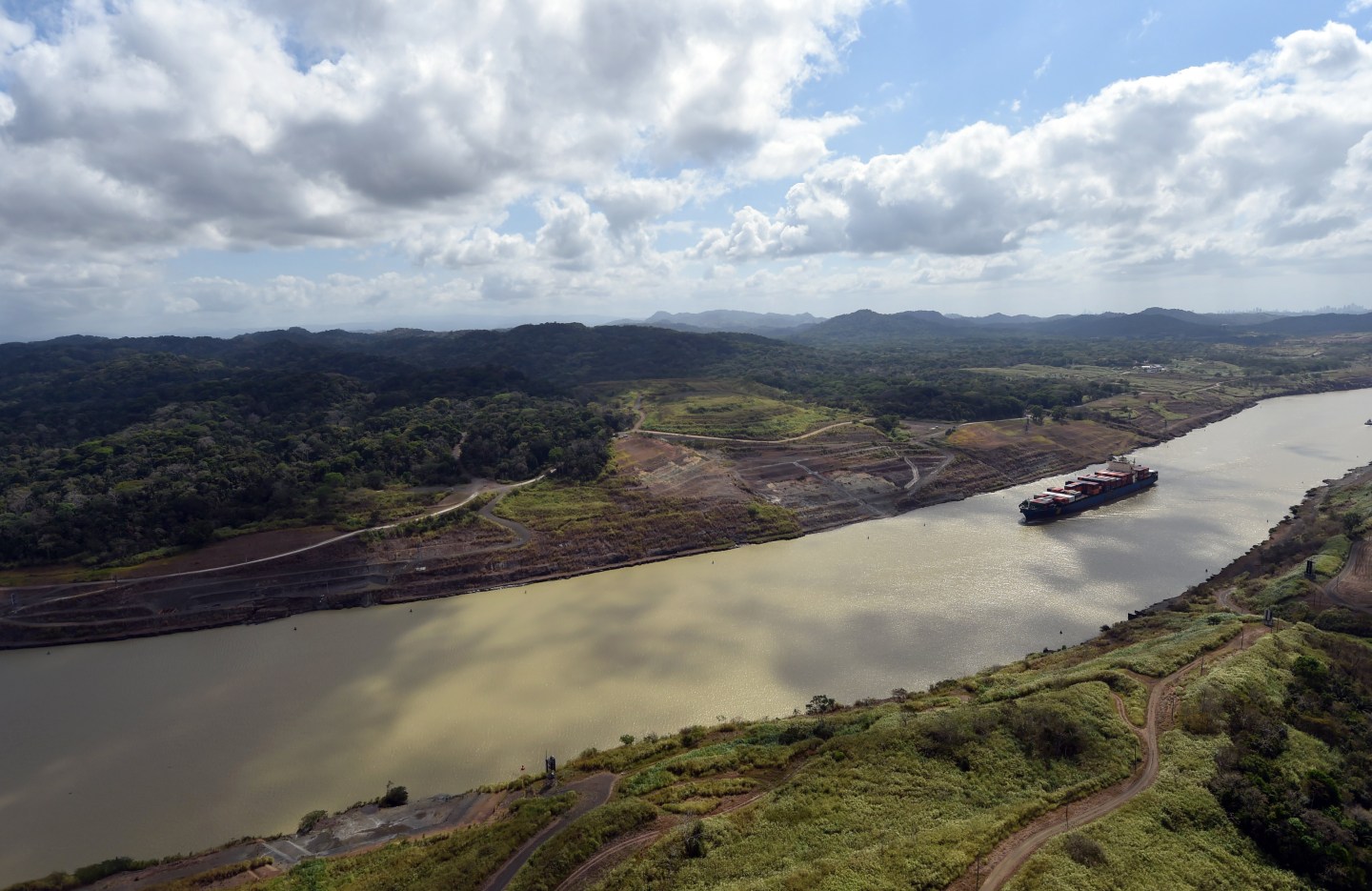
A merchant ship sails along the Panama Canal, on March 23, 2015. AFP PHOTO/ Rodrigo ARANGUA (Photo credit should read RODRIGO ARANGUA/AFP/Getty Images)Photograph by Rodrigo Arangua — AFP/Getty Images

The original Panama canal remains of the most ambitious public works projects of all time. But it wasn’t quite ambitious enough: within a few years of its opening in 1914, it was too small for many military and cargo ships. The U.S. authorities then in control began excavation for larger locks in 1939—but that work came to a standstill as America entered World War II, and no effective progress was made on the project for the remainder of the 20th century.

That changed swiftly when the canal transitioned to full Panamanian control in 1999. By 2006, a detailed expansion plan had been drafted and approved by Panamanian voters in a 77% landslide. With a total budget of $5.2 billion, completion was initially projected for 2014. Last year, the canal netted $2.6 billion, roughly half of Panama’s national revenue. The Panama Canal Authority has projected that the expansion will increase that revenue eightfold by 2025.

There’s been a hitch in the expansion effort, however. A group of mostly European contractors known as the Grupo Unidos por el Canal has filed claims totaling more than a half billion dollars against the Panama Canal Authority, alleging that misinformation led to cost overruns.

But according to Dr. J. David Rogers, a professor of geological engineering at Missouri University of Science and Technology, who has worked closely with the Panamanians for more than a quarter-century, the real problem is that contractors knowingly underbid the job.

The canal expansion is about more than money to the Panamanians, according to Dr. Rogers. “It’s a national pride project for them. It’s their lifeblood,” he says of the Panamanians’ feelings about the canal. “It’s what makes them go.”

The same seriousness didn’t characterize Americans’ approach to canal expansion. Of a series of false starts and fizzled plans, the most amazing came as part of Operation Plowshare, the “Atoms for Peace” program of the U.S. Atomic Energy Agency (now the Department of Energy). Intended to highlight the peacetime usefulness of atomic warheads, Plowshare spent more than a decade exploring the possibility of widening the canal by detonating a string of nuclear warheads. Rising awareness of environmental risks in the 1960s scuttled the idea.

Under the current, nuke-free plan, new approach channels and locks are being excavated alongside the existing entrances, allowing operations to continue normally during construction. The new locks and channels will be about three times bigger, allowing the passage of more of today’s huge container ships. The maximum load will increase from about 5,000 containers to 12,000—though the very largest ships, which currently balloon up to 19,000 containers and primarily work routes between Europe and Asia through the Suez Canal, still won’t fit.

The expansion will provide cheaper shipping between Asia and the American Gulf Coast. Traffic that currently flows through West Coast ports such as Los Angeles and Long Beach—including huge amounts of Midwestern grain and coal—will soon move more directly through ports including Houston and Savannah. Ports along the U.S. Gulf and East coasts have been expanding to accommodate increased ship size and traffic.

The ongoing court battle means that even the Panama Canal Authority’s recently-updated 2016 target for completion may be missed. But a bigger canal is finally coming—and with it, a host of new possibilities.


About the Author
By David Z. Morris
See full bioRight Arrow Button Icon

Latest in Tech

Big TechSpotify
Spotify users lamented Wrapped in 2024. This year, the company brought back an old favorite and made it less about AI
By Dave Lozo and Morning BrewDecember 4, 2025
3 hours ago
InnovationVenture Capital
This Khosla Ventures–backed startup is using AI to personalize cancer care
By Allie GarfinkleDecember 4, 2025
7 hours ago
AIEye on AI
Companies are increasingly falling victim to AI impersonation scams. This startup just raised $28M to stop deepfakes in real time
By Sharon GoldmanDecember 4, 2025
8 hours ago
Jensen Huang
SuccessBillionaires
Nvidia CEO Jensen Huang admits he works 7 days a week, including holidays, in a constant ‘state of anxiety’ out of fear of going bankrupt
By Jessica CoacciDecember 4, 2025
8 hours ago
Ted Pick
BankingData centers
Morgan Stanley considers offloading some of its data-center exposure
By Esteban Duarte, Paula Seligson, Davide Scigliuzzo and BloombergDecember 4, 2025
8 hours ago
Zuckerberg
EnergyMeta
Meta’s Zuckerberg plans deep cuts for metaverse efforts
By Kurt Wagner and BloombergDecember 4, 2025
8 hours ago

Most Popular

placeholder alt text
Economy
Two months into the new fiscal year and the U.S. government is already spending more than $10 billion a week servicing national debt
By Eleanor PringleDecember 4, 2025
13 hours ago
placeholder alt text
North America
Jeff Bezos and Lauren Sánchez Bezos commit $102.5 million to organizations combating homelessness across the U.S.: ‘This is just the beginning’
By Sydney LakeDecember 2, 2025
2 days ago
placeholder alt text
Success
‘Godfather of AI’ says Bill Gates and Elon Musk are right about the future of work—but he predicts mass unemployment is on its way
By Preston ForeDecember 4, 2025
9 hours ago
placeholder alt text
Economy
Ford workers told their CEO 'none of the young people want to work here.' So Jim Farley took a page out of the founder's playbook
By Sasha RogelbergNovember 28, 2025
6 days ago
placeholder alt text
Health
Bill Gates decries ‘significant reversal in child deaths’ as nearly 5 million kids will die before they turn 5 this year
By Nick LichtenbergDecember 4, 2025
20 hours ago
placeholder alt text
Economy
Tariffs and the $38 trillion national debt: Kevin Hassett sees ’big reductions’ in deficit while Scott Bessent sees a ‘shrinking ice cube’
By Nick LichtenbergDecember 4, 2025
7 hours ago
Rankings
  • 100 Best Companies
  • Fortune 500
  • Global 500
  • Fortune 500 Europe
  • Most Powerful Women
  • Future 50
  • World’s Most Admired Companies
  • See All Rankings
Sections
  • Finance
  • Leadership
  • Success
  • Tech
  • Asia
  • Europe
  • Environment
  • Fortune Crypto
  • Health
  • Retail
  • Lifestyle
  • Politics
  • Newsletters
  • Magazine
  • Features
  • Commentary
  • Mpw
  • CEO Initiative
  • Conferences
  • Personal Finance
  • Education
Customer Support
  • Frequently Asked Questions
  • Customer Service Portal
  • Privacy Policy
  • Terms Of Use
  • Single Issues For Purchase
  • International Print
Commercial Services
  • Advertising
  • Fortune Brand Studio
  • Fortune Analytics
  • Fortune Conferences
  • Business Development
About Us
  • About Us
  • Editorial Calendar
  • Press Center
  • Work At Fortune
  • Diversity And Inclusion
  • Terms And Conditions
  • Site Map

© 2025 Fortune Media IP Limited. All Rights Reserved. Use of this site constitutes acceptance of our Terms of Use and Privacy Policy | CA Notice at Collection and Privacy Notice | Do Not Sell/Share My Personal Information
FORTUNE is a trademark of Fortune Media IP Limited, registered in the U.S. and other countries. FORTUNE may receive compensation for some links to products and services on this website. Offers may be subject to change without notice.