• Home
  • Latest
  • Fortune 500
  • Finance
  • Tech
  • Leadership
  • Lifestyle
  • Rankings
  • Multimedia
Commentary

A wake-up call for tomorrow’s top 1 percent: rebuild America’s middle class

By
Michael E. Porter
Michael E. Porter
and
Jan W. Rivkin
Jan W. Rivkin
Down Arrow Button Icon
By
Michael E. Porter
Michael E. Porter
and
Jan W. Rivkin
Jan W. Rivkin
Down Arrow Button Icon
March 26, 2015, 12:18 AM ET
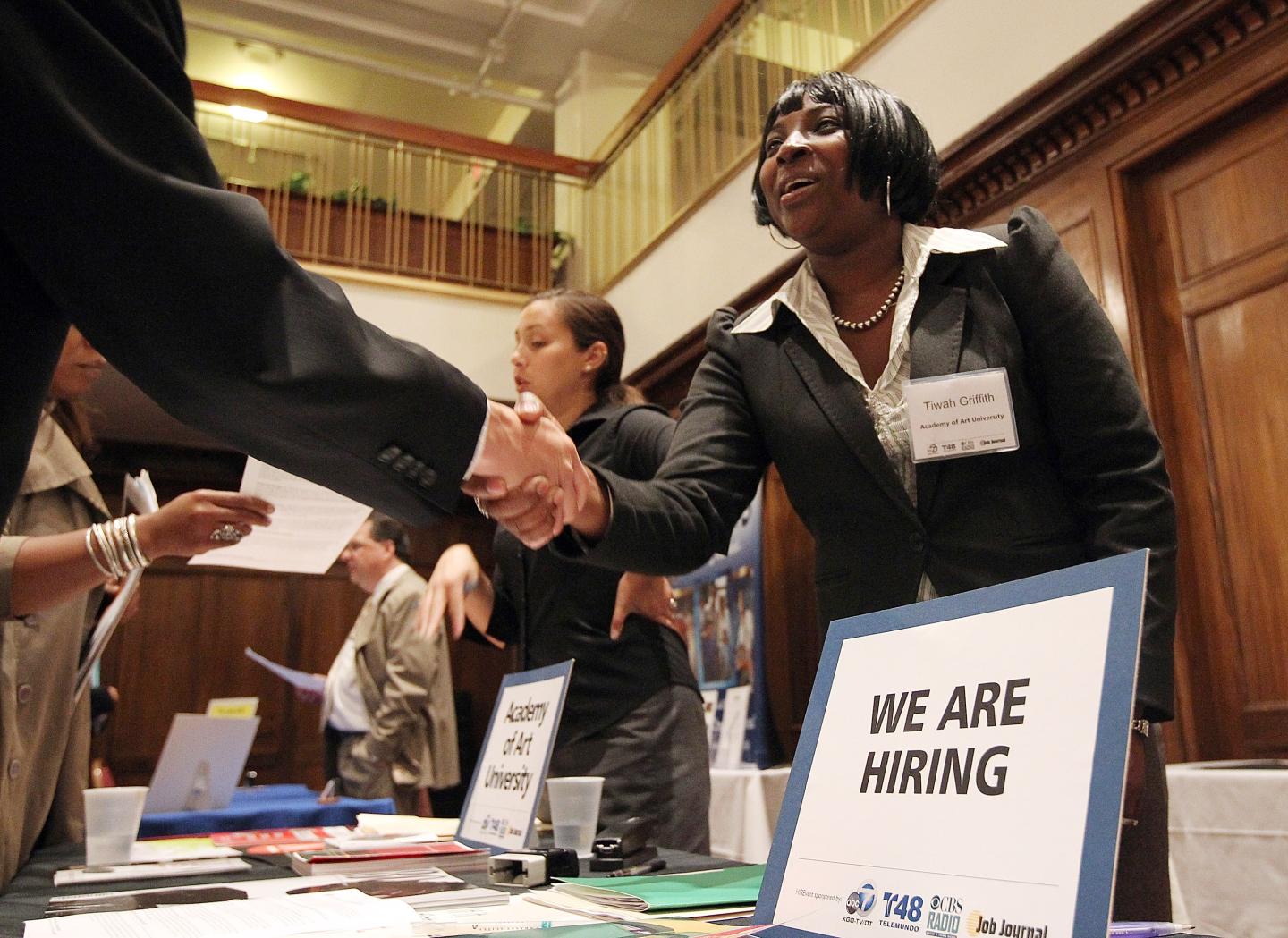
Job Seekers  Meet With Recruiters At Job Fair
SAN FRANCISCO, CA - JULY 12: A job seeker shakes hands with a recruiter during the San Francisco Hirevent job fair at the Hotel Whitmore on July 12, 2011 in San Francisco, California. As the national unemployment rate stands at 9.2 percent, several hundred job seekers turned out to meet with recruiters at the San Francisco Hirevent job fair where nearly 250 jobs were available. (Photo by Justin Sullivan/Getty Images)Photograph by Justin Sullivan—Getty Images

Who will be tomorrow’s 1%? Many of those who will be America’s wealthiest individuals in 2030 and beyond are graduating today from professional schools and PhD programs, starting their first companies, reporting for duty in management development programs, or joining private equity firms and hedge funds. They and their peers constitute tomorrow’s business leadership.

The greatest economic and social challenge facing their generation is far different from that of prior generations: they must put America on a path toward shared prosperity, in which they and the broad base of Americans thrive. Doing so will be hard because the very forces that will bring prosperity to tomorrow’s leaders endanger the economic well-being of working- and middle-class Americans.

Today’s U.S. economy, unlike the economy that fueled the American Dream for generations, is not producing shared prosperity. Instead, the success of highly skilled professionals has diverged from the realities of working- and middle-class Americans, who face stagnant incomes and weak job prospects. Many larger businesses are doing well, as are a select group of startups in hot spots such as Silicon Valley. But most small businesses, once tickets to opportunity for those without elite educations and connections, are struggling.

Today’s lack of shared prosperity began to take root long before the Great Recession. The opening of international markets and shifts in technology started changing the economic landscape decades ago. Large firms began investing more globally. Automation allowed companies to do more with fewer but more-skilled workers. While these developments benefited American firms and consumers, they had three subtle, longer-term consequences.

First, the connection between companies and their communities weakened. U.S.-based companies felt less compelled to invest at home in “the commons”—the shared assets that make citizens and companies productive, such as our education system, workforce skills, local supplier networks and infrastructure.”

Second, workers—especially those in the middle of the skills spectrum—suddenly found themselves competing for jobs not only with hundreds of millions of increasingly skilled workers around the world but also with automation that handled many lesser skilled tasks. As emerging economies upgraded their business environments, higher-wage sectors of the U.S. economy exposed to international competition stopped adding jobs.

Third, individuals with unique skills—from entrepreneurs to engineers, investors, consultants, and celebrities—could now leverage those skills on a global scale. As the 1% flourished, inequality soared.

America should have responded to these changes by redoubling its investment in the commons at home and equipping the middle class to compete in a new economy. Instead, the country maintained the illusion of shared prosperity for a while—for instance, by extending credit to the middle class. The resulting financial crisis left the federal government fiscally overextended, unable to invest in the commons, and politically gridlocked.

Today’s divergence of prosperity in America is not only unfair. It is also unsustainable. Weak middle-class prospects undermine the consumer spending on which many businesses depend. Workers with marginal or stagnant incomes, and without the skills needed to improve them, are less committed and less productive. And a languishing middle class fosters disgruntled voters who demand policies that redistribute prosperity rather than create it.

What should tomorrow’s 1% do? Today’s philanthropy and political donations are not the answer. Rather, a transformation of America’s business culture is required.

Reimagine business’s role. Change will begin when tomorrow’s leaders realize that America’s path is unsustainable — the tragedy of the commons is destined to become their tragedy. Collectively, they must recognize that the long-term health of their businesses is tied inextricably to the health of their communities, the local business environment, and the education and skills of their workers. Tomorrow’s leaders must also reject tactics, like tax avoidance and special-interest lobbying, that undermine shared prosperity.

Pursue shared value through products and services. The most effective of tomorrow’s business leaders will realize that they can address many of America’s most important societal needs not through philanthropy but through business itself. The shared-value companies of the future will make money while, and indeed because, they provide scalable solutions to America’s toughest problems in areas like health, the environment and skills advancement.

Take responsibility locally. Most institutions that shape the commons—such as schools, community colleges, universities, highway authorities, and public transportation systems—are fiercely local. Ultimately, shared prosperity must be restored in America city by city. Tomorrow’s leaders must commit themselves, early on, to local issues and institutions, focusing their time and effort especially on those steps that lift shared prosperity.

Engage across institutions. Most critical solutions that drive shared prosperity span the public, private, nonprofit, and education sectors. The most effective efforts we see to upgrade the middle class are collaborations that cut across traditional silos: for example, community colleges working with companies to train the graduates that companies want to hire. Business must step up and lead such efforts.

Tomorrow’s 1% must start now. The challenges we have discussed have been a generation in the making. They will take a generation to address. It is tempting to wait to get involved in building the commons until one’s own career is settled, but our society cannot wait that long.

Michael E. Porter is the Bishop William Lawrence University Professor at The Institute for Strategy and Competitiveness at the Harvard Business School. Jan W. Rivkin is the Bruce V. Rauner Professor and chair of the Strategy Unit at Harvard Business School.

About the Authors
By Michael E. Porter
See full bioRight Arrow Button Icon
By Jan W. Rivkin
See full bioRight Arrow Button Icon

Latest in Commentary

Finance
Lorem ipsum dolor sit amet, consectetur adipiscing elit, sed do eiusmod tempor incididunt ut labore et dolore magna aliqua. Ut enim ad minim veniam
By Fortune Editors
October 20, 2025
Finance
Lorem ipsum dolor sit amet, consectetur adipiscing elit, sed do eiusmod tempor incididunt ut labore et dolore magna aliqua. Ut enim ad minim veniam
By Fortune Editors
October 20, 2025
Finance
Lorem ipsum dolor sit amet, consectetur adipiscing elit, sed do eiusmod tempor incididunt ut labore et dolore magna aliqua. Ut enim ad minim veniam
By Fortune Editors
October 20, 2025
Finance
Lorem ipsum dolor sit amet, consectetur adipiscing elit, sed do eiusmod tempor incididunt ut labore et dolore magna aliqua. Ut enim ad minim veniam
By Fortune Editors
October 20, 2025
Finance
Lorem ipsum dolor sit amet, consectetur adipiscing elit, sed do eiusmod tempor incididunt ut labore et dolore magna aliqua. Ut enim ad minim veniam
By Fortune Editors
October 20, 2025
Finance
Lorem ipsum dolor sit amet, consectetur adipiscing elit, sed do eiusmod tempor incididunt ut labore et dolore magna aliqua. Ut enim ad minim veniam
By Fortune Editors
October 20, 2025

Most Popular

Finance
Lorem ipsum dolor sit amet, consectetur adipiscing elit, sed do eiusmod tempor incididunt ut labore et dolore magna aliqua. Ut enim ad minim veniam
By Fortune Editors
October 20, 2025
Finance
Lorem ipsum dolor sit amet, consectetur adipiscing elit, sed do eiusmod tempor incididunt ut labore et dolore magna aliqua. Ut enim ad minim veniam
By Fortune Editors
October 20, 2025
Finance
Lorem ipsum dolor sit amet, consectetur adipiscing elit, sed do eiusmod tempor incididunt ut labore et dolore magna aliqua. Ut enim ad minim veniam
By Fortune Editors
October 20, 2025
Finance
Lorem ipsum dolor sit amet, consectetur adipiscing elit, sed do eiusmod tempor incididunt ut labore et dolore magna aliqua. Ut enim ad minim veniam
By Fortune Editors
October 20, 2025
Finance
Lorem ipsum dolor sit amet, consectetur adipiscing elit, sed do eiusmod tempor incididunt ut labore et dolore magna aliqua. Ut enim ad minim veniam
By Fortune Editors
October 20, 2025
Finance
Lorem ipsum dolor sit amet, consectetur adipiscing elit, sed do eiusmod tempor incididunt ut labore et dolore magna aliqua. Ut enim ad minim veniam
By Fortune Editors
October 20, 2025
Fortune Secondary Logo
Rankings
  • 100 Best Companies
  • Fortune 500
  • Global 500
  • Fortune 500 Europe
  • Most Powerful Women
  • World's Most Admired Companies
  • See All Rankings
  • Lists Calendar
Sections
  • Finance
  • Fortune Crypto
  • Features
  • Leadership
  • Health
  • Commentary
  • Success
  • Retail
  • Mpw
  • Tech
  • Lifestyle
  • CEO Initiative
  • Asia
  • Politics
  • Conferences
  • Europe
  • Newsletters
  • Personal Finance
  • Environment
  • Magazine
  • Education
Customer Support
  • Frequently Asked Questions
  • Customer Service Portal
  • Privacy Policy
  • Terms Of Use
  • Single Issues For Purchase
  • International Print
Commercial Services
  • Advertising
  • Fortune Brand Studio
  • Fortune Analytics
  • Fortune Conferences
  • Business Development
  • Group Subscriptions
About Us
  • About Us
  • Lists Calendar
  • Press Center
  • Work At Fortune
  • Terms And Conditions
  • Site Map
  • About Us
  • Lists Calendar
  • Press Center
  • Work At Fortune
  • Terms And Conditions
  • Site Map
  • Facebook icon
  • Twitter icon
  • LinkedIn icon
  • Instagram icon
  • Pinterest icon

Latest in Commentary

one piece
CommentaryPersonal Finance
Gen Z is doing (almost) everything right with money—and still getting burned
By Beth KoblinerApril 22, 2026
5 hours ago
beard
CommentaryEducation
Yale asked the right question. Now the rest of higher education owes an answer
By Steve BeardApril 22, 2026
5 hours ago
trump
Commentarynational debt
America’s national debt is heading to 175% of GDP. Here’s why no president—including Trump—has the will to stop it
By Steve H. Hanke and David M. WalkerApril 22, 2026
6 hours ago
edelman
CommentaryHealth
70% of people believe at least one divisive health claim. Science needs a new playbook
By Richard EdelmanApril 22, 2026
7 hours ago
gas
CommentaryMiddle class
The $100 oil shock is hitting the middle class like a margin call
By Katica RoyApril 21, 2026
1 day ago
trump
CommentarySocial Security
What happens if nothing is done to fix Social Security by 2032?
By Martha SheddenApril 21, 2026
1 day ago

Most Popular

The tables have turned: Florida and Texas are the biggest losers in the housing market as Ohio emerges a surprise winner
Real Estate
The tables have turned: Florida and Texas are the biggest losers in the housing market as Ohio emerges a surprise winner
By Sydney LakeApril 21, 2026
22 hours ago
'Something sinister could be happening': FBI looks into dead or missing nuclear and space defense scientists tied to NASA, Blue Origin, and SpaceX
Politics
'Something sinister could be happening': FBI looks into dead or missing nuclear and space defense scientists tied to NASA, Blue Origin, and SpaceX
By Catherina GioinoApril 21, 2026
21 hours ago
$166 billion in tariff refunds just became available, but small businesses may already be at a disadvantage
Law
$166 billion in tariff refunds just became available, but small businesses may already be at a disadvantage
By Sasha RogelbergApril 20, 2026
2 days ago
Jeff Bezos once gave Eva Longoria and the admiral behind Osama bin Laden's capture $100 million—but she says you don't need wealth to give back
Success
Jeff Bezos once gave Eva Longoria and the admiral behind Osama bin Laden's capture $100 million—but she says you don't need wealth to give back
By Orianna Rosa RoyleApril 21, 2026
1 day ago
John Ternus, the man stepping into Tim Cook and Steve Jobs' shoes, is a 25-year Apple veteran with zero LinkedIn posts
C-Suite
John Ternus, the man stepping into Tim Cook and Steve Jobs' shoes, is a 25-year Apple veteran with zero LinkedIn posts
By Kelvin Chan and The Associated PressApril 21, 2026
24 hours ago
‘Something sinister’: What we know about the FBI probe into dead and missing scientists linked to space and military industries
Economy
‘Something sinister’: What we know about the FBI probe into dead and missing scientists linked to space and military industries
By Jim EdwardsApril 22, 2026
6 hours ago

© 2026 Fortune Media IP Limited. All Rights Reserved. Use of this site constitutes acceptance of our Terms of Use and Privacy Policy | CA Notice at Collection and Privacy Notice | Do Not Sell/Share My Personal Information
FORTUNE is a trademark of Fortune Media IP Limited, registered in the U.S. and other countries. FORTUNE may receive compensation for some links to products and services on this website. Offers may be subject to change without notice.