• Home
  • Latest
  • Fortune 500
  • Finance
  • Tech
  • Leadership
  • Lifestyle
  • Rankings
  • Multimedia
SABMiller

Here’s how SABMiller plans to tap into Africa’s nascent beer market

By
John Kell
John Kell
Contributing Writer and author of CIO Intelligence
Down Arrow Button Icon
By
John Kell
John Kell
Contributing Writer and author of CIO Intelligence
Down Arrow Button Icon
March 10, 2015, 3:31 PM ET
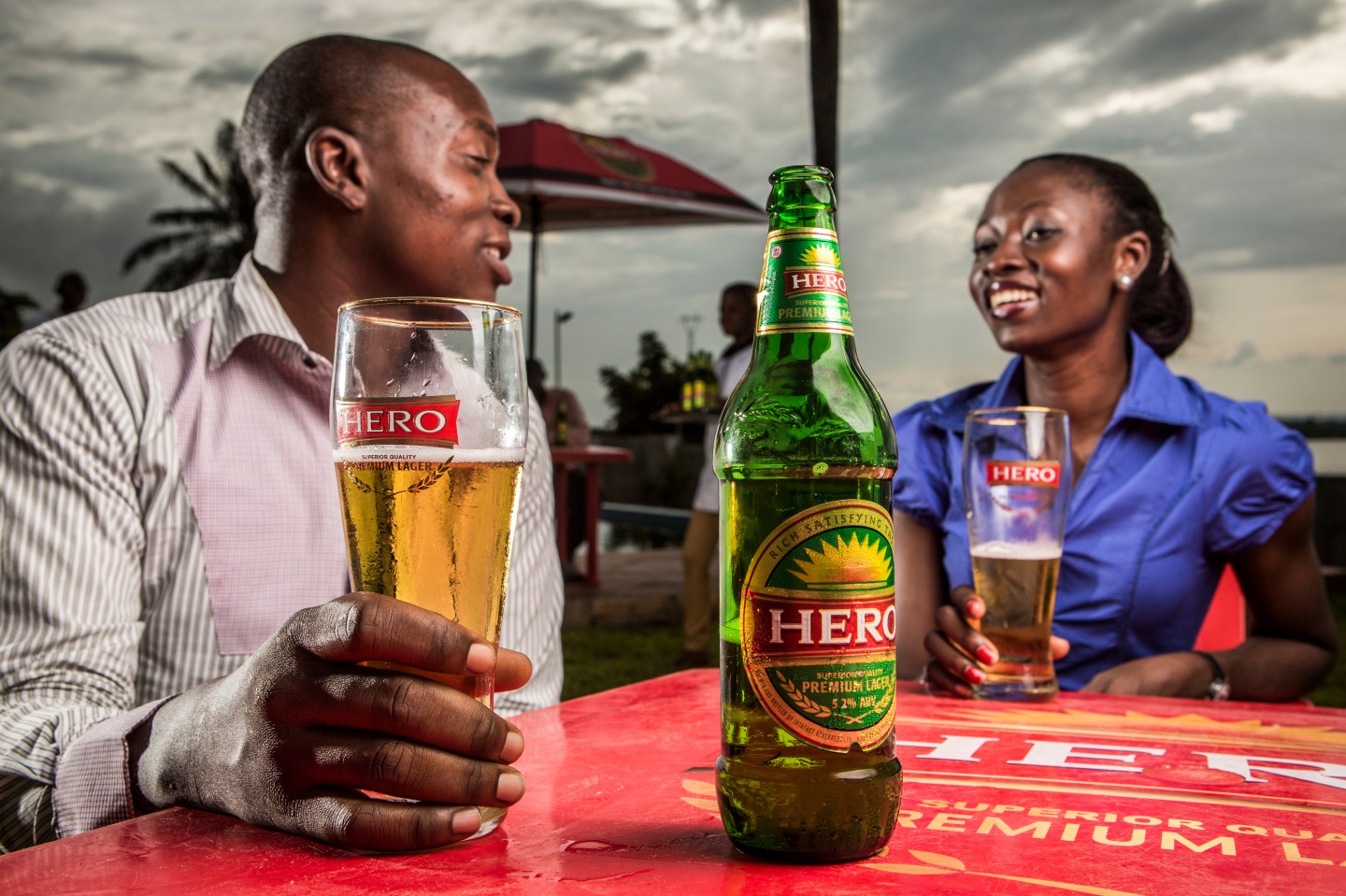
SABMiller Niger, Credit: Tom Parker/OneRedEye
SABMiller Plc. Nigeria. Credit: Tom Parker/OneRedEyePhotograph by Tom Parker — OneRedEye

SABMiller’s plan to dominate the African beer market hinges on $1 beers.

No, that isn’t a happy hour promotion run amok, it’s the price the brewer charges for many of the local beers it sells in Africa, the world’s second largest continent by population. And while it might not seem like a lot of money, the brewer is asking Africans to spend almost double what they would pay for the homemade brews and spirits that are most popular on the continent.

SABMiller has outlined a new strategy that focuses on keeping a lid on beer prices and developing local lagers to help the world’s second largest brewer tackle an increasingly important but complex market.

While many Western alcoholic beverage companies lean heavily on North America and Western Europe for volume and profits, Africa is far more important to SABMiller than other global rivals such as Anheuser-Busch InBev and Carlsberg. SABMiller derives 27% of its volume from the region, and almost a third of its profits. Over the medium term, the company expects volume will rise in the mid-single digits with net producer revenue projected to rise 10% — growth that would greatly outperform the company’s overall performance.

“Consumers in Africa drink the same amount of alcohol as consumers everywhere else,” said Mark Bowman, managing director of SABMiller Africa at a presentation in New York City. But the problem that brewers face is beer isn’t the alcoholic beverage of choice, at least not right now.

Africa is an alluring market to major brewers. On average, Africans drink nine liters of beer per person, per year, compared with a global average of 45 liters. Africans prefer fortified wines, rice wine and, quite often, cheaper homemade alcohol. Illegally made alcohol continues to dwarf the legal market in Africa, according to SABMiller and estimates from global health organizations.

SABMiller is trying to get more Africans to consider the brands it legally produces, which are sold at low sticker prices by Western standards but cost more for Africans to buy due to their limited purchasing power. Eight hours of work is needed for the average African to make enough money to buy a beer, compared to just eight minutes in Europe. A lager at the local pub is a far greater luxury in Africa.

As a result, SABMiller’s strategy partly hinges on fewer price increases with a greater focus on volume. As economies improve and Africans make more money, if beer prices stay stable, SABMiller hopes it can win more market share. SABMiller has conceded that the plan will result in lower margin growth for now.

Investments are also needed. The company is in the process of completing a $100 million brewery expansion project in Ghana that will double brewing capacity. It has spent millions boost capacity in Nigeria, Zambia, and a handful of other markets.

Localization — the process of adapting a product to a specific locale, or market — is also important. SABMiller sells Hero in Nigeria, Balimi in Tanzania and Club lager in Ghana, each with their own brand stories that closely align with the nation’s identity. Such localization efforts have helped SABMiller increase its beer market share to 48% from 28% five years ago, for example.
[fortune-brightcove videoid=4103466039001]

Analysts have said due to Africa’s large population, rising economic growth and relatively low beer consumption, the continent is likely the most attractive region for long-term profit growth.

But there are also vast challenges, including high costs and low brewer productivity outside South Africa. In the northern part of the continent, for example, countries such as Morocco and Algeria have a high level of abstention from alcohol. These are regions where Muslims make up nearly all of the population.

Selling more beer to African women also represents both an opportunity and a challenge. Women only make up about 10% of the consumer base for lagers, and SABMiller is still tinkering with how it can best reach that important audience. A mistake SABMiller made in the past is that it targeted women with the Redd’s brand, but later found both genders rejected the female-focused marketing. The brewer has had more success when marketing a brand as gender neutral, or even slightly more masculine.

“We haven’t been able to crack the female-centered component of beer,” said Bowman.

About the Author
By John KellContributing Writer and author of CIO Intelligence

John Kell is a contributing writer for Fortune and author of Fortune’s CIO Intelligence newsletter.

See full bioRight Arrow Button Icon
0

Most Popular

Finance
Lorem ipsum dolor sit amet, consectetur adipiscing elit, sed do eiusmod tempor incididunt ut labore et dolore magna aliqua. Ut enim ad minim veniam
By Fortune Editors
October 20, 2025
Finance
Lorem ipsum dolor sit amet, consectetur adipiscing elit, sed do eiusmod tempor incididunt ut labore et dolore magna aliqua. Ut enim ad minim veniam
By Fortune Editors
October 20, 2025
Finance
Lorem ipsum dolor sit amet, consectetur adipiscing elit, sed do eiusmod tempor incididunt ut labore et dolore magna aliqua. Ut enim ad minim veniam
By Fortune Editors
October 20, 2025
Finance
Lorem ipsum dolor sit amet, consectetur adipiscing elit, sed do eiusmod tempor incididunt ut labore et dolore magna aliqua. Ut enim ad minim veniam
By Fortune Editors
October 20, 2025
Finance
Lorem ipsum dolor sit amet, consectetur adipiscing elit, sed do eiusmod tempor incididunt ut labore et dolore magna aliqua. Ut enim ad minim veniam
By Fortune Editors
October 20, 2025
Finance
Lorem ipsum dolor sit amet, consectetur adipiscing elit, sed do eiusmod tempor incididunt ut labore et dolore magna aliqua. Ut enim ad minim veniam
By Fortune Editors
October 20, 2025
Rankings
  • 100 Best Companies
  • Fortune 500
  • Global 500
  • Fortune 500 Europe
  • Most Powerful Women
  • Future 50
  • World’s Most Admired Companies
  • See All Rankings
Sections
  • Finance
  • Leadership
  • Success
  • Tech
  • Asia
  • Europe
  • Environment
  • Fortune Crypto
  • Health
  • Retail
  • Lifestyle
  • Politics
  • Newsletters
  • Magazine
  • Features
  • Commentary
  • Mpw
  • CEO Initiative
  • Conferences
  • Personal Finance
  • Education
Customer Support
  • Frequently Asked Questions
  • Customer Service Portal
  • Privacy Policy
  • Terms Of Use
  • Single Issues For Purchase
  • International Print
Commercial Services
  • Advertising
  • Fortune Brand Studio
  • Fortune Analytics
  • Fortune Conferences
  • Business Development
About Us
  • About Us
  • Editorial Calendar
  • Press Center
  • Work At Fortune
  • Diversity And Inclusion
  • Terms And Conditions
  • Site Map
  • Facebook icon
  • Twitter icon
  • LinkedIn icon
  • Instagram icon
  • Pinterest icon

Most Popular

placeholder alt text
Economy
America borrowed $43.5 billion a week in the first four months of the fiscal year, with debt interest on track to be over $1 trillion for 2026
By Eleanor PringleFebruary 10, 2026
2 days ago
placeholder alt text
Economy
It turns out that Joe Biden really did crush Americans' dreams for the future. Just look at how the vibe changed 5 years ago
By Jake AngeloFebruary 10, 2026
1 day ago
placeholder alt text
C-Suite
Meet Jody Allen, the billionaire owner of the Seattle Seahawks, who plans to sell the team and donate the proceeds to charity
By Jake AngeloFebruary 9, 2026
2 days ago
placeholder alt text
Commentary
Something big is happening in AI — and most people will be blindsided
By Matt ShumerFebruary 11, 2026
11 hours ago
placeholder alt text
AI
As billionaires bail, Mark Zuckerberg doubles down on California with $50 million donation
By Sydney LakeFebruary 9, 2026
2 days ago
placeholder alt text
Economy
China might be beginning to back away from U.S. debt as investors get nervous about overexposure to American assets
By Eleanor PringleFebruary 9, 2026
3 days ago

© 2026 Fortune Media IP Limited. All Rights Reserved. Use of this site constitutes acceptance of our Terms of Use and Privacy Policy | CA Notice at Collection and Privacy Notice | Do Not Sell/Share My Personal Information
FORTUNE is a trademark of Fortune Media IP Limited, registered in the U.S. and other countries. FORTUNE may receive compensation for some links to products and services on this website. Offers may be subject to change without notice.