• Home
  • Latest
  • Fortune 500
  • Finance
  • Tech
  • Leadership
  • Lifestyle
  • Rankings
  • Multimedia

Trendingnow

1

Social Security unraveling: 7,100 workers sacked, performance metrics retired, disability claims falling

2

Erin Brockovich, the activist who defeated a utility giant and inspired a Julia Roberts film, is pushing data centers to be more transparent

3

'Where we are today is frightening': a Pulitzer-winning historian sees a doomsday scenario involving China and the national debt

1

Social Security unraveling: 7,100 workers sacked, performance metrics retired, disability claims falling

2

Erin Brockovich, the activist who defeated a utility giant and inspired a Julia Roberts film, is pushing data centers to be more transparent

3

'Where we are today is frightening': a Pulitzer-winning historian sees a doomsday scenario involving China and the national debt
CommentaryChina

Fighting pollution: What China can learn from Britain

By
Nicola Persico
Nicola Persico
Down Arrow Button Icon
By
Nicola Persico
Nicola Persico
Down Arrow Button Icon
March 10, 2015, 11:18 AM ET
China Daily Life - Pollution
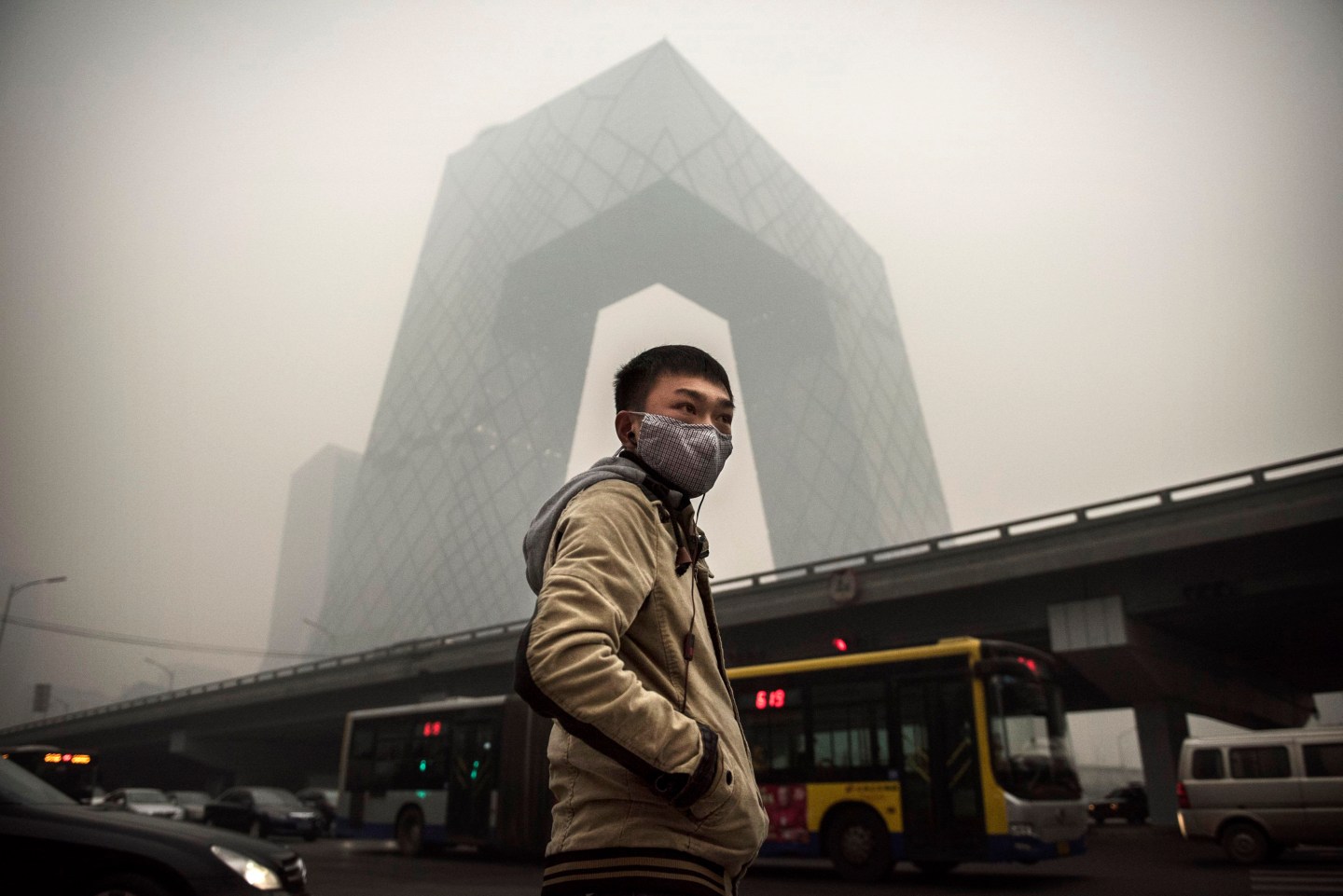
BEIJING, CHINA - NOVEMBER 29: A Chinese man wears a mask as he waits to cross the road near the CCTV building during heavy smog on November 29, 2014 in Beijing, China. United States President Barack Obama and China's president Xi Jinping agreed on a plan to limit carbon emissions by their countries, which are the world's two biggest polluters, at a summit in Beijing earlier this month. (Photo by Kevin Frayer/Getty Images)Photograph by Kevin Frayer — Getty Images

The hottest movie in China right now isn’t an action or sci-fi flick. It’s “Under the Dome,” a documentary that debuted last month about pollution in China. The response has been overwhelming; the film has gone viral, receiving more than 200 million views on video portals, and putting China’s air pollution crisis at the forefront ahead of the country’s annual legislative session. Last week, Chinese Premier Li Keqiang’s State of the Union Address discussed pollution; he called it “a blight on people’s quality of life and a trouble that weighs on their hearts.”

This response signals a significant shift. Pollution has reached grotesque proportions in many Chinese cities: a mega-screen was set up recently in Tiananmen Square i to show the sunrise, a phenomenon that is now rarely seen due to the thick smog; poor air quality has been estimated to reduce life expectancy up to five years; the groundwater is polluted, too, and 20% of China’s farmland is laced with toxic metals, which are absorbed by the crops. The elites seek tegong, crops grown at special non-polluted farms, which are not available for public purchase. And those who can afford it send their children abroad to more salubrious shores.

Until now, this environmental damage has been accepted as the price of China’s unprecedented growth. But now as economic growth slows down to its lowest level in a quarter century, China’s leadership feels increased pressure to deliver on sustainability. It may succeed, but the Communist state may have to accept some degree of Democracy in the process – at least if history is any guide.

In the 1820s, Britain was in a similar position as today’s China. Back then, the “workshop of the world” was not China, but Manchester. Britain’s industrial revolution, like China’s today, was marked by massive urbanization and industrialization. Severe environmental and public health problems resulted: heavy smog from coal-burning, and water-borne diseases emerged due to lack of sewers and sanitation. Like other fast-growing industrial cities, Manchester was so unsanitary that life expectancy at birth was only 27 years, compared to the British average of 41. Alexis de Tocqueville wrote about the city: “From this foul drain, the greatest stream of human industry flows out to fertilize the world.” Much the same could be said today of many of China’s industrial cities.

Britain entered the industrial revolution as an oligarchy, and came out a democracy. By the time the “Age of Reform” was over (1830-1884), all English male heads of households could vote. Despite Karl Marx’s prophesy of class struggle, this democratization happened peacefully. A reading of the historical evidence suggests that the democratization process was harmonious because environmental and health issues created elite support for it.

According to this argument, the urban elites suffered from the same industrialization-related diseases as the poor: typhus, cholera, and other sanitation-related epidemics. These problems could have been addressed by building sewers, paving roads, and regulating industrial activity. But the old political system was broken: it could not provide public health and environmental investments because it was captured by moneyed interests and focused on procuring benefits for the industrial barons. In time, the state of public health became so dire that the elites saw democratization as the only solution. Once government was held accountable to a broader cross-section of the population, it would be forced to provide much-needed public goods. This is in fact what happened. There is evidence that the age of reform ushered in a great increase in public goods spending by government.

Can the history of 19th century Britain offer insight into today’s China? Arguably, yes. Today’s Chinese elites are harmed by the pollution and public health problems. The situation is so bad that, soon, these elites may wish to make government more responsive to mass demand for clean air and water. To make this happen, the elites may see it as necessary to accept a degree of power devolution to the masses: democratization, perhaps under the guise of decentralization. The Chinese government fears change because it could bring internal conflict. But Britain’s history indicates that this kind of democratization can happen harmoniously, which should be reassuring.

In China, the phase of easy “catch-up” growth is coming to an end, and the environmental and public health challenges are growing worse. An evolution in the form of government is necessary to address these challenges. Premier Li Keqiang’s speech acknowledges the problems, but the elites are split as to the solution. In fact, last Friday, the documentary “Under the Dome” was pulled offline by the government just a week after it was posted. Despite this, the conditions exist for a democratization process to happen harmoniously, perhaps through decentralization. So in the end Karl Marx may be wrong — again. China’s governance need not change through class struggle, and it may yet be poised for its own age of reform.

Nicola Persico is a professor of managerial economics and decision sciences at Kellogg School of Management at Northwestern University. He is also the Director of the Center for Mathematical Studies in Economics & Management.


About the Author
By Nicola Persico
See full bioRight Arrow Button Icon

Latest in Commentary

Finance
Lorem ipsum dolor sit amet, consectetur adipiscing elit, sed do eiusmod tempor incididunt ut labore et dolore magna aliqua. Ut enim ad minim veniam
By Fortune Editors
October 20, 2025
Finance
Lorem ipsum dolor sit amet, consectetur adipiscing elit, sed do eiusmod tempor incididunt ut labore et dolore magna aliqua. Ut enim ad minim veniam
By Fortune Editors
October 20, 2025
Finance
Lorem ipsum dolor sit amet, consectetur adipiscing elit, sed do eiusmod tempor incididunt ut labore et dolore magna aliqua. Ut enim ad minim veniam
By Fortune Editors
October 20, 2025
Finance
Lorem ipsum dolor sit amet, consectetur adipiscing elit, sed do eiusmod tempor incididunt ut labore et dolore magna aliqua. Ut enim ad minim veniam
By Fortune Editors
October 20, 2025
Finance
Lorem ipsum dolor sit amet, consectetur adipiscing elit, sed do eiusmod tempor incididunt ut labore et dolore magna aliqua. Ut enim ad minim veniam
By Fortune Editors
October 20, 2025
Finance
Lorem ipsum dolor sit amet, consectetur adipiscing elit, sed do eiusmod tempor incididunt ut labore et dolore magna aliqua. Ut enim ad minim veniam
By Fortune Editors
October 20, 2025

Most Popular

Finance
Lorem ipsum dolor sit amet, consectetur adipiscing elit, sed do eiusmod tempor incididunt ut labore et dolore magna aliqua. Ut enim ad minim veniam
By Fortune Editors
October 20, 2025
Finance
Lorem ipsum dolor sit amet, consectetur adipiscing elit, sed do eiusmod tempor incididunt ut labore et dolore magna aliqua. Ut enim ad minim veniam
By Fortune Editors
October 20, 2025
Finance
Lorem ipsum dolor sit amet, consectetur adipiscing elit, sed do eiusmod tempor incididunt ut labore et dolore magna aliqua. Ut enim ad minim veniam
By Fortune Editors
October 20, 2025
Finance
Lorem ipsum dolor sit amet, consectetur adipiscing elit, sed do eiusmod tempor incididunt ut labore et dolore magna aliqua. Ut enim ad minim veniam
By Fortune Editors
October 20, 2025
Finance
Lorem ipsum dolor sit amet, consectetur adipiscing elit, sed do eiusmod tempor incididunt ut labore et dolore magna aliqua. Ut enim ad minim veniam
By Fortune Editors
October 20, 2025
Finance
Lorem ipsum dolor sit amet, consectetur adipiscing elit, sed do eiusmod tempor incididunt ut labore et dolore magna aliqua. Ut enim ad minim veniam
By Fortune Editors
October 20, 2025
Fortune Secondary Logo
Rankings
  • 100 Best Companies
  • Fortune 500
  • Global 500
  • Fortune 500 Europe
  • Most Powerful Women
  • World's Most Admired Companies
  • See All Rankings
  • Lists Calendar
Sections
  • Finance
  • Fortune Crypto
  • Features
  • Leadership
  • Health
  • Commentary
  • Success
  • Retail
  • Mpw
  • Tech
  • Lifestyle
  • CEO Initiative
  • Asia
  • Politics
  • Conferences
  • Europe
  • Newsletters
  • Personal Finance
  • Environment
  • Magazine
  • Education
Customer Support
  • Frequently Asked Questions
  • Customer Service Portal
  • Privacy Policy
  • Terms Of Use
  • Single Issues For Purchase
  • International Print
Commercial Services
  • Advertising
  • Fortune Brand Studio
  • Fortune Analytics
  • Fortune Conferences
  • Business Development
  • Group Subscriptions
About Us
  • About Us
  • Press Center
  • Work At Fortune
  • Terms And Conditions
  • Site Map
  • About Us
  • Press Center
  • Work At Fortune
  • Terms And Conditions
  • Site Map
  • Facebook icon
  • Twitter icon
  • LinkedIn icon
  • Instagram icon
  • Pinterest icon

Latest in Commentary

as
CommentaryVenture Capital
The most contrarian and durable bet in AI is 85 million moms
By Allison SternJune 3, 2026
9 hours ago
adc
CommentaryLeadership
AI is turning workers into superhumans. Their leadership teams haven’t kept up
By Adrienne Down CoulsonJune 2, 2026
1 day ago
liaquat
CommentaryBubbles
I won a Pulitzer for explaining the Great Depression. The AI spending boom terrifies me
By Liaquat AhamedJune 2, 2026
2 days ago
Allison Danielsen is CEO, Tallo.
CommentaryCareers
My wrist injury derailed my college plans. It’s why I’m a CEO today
By Allison DanielsenMay 31, 2026
3 days ago
treble
CommentaryElections
I built a startup from scratch and still nearly died because of a broken healthcare system. That’s why I’m running for Congress
By Jonathan TrebleMay 31, 2026
3 days ago
bn
CommentaryEducation
Bill Nye: Companies say there’s a skills gap. They’re wrong — and students can prove it
By Bill NyeMay 31, 2026
3 days ago

Most Popular

Social Security unraveling: 7,100 workers sacked, performance metrics retired, disability claims falling
North America
Social Security unraveling: 7,100 workers sacked, performance metrics retired, disability claims falling
By Katie Savin, Callie Freitag, Matthew Borus and The ConversationJune 2, 2026
1 day ago
Erin Brockovich, the activist who defeated a utility giant and inspired a Julia Roberts film, is pushing data centers to be more transparent
Environment
Erin Brockovich, the activist who defeated a utility giant and inspired a Julia Roberts film, is pushing data centers to be more transparent
By Marco Quiroz-GutierrezJune 1, 2026
2 days ago
'Where we are today is frightening': a Pulitzer-winning historian sees a doomsday scenario involving China and the national debt
Banking
'Where we are today is frightening': a Pulitzer-winning historian sees a doomsday scenario involving China and the national debt
By Nick LichtenbergJune 2, 2026
1 day ago
Cognizant CEO says AI is remaking middle managers into player-coaches who can 'both  execute and develop others'
Newsletters
Cognizant CEO says AI is remaking middle managers into player-coaches who can 'both execute and develop others'
By Diane BradyJune 2, 2026
1 day ago
Current price of oil as of June 2, 2026
Personal Finance
Current price of oil as of June 2, 2026
By Joseph HostetlerJune 2, 2026
1 day ago
Current price of gold as of June 2, 2026
Personal Finance
Current price of gold as of June 2, 2026
By Danny BakstJune 2, 2026
1 day ago

© 2026 Fortune Media IP Limited. All Rights Reserved. Use of this site constitutes acceptance of our Terms of Use and Privacy Policy | CA Notice at Collection and Privacy Notice | Do Not Sell/Share My Personal Information
FORTUNE is a trademark of Fortune Media IP Limited, registered in the U.S. and other countries. FORTUNE may receive compensation for some links to products and services on this website. Offers may be subject to change without notice.