• Home
  • Latest
  • Fortune 500
  • Finance
  • Tech
  • Leadership
  • Lifestyle
  • Rankings
  • Multimedia

Trendingnow

1

'Dr. Doom' Nouriel Roubini says we're headed for universal basic income or 'some form of socialism' as AI revolutionizes work—He calls that optimistic

2

‘I want to die broke’: Billionaire philanthropist Denny Sanford dies after giving away $4 billion

3

Power companies are using eminent domain to seize land for data centers as 70% of Americans say not in my backyard

1

'Dr. Doom' Nouriel Roubini says we're headed for universal basic income or 'some form of socialism' as AI revolutionizes work—He calls that optimistic

2

‘I want to die broke’: Billionaire philanthropist Denny Sanford dies after giving away $4 billion

3

Power companies are using eminent domain to seize land for data centers as 70% of Americans say not in my backyard

How to get a $1 billion valuation in just eight months

By
Erin Griffith
Erin Griffith
Down Arrow Button Icon
By
Erin Griffith
Erin Griffith
Down Arrow Button Icon
January 22, 2015, 7:07 AM ET
Slack CEO Stewart Butterfield
Stewart Butterfield, co-founder and chief executive officer of Slack, stands for a photograph after a Bloomberg West Television interview in San Francisco, California, U.S., on Wednesday, Nov. 12, 2014. Slack, a software service company helping teams of co-workers to converse, work on projects together, and share links, pictures and more in real time, recently raised $120 million and is now valued at $1.12 billion. Photographer: David Paul Morris/Bloomberg via Getty ImagesPhotograph by David Paul Morris — Bloomberg/Getty Images
Add Fortune on Google for similar content.

If any company embodies the Age of the Unicorn (the subject of Fortune’s latest cover story), it’s Slack.

The business software maker can easily serve as an example of why we’re in a tech bubble. Its namesake product is only eight months old and the company is worth $1 billion. How is that even possible? Is money even real in Silicon Valley?

But Slack just as easily serves as an example of how big an opportunity there is. Slack has grown as much as 7% each week since it launched—a pace large companies aspire to hit each year—adding thousands of new users who pay for the service. The company has 100 employees and it’s only burning $100,000 per month. Sure, it’s not even a year old. But it’s clearly going to be huge.

This is how you get to $1 billion so quickly.

After ignoring daily inquiries from venture capitalists all summer, Slack CEO Stewart Butterfield decided in September to take a week’s worth of investor meetings, “to see where things were at.” Slack had launched in February, a year after the company shut down a gaming product that never took off. The new product, a collaboration tool for desk workers, was an immediate hit. By April, Slack’s early traction was enough for it to raise $42.8 million, valuing the company at $250 million.

The news stoked the hype around Slack. Venture capitalists witnessed its rapid adoption at their portfolio companies. The emails from investors had swelled to 10 new funding offers per week. Sometimes it from was investors Butterfield knew. (He had previously co-founded the photo-sharing site Flickr, which sold to Yahoo in 2005.) Often they were from complete strangers hoping he’d take their money.

Slack didn’t need the money, but Butterfield decided to test the waters because he believed this era of easy venture capital high valuations would not last forever. “I’m one of those people who think the other shoe has yet to drop from 2008,” he says. “I lost a shitload of money in 2008, and I saw the fundraising environment tighten up. I’m aware of the cycle. It’s difficult to call a top, but it’s pretty obvious we’re far from the bottom.”

There’s another, slightly less rational reason Butterfield decided to raise more money: He wanted a $1 billion valuation. If Slack couldn’t get that, he wouldn’t raise anything. The cachet of the figure is meaningful in an intangible way, he says. It means “we’re a part of that conversation about companies worth $1 billion.”

He elaborates: “It’s definitely a psychological threshold and it helps for certain kinds of customers. When [we’re] negotiating with a Fortune 500 company on legal terms of service for some detail about what sort of deal they will get in the third year, then having the comfort of knowing we’re highly valued and financially secure, that really helps.”

A billion dollars goes a long way with big hires, too. “There is a class of employees who are more risk-averse and work at some company like Google or Facebook and they have a mortgage and kids,” he says. “It helps a lot of those kinds of people as well.”

But is the $1 billion valuation actually based on any real metrics? Were any numbers crunched, any spreadsheets analyzed, or any public comps selected? Not really. “There are fairly precise methods for putting a value on future cash flow given steady business,” Butterfield says. “We’re not in that position, obviously.” Put another way: Slack is growing too quickly for projections. At its last public announcement, 45,000 teams with 365,000 daily active users were paying to use Slack. “Every single day except holidays is a record for that day,” he says. “Every Tuesday is the best Tuesday we’ve had.”

So why not pick the big, round number that helps with customers and recruiting? Butterfield acknowledges there’s quite a bit of growth baked into Slack’s valuation. “You have to choose some numbers,” he says. “One billion is better than $800 million because it’s the psychological threshold for potential customers, employees, and the press.”

Slack had no problem getting investors to agree to the $1 billion valuation, by the way. Butterfield only wanted to raise $100 million; he ended up with $200 million in commitments and closed the round at $120 million. In the three months since raising the money, Slack has just about doubled everything—customers, revenue, users—and Butterfield expects it will repeat the feat in the next four months.

So far Slack has only spent around 1% of the money it raised, Butterfield says. He’s confident that even if the economy turns south, Slack will be fine. “We’re able to weather pretty much any storm,” he says. “You’d have to be in a meteors-hitting-the-earth scenario before Slack as a business would get into trouble.”

For more on Slack and the phenomenon of billion-dollar startups, read “The Age of Unicorns.”

Watch more of our coverage on business Unicorns from Fortune’s video team:

About the Author
By Erin Griffith
See full bioRight Arrow Button Icon
Add Fortune on Google for similar content.

Latest in

Finance
Lorem ipsum dolor sit amet, consectetur adipiscing elit, sed do eiusmod tempor incididunt ut labore et dolore magna aliqua. Ut enim ad minim veniam
By Fortune Editors
October 20, 2025
Finance
Lorem ipsum dolor sit amet, consectetur adipiscing elit, sed do eiusmod tempor incididunt ut labore et dolore magna aliqua. Ut enim ad minim veniam
By Fortune Editors
October 20, 2025
Finance
Lorem ipsum dolor sit amet, consectetur adipiscing elit, sed do eiusmod tempor incididunt ut labore et dolore magna aliqua. Ut enim ad minim veniam
By Fortune Editors
October 20, 2025
Finance
Lorem ipsum dolor sit amet, consectetur adipiscing elit, sed do eiusmod tempor incididunt ut labore et dolore magna aliqua. Ut enim ad minim veniam
By Fortune Editors
October 20, 2025
Finance
Lorem ipsum dolor sit amet, consectetur adipiscing elit, sed do eiusmod tempor incididunt ut labore et dolore magna aliqua. Ut enim ad minim veniam
By Fortune Editors
October 20, 2025
Finance
Lorem ipsum dolor sit amet, consectetur adipiscing elit, sed do eiusmod tempor incididunt ut labore et dolore magna aliqua. Ut enim ad minim veniam
By Fortune Editors
October 20, 2025

Most Popular

Finance
Lorem ipsum dolor sit amet, consectetur adipiscing elit, sed do eiusmod tempor incididunt ut labore et dolore magna aliqua. Ut enim ad minim veniam
By Fortune Editors
October 20, 2025
Finance
Lorem ipsum dolor sit amet, consectetur adipiscing elit, sed do eiusmod tempor incididunt ut labore et dolore magna aliqua. Ut enim ad minim veniam
By Fortune Editors
October 20, 2025
Finance
Lorem ipsum dolor sit amet, consectetur adipiscing elit, sed do eiusmod tempor incididunt ut labore et dolore magna aliqua. Ut enim ad minim veniam
By Fortune Editors
October 20, 2025
Finance
Lorem ipsum dolor sit amet, consectetur adipiscing elit, sed do eiusmod tempor incididunt ut labore et dolore magna aliqua. Ut enim ad minim veniam
By Fortune Editors
October 20, 2025
Finance
Lorem ipsum dolor sit amet, consectetur adipiscing elit, sed do eiusmod tempor incididunt ut labore et dolore magna aliqua. Ut enim ad minim veniam
By Fortune Editors
October 20, 2025
Finance
Lorem ipsum dolor sit amet, consectetur adipiscing elit, sed do eiusmod tempor incididunt ut labore et dolore magna aliqua. Ut enim ad minim veniam
By Fortune Editors
October 20, 2025
Fortune Secondary Logo
Rankings
  • 100 Best Companies
  • Fortune 500
  • Global 500
  • Fortune 500 Europe
  • Most Powerful Women
  • World's Most Admired Companies
  • See All Rankings
  • Lists Calendar
Sections
  • Finance
  • Fortune Crypto
  • Features
  • Leadership
  • Health
  • Commentary
  • Success
  • Retail
  • Mpw
  • Tech
  • Lifestyle
  • CEO Initiative
  • Asia
  • Politics
  • Conferences
  • Europe
  • Newsletters
  • Personal Finance
  • Environment
  • Magazine
  • Education
Customer Support
  • Frequently Asked Questions
  • Customer Service Portal
  • Privacy Policy
  • Terms Of Use
  • Single Issues For Purchase
  • International Print
Commercial Services
  • Advertising
  • Fortune Brand Studio
  • Fortune Analytics
  • Fortune Conferences
  • Business Development
  • Group Subscriptions
About Us
  • About Us
  • Press Center
  • Work At Fortune
  • Terms And Conditions
  • Site Map
  • About Us
  • Press Center
  • Work At Fortune
  • Terms And Conditions
  • Site Map
  • Facebook icon
  • Twitter icon
  • LinkedIn icon
  • Instagram icon
  • Pinterest icon

Latest in

Photo of Hugging Face cofounder and CEO Clement Delangue.
CybersecurityAI agents
Hugging Face says it resorted to a Chinese AI model to battle a fully autonomous cyberattack because U.S. model guardrails stymied its defense
By Emily ForliniJuly 20, 2026
2 hours ago
Forget ‘baby bonuses.’ Nobel Laureate Claudia Goldin says birth rates hinge on dependable fathers
NewslettersMPW Daily
Forget ‘baby bonuses.’ Nobel Laureate Claudia Goldin says birth rates hinge on dependable fathers
By Emma HinchliffeJuly 20, 2026
3 hours ago
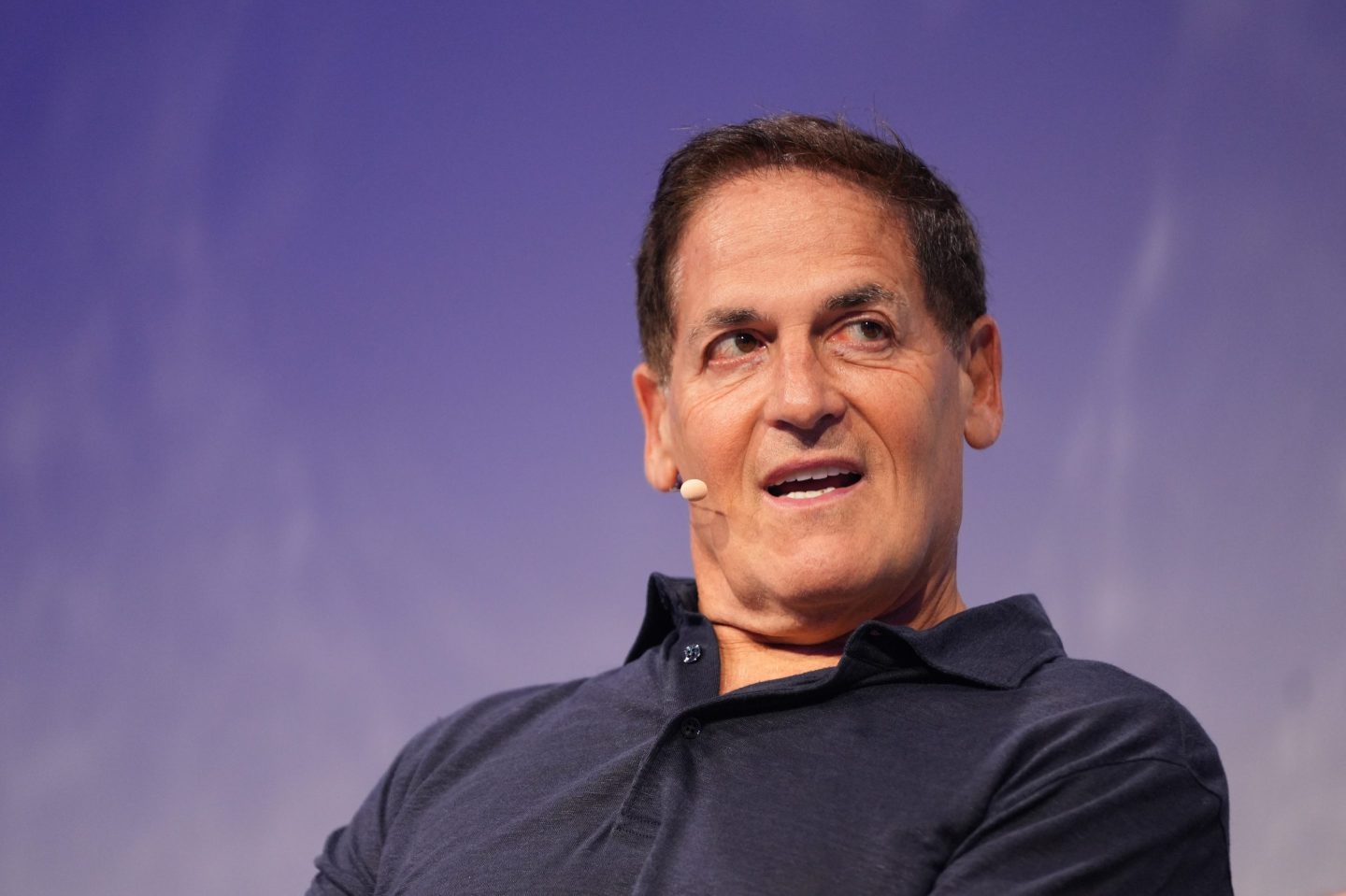
Mark Cuban, in front of a purple background, has his mouth open and is looking to his left.
Successcompensation
Mark Cuban says he has the solution to growing income inequality, and it’s to reward every employee—from CEO to janitor—with company stock
By Sasha RogelbergJuly 20, 2026
3 hours ago
The Treasury is walking a tightrope on U.S. debt by relying so much on short-term rates that are at the mercy of a suddenly very hawkish Fed
EconomyDebt
The Treasury is walking a tightrope on U.S. debt by relying so much on short-term rates that are at the mercy of a suddenly very hawkish Fed
By Jason MaJuly 20, 2026
4 hours ago
Types of mortgage loans: A guide to choosing the right one
Real Estatemortgages
Types of mortgage loans: A guide to choosing the right one
By Joseph HostetlerJuly 20, 2026
5 hours ago
Ferran Torres
SuccessWorld Cup
Spain’s Ferran Torres scored the winning goal in the World Cup—but just four years ago, he was in therapy and stuck in a ‘bottomless pit’
By Emma BurleighJuly 20, 2026
5 hours ago

Most Popular

'Dr. Doom' Nouriel Roubini says we're headed for universal basic income or 'some form of socialism' as AI revolutionizes work—He calls that optimistic
AI
'Dr. Doom' Nouriel Roubini says we're headed for universal basic income or 'some form of socialism' as AI revolutionizes work—He calls that optimistic
By Jason MaJuly 18, 2026
2 days ago
‘I want to die broke’: Billionaire philanthropist Denny Sanford dies after giving away $4 billion
Success
‘I want to die broke’: Billionaire philanthropist Denny Sanford dies after giving away $4 billion
By Sydney LakeJuly 20, 2026
7 hours ago
Power companies are using eminent domain to seize land for data centers as 70% of Americans say not in my backyard
AI
Power companies are using eminent domain to seize land for data centers as 70% of Americans say not in my backyard
By Aaron Walayat and The ConversationJuly 19, 2026
2 days ago
Red Lobster’s 37-year-old CEO waited tables before joining the C-suite—he says it was a crash course in managing ‘difficult people and situations’
Success
Red Lobster’s 37-year-old CEO waited tables before joining the C-suite—he says it was a crash course in managing ‘difficult people and situations’
By Preston ForeJuly 19, 2026
2 days ago
Warren Buffett says his $147 billion investing career was an accident: ‘I may be one of the 10 luckiest in the world’
Future of Work
Warren Buffett says his $147 billion investing career was an accident: ‘I may be one of the 10 luckiest in the world’
By Sarah GlodekJuly 20, 2026
14 hours ago
It’s not just Taco Bell lettuce and possible glass in Pillsbury rolls: Food and drink recall events reached a 6-year year-over-year high
Retail
It’s not just Taco Bell lettuce and possible glass in Pillsbury rolls: Food and drink recall events reached a 6-year year-over-year high
By Sasha RogelbergJuly 20, 2026
11 hours ago

© 2026 Fortune Media IP Limited. All Rights Reserved. Use of this site constitutes acceptance of our Terms of Use and Privacy Policy | CA Notice at Collection and Privacy Notice | Do Not Sell/Share My Personal Information
FORTUNE is a trademark of Fortune Media IP Limited, registered in the U.S. and other countries. FORTUNE may receive compensation for some links to products and services on this website. Offers may be subject to change without notice.