• Home
  • Latest
  • Fortune 500
  • Finance
  • Tech
  • Leadership
  • Lifestyle
  • Rankings
  • Multimedia
CommentaryCommentary

What Cuba’s new investors can learn from Coca-Cola

By
Nicola Persico
Nicola Persico
Down Arrow Button Icon
By
Nicola Persico
Nicola Persico
Down Arrow Button Icon
January 5, 2015, 10:33 AM ET
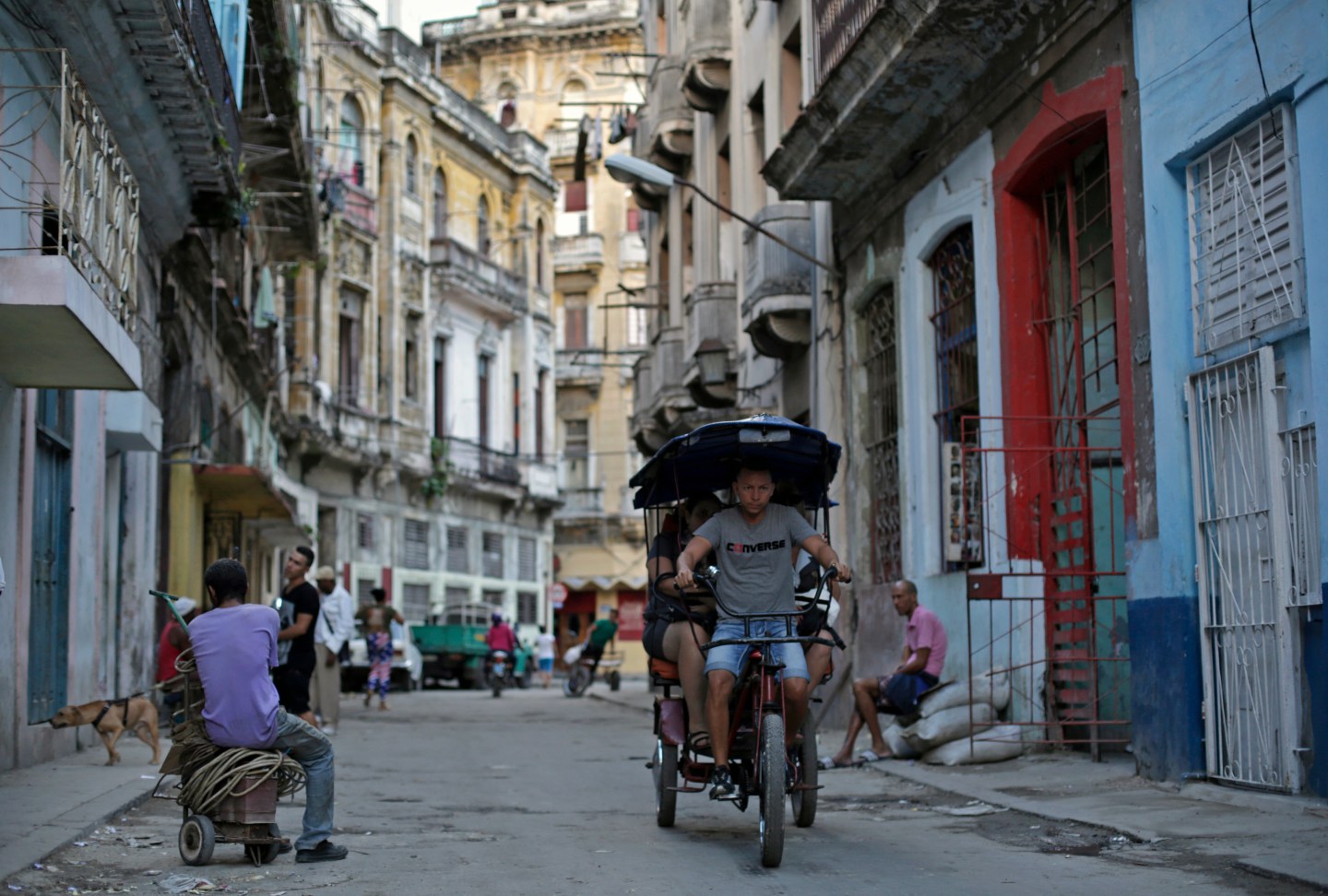
A man fetches passengers on his tricycle taxi in Havana
A man fetches passengers on his tricycle taxi in Havana December 17, 2014. REUTERS/Enrique De La Osa (CUBA - Tags: SOCIETY) - RTR4IH4SPhotograph by Enrique de la Osa — Reuters

President Obama’s move last month to start normalizing relations with Cuba is historic in many ways, particularly for U.S. businesses looking to do business in the communist island. After decades of isolation and investment sanctions, Cuba has had little experience with how to harness competitive markets. Going forward, the Cuban government will have to make many choices about what private activities it will allow in its borders and how it wants to regulate them. Cuba will also have to invest in reforming its courts and laws regulating all aspects of its economy — a confusing process that could take years to complete.

While officials work these details out, it’s hard to imagine that companies will merely sit by the sidelines. True, obtaining a license to operate will be challenging for some businesses, but there are also opportunities for executives to help Cuba re-write the rules of doing business in its new economy. To succeed, companies must broaden the focus of their business strategy. Executives must understand that they need to create value for the Cuban economy overall. This can be done by creating relationships with local regulators, establish a strong reputation with customers, and form broad coalitions of local interests.

Coca-Cola’s entry into Myanmar in 2013 illustrates the challenges and opportunities that businesses could very well face. Like Cuba, international sanctions banned Coke (KO) from doing business in Myanmar. Government regulations protected local companies in the soft drinks market. Coke was scrutinized for dealing with a repressive military regime, but eventually, it was able to obtain its license to operate by investing and partnering with local businesses.To create local jobs, Coke invested in a new bottling plant. The company also launched a project to provide financial education to 25,000 women living in rural areas; it partnered with a local bottler; created codes of business conduct for itself and its suppliers regulating employment practices, land acquisition, water use, etc.

Taken together, such efforts helped Coke build trust with lawmakers in Myanmar and those efforts eventually helped the company get its license to operate. But there is more. By officially and credibly reporting its actions, Coke implicitly established a set of “best practices” for foreign investors. In other words, the helped company establish rules that other foreign companies can follow.

Today, Coke has secured more than half of Myanmar’s soft drinks market. This success is built on a cornerstone: a license to operate, which was won by looking beyond products and markets, to the arenas where rules are made.

Is there a lesson here for the Cuban market? I believe so. Companies looking to enter Cuba cannot afford to sit out the rule-making game, because their competitors will play it. Smaller companies will need to play the game too — perhaps through industry trade associations. Those firms who are able to broaden their strategy “beyond markets” will be the winners in the new Cuban economy. In the words of Robert Galvin, legendary CEO of Motorola: “We have helped write national laws of countries where we have engaged, always in a respectful way. [ …] With the right rules of the game, one’s opportunity for success is enhanced.”

Nicola Persico is a Professor of Managerial Economics and Decision Sciences at Kellogg School of Management at Northwestern University. He is also the Director of the Center for Mathematical Studies in Economics & Management.

About the Author
By Nicola Persico
See full bioRight Arrow Button Icon

Latest in Commentary

Julian Braithwaite is the Director General of the International Alliance for Responsible Drinking
CommentaryProductivity
Gen Z is drinking 20% less than Millennials. Productivity is rising. Coincidence? Not quite
By Julian BraithwaiteDecember 13, 2025
3 hours ago
carbon
Commentaryclimate change
Banking on carbon markets 2.0: why financial institutions should engage with carbon credits
By Usha Rao-MonariDecember 13, 2025
4 hours ago
Dr. Javier Cárdenas is the director of the Rockefeller Neuroscience Institute NeuroPerformance Innovation Center.
Commentaryconcussions
Fists, not football: There is no concussion protocol for domestic violence survivors
By Javier CárdenasDecember 12, 2025
1 day ago
Gary Locke is the former U.S. ambassador to China, U.S. secretary of commerce, and governor of Washington.
CommentaryChina
China is winning the biotech race. Patent reform is how we catch up
By Gary LockeDecember 12, 2025
1 day ago
millennial
CommentaryConsumer Spending
Meet the 2025 holiday white whale: the millennial dad spending $500+ per kid
By Phillip GoerickeDecember 12, 2025
1 day ago
Sarandos
CommentaryAntitrust
Netflix, Warner, Paramount and antitrust: Entertainment megadeal’s outcome must follow the evidence, not politics or fear of integration
By Satya MararDecember 12, 2025
1 day ago

Most Popular

placeholder alt text
Economy
Tariffs are taxes and they were used to finance the federal government until the 1913 income tax. A top economist breaks it down
By Kent JonesDecember 12, 2025
1 day ago
placeholder alt text
Success
Apple cofounder Ronald Wayne sold his 10% stake for $800 in 1976—today it’d be worth up to $400 billion
By Preston ForeDecember 12, 2025
1 day ago
placeholder alt text
Success
40% of Stanford undergrads receive disability accommodations—but it’s become a college-wide phenomenon as Gen Z try to succeed in the current climate
By Preston ForeDecember 12, 2025
1 day ago
placeholder alt text
Economy
For the first time since Trump’s tariff rollout, import tax revenue has fallen, threatening his lofty plans to slash the $38 trillion national debt
By Sasha RogelbergDecember 12, 2025
21 hours ago
placeholder alt text
Economy
The Fed just ‘Trump-proofed’ itself with a unanimous move to preempt a potential leadership shake-up
By Jason MaDecember 12, 2025
20 hours ago
placeholder alt text
Success
At 18, doctors gave him three hours to live. He played video games from his hospital bed—and now, he’s built a $10 million-a-year video game studio
By Preston ForeDecember 10, 2025
3 days ago
Rankings
  • 100 Best Companies
  • Fortune 500
  • Global 500
  • Fortune 500 Europe
  • Most Powerful Women
  • Future 50
  • World’s Most Admired Companies
  • See All Rankings
Sections
  • Finance
  • Leadership
  • Success
  • Tech
  • Asia
  • Europe
  • Environment
  • Fortune Crypto
  • Health
  • Retail
  • Lifestyle
  • Politics
  • Newsletters
  • Magazine
  • Features
  • Commentary
  • Mpw
  • CEO Initiative
  • Conferences
  • Personal Finance
  • Education
Customer Support
  • Frequently Asked Questions
  • Customer Service Portal
  • Privacy Policy
  • Terms Of Use
  • Single Issues For Purchase
  • International Print
Commercial Services
  • Advertising
  • Fortune Brand Studio
  • Fortune Analytics
  • Fortune Conferences
  • Business Development
About Us
  • About Us
  • Editorial Calendar
  • Press Center
  • Work At Fortune
  • Diversity And Inclusion
  • Terms And Conditions
  • Site Map

© 2025 Fortune Media IP Limited. All Rights Reserved. Use of this site constitutes acceptance of our Terms of Use and Privacy Policy | CA Notice at Collection and Privacy Notice | Do Not Sell/Share My Personal Information
FORTUNE is a trademark of Fortune Media IP Limited, registered in the U.S. and other countries. FORTUNE may receive compensation for some links to products and services on this website. Offers may be subject to change without notice.