• Home
  • Latest
  • Fortune 500
  • Finance
  • Tech
  • Leadership
  • Lifestyle
  • Rankings
  • Multimedia

Trendingnow

1

Jensen Huang made his $172 billion fortune on AI chips. His family's $75 million gift to Vanderbilt argues art decides what technology is for

2

'The demographic dividend of the last 40 years is ending': J.P. Morgan says the world is running out of the two things that kept interest rates down

3

The $39 trillion U.S. national debt isn’t as high as Japan’s and Singapore’s relative to economy size—and yet it's still worse somehow

1

Jensen Huang made his $172 billion fortune on AI chips. His family's $75 million gift to Vanderbilt argues art decides what technology is for

2

'The demographic dividend of the last 40 years is ending': J.P. Morgan says the world is running out of the two things that kept interest rates down

3

The $39 trillion U.S. national debt isn’t as high as Japan’s and Singapore’s relative to economy size—and yet it's still worse somehow
The Cloud Series

Regin, a new piece of spyware, said to infect telecom, energy, airline industries

By
DJ Summers
DJ Summers
Down Arrow Button Icon
By
DJ Summers
DJ Summers
Down Arrow Button Icon
November 23, 2014, 12:00 PM ET
185288188
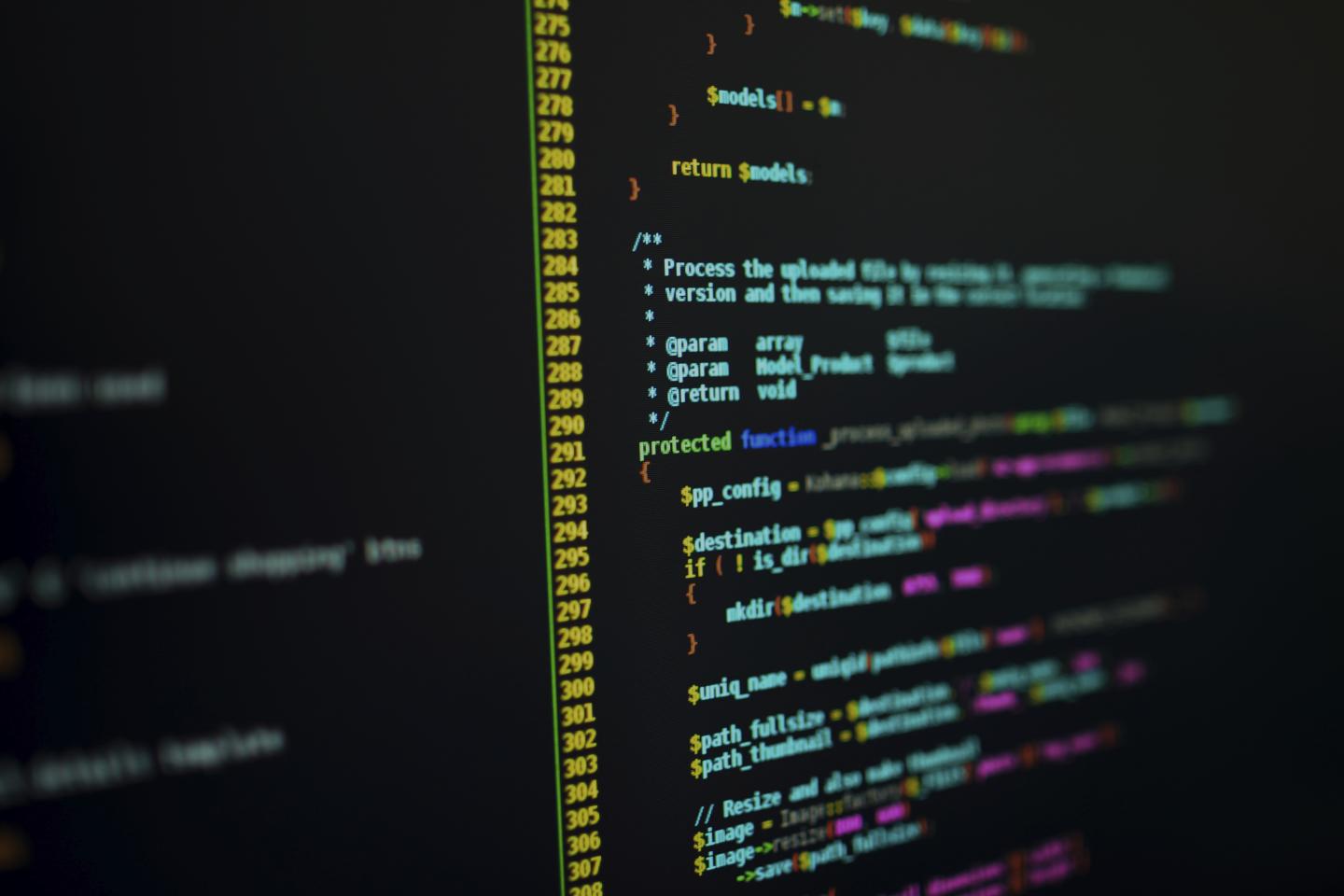
PHP CodePhotograph by Scott Cartwright — Getty Images
Add Fortune on Google for similar content.

The cyber security firm Symantec on Sunday revealed that a malicious new piece of software is collecting information on individuals, companies, and government entities without their knowledge.

The malware, called Regin, is considered to be a mass surveillance and data collection tool (sometimes referred to as “spyware”). Its purpose and origin is still unclear, Symantec said, but researchers believe that the program is the work of a nation-state.

“We believe Regin is used primarily for espionage,” said Liam O’Murchu, a security researcher at Symantec. “We see both companies and individuals targeted. The ultimate goal is to listen in on phone calls or something like that. [Regin’s operators] target individuals and spread the attack to find whatever it is they’re looking for. All of these things together make us think that a government wrote it.”

Symantec (SYMC) said Regin (pronounced “re-gen,” as in “regenerate”) monitors its targets with a rarely-seen level of sophistication. Internet service providers and telecommunications companies make up the bulk of the those that are initially infected, researchers said. Regin then targets individuals of interest—in the hospitality, energy, research, and airline industries, among others—that are served by those ISPs. Regin’s operators continue to use infected companies as a springboard to gain access to more individuals. Once they gain access, they can remotely control a person’s keyboard, monitor Internet activity, and recover deleted files.

More than half of observed attacks have targeted Russia and Saudi Arabia, Symantec said. The rest are scattered across Europe, Central America, Africa, and Asia. The initial infection can come from a wide variety of sources, such as copies of popular websites or web browsers and USB drives that have been plugged into contaminated systems.

Regin has five attack stages. It begins with an initial “drop,” also called a Trojan horse (or “backdoor”) breach, that allows it to exploit a security vulnerability while avoiding detection. The first stage deploys what is called a loader, which prepares and executes the next stage; the second stage does the same to complicate detection. The third and fourth stages, called kernels, build a framework for the fifth and final stage, called the payload. That’s when it can wrest control of a computer or leap to a new victim.

Each stage prepares and executes the next, rather than deploy from a common framework. It’s similar in concept to Russian nesting dolls. Regin’s distributed structure makes it difficult for cyber security researchers to identify it without capturing information about all five stages.

The malware is made up of a system of customizable modules so that it may collect the information it needs across a number of different victims. For example, one Regin attack might capture a password from a hotel clerk’s computer while another attack may obtain remote control of another computer’s keyboard for purposes unknown. Each module is customized for one task or system, making detection and prevention of a comprehensive Regin attack difficult.

“One of the problems we have with analyzing is we don’t have all the components,” O’Murchu said. “You only get the modules set on that [particular] victim. But we know there are far more modules than what we have here. We don’t have enough information to understand. On top of that, it’s coded in a very advanced way to leave a small footprint. Anything they leave behind is encrypted. Each part is dependent on having all the parts.”

This kind of operational complexity is typically reserved for a state or a state-sponsored actor, Symantec said. Only a handful of malware programs to date have demonstrated such sophistication. In 2012, the Flamer malware used the same modular system to hit targets in the West Bank of Palestine, Hungary, Iran, and Lebanon, among other countries. Regin’s multi-stage attack pattern operates similarly to the Duqu malware and its descendent Stuxnet, the malware responsible for the disruption of Iranian nuclear facilities in 2010. O’Murchu said Regin is part of a disquieting trend of government-written and government-enacted malware.

“We often say that Stuxnet opened Pandora’s box,” O’Murchu says. “Whether that is because we know what to look for now or because there has been a genuine increase since Stuxnet is up for debate, but what we can say is that yes, we now know about a lot more scary government malware than before. It is far more pervasive, it is embedded in more organizations than we have ever seen, it is more organized than ever, and it is more capable than ever. I would say there has been an explosion in government related malware, and it doesn’t seem to be going away anytime soon.”

What makes Regin different is who it attacks. Instead of going only after high-worth targets, Regin attacks many different targets in an attempt to piece together contextual information. Of the 9% of Regin attacks in the hospitality industry, 4% targeted low-level computers, presumably for this information.

“The average person needs to be aware,” O’Murchu says. “A lot of the infections are not the final target. They are third parties providing some extra information to get to a final target. Lot of people think, ‘I don’t have anything of importance, why would anyone get on my computer?’ Ordinary people who may not think they’re targets in fact are.”

About the Author
By DJ Summers
See full bioRight Arrow Button Icon
Add Fortune on Google for similar content.

Latest in

Finance
Lorem ipsum dolor sit amet, consectetur adipiscing elit, sed do eiusmod tempor incididunt ut labore et dolore magna aliqua. Ut enim ad minim veniam
By Fortune Editors
October 20, 2025
Finance
Lorem ipsum dolor sit amet, consectetur adipiscing elit, sed do eiusmod tempor incididunt ut labore et dolore magna aliqua. Ut enim ad minim veniam
By Fortune Editors
October 20, 2025
Finance
Lorem ipsum dolor sit amet, consectetur adipiscing elit, sed do eiusmod tempor incididunt ut labore et dolore magna aliqua. Ut enim ad minim veniam
By Fortune Editors
October 20, 2025
Finance
Lorem ipsum dolor sit amet, consectetur adipiscing elit, sed do eiusmod tempor incididunt ut labore et dolore magna aliqua. Ut enim ad minim veniam
By Fortune Editors
October 20, 2025
Finance
Lorem ipsum dolor sit amet, consectetur adipiscing elit, sed do eiusmod tempor incididunt ut labore et dolore magna aliqua. Ut enim ad minim veniam
By Fortune Editors
October 20, 2025
Finance
Lorem ipsum dolor sit amet, consectetur adipiscing elit, sed do eiusmod tempor incididunt ut labore et dolore magna aliqua. Ut enim ad minim veniam
By Fortune Editors
October 20, 2025

Most Popular

Finance
Lorem ipsum dolor sit amet, consectetur adipiscing elit, sed do eiusmod tempor incididunt ut labore et dolore magna aliqua. Ut enim ad minim veniam
By Fortune Editors
October 20, 2025
Finance
Lorem ipsum dolor sit amet, consectetur adipiscing elit, sed do eiusmod tempor incididunt ut labore et dolore magna aliqua. Ut enim ad minim veniam
By Fortune Editors
October 20, 2025
Finance
Lorem ipsum dolor sit amet, consectetur adipiscing elit, sed do eiusmod tempor incididunt ut labore et dolore magna aliqua. Ut enim ad minim veniam
By Fortune Editors
October 20, 2025
Finance
Lorem ipsum dolor sit amet, consectetur adipiscing elit, sed do eiusmod tempor incididunt ut labore et dolore magna aliqua. Ut enim ad minim veniam
By Fortune Editors
October 20, 2025
Finance
Lorem ipsum dolor sit amet, consectetur adipiscing elit, sed do eiusmod tempor incididunt ut labore et dolore magna aliqua. Ut enim ad minim veniam
By Fortune Editors
October 20, 2025
Finance
Lorem ipsum dolor sit amet, consectetur adipiscing elit, sed do eiusmod tempor incididunt ut labore et dolore magna aliqua. Ut enim ad minim veniam
By Fortune Editors
October 20, 2025
Fortune Secondary Logo
Rankings
  • 100 Best Companies
  • Fortune 500
  • Global 500
  • Fortune 500 Europe
  • Most Powerful Women
  • World's Most Admired Companies
  • See All Rankings
  • Lists Calendar
Sections
  • Finance
  • Fortune Crypto
  • Features
  • Leadership
  • Health
  • Commentary
  • Success
  • Retail
  • Mpw
  • Tech
  • Lifestyle
  • CEO Initiative
  • Asia
  • Politics
  • Conferences
  • Europe
  • Newsletters
  • Personal Finance
  • Environment
  • Magazine
  • Education
Customer Support
  • Frequently Asked Questions
  • Customer Service Portal
  • Privacy Policy
  • Terms Of Use
  • Single Issues For Purchase
  • International Print
Commercial Services
  • Advertising
  • Fortune Brand Studio
  • Fortune Analytics
  • Fortune Conferences
  • Business Development
  • Group Subscriptions
About Us
  • About Us
  • Press Center
  • Work At Fortune
  • Terms And Conditions
  • Site Map
  • About Us
  • Press Center
  • Work At Fortune
  • Terms And Conditions
  • Site Map
  • Facebook icon
  • Twitter icon
  • LinkedIn icon
  • Instagram icon
  • TikTok icon
  • YouTube icon

Latest in

Photo of ballots being counted and sorted
PoliticsElections
Nearly 150,000 California mail ballots rejected in June primary, a record high thanks to late-arriving ballots
By The Associated Press and MIchael R. BloodJuly 24, 2026
1 hour ago
Photo of the nun
North AmericaImmigration
Nun detained by ICE on her way to Mass speaks out for first time: ‘For me, a nun, not to go to Mass…it was very, very heartbreaking’
By The Associated Press, Valerie Gonzalez and Jamie StengleJuly 24, 2026
1 hour ago
Court illustration of the author testifying
LawTerrorism
Salman Rushdie describes a ‘lake of blood’ as his convicted attacker faces terrorism charges tied to the 2022 stabbing
By The Associated Press, John Wawrow and Jennifer PeltzJuly 24, 2026
1 hour ago
A gun lays on a table next to a row of ammunition.
Lawgun control
Two gun rights groups are suing the U.S. Virgin Islands over concealed carry for nonresidents
By The Associated Press and Danica CotoJuly 24, 2026
1 hour ago
Vice President JD Vance sits in on a meeting.
North AmericaJD Vance
The Secret Service is investigating a member of JD Vance’s detail over a suspected news leak
By The Associated PressJuly 24, 2026
1 hour ago
Google logo is displayed on a smartphone in front of the EU Flag.
CybersecurityGoogle
EU strikes Google with $1 billion fine in major crackdown on antitrust regulations even as Trump threatens retaliation
By The Associated Press and Sam McNeilJuly 24, 2026
1 hour ago

Most Popular

Jensen Huang made his $172 billion fortune on AI chips. His family's $75 million gift to Vanderbilt argues art decides what technology is for
Big Tech
Jensen Huang made his $172 billion fortune on AI chips. His family's $75 million gift to Vanderbilt argues art decides what technology is for
By Sydney LakeJuly 23, 2026
2 days ago
'The demographic dividend of the last 40 years is ending': J.P. Morgan says the world is running out of the two things that kept interest rates down
Economy
'The demographic dividend of the last 40 years is ending': J.P. Morgan says the world is running out of the two things that kept interest rates down
By Eleanor PringleJuly 24, 2026
14 hours ago
The $39 trillion U.S. national debt isn’t as high as Japan’s and Singapore’s relative to economy size—and yet it's still worse somehow
Economy
The $39 trillion U.S. national debt isn’t as high as Japan’s and Singapore’s relative to economy size—and yet it's still worse somehow
By Sasha RogelbergJuly 23, 2026
1 day ago
The millennial generation has split, new Fed research shows: Those over 35 are edging toward boomer-style wealth, while everyone else falls behind
Real Estate
The millennial generation has split, new Fed research shows: Those over 35 are edging toward boomer-style wealth, while everyone else falls behind
By Nick LichtenbergJuly 22, 2026
2 days ago
Spain lifted the World Cup, but the IRS still gets a cut of its $50 million pay day as players, coaches and refs all face complex U.S. “jock taxes”
Personal Finance
Spain lifted the World Cup, but the IRS still gets a cut of its $50 million pay day as players, coaches and refs all face complex U.S. “jock taxes”
By Joshua HongJuly 23, 2026
2 days ago
Current price of oil as of July 24, 2026
Personal Finance
Current price of oil as of July 24, 2026
By Joseph HostetlerJuly 24, 2026
12 hours ago

© 2026 Fortune Media IP Limited. All Rights Reserved. Use of this site constitutes acceptance of our Terms of Use and Privacy Policy | CA Notice at Collection and Privacy Notice | Do Not Sell/Share My Personal Information
FORTUNE is a trademark of Fortune Media IP Limited, registered in the U.S. and other countries. FORTUNE may receive compensation for some links to products and services on this website. Offers may be subject to change without notice.