
• Home
  • Latest
  • Fortune 500
  • Finance
  • Tech
  • Leadership
  • Lifestyle
  • Rankings
  • Multimedia

Trendingnow

1

Farm groups saved Bayer in court over RoundUp cancer claims. Five days later, Bayer called for tariffs on the ingredient farmers rely on

2

U.S. Treasury has borrowed $155 billion every month of this fiscal year—and is now paying $24 billion a week in interest on its debts

3

Billionaire MacKenzie Scott just donated $20 million to support America’s youth mental health, as a fifth of teens struggle with suicidal thoughts

1

Farm groups saved Bayer in court over RoundUp cancer claims. Five days later, Bayer called for tariffs on the ingredient farmers rely on

2

U.S. Treasury has borrowed $155 billion every month of this fiscal year—and is now paying $24 billion a week in interest on its debts

3

Billionaire MacKenzie Scott just donated $20 million to support America’s youth mental health, as a fifth of teens struggle with suicidal thoughts
FinanceInvesting

Don’t count on a soft landing for stocks

Shawn Tully
By
Shawn Tully
Shawn Tully
Senior Editor-at-Large
Down Arrow Button Icon
Shawn Tully
By
Shawn Tully
Shawn Tully
Senior Editor-at-Large
Down Arrow Button Icon
October 8, 2014, 4:32 PM ET
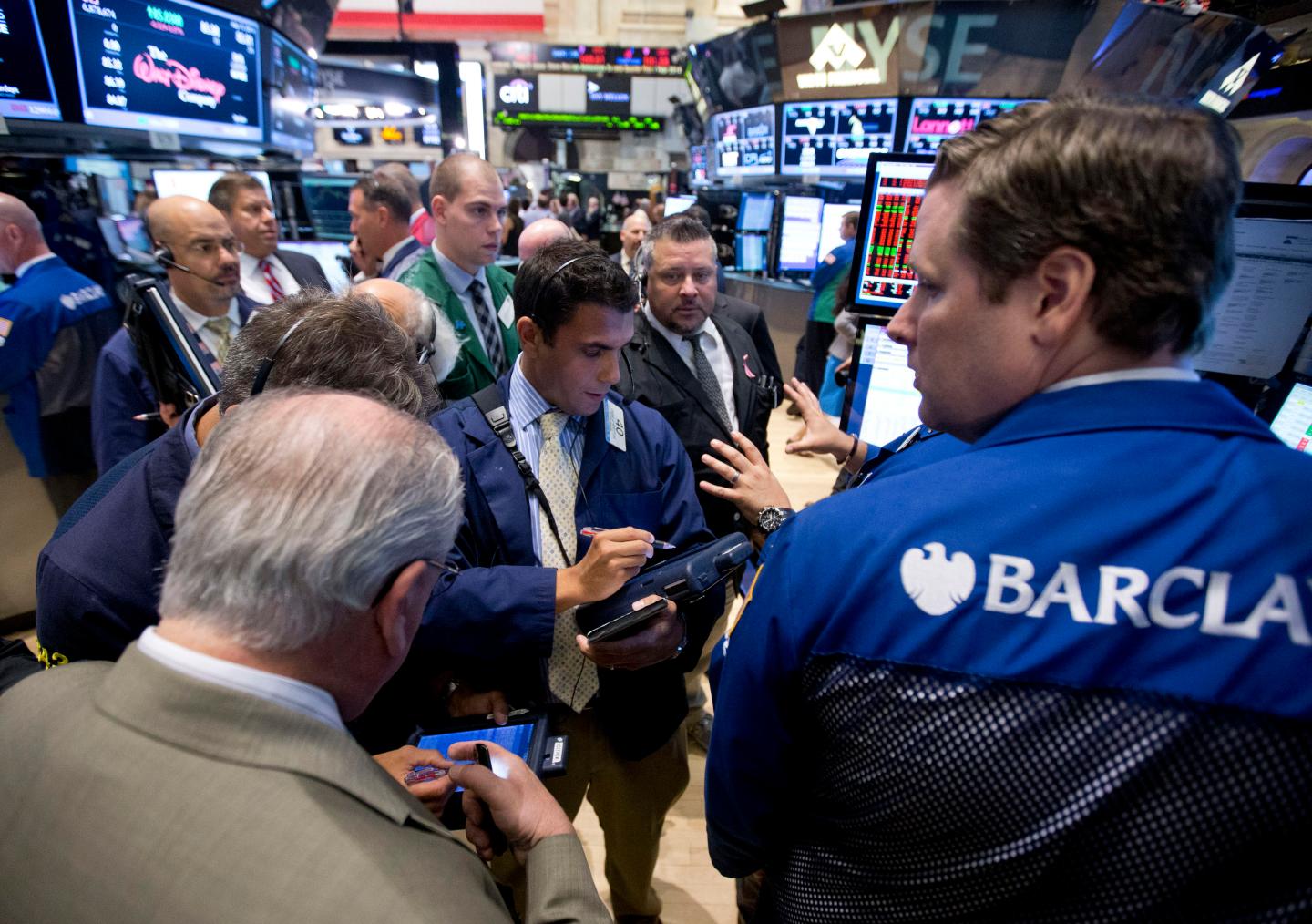
Traders At The NYSE React To Malaysian Airliner Crash In Ukraine
Traders work on the floor of the New York Stock Exchange (NYSE) in New York, U.S., on Thursday, July 17, 2014. U.S. stocks fell while Treasuries rallied with gold after the crash of a passenger jet in Ukraine sparked demand for haven assets on concerns tensions may escalate. Sanctions against Russia intended to curb violence in the region sent European markets lower. Photographer: Jin Lee/Bloomberg via Getty ImagesPhotograph by Jin Lee — Bloomberg/Getty Images
Add Fortune on Google for similar content.

The recent stock market selloff has investors worried that equities are overpriced, maybe extremely overpriced.

If that’s the case—and all measures suggest that it is—what trajectory is the eventual selloff likely to take? Forget about a soft-landing scenario.

On Wednesday, the Dow Jones Industrial Average jumped by 274 points. But bear in mind, stocks usually don’t crash in a day, or a month. Nevertheless, the damage comes fast. When stocks are this pricey, history tells us that prices swirl downwards in a continuous whirlpool that usually lasts about a year and goes to extremes, driving valuations well below rational levels. First everyone believes equities are a great deal, then no one believes. Eventually, the panic makes stocks a bargain once again.

But don’t count on a benign, downward drift of 10% or 15%, just enough to bring the kind of “healthy correction” and “new buying opportunity” that equity strategists are always touting. When you start from these levels, the fall is more often brutal than soft.

Since 1876, U.S. stocks have experienced eight contractions that hammered prices from between 30% to 60%, in round numbers. In the post-World War II era, where we have complete data, the crashes tended to follow similar patterns: Equities peaked with extremely high PEs, as measured by the Shiller Cyclically Adjusted Price-Earnings ratio (or CAPE), which adjusts for big swings in earnings that can greatly distort PEs based on today’s highly erratic profits. Dividend yields also tend to be far below average when selloffs commence. That’s a good description of where the market stands right now.

A review of these major crashes offers a guide on what we can expect. Generally, the downdrafts last around a year, and seldom continue for more than 18 months, with the glaring exception of the Great Depression.

Using data beginning in 1871, the first big bust came in the mid-Victorian period. From mid-1876 to mid-1877, stock prices tumbled 35% in a 13-month stretch. It was another three decades before investors suffered steep losses again. From January 1906 to January 1907, the S&P lost 37.7%. Another crash lasted from November 1916 to November 1917, slashing prices by 31%.

The Great Depression broke the tradition of yearlong busts. From September 1929 to June 1932—a period of 33 months—the S&P contracted by 85%. It’s worth noting that at the start of that long descent, the Shiller PE stood at 33, its highest level to that date and twice its previous average. The dividend yield was also unusually low for the era, at around 3%.

Stocks rebounded strongly until March 1937, when the CAPE tripled from its lows to 22. Over the next 11 months, stocks cratered by 45.3%.

From the end of World War II until the late 1960s, stocks enjoyed a magical run, interspersed with only minor corrections. Then, from May 1969 through May 1970, shares fell by 27.6%. The starting Shiller PE: an elevated 21, around 30% above the then-historic average of 16.

The OPEC oil crisis brought the longest market crash since the Great Depression. From January 1973 to September 1974, a span of 21 months, the S&P fell by 42.5%. This time, it was the tripling of oil prices and its damage to the economy, rather than overpriced stocks—the CAPE started out at 19—that prompted the collapse.

Surprisingly, the Black Friday dive of October 19, 1987, was more severe for being sudden than big. From September 1987 to April 1988, the S&P dropped by 19.7% and then rebounded quickly. The CAPE at the start was hardly signaling rough times ahead. It stood at around 18—above average, but hardly alarming. Nor was there cause for great concern, despite the short-lived carnage of Black Friday.

In fact, Black Friday is an exception to the rule that big selloffs persist for around a year. That’s hardly comforting. During those 12 to 18-month spans, stocks generally swoon straight downwards, often falling a few percentage points a month.

The next crunch came in September 2000 with the bursting of the dot-com bubble. It was really two separate crashes. In September, the Shiller PE was flashing red at an incredible 42, near an all-time record. Over the next 11 months, stock prices shrank by 29%. That selloff wasn’t sufficient. The S&P snapped back until March 2002, sending the CAPE back over 30. A second selloff took shares down another 27.5% to the low point of February 2003.

The pain is still fresh from the cataclysm that struck in October 2007. Stocks dropped, more or less in a straight line, until March 2009, a period of 17 months. When the din subsided, shareholders had lost 51% of their money. Once again, the Shiller PE was dangerously high at the start of the trouble, standing at 27.3. And the dividend yield was a puny 1.75%. Suddenly, investors decided they weren’t getting paid nearly enough for the danger of holding volatile shares that had just decimated many a nest egg.

Right now, the CAPE of 26 tells us that stocks are pricey­­—unless you think equities aren’t particularly risky. It also doesn’t help that the dividend yield is far, far below its historic norm at 2%.

We don’t know if a crash is imminent, or if investors are happy with low yields and the modest capital gains that, at best, they can expect at these prices. It could break either way. But if a crash is coming, it will probably mirror those of the past. Most if not all of the damage will come in around 12 months. Prices will pretty much go straight down. Don’t look for “buying opportunities” in the infrequent lulls. What’s encouraging is that the selloff will be overblown. Just look at the aftermath of 2007: By early 2009, the CAPE had dropped to 13. That was no soft landing. And that was the time to buy.

About the Author
Shawn Tully
By Shawn TullySenior Editor-at-Large

Shawn Tully is a senior editor-at-large at Fortune, covering the biggest trends in business, aviation, politics, and leadership.

See full bioRight Arrow Button Icon
Add Fortune on Google for similar content.

Latest in Finance

Finance
Lorem ipsum dolor sit amet, consectetur adipiscing elit, sed do eiusmod tempor incididunt ut labore et dolore magna aliqua. Ut enim ad minim veniam
By Fortune Editors
October 20, 2025
Finance
Lorem ipsum dolor sit amet, consectetur adipiscing elit, sed do eiusmod tempor incididunt ut labore et dolore magna aliqua. Ut enim ad minim veniam
By Fortune Editors
October 20, 2025
Finance
Lorem ipsum dolor sit amet, consectetur adipiscing elit, sed do eiusmod tempor incididunt ut labore et dolore magna aliqua. Ut enim ad minim veniam
By Fortune Editors
October 20, 2025
Finance
Lorem ipsum dolor sit amet, consectetur adipiscing elit, sed do eiusmod tempor incididunt ut labore et dolore magna aliqua. Ut enim ad minim veniam
By Fortune Editors
October 20, 2025
Finance
Lorem ipsum dolor sit amet, consectetur adipiscing elit, sed do eiusmod tempor incididunt ut labore et dolore magna aliqua. Ut enim ad minim veniam
By Fortune Editors
October 20, 2025
Finance
Lorem ipsum dolor sit amet, consectetur adipiscing elit, sed do eiusmod tempor incididunt ut labore et dolore magna aliqua. Ut enim ad minim veniam
By Fortune Editors
October 20, 2025

Most Popular

Finance
Lorem ipsum dolor sit amet, consectetur adipiscing elit, sed do eiusmod tempor incididunt ut labore et dolore magna aliqua. Ut enim ad minim veniam
By Fortune Editors
October 20, 2025
Finance
Lorem ipsum dolor sit amet, consectetur adipiscing elit, sed do eiusmod tempor incididunt ut labore et dolore magna aliqua. Ut enim ad minim veniam
By Fortune Editors
October 20, 2025
Finance
Lorem ipsum dolor sit amet, consectetur adipiscing elit, sed do eiusmod tempor incididunt ut labore et dolore magna aliqua. Ut enim ad minim veniam
By Fortune Editors
October 20, 2025
Finance
Lorem ipsum dolor sit amet, consectetur adipiscing elit, sed do eiusmod tempor incididunt ut labore et dolore magna aliqua. Ut enim ad minim veniam
By Fortune Editors
October 20, 2025
Finance
Lorem ipsum dolor sit amet, consectetur adipiscing elit, sed do eiusmod tempor incididunt ut labore et dolore magna aliqua. Ut enim ad minim veniam
By Fortune Editors
October 20, 2025
Finance
Lorem ipsum dolor sit amet, consectetur adipiscing elit, sed do eiusmod tempor incididunt ut labore et dolore magna aliqua. Ut enim ad minim veniam
By Fortune Editors
October 20, 2025
Fortune Secondary Logo
Rankings
  • 100 Best Companies
  • Fortune 500
  • Global 500
  • Fortune 500 Europe
  • Most Powerful Women
  • World's Most Admired Companies
  • See All Rankings
  • Lists Calendar
Sections
  • Finance
  • Fortune Crypto
  • Features
  • Leadership
  • Health
  • Commentary
  • Success
  • Retail
  • Mpw
  • Tech
  • Lifestyle
  • CEO Initiative
  • Asia
  • Politics
  • Conferences
  • Europe
  • Newsletters
  • Personal Finance
  • Environment
  • Magazine
  • Education
Customer Support
  • Frequently Asked Questions
  • Customer Service Portal
  • Privacy Policy
  • Terms Of Use
  • Single Issues For Purchase
  • International Print
Commercial Services
  • Advertising
  • Fortune Brand Studio
  • Fortune Analytics
  • Fortune Conferences
  • Business Development
  • Group Subscriptions
About Us
  • About Us
  • Press Center
  • Work At Fortune
  • Terms And Conditions
  • Site Map
  • About Us
  • Press Center
  • Work At Fortune
  • Terms And Conditions
  • Site Map
  • Facebook icon
  • Twitter icon
  • LinkedIn icon
  • Instagram icon
  • Pinterest icon

Latest in Finance

Meet ‘Freedom Fuel Network’ stations, a new chain with cheaper gas and mysterious origins
EnergyDonald Trump
Meet ‘Freedom Fuel Network’ stations, a new chain with cheaper gas and mysterious origins
By Joshua HongJuly 10, 2026
2 hours ago
Billionaires warned New York would scare off business. Anthropic and Airbnb just made their biggest bets on the city yet
Real EstateAnthropic
Billionaires warned New York would scare off business. Anthropic and Airbnb just made their biggest bets on the city yet
By Mia OsmonbekovJuly 10, 2026
3 hours ago
This summer’s hottest IPOs are minting a new class of ultra-high-net-worth ‘IPO Bros’—and family offices are changing how they approach them
SuccessIPOs
This summer’s hottest IPOs are minting a new class of ultra-high-net-worth ‘IPO Bros’—and family offices are changing how they approach them
By Catherina GioinoJuly 10, 2026
4 hours ago
What is uninsured motorist coverage and do you need it?
Personal FinanceInsurance
What is uninsured motorist coverage and do you need it?
By Joseph HostetlerJuly 10, 2026
6 hours ago
Top Iranian officials admitted to the supreme leader that the U.S. naval blockade was crushing the economy, report says, as Trump eyes reimposing it
Middle EastIran
Top Iranian officials admitted to the supreme leader that the U.S. naval blockade was crushing the economy, report says, as Trump eyes reimposing it
By Jason MaJuly 10, 2026
7 hours ago
Asian businessman using a laptop
SuccessCareers
One Wall Street firm is paying its Gen Z interns fresh out of college $8,600 a week—more than the typical American makes in nearly two months
By Preston ForeJuly 10, 2026
8 hours ago

Most Popular

Farm groups saved Bayer in court over RoundUp cancer claims. Five days later, Bayer called for tariffs on the ingredient farmers rely on
Economy
Farm groups saved Bayer in court over RoundUp cancer claims. Five days later, Bayer called for tariffs on the ingredient farmers rely on
By Mia OsmonbekovJuly 9, 2026
1 day ago
U.S. Treasury has borrowed $155 billion every month of this fiscal year—and is now paying $24 billion a week in interest on its debts
Economy
U.S. Treasury has borrowed $155 billion every month of this fiscal year—and is now paying $24 billion a week in interest on its debts
By Eleanor PringleJuly 10, 2026
13 hours ago
Billionaire MacKenzie Scott just donated $20 million to support America’s youth mental health, as a fifth of teens struggle with suicidal thoughts
Success
Billionaire MacKenzie Scott just donated $20 million to support America’s youth mental health, as a fifth of teens struggle with suicidal thoughts
By Emma BurleighJuly 9, 2026
1 day ago
Top Iranian officials admitted to the supreme leader that the U.S. naval blockade was crushing the economy, report says, as Trump eyes reimposing it
Middle East
Top Iranian officials admitted to the supreme leader that the U.S. naval blockade was crushing the economy, report says, as Trump eyes reimposing it
By Jason MaJuly 10, 2026
7 hours ago
Self-made multimillionaire says Canadians 'give no money away' compared with Americans—research shows U.S. giving is more than twice as high
Success
Self-made multimillionaire says Canadians 'give no money away' compared with Americans—research shows U.S. giving is more than twice as high
By Preston ForeJuly 9, 2026
1 day ago
Current price of oil as of July 10, 2026
Personal Finance
Current price of oil as of July 10, 2026
By Joseph HostetlerJuly 10, 2026
13 hours ago

© 2026 Fortune Media IP Limited. All Rights Reserved. Use of this site constitutes acceptance of our Terms of Use and Privacy Policy | CA Notice at Collection and Privacy Notice | Do Not Sell/Share My Personal Information
FORTUNE is a trademark of Fortune Media IP Limited, registered in the U.S. and other countries. FORTUNE may receive compensation for some links to products and services on this website. Offers may be subject to change without notice.