• Home
  • Latest
  • Fortune 500
  • Finance
  • Tech
  • Leadership
  • Lifestyle
  • Rankings
  • Multimedia
FinanceAlibaba Group Inc.

The Wall Street fable behind Alibaba’s IPO

Shawn Tully
By
Shawn Tully
Shawn Tully
Senior Editor-at-Large
Down Arrow Button Icon
Shawn Tully
By
Shawn Tully
Shawn Tully
Senior Editor-at-Large
Down Arrow Button Icon
September 10, 2014, 3:10 PM ET
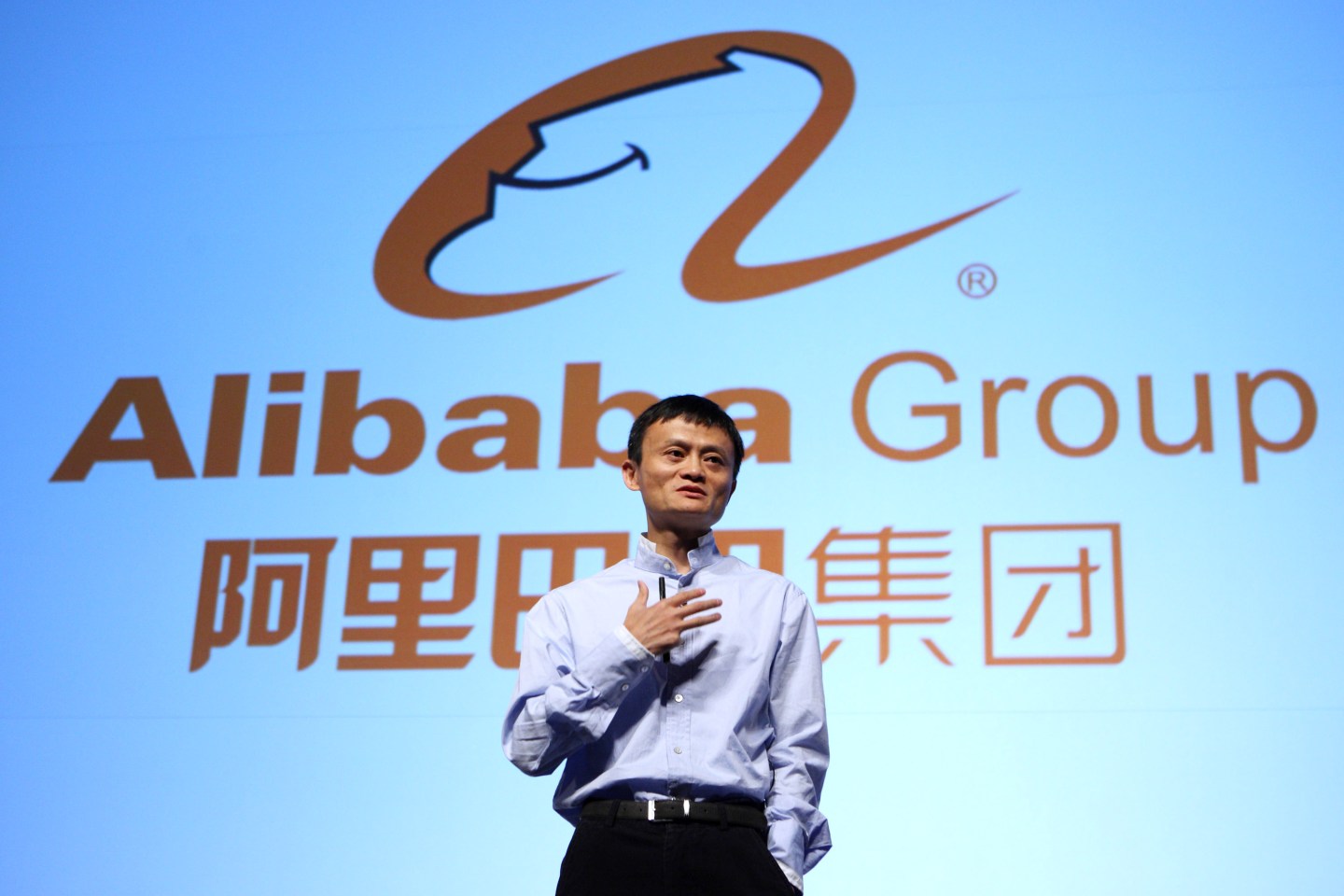
Alibaba Group Holdings Ltd. and Founder Jack Ma As Company Files for U.S. Initial Public Offering of E-Commerce Giant
FILE PHOTO: Jack Ma, chairman and then-chief executive officer of Alibaba Group Holding Ltd., speaks during a news conference in Tokyo, Japan, on Tuesday, June 1, 2010. Alibaba, which rode China's emergence as an economic superpower over the last 15 years to become a massive online marketplace for everything from forks to forklifts, filed today for what could become the largest U.S. initial public offering ever. Photographer: Tomohiro Ohsumi/Bloomberg via Getty ImagesTomohiro Ohsumi/Bloomberg—Getty Images

A friend who’s a major money manager—call him Oscar—recently related a story about just how intoxicating a big-pop IPO can be. On a flight from LA to New York a few years ago, Oscar was seated across the aisle from the CFO of a California company that had just gone public. “It was fantastic!” crowed the executive, his volume rising as he downed one gin and tonic after another. “Our stock jumped 30% the first day! That’s tens of millions of dollars!” As they deplaned, Oscar remarked to the stumbling CFO, “Wouldn’t your company be worth a lot more if you’d put those tens of millions in your treasury, instead of giving that money away?” The CFO suddenly turned reflective, as if he’d never heard of that idea—though it’s unlikely the facts stopped his binge of self-congratulation for long.

It now appears that BIG POP is working its intoxicating spell on Alibaba—soon to trade under the ticker (BABA). The road show for its forthcoming IPO is now in full swing, and its shares are reportedly proving a huge hit with institutional investors. Big fund managers, anticipating an overnight windfall, are reportedly requesting far more shares for their portfolios than Alibaba is selling at a price somewhere between $60 and $66 a share—the exact number will be determined on September 18, on the eve of its eagerly awaited debut.

What appears to be growing excess demand for Alibaba stock is likely to cause what it always causes: a steep rise in the share price in the first days of trading. That pop is one of Wall Street’s prized events. The term evokes images of exploding champagne corks, a sign of flush times in the markets—and if you believe what Wall Street is selling, the hallmark of a successful IPO.

In reality, a big first-day pop means that the underwriters have sold the shares too cheaply, at far below the price those institutional buyers were really willing to pay. The major beneficiaries are the famous Wall Street names and their commission-paying clients; the loser is the company that raises far less cash than if its shares had sold at market prices. What’s remarkable is that so many great companies voluntarily leave so many billions “on the table.” And it’s amazing how many supposedly sophisticated entrepreneurs are conned by the prospect. Especially since Wall Street has only the weakest rationale for selling it: Pin-striped bankers promise that those first-day price surges will make for great “publicity” for the newbie companies, and attract a coterie of loyal investors.

In reality, the only coterie it’s likely to attract is the crowd of celebrating bankers that night at Peter Luger’s.

Successful newly public companies don’t always start with a pop. Facebook’s (FB) shares famously dropped in early trading, meaning it raised more cash than it deserved at its 2012 debut. And it’s not certain that Alibaba’s shares will pop at all, once all is said and done. But to hear the hype surrounding what is likely to be the biggest IPO in tech history, it sure likes like Wall Streeters expect it to. Should that be the case, the amount of money Alibaba could forgo—and the size of the prize for Wall Street—are unprecedented.

To understand the jubilation among the fraternity of capital-markets types, let’s examine Alibaba’s plan, as revealed in its prospectus released on Sept. 5. The Chinese online and mobile commerce colossus is offering a maximum of 368 million shares for sale through six principal underwriters: Credit Suisse (CS), Morgan Stanley (MS), JPMorgan Chase (JPM), Goldman Sachs (GS), Citigroup (C), and Deutsche Bank (DB). If the shares sell at the top of the pricing range, at $66, the IPO would raise more than $24 billion, putting Alibaba’s market cap at $163 billion.

So what happens if the company’s shares pop 25% on Day One? They would then close at $82.50, handing the institutions that purchased them through the underwriters a gain of $16.50 a share. If Alibaba and insiders had gotten that real market price instead of $66, they would have collected an additional $6 billion. That’s right: $6 billion. As far as tips go, that’s a staggering sum. (Any waiter at Peter Luger would be thrilled to get it.) But a tip is what it is—because that’s what’s being left on the table.

The losers would divide into two categories. Large shareholders including Yahoo! and founder Jack Ma are selling as many as 219 million shares, so their portion of the foregone cash comes to about $3.6 billion. The company itself is selling the balance of the shares. Hence, it’s leaving around $2.4 billion on the table. It’s reasonable to assume that the same company with $2.4 billion more in cash is worth $2.4 billion more than the same company sans that cash. It’s therefore likely that Alibaba would sacrifice about 1.5% of its potential market value by allowing its shares to be 25% underpriced.

So who are the major winners? No surprise here: the Wall Street firms and their high-roller clients who get to buy the underpriced shares. It’s not in banking fees where the big money resides. “The underwriters wanted higher fees but Chinese companies and those outside the U.S. pay less for a given sized deal,” says Jay Ritter, a professor at the University of Florida. “This is also a high-profile deal that put Alibaba in a strong bargaining position.” The investment banks are garnering around $350 million in fees, or only around 1% of the proceeds, well below the norm on most IPOs.

No the cash payout to the bankers travels in a more circuitous route. These fabled Wall Street firms are handing their favorite clients $6 billion in quick profits. That’s around 10% of the total amount left on the table in the entire tech boom from 1999 to 2001. Investors, in turn, are very likely to repay the firms with big trading commissions in the days and weeks to come. The biggest such payers tend to be hedge funds, so hedge funds usually get the meatiest share allocations. Mutual funds that pay low commissions have less favored status.

The rule of thumb, says Ritter, is that Wall Street recoups 30% of the total windfall in commissions. That’s $1.8 billion. So including fees, Wall Street’s potential take mounts to well over $2.1 billion.

Of course, we don’t know if Alibaba will pop at all—or if so, by how much. But this is one of the great spectacles in the financial world. Wall Street is trying to work its intoxicating magic once again, and they’ve got folks who should know a lot better believing a tale no more believable than the Arabian Nights: the fables that brought us the first Alibaba.
About the Author
Shawn Tully
By Shawn TullySenior Editor-at-Large

Shawn Tully is a senior editor-at-large at Fortune, covering the biggest trends in business, aviation, politics, and leadership.

See full bioRight Arrow Button Icon

Latest in Finance

Finance
Lorem ipsum dolor sit amet, consectetur adipiscing elit, sed do eiusmod tempor incididunt ut labore et dolore magna aliqua. Ut enim ad minim veniam
By Fortune Editors
October 20, 2025
Finance
Lorem ipsum dolor sit amet, consectetur adipiscing elit, sed do eiusmod tempor incididunt ut labore et dolore magna aliqua. Ut enim ad minim veniam
By Fortune Editors
October 20, 2025
Finance
Lorem ipsum dolor sit amet, consectetur adipiscing elit, sed do eiusmod tempor incididunt ut labore et dolore magna aliqua. Ut enim ad minim veniam
By Fortune Editors
October 20, 2025
Finance
Lorem ipsum dolor sit amet, consectetur adipiscing elit, sed do eiusmod tempor incididunt ut labore et dolore magna aliqua. Ut enim ad minim veniam
By Fortune Editors
October 20, 2025
Finance
Lorem ipsum dolor sit amet, consectetur adipiscing elit, sed do eiusmod tempor incididunt ut labore et dolore magna aliqua. Ut enim ad minim veniam
By Fortune Editors
October 20, 2025
Finance
Lorem ipsum dolor sit amet, consectetur adipiscing elit, sed do eiusmod tempor incididunt ut labore et dolore magna aliqua. Ut enim ad minim veniam
By Fortune Editors
October 20, 2025

Most Popular

Finance
Lorem ipsum dolor sit amet, consectetur adipiscing elit, sed do eiusmod tempor incididunt ut labore et dolore magna aliqua. Ut enim ad minim veniam
By Fortune Editors
October 20, 2025
Finance
Lorem ipsum dolor sit amet, consectetur adipiscing elit, sed do eiusmod tempor incididunt ut labore et dolore magna aliqua. Ut enim ad minim veniam
By Fortune Editors
October 20, 2025
Finance
Lorem ipsum dolor sit amet, consectetur adipiscing elit, sed do eiusmod tempor incididunt ut labore et dolore magna aliqua. Ut enim ad minim veniam
By Fortune Editors
October 20, 2025
Finance
Lorem ipsum dolor sit amet, consectetur adipiscing elit, sed do eiusmod tempor incididunt ut labore et dolore magna aliqua. Ut enim ad minim veniam
By Fortune Editors
October 20, 2025
Finance
Lorem ipsum dolor sit amet, consectetur adipiscing elit, sed do eiusmod tempor incididunt ut labore et dolore magna aliqua. Ut enim ad minim veniam
By Fortune Editors
October 20, 2025
Finance
Lorem ipsum dolor sit amet, consectetur adipiscing elit, sed do eiusmod tempor incididunt ut labore et dolore magna aliqua. Ut enim ad minim veniam
By Fortune Editors
October 20, 2025
Fortune Secondary Logo
Rankings
  • 100 Best Companies
  • Fortune 500
  • Global 500
  • Fortune 500 Europe
  • Most Powerful Women
  • Future 50
  • World’s Most Admired Companies
  • See All Rankings
Sections
  • Finance
  • Fortune Crypto
  • Features
  • Leadership
  • Health
  • Commentary
  • Success
  • Retail
  • Mpw
  • Tech
  • Lifestyle
  • CEO Initiative
  • Asia
  • Politics
  • Conferences
  • Europe
  • Newsletters
  • Personal Finance
  • Environment
  • Magazine
  • Education
Customer Support
  • Frequently Asked Questions
  • Customer Service Portal
  • Privacy Policy
  • Terms Of Use
  • Single Issues For Purchase
  • International Print
Commercial Services
  • Advertising
  • Fortune Brand Studio
  • Fortune Analytics
  • Fortune Conferences
  • Business Development
  • Group Subscriptions
About Us
  • About Us
  • Editorial Calendar
  • Press Center
  • Work At Fortune
  • Diversity And Inclusion
  • Terms And Conditions
  • Site Map
Fortune Secondary Logo
  • About Us
  • Editorial Calendar
  • Press Center
  • Work At Fortune
  • Diversity And Inclusion
  • Terms And Conditions
  • Site Map
  • Facebook icon
  • Twitter icon
  • LinkedIn icon
  • Instagram icon
  • Pinterest icon

Latest in Finance

Trump sits and gestures.
PoliticsMiddle East
Trump threatens Spain with trade war after it refuses to roll over and lend its army bases to the Iran effort
By Fatima Hussein, Suman Naishadham and The Associated PressMarch 3, 2026
4 hours ago
A view of the liquefied natural gas (LNG) production facility in Qatar's Ras Laffan Industrial City. Photo: Stringer/dpa (Photo by Stringer/picture alliance via Getty Images)
EnergyIran
U.S. oil and gas exporters can’t fill the Middle East supply gap, but Trump’s pledge to insure and protect tankers stems the tide on surging prices
By Jordan BlumMarch 3, 2026
4 hours ago
Personal FinanceGold
What would $5,000 worth of gold purchased in 2016 be worth in 2026?
By Joseph HostetlerMarch 3, 2026
5 hours ago
Current price of Bitcoin for March 3, 2026
Personal FinanceBitcoin
Current price of Bitcoin for March 3, 2026
By Joseph HostetlerMarch 3, 2026
6 hours ago
Illustration of ships on fire
EconomyU.S. economy
Top economist says companies are close to a ‘Cortés moment’ on AI, referencing the conquistador who burned his boats and then invaded Mexico
By Nick LichtenbergMarch 3, 2026
7 hours ago
snow
North Americasnow
AI that you can get behind: Syracuse claims snow complaints have dropped 30% since it partnered with the right GPS tech firm
By Jeff McMurray and The Associated PressMarch 3, 2026
7 hours ago

Most Popular

placeholder alt text
Economy
Interest on the $38.8 trillion national debt has tripled since 2020, and it already costs taxpayers more than defense and Medicaid
By Nick LichtenbergMarch 2, 2026
1 day ago
placeholder alt text
Middle East
Iran’s Islamic Revolutionary Guard controls a sprawling business empire that dominates the economy
By Jason MaMarch 2, 2026
1 day ago
placeholder alt text
Middle East
U.S. military gives Iran a taste of its own medicine with cheap copycat Shahed drones, while concern shifts to munitions supply in extended conflict
By Jason MaMarch 1, 2026
2 days ago
placeholder alt text
Personal Finance
Current price of gold as of March 2, 2026
By Danny BakstMarch 2, 2026
1 day ago
placeholder alt text
AI
American schools weren’t broken until Silicon Valley used a lie to convince them they were—now reading and math scores are plummeting
By Sasha RogelbergMarch 1, 2026
2 days ago
placeholder alt text
Personal Finance
Current price of silver as of Tuesday, March 3, 2026
By Joseph HostetlerMarch 3, 2026
12 hours ago

© 2026 Fortune Media IP Limited. All Rights Reserved. Use of this site constitutes acceptance of our Terms of Use and Privacy Policy | CA Notice at Collection and Privacy Notice | Do Not Sell/Share My Personal Information
FORTUNE is a trademark of Fortune Media IP Limited, registered in the U.S. and other countries. FORTUNE may receive compensation for some links to products and services on this website. Offers may be subject to change without notice.